

17 Ways to Make a Small Entryway Look Expensive on a Budget
This platform is proudly ad-free! To keep it that way and support our efforts, some posts may contain affiliate links. These links come at no extra cost to you, but they help us grow and continue providing valuable content. Thank you for your understanding and support!
Your entryway is the first space visitors see, and it sets the tone for your entire home.
A small entryway doesn’t have to look cramped or generic.
The challenge is creating something that feels intentional and elevated without spending thousands of dollars on renovations.
Most of the ideas below cost under fifty dollars, require no contractor, and can be installed in a single afternoon.
This list gives you seventeen concrete ways to make your small entryway look expensive: from flooring tricks to lighting choices to wall treatments that actually work in tight spaces.
1. Marble Floor Tile Illusion
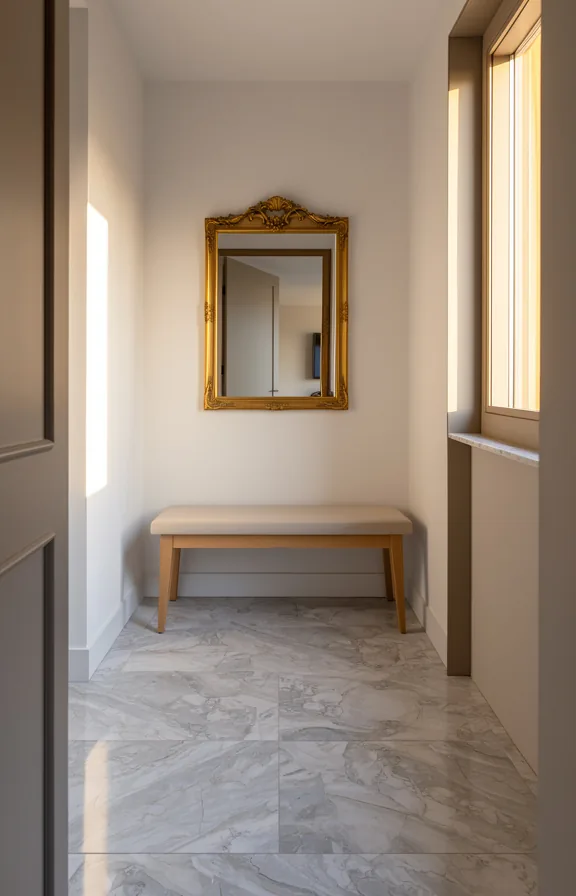
Soft gray veining across a white base creates quiet luxury instantly.Your eye travels across the floor before landing on anything else.
This draws attention downward, which makes tight spaces feel less cramped.Polished or honed marble-look porcelain tile costs far less than real marble.
The finish reflects light subtly, making your entryway glow without brightness.A checkerboard or linear pattern reads as intentional and expensive.
Pair it with pale walls to keep the marble as the anchor.A single brass or brushed gold fixture above the door completes it.
The cool tones of gray marble pair beautifully with warm metal.This works best in homes with good natural light from windows.Sunlight on the tile makes the whole space feel refined and open.
Most of this look comes from flooring choice and lighting angle.No structural changes or wall work needed to pull it off.
Pro Tip: Lay tiles in a linear direction rather than random pattern for a more intentional, high-end finish.
2. Gold-Framed Mirror Statement
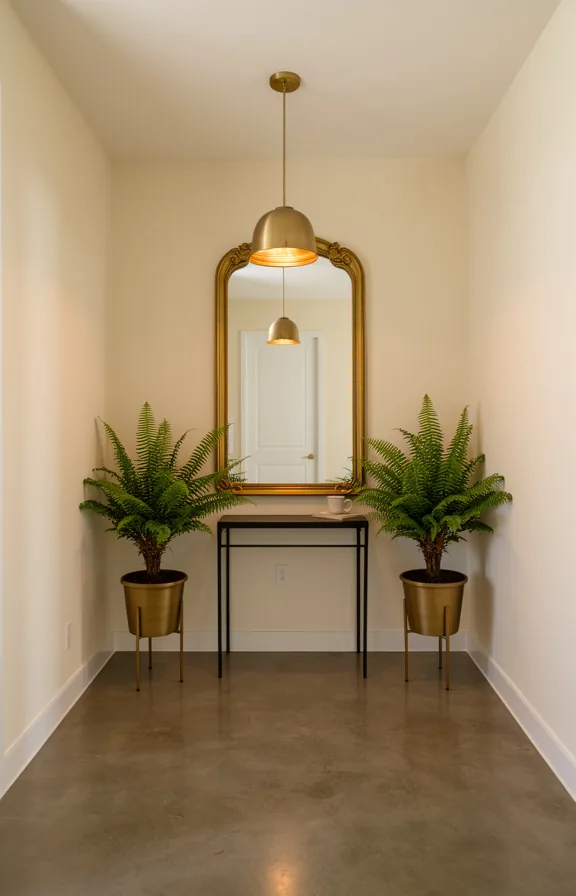
Warm gold leaf catches light from above the entry door.A oversized mirror with beveled edges anchors the wall space.
The frame itself becomes architecture, not decoration.Your eye travels up and outward when you enter.
The room suddenly feels taller and wider than it is.Below it sits a narrow console in dark wood or metal.
A single ceramic vessel or stack of leather books lives there.The palette stays neutral: cream walls, soft gray, warm white.
Light bounces off the mirror throughout the day and evening.The reflection pulls in whatever sits beyond the entryway.
This works best in homes with strong natural light sources.The mirror’s purpose becomes functional and sculptural at once.
Pro Tip: Hang mirrors slightly higher than eye level to maximize ceiling height perception.
3. Floating Wood Shelf Display
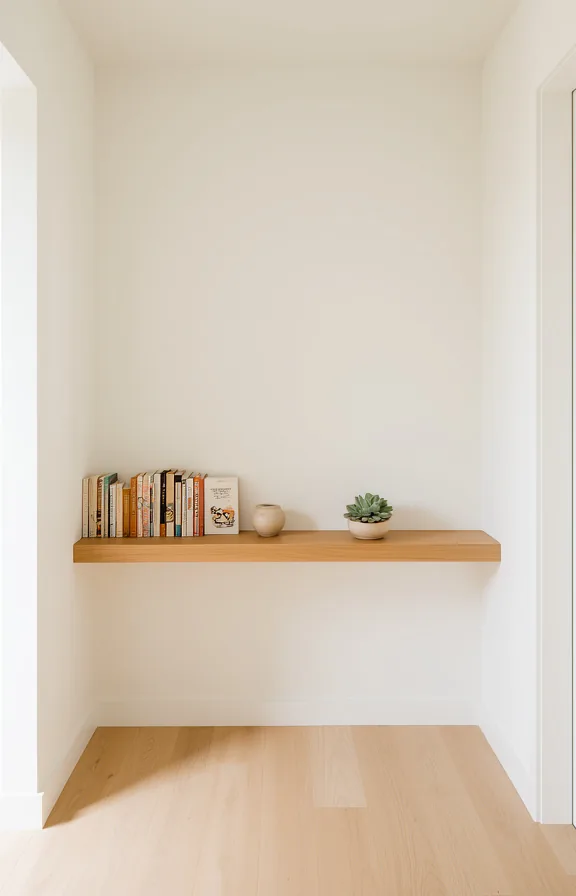
A single floating shelf in warm walnut or light oak creates instant architectural interest.The shelf sits at eye level, just above where you’d naturally look.
This height makes your entryway feel intentional rather than makeshift.Pale cream or off-white walls surround it, letting the wood warm the space.
Small objects live on the shelf: a ceramic vessel, a stack of art books, one green plant.Nothing crowds the surface; negative space is part of the design.
Soft, indirect light catches the shelf edge and casts a gentle shadow below.This shadow deepens the perception of depth in a tight entry.
The whole effect reads expensive because it looks deliberate and restrained.This works best in narrow entryways where wall space is limited.
You need only one shelf and three to five carefully chosen objects.
Pro Tip: Mount the shelf slightly below eye level, not above it; lower placement feels more grounded and less like a forgotten corner.
4. Painted Accent Wall Drama
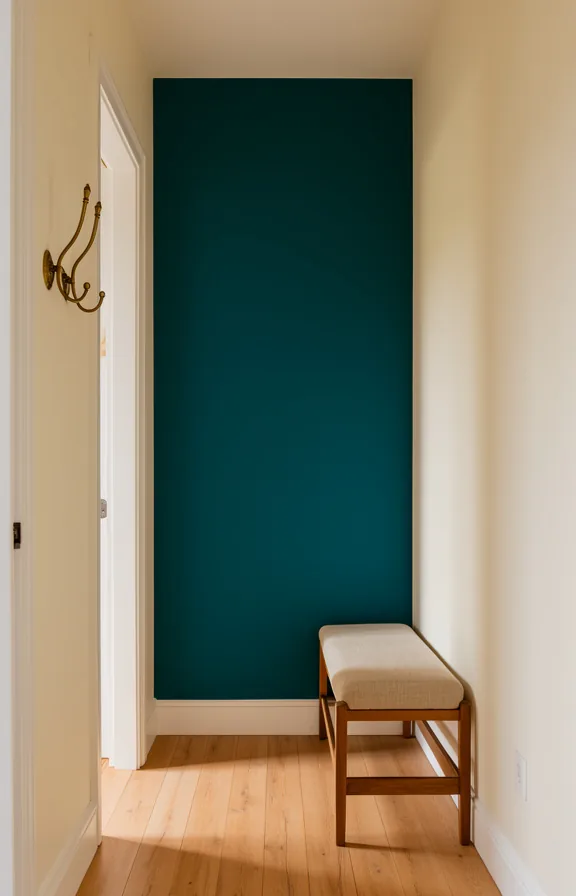
One deep wall color against pale surroundings signals intentionality.Dark paint on a single wall draws the eye inward.
Your entryway feels curated, not sparse or underfinished.Choose a navy, forest green, or warm charcoal tone.
The remaining walls stay in soft cream or warm white.Natural wood flooring or light neutral tile completes the contrast.
Overhead light bounces off lighter walls and softens shadows.The dark wall creates depth in a small footprint.
This approach works well in homes with standard eight-foot ceilings.Vertical space expands when one wall anchors the room.
Most of this look comes from paint alone.No structural changes or costly materials required.
Pro Tip: Paint the wall opposite your entry door, not the one you see first when entering.
5. Brass Pendant Light Fixture
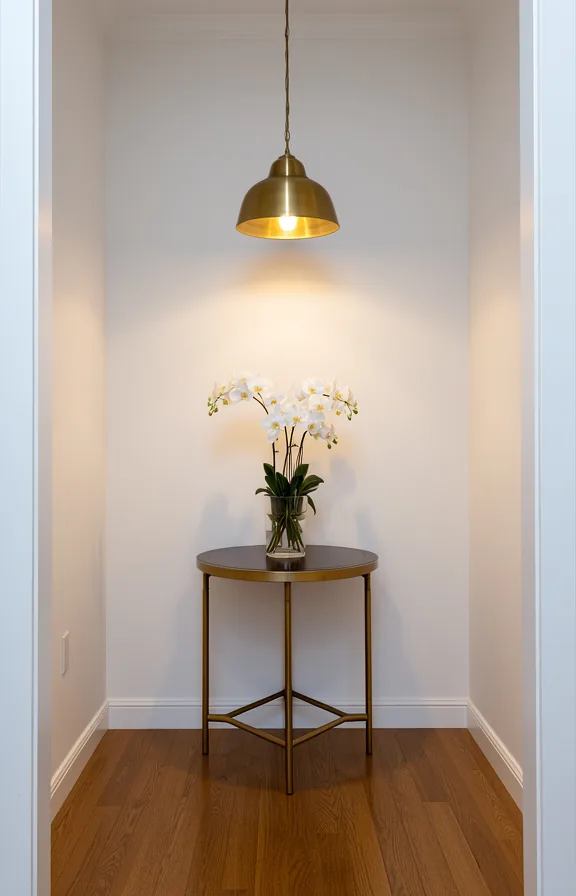
Warm amber tones pool down from a single brass pendant hanging at eye level.The fixture casts soft shadows on pale walls and burnished wood flooring.
Matte brass or aged brass finish reads more expensive than shiny polished brass.The light quality feels intentional, like someone designed this space with care.
A small entryway needs lighting that feels intimate, not harsh or institutional.Brass reflects light subtly, creating depth without overwhelming a tight floor plan.
The warm glow draws focus upward, making low ceilings feel less constraining.This works best in homes where the pendant hangs between 6.5 and 7 feet high.Most of this effect comes from choosing the right bulb temperature and finish.
Pro Tip: Select a warm white bulb at 2700K color temperature for luxury feel.
6. Patterned Runner Rug Moment
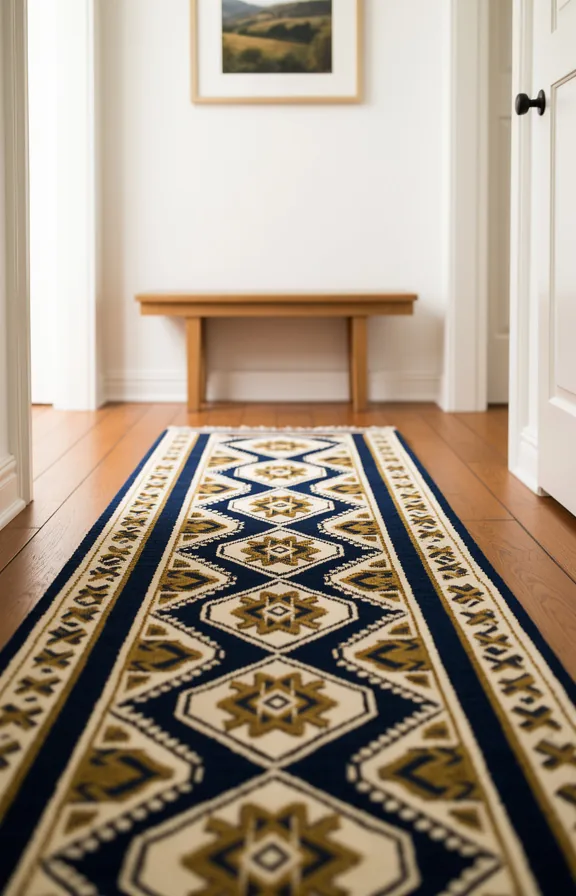
A geometric patterned runner anchors your entryway like a designer’s deliberate choice.The rug stretches the length of your narrow space, drawing the eye forward.
Think warm neutrals with subtle repeating motifs: cream, soft gray, muted gold.The pattern sits on a natural fiber base: jute, wool blend, or cotton.
Wood floors frame both long edges, visible on either side of the runner.This creates a clear visual pathway that feels intentional and collected.
The texture catches light differently than bare floor, adding quiet depth.A patterned runner costs less than wall treatments but reads as thoughtful.
Most small entryways benefit from this approach because scale matters here.The pattern prevents the space from feeling empty or corporate.
Instead, your entryway reads as a curated threshold into your home.This works best when the pattern complements your existing walls, not fights them.
Pro Tip: Choose a pattern with matte finish over shiny to avoid glare in tight spaces.
7. Whitewashed Wood Paneling Feature
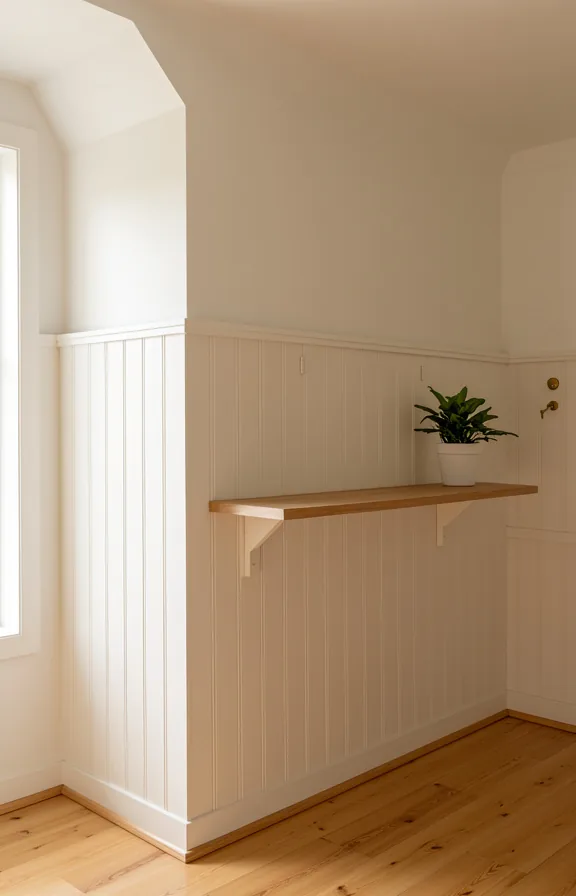
Vertical shiplap in soft white hits your eye the moment you open the door.The wood grain shows through beneath the whitewash, creating quiet texture and depth.
This paneling adds architectural character without feeling trendy or temporary.Pair it with a pale natural linen curtain or a single floating shelf in natural wood.
Your lighting becomes crucial here, so layer it carefully for warmth.A simple brass or ceramic sconce beside a mirror reflects light and enlarges the space.
Keep your flooring simple: light wood, concrete, or pale tile grounds the wood paneling.The palette stays mostly neutral, so a single accent color in hardware or a small plant reads clearly.
This concept works best in homes where one wall can be fully paneled without boxing in the space.
The vertical lines naturally draw the eye upward, making small entryways feel taller.
Pro Tip: Apply whitewash in two thin coats rather than one heavy coat for authentic, uneven coverage that reads expensive.
8. Gallery Wall Arrangement Style
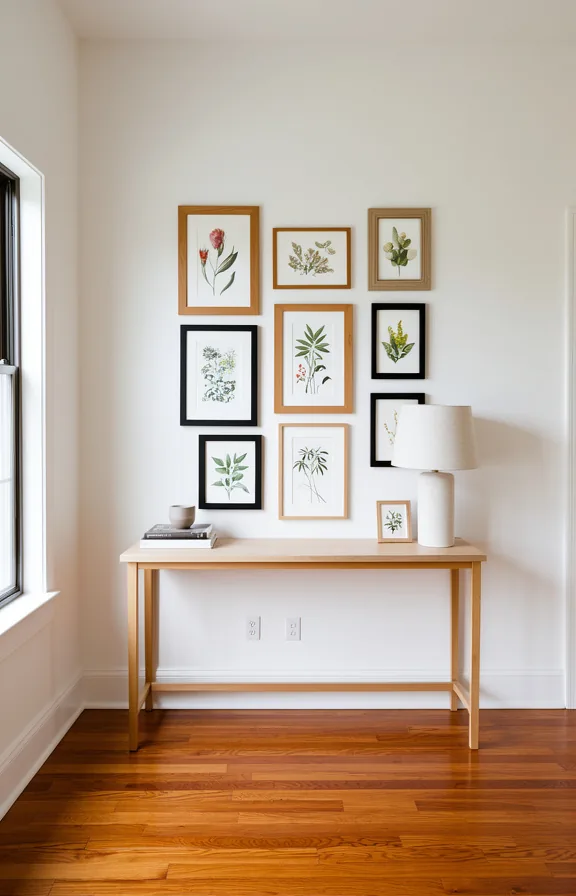
Framed prints arranged salon-style fill your entryway wall with visual interest.White or cream walls become the gallery backdrop for layered artwork.
The frames themselves are mixed: thin black metal, natural wood, matte black.Prints vary in size but stay within a cohesive colour palette.
Soft warm lighting from below highlights the arrangement without glare.A simple console table anchors the space visually beneath the wall.
The effect reads as collected and intentional, not cluttered or random.This concept works best in entryways with one clear focal wall.
Most of the impact comes from thoughtful arrangement and frame finish.No structural changes or expensive materials are required to execute it.
Pro Tip: Sketch your layout on paper before hanging anything.
9. Arched Doorway Entryway Frame
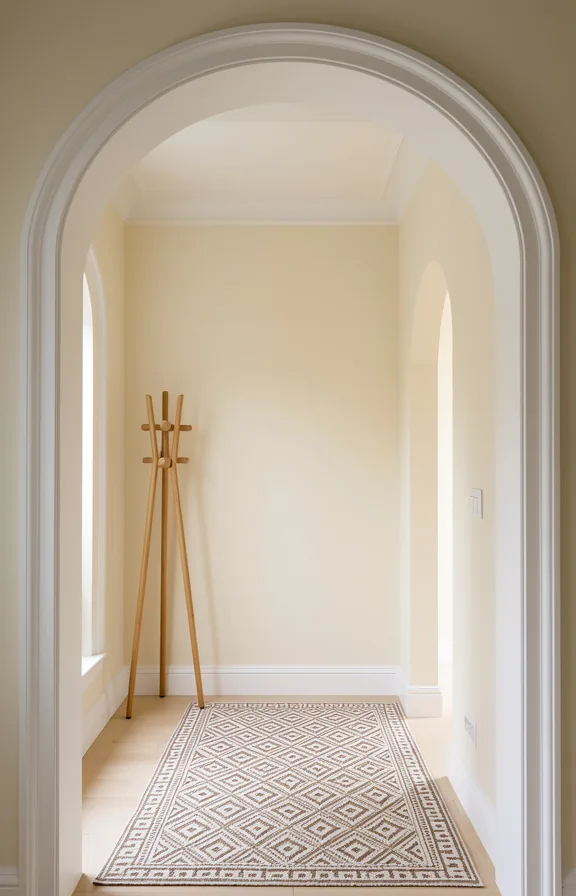
Soft white trim frames an arched opening between rooms.The curve stops the eye and adds quiet architectural detail.
Beyond the arch, cream-coloured walls catch natural light generously.The geometry feels intentional, not accidental or rushed.
Matte or eggshell paint on trim shows craft without shine.The arch itself becomes a frame within your home.
This strategy works in homes with any ceiling height.Most of this effect comes from paint, trim, and light.
No structural changes are necessary to create impact.The arch draws visitors forward and makes them pause.
Small entryways feel larger when a clear threshold exists.Arched trim costs less than other architectural upgrades.Paint the trim crisp white for maximum visual lift.
Pro Tip: Prime trim with a bonding primer first; paint adheres better and looks more refined in the finished space.
10. Soft Terrazzo Flooring Look
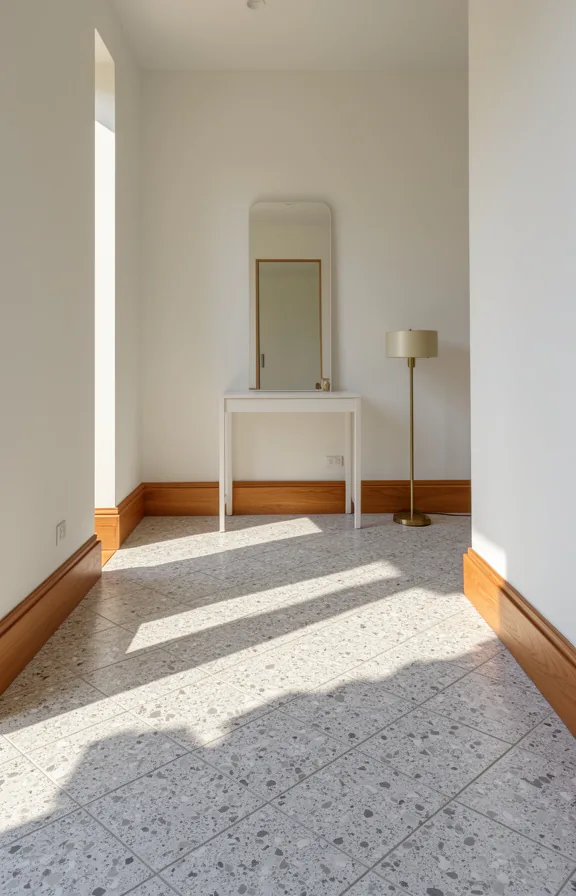
Light grey and cream terrazzo tiles anchor your entire entry space.This flooring creates the feeling of stepping into a curated, intentional home.
Soft terrazzo works because it reads as expensive without the price tag.The speckled pattern adds visual texture without overwhelming a tight footprint.
Pale tones keep small entries feeling open and airy, not cramped.White or cream walls paired with terrazzo feel naturally luxe together.
A single brass or stainless steel console table echoes the floor’s shimmer.Soft, warm overhead lighting brings out the gentle flecks in terrazzo.
This look works best in entryways without major sunlight changes throughout day.The concept requires only flooring and wall paint to feel complete.
No structural work or built-ins needed to pull off this effect.
Pro Tip: Matte terrazzo reads as more expensive than glossy finishes.
11. Curved Console Table Setup
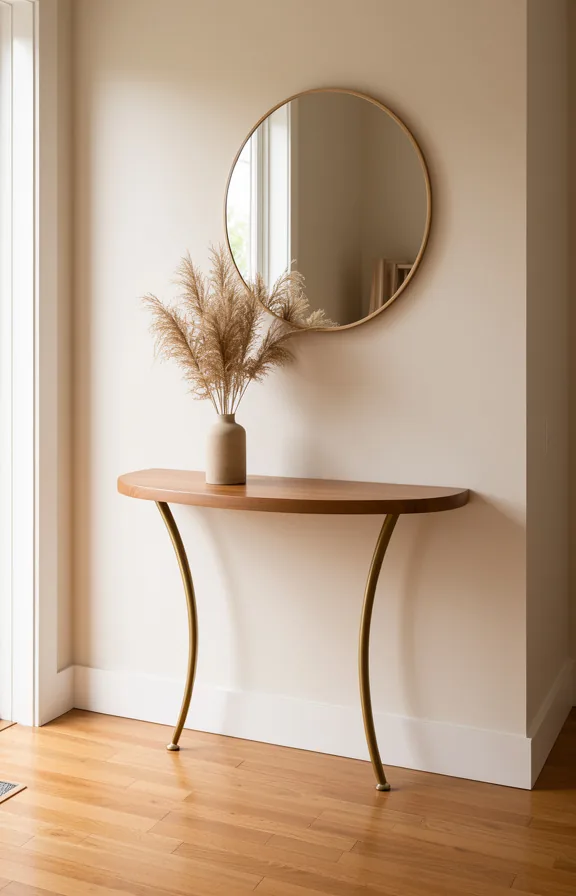
Warm brass curved legs anchor a slim marble or stone-top console table.A round mirror in brass or gold sits centered directly above the surface.
The curved lines soften the hard geometry of a narrow hallway or foyer.Light bounces off the mirror and brightens a space that feels tight or dim.
A single potted plant and two glass candle holders sit on the tabletop.The brass finishes echo each other, creating a cohesive metal story in one small zone.
This setup works best in entries with wall space between 24 and 36 inches wide.A muted neutral or soft sage wall behind it makes the metals read even richer.
This look costs far less than a statement cabinet but feels just as intentional.
Pro Tip: Curved furniture reads as more expensive because straight edges look spare and budget-tight instead.
12. Botanical Print Wall Styling
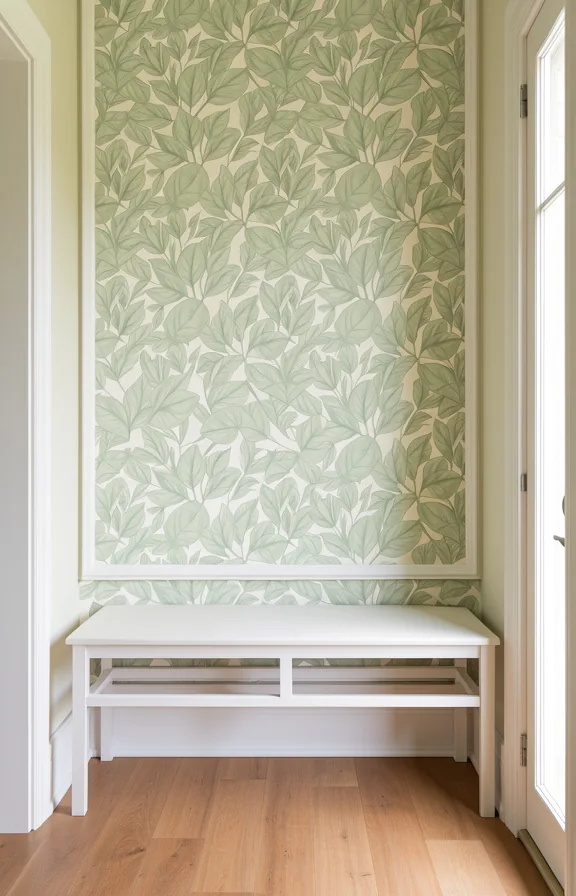
Framed botanical prints clustered on your entry wall create instant architectural presence.
The key is scale and placement, not the cost of frames.A gallery wall of five to seven prints reads as intentional design.
Mismatched frames in white, natural wood, or thin black metal unify the cluster.Prints with botanical subjects feel more refined than generic art.
Ferns, pressed flowers, and botanical specimens reference luxury interiors without the price tag.
Hang prints at eye level or slightly below for maximum impact.Off-white or cream walls make botanical imagery pop more than white walls.
Natural light crossing the frames enhances the sophisticated, collected feeling.This approach works best in homes with at least 4 linear feet of wall space.
Most of the effect comes from arrangement and frame choice, not the prints themselves.
Pro Tip: Arrange prints in a loose grid or organic cluster rather than a strict line.
13. Velvet Bench Seating Area
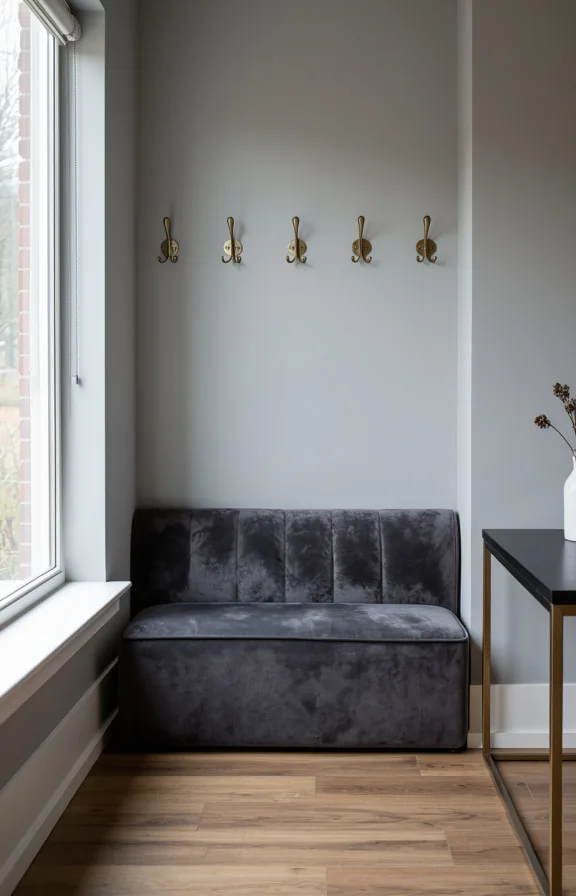
A deep grey velvet bench anchors your entryway with quiet luxury.Velvet catches light differently than fabric or wood ever could.
This material signals “intentional design” without costing what real luxury furniture does.Pair it with a brushed brass or matte black metal frame.
Position the bench where people naturally sit: below a window or console.Layer a neutral linen throw over one corner of the seat.
Add two to three throw pillows in contrasting textures.Use one velvet pillow in the same grey as the bench.
Add one in a cream boucle or natural linen.The third pillow works best in a soft warm taupe.
Overhead, hang a single pendant light or small brass fixture.Warm, downward-facing light makes the velvet glow at dusk.
Keep the wall above the bench nearly bare or minimal.One framed piece or a small mirror is enough.This approach works best when your entryway is narrow or compact.
A bench in a tight space reads as intentional, not cramped.Most of this effect comes from fabric choice and lighting.No structural changes or
14. Hexagonal Tile Accent Wall
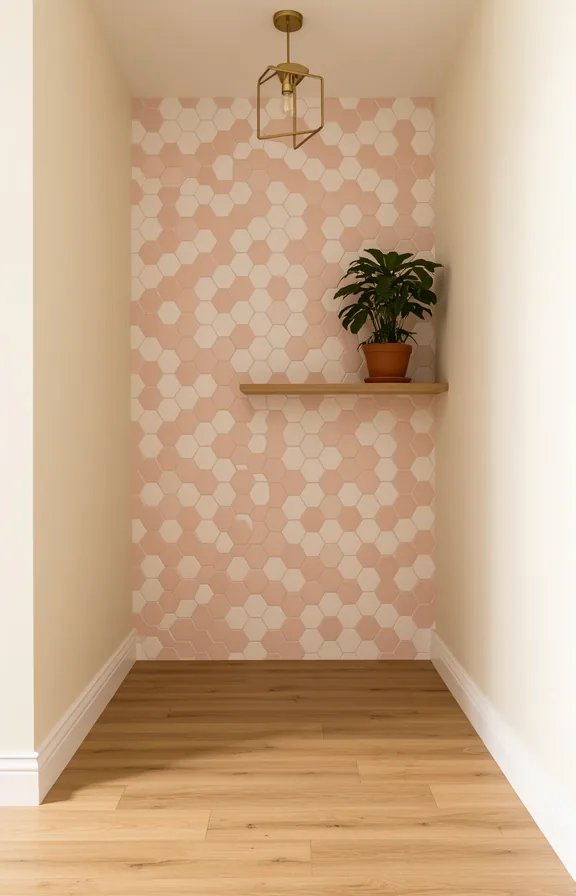
Cream hexagonal tiles climb one wall from floor to chair rail height.The geometric pattern catches light differently as you move through the space.
Adjacent walls stay soft and neutral, letting the tile be the focal point.Natural wood flooring grounds the scheme with warmth underneath.
A simple floating shelf mounted on the tile wall adds function without clutter.Soft, diffused light makes the hexagons glow rather than glare.
The overall mood feels considered and layered, not sparse or cold.This concept works best with lower-cost ceramic hexagons, not marble or natural stone.
Most of the impact comes from the geometric pattern itself, not the material cost.
Pro Tip: Stop the tile pattern at chair rail height to save money and time.
15. Linen Curtain Sidelight Drape
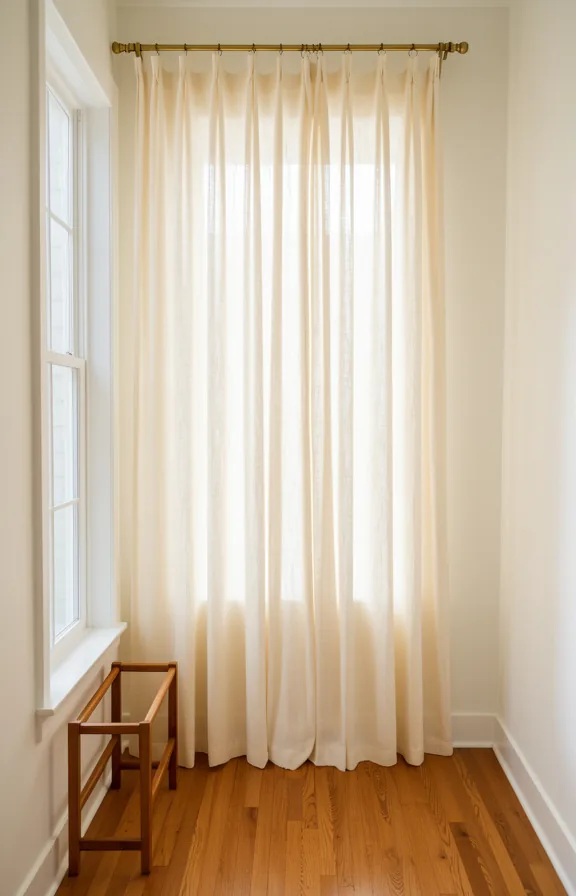
Soft linen panels frame your front door sidelights like custom millwork.The fabric filters incoming light into a warm, diffused glow.
This creates an intentional, high-end entry without visible hardware or clutter.Your eye moves straight to the door, not the mess beside it.
The neutral fabric works with any colour scheme you choose later.Natural linen drapes slightly, adding movement and casual elegance to the space.
Most people never notice the sidelights until the curtain draws attention.This works best with white or pale walls to maximise the effect.
The quality of the light matters more than the cost of fabric.A small entryway feels curated and finished when sidelights are styled.
This look requires only fabric, a simple rod, and basic hanging hardware.
Pro Tip: Hang the rod closer to the ceiling than the actual sidelight frame.
16. Stone Accent Wall Texture
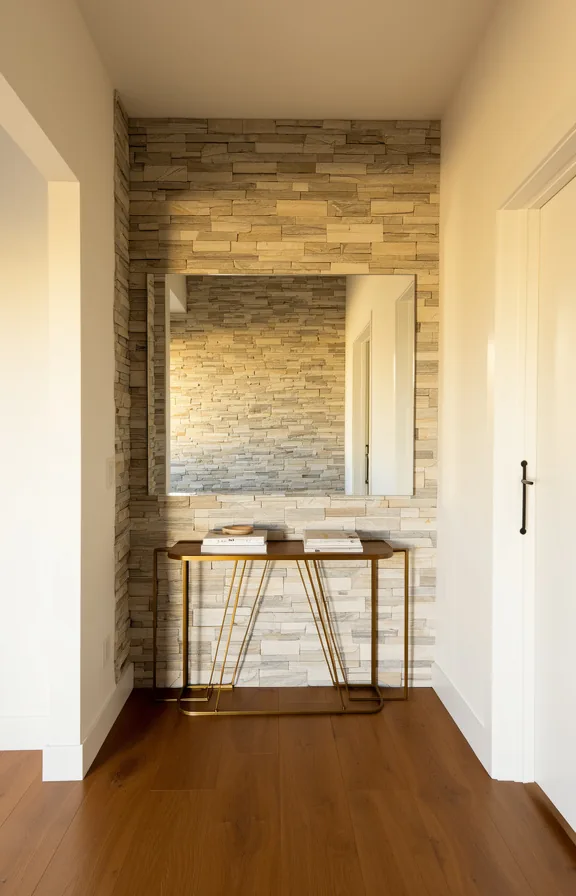
Rough stacked stone covers one wall behind your entry console or coat hooks.The texture catches light differently as people move through the space.
Your entryway feels architectural and intentional, not just a hallway.Soft grey and warm cream tones in the stone work with any paint color.
A single pendant or wall sconce mounted above highlights the shadows in the texture.This approach works best in smaller entries because texture makes walls feel deeper.
The stone becomes a focal point you notice before noticing the small square footage.Most stone accent walls come in peel-and-stick panels or lightweight veneer formats.
No structural changes or professional installation required for either option.The material costs less than professional stonework but reads as high-end.
Pair it with a simple wooden floating shelf and minimal accessories above.Keep the opposite wall clean and plain to avoid visual clutter.
Natural stone texture absorbs some sound, making the entry feel quieter and larger.
Pro Tip: Mount lighting slightly above eye level to graze across the stone surface.
17. Layered Lighting in Warm Brass
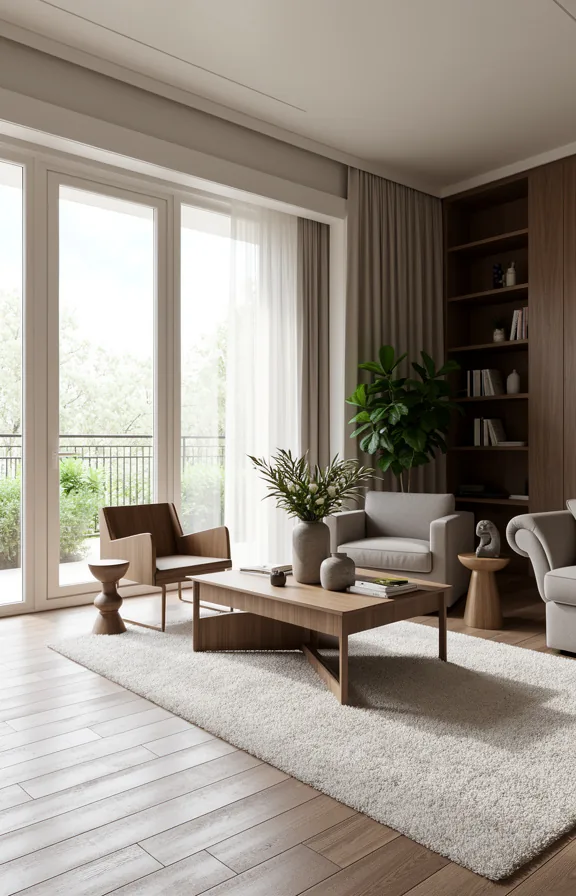
Warm brass fixtures mounted at two different heights create visual depth.A single brass wall sconce sits at eye level beside the door.
A small brass pendant hangs lower, casting light down onto a console.
The overlapping pools of warm light make your entryway feel deliberate.Soft amber tones replace harsh overhead fixtures in a small space.
This approach costs less than rewiring but feels intentional and layered.The brass finishes tie together hardware, mirrors, and accessories throughout.
Your eye moves upward, which makes the ceiling feel higher.Most people skip this step and rely on one central light.
That choice flattens a small room and reads as incomplete.Two warm sources transform an entryway into a welcoming threshold.
This works best in homes where you can add wall fixtures easily.Rental renters can use tall brass floor lamps on either side instead.
Pro Tip: Warm light below eye level makes rooms feel intimate and intentional.
Start with the floating shelf idea at number three if your entryway is truly minimal.
A single shelf costs under thirty dollars and instantly anchors the space with intentional styling.
Pair it with the painted accent wall from number four to add depth and personality without major investment.
Save this post and return to it when you’re ready to refresh your entry.