

18 Bright Airy Entryway Mistakes Renters Make and Fast Budget Friendly Fixes
This platform is proudly ad-free! To keep it that way and support our efforts, some posts may contain affiliate links. These links come at no extra cost to you, but they help us grow and continue providing valuable content. Thank you for your understanding and support!
A bright airy entryway should feel welcoming the moment you step inside. Most renters spend energy on lightness and openness, then wonder why the space feels cold, empty, or visually unfinished.
The issue is rarely too much light or too little furniture. Bright airy entryway mistakes usually come from specific placement errors, scale problems, and gaps in layering that leave the space feeling unintentional.
These 18 fixes cost under $50 each and require zero drilling, wall damage, or permanent changes. Most take under an hour to implement and deliver immediate results.
You will find practical solutions here, not design theory. The floating shelf idea at number seven costs under $25 and creates instant storage in rentals.
Read through and identify which mistakes match your space. Start with whichever one causes the most frustration.
1. Skipping a Welcoming Entryway Rug
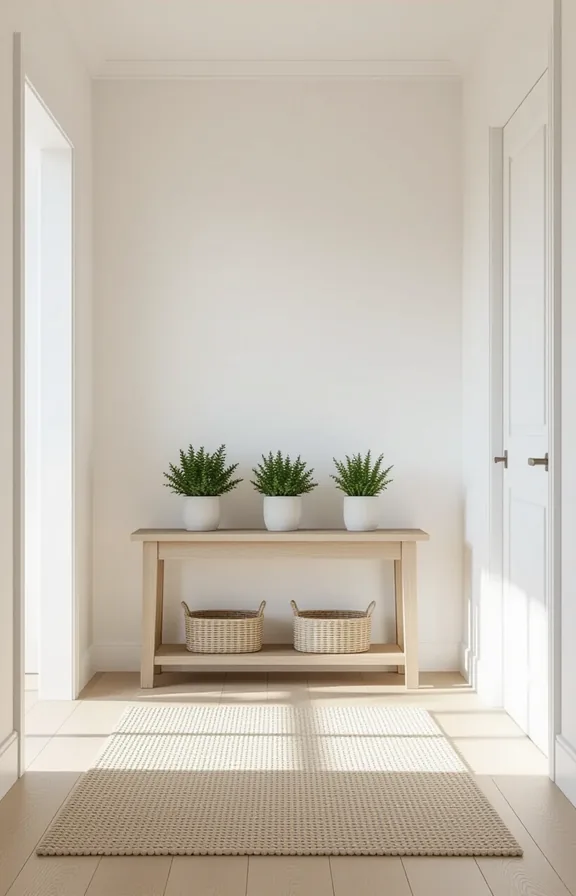
Bare flooring in a bright entryway reads as unfinished and cold. The space feels incomplete, even when walls are freshly painted and lighting is soft.
Hard floors alone don’t define a room’s purpose or invite people inside. A rug grounds the entry and signals transition from outdoors to home.
Layer a natural fiber rug in jute or sisal, sized 2.5 by 4 feet minimum. Most renters skip this step because it feels temporary, but it costs under fifty dollars and anchors the entire space.
Pro Tip: Stand at your front door and look down. If you see only flooring, a rug is missing.
2. Hanging Mirrors Too High
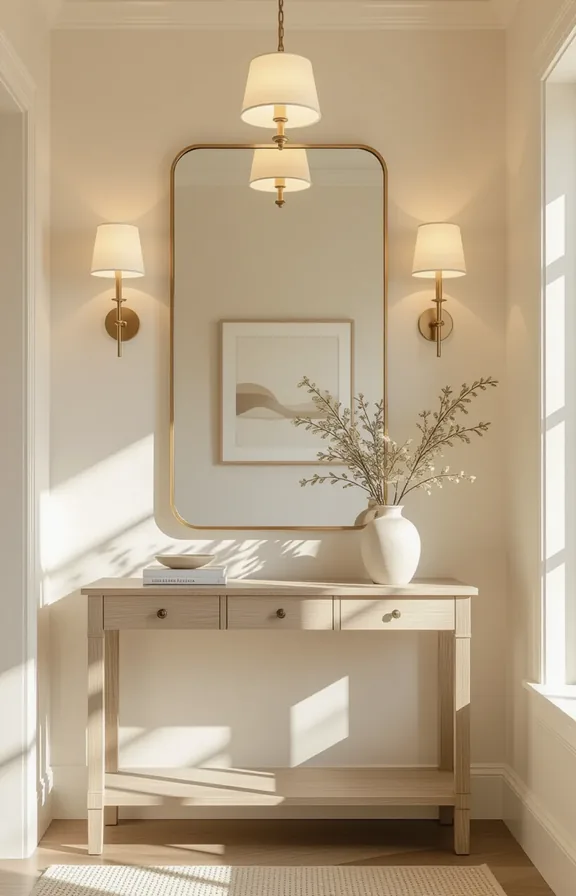
A mirror mounted near the ceiling creates dead space above your console table. The room feels broken and awkwardly proportioned, even when everything else is bright and clean.
Eye level is roughly 57 to 60 inches from the floor in most homes. Mirrors hung higher than this force your gaze upward and make entryways feel disconnected. Position the mirror center between 60 and 66 inches from the floor for natural sightlines.
Most renters hang mirrors too high because they worry about clearance or follow ceiling height rather than human proportions.
Hang your mirror so the bottom edge sits 8 to 10 inches above a console table. This creates visual balance and makes the space feel intentional, just like properly hung shelves.
Pro Tip: Step back 6 feet and look at your mirror’s reflection of your face. If your eyes sit in the upper third of the mirror, it is too high.
3. Leaving Walls Completely Bare
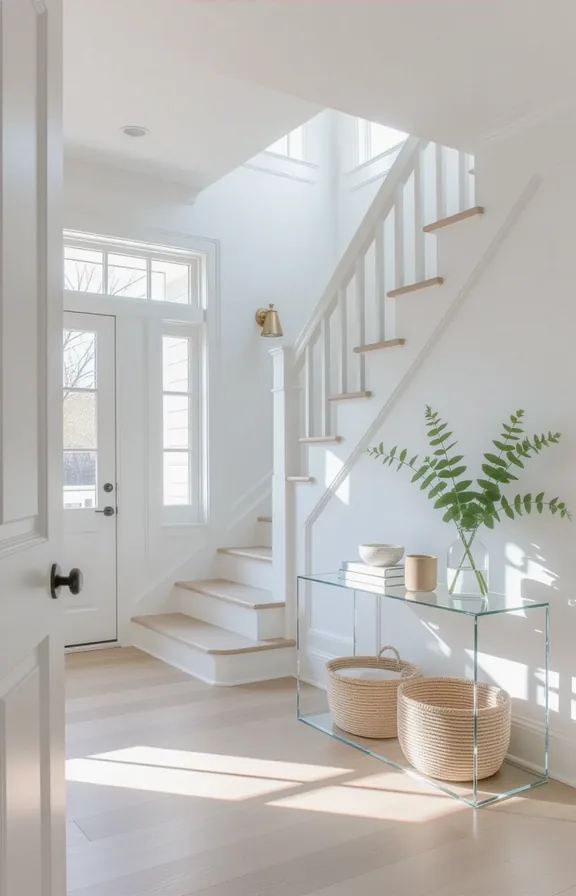
White walls with zero decoration feel cold, not calm. The room reads as unfinished rather than intentionally minimal.
Bare walls make a space feel temporary, which matters psychologically in entryways. Most renters skip wall styling because it feels permanent, but removable options exist. This mistake happens in roughly half of bright entryways.
Hang a large framed print (20 by 24 inches minimum) at eye level, roughly 57 inches from floor to center. Add a narrow shelf below it at 48 inches, then style with three small objects: a ceramic vessel, a potted trailing plant, and a candle. This anchors the entire space.
Pro Tip: Stand at the entryway door and look straight ahead. If your eyes land on empty wall, something needs hanging there.
4. Choosing Dark Paint Colors
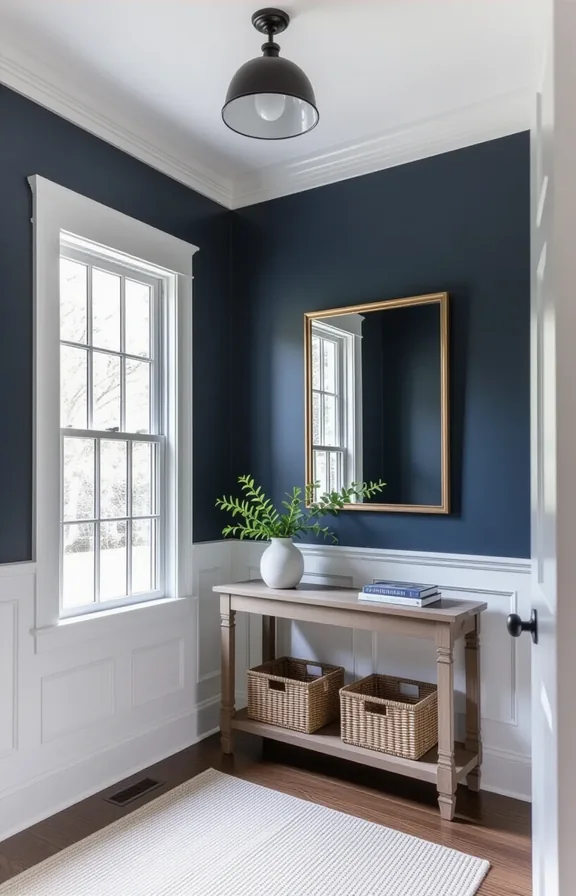
Deep charcoal, navy, or forest green paint makes small entryways feel cramped and dim. The space closes in visually, swallowing natural light before it spreads through your home.
Dark walls absorb light rather than reflect it. Entryways already lack windows and depth. Adding dark paint removes the breathing room renters need. Most renters make this mistake when chasing design trends that work better in larger rooms.
Paint the walls soft white, warm cream, or pale greige instead. If you want colour, try a barely-there sage or dusty blue so light still bounces. One accent wall works only if it’s behind a mirror or furniture, not across the entry view.
Pro Tip: Stand at your entry door at different times of day. If the space feels smaller or darker than it did before painting, the colour is too deep.
5. Overcrowding the Entry Console
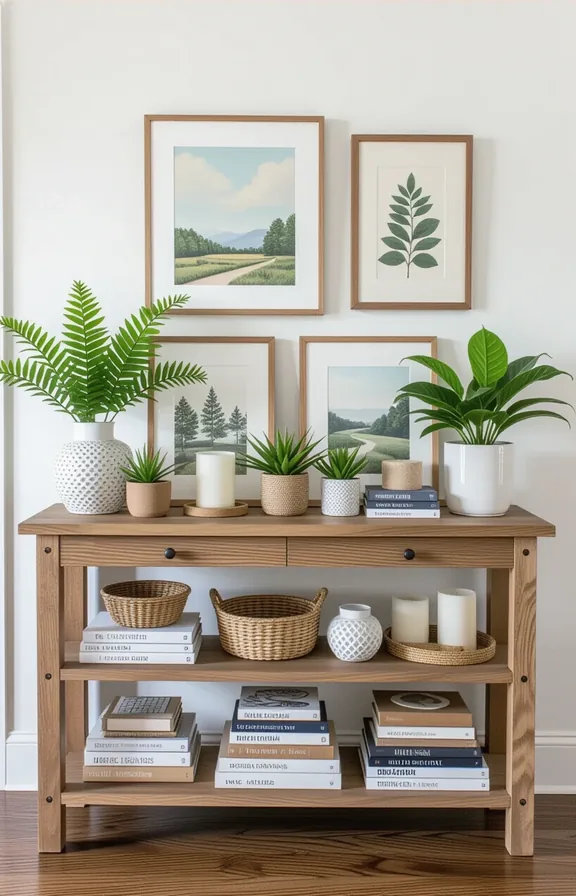
A stack of books, three frames, two plants, and five candles clustered across a narrow console creates visual chaos. The eye has nowhere to rest, making even a bright room feel cramped and intentional.
Negative space is what makes an airy entryway work. When every surface is covered, the brain registers clutter before it registers style. Most renters make this mistake because empty space feels wrong at first.
Edit down to three objects maximum on any console. Space them 12 to 18 inches apart. Choose one focal point: a single tall plant, a pair of matching vases, or a stack of two books with a candle beside them.
Pro Tip: Step back and count your objects. If you can’t name each one’s purpose in under five seconds, something needs to go.
6. Using Overhead Lighting Only
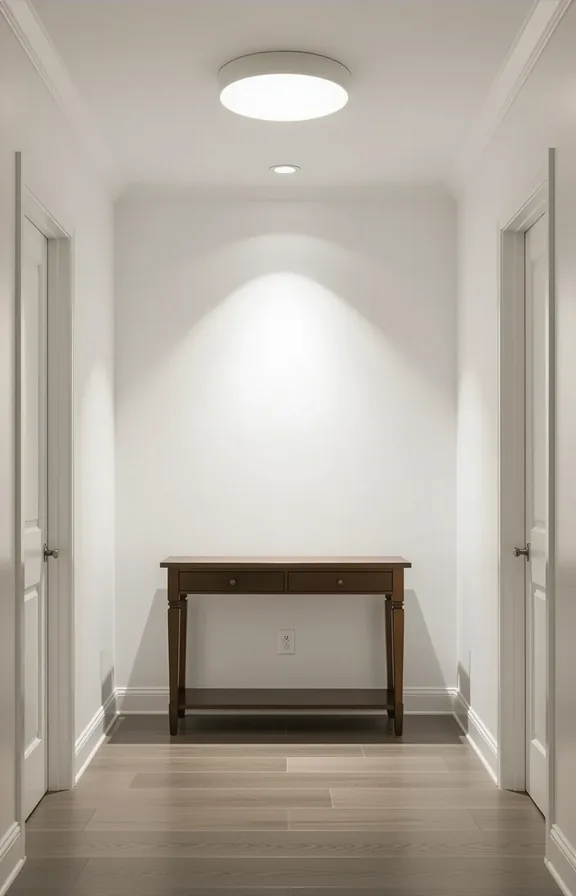
Harsh overhead ceiling lights create flat, shadowless brightness that drains warmth from an entryway. The space feels sterile and uninviting, even when painted in soft neutrals.
Ceiling fixtures cast downward light that flattens faces and objects. Warm lighting below eye level makes a room feel smaller and more intimate. Most entryways rely solely on overhead fixtures, missing the layered effect that reads best in photos and in person.
Add a table lamp with a warm bulb on a console table, positioned at 60 inches high. A brass swing-arm sconce mounted at 66 inches beside the mirror or door works equally well. Both add ambient warmth without requiring rewiring.
Pro Tip: Look at how light hits your face in the mirror. If shadows fall upward, overhead lighting dominates and needs a second source below.
7. Ignoring Floating Shelves for Storage
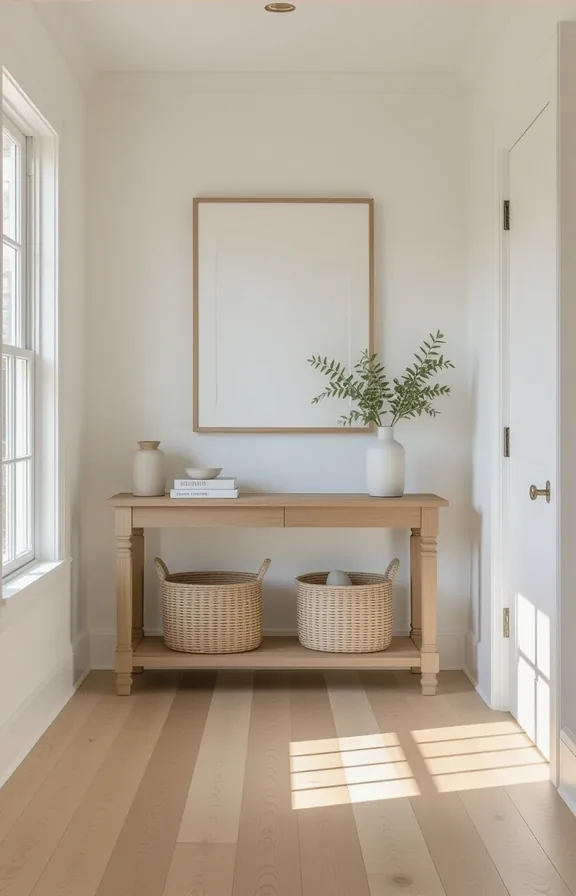
Bare white walls above an entryway console feel incomplete and visually empty. The space reads unfinished, even when everything else is styled correctly.
Floating shelves solve this instantly because they add vertical storage without taking floor space. Renters often skip them, assuming shelves require permanent installation or look too minimal.
Install two shelves at 48 and 60 inches high above your console. Use adhesive-backed brackets rated for your wall type. Style lower shelves with baskets for keys and gloves; keep upper shelves mostly clear. Most entryways need at least one wall of storage to feel intentional.
Pro Tip: Step back ten feet. Empty walls above furniture always look unresolved.
8. Picking the Wrong Basket Sizes
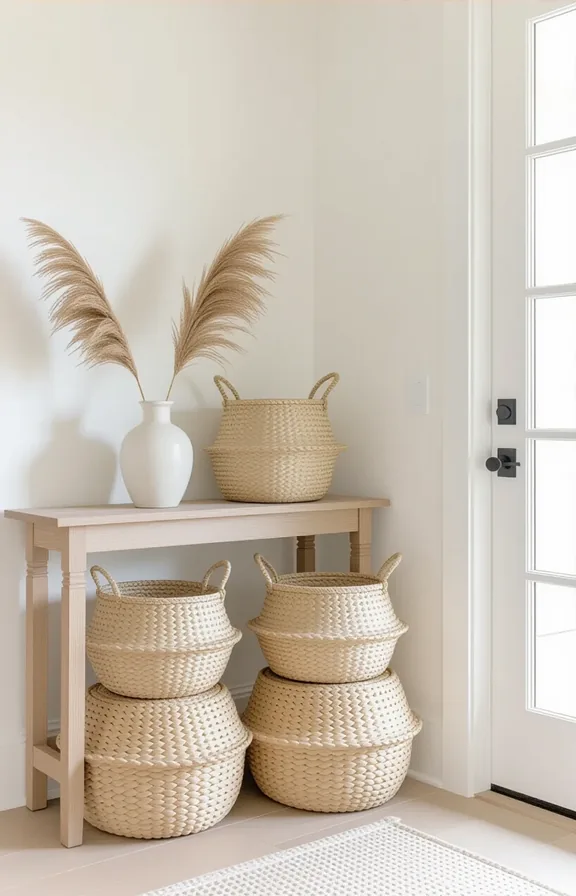
Oversized baskets crammed into narrow entryway corners create visual clutter and make the space feel cramped. A single basket that dominates the floor steals all the breathing room that bright, airy rooms need.
Wrong basket sizes disrupt proportion and make a light room feel heavy and unbalanced. Most homes have at least one basket that’s too large for its location. Scale matters more than most people realize in small spaces.
Swap for baskets that occupy no more than one-third of your shelf or corner width. A set of three smaller woven baskets (roughly 10–14 inches wide) works better than one 20-inch option. Leave air and negative space visible around each piece.
Pro Tip: Step back and squint at your entryway. If a basket immediately dominates your line of sight, it’s too large for that space.
9. Forgetting a Coat Hook Wall
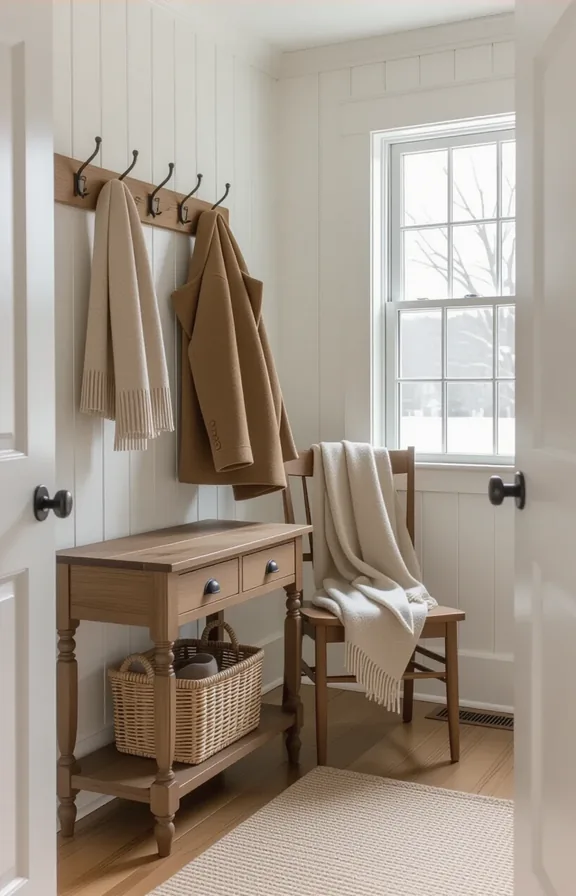
A blank wall beside your door reads as incomplete and unfinished. Without coat hooks, your entryway feels like it’s missing its main function.
Hooks anchor the space and tell visitors where to place their things immediately. Most entryways lack dedicated storage, which makes the room feel chaotic and unused.
Install three to five hooks at 60 inches from the floor across a 24-inch section of wall. Brass or matte black hooks work with bright, airy schemes. Space them 8 to 10 inches apart so coats hang without bunching.
Pro Tip: Spot this mistake by standing in your entryway and asking where a guest would naturally hang their jacket. If you hesitate, hooks are missing.
10. Placing Furniture Too Close Together
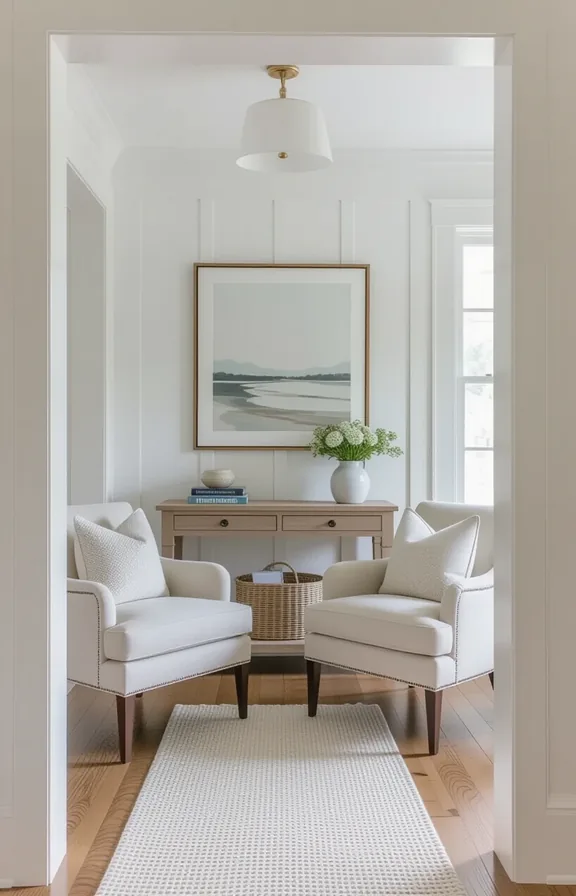
A console table pushed directly against a shoe bench creates visual clutter instantly. The room feels cramped even when it’s technically empty.
Crowded layouts interrupt sightlines and trap dust in gaps. Air needs to flow around each piece for brightness to register as real.
Leave at least 18 inches between furniture pieces. A small console in the corner with clear floor space around a mirror reads lighter than the same items touching. Most entryways suffer from this mistake.
Pro Tip: Step back and check if you can draw an invisible line of breathing room around each piece. If furniture blocks that line, move it out.
11. Using Mismatched Lighting Fixtures
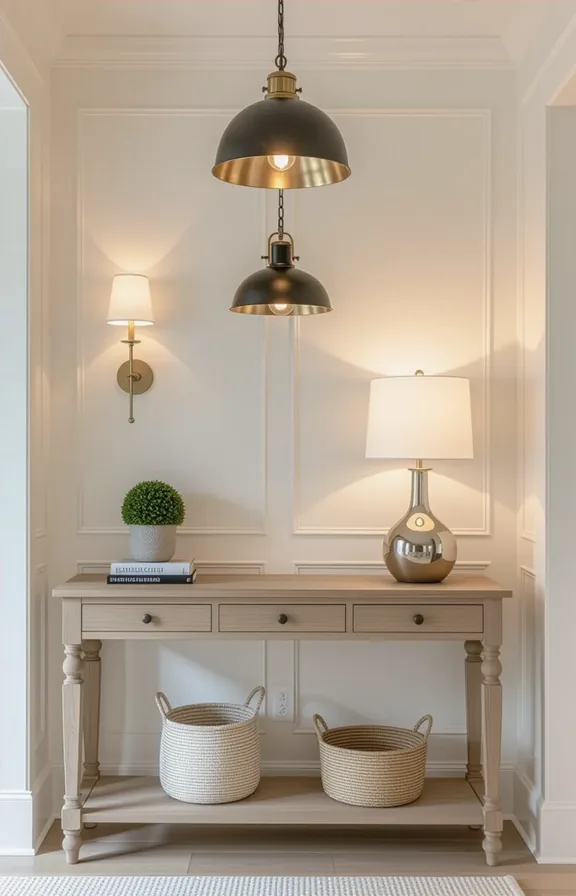
A brass pendant hangs beside a brushed nickel wall sconce and a chrome flush mount overhead. The eye bounces between three different finishes and styles, making the entry feel chaotic instead of calm.
Mismatched fixtures break the visual flow that bright, airy spaces depend on. Most entryways have at least two conflicting light sources. Your brain reads this as unfinished or accidental rather than intentional.
Replace all three with one unified finish: matching brass, nickel, or matte black throughout. Use a single pendant or two identical sconces flanking a mirror. This costs less than it looks.
Pro Tip: Photograph your entryway from the doorway. If your eye jumps between three different metal tones, it’s a mismatch worth fixing.
12. Skipping Window Treatments Entirely
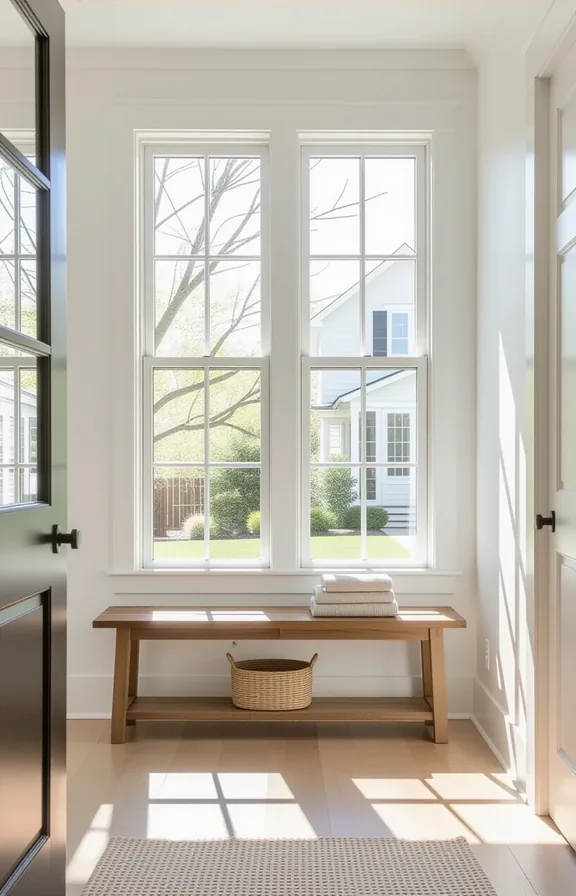
Bare windows in an entryway feel unfinished and cold, even when flooded with natural light. The room looks incomplete, like furniture is still being arranged.
Without window treatments, harsh sunlight bleaches furnishings and exposes everything outside directly into the space. Most entryways suffer from this same oversight. A simple solution works: hang linen curtain panels in cream or soft grey from ceiling to floor on each side of the window frame.
This frames the view, softens incoming light, and adds intentional depth to the space. Keep panels open during the day for brightness while maintaining visual polish and protection.
Pro Tip: Bare glass feels incomplete instantly. Quality curtains change a room from empty to styled in seconds.
13. Choosing Heavy or Dark Frames
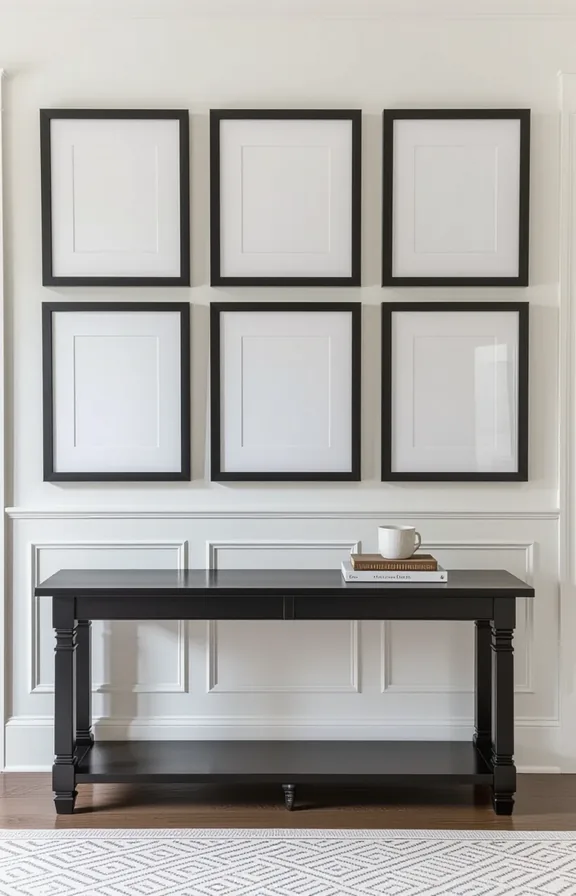
Thick wooden frames or dark metal borders pull visual weight downward in a bright entryway. They anchor the space and make it feel heavier than it actually is.
Dark frames compete with light walls for attention. A white or natural wood frame recedes into the background instead, letting the artwork shine without visual strain.
Most rental entryways struggle with this mistake. Swap heavy frames for thin silver metal frames or pale wood options under two inches wide.
Pro Tip: Stand in your entryway and squint. If the frames look darker than the wall behind them, they need replacing.
14. Leaving the Floor Empty
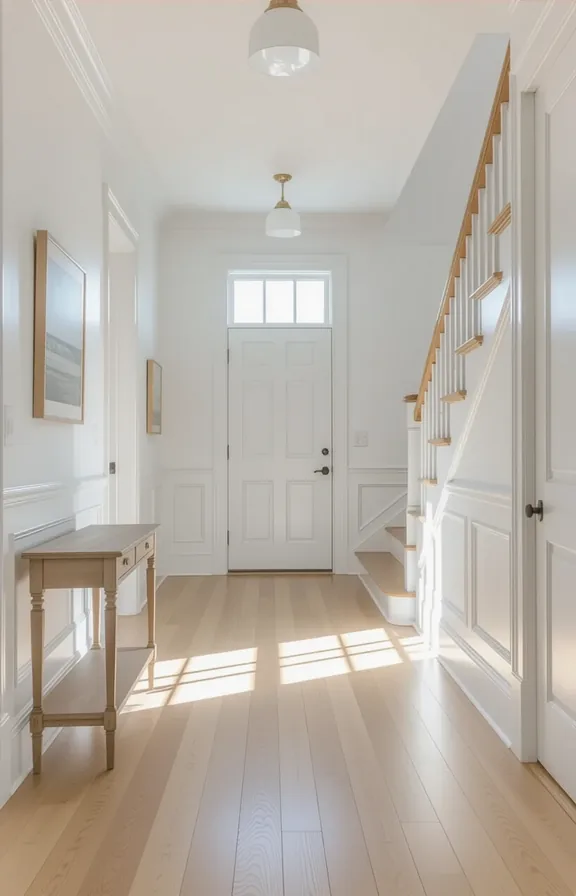
A bare floor in a bright entryway feels clinical and incomplete. The room looks staged rather than lived in, which drains all warmth from the space.
Empty floors make rooms feel larger than they are, but not in a good way. Scale disappears and the eye has nowhere to land, creating visual drift that reads as unfinished.
Layer a natural fiber runner or a 3×5 wool blend rug directly in front of the door. Add a low wooden bench or basket beside it. Most entryways need this anchor point to feel grounded and intentional.
Pro Tip: Step inside and look down. If your eyes skip over the floor entirely, something is missing there.
15. Installing Shelves Too High
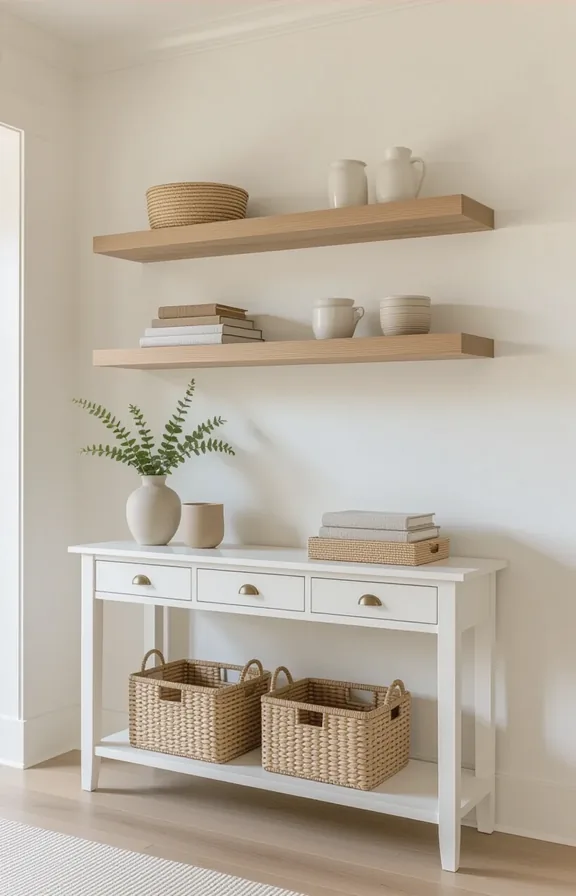
Shelves mounted near the ceiling create dead visual space below them. The eye travels upward instead of landing on your entry’s focal points. Most entryways have at least one shelf placed too high.
High shelves feel distant and disconnected from daily life in the space. They’re harder to access and make the room feel visually top-heavy. Eye level or just below reads as more intentional and intimate.
Mount shelves at 48 to 60 inches from the floor, with the bottom edge around 5 to 7 inches above a console table. This creates a connected display zone that pulls the room together visually.
Pro Tip: Stand in your entryway doorway. If you have to look up to see shelf contents, they’re too high. Adjust downward immediately.
16. Stop Overcrowding Console Table
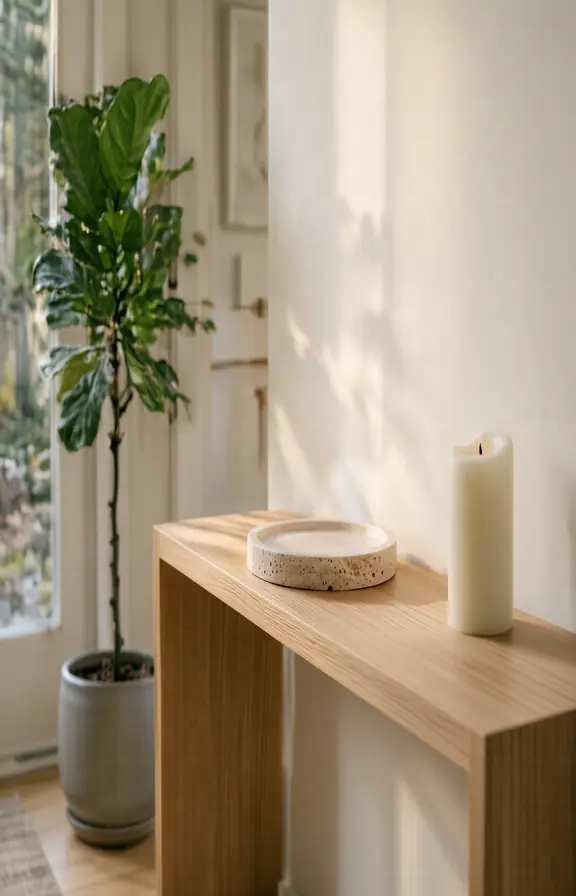
A small wooden console table holds a cluster of candles, plants, books, and decorative bowls. The surface looks busy and chaotic, making the entire entryway feel cramped. Crowded surfaces kill the airy feeling you worked to create.
Clutter pulls the eye in multiple directions, making even a bright, open space feel visually heavy. Most entryways suffer from this mistake because people want to display everything at once. One key object per 12 inches of table length works better.
Choose three items maximum: a tall potted plant on one end, a small tray for keys in the center, and a single pillar candle or sculptural object on the other side.
Leave at least half the surface clear. This spacing keeps the room feeling open and lets light move across the table uninterrupted.
Pro Tip: Photograph your entry table and count every object. If you can’t see the wood grain between items, you have too much.
17. Add Weight To Bare Walls
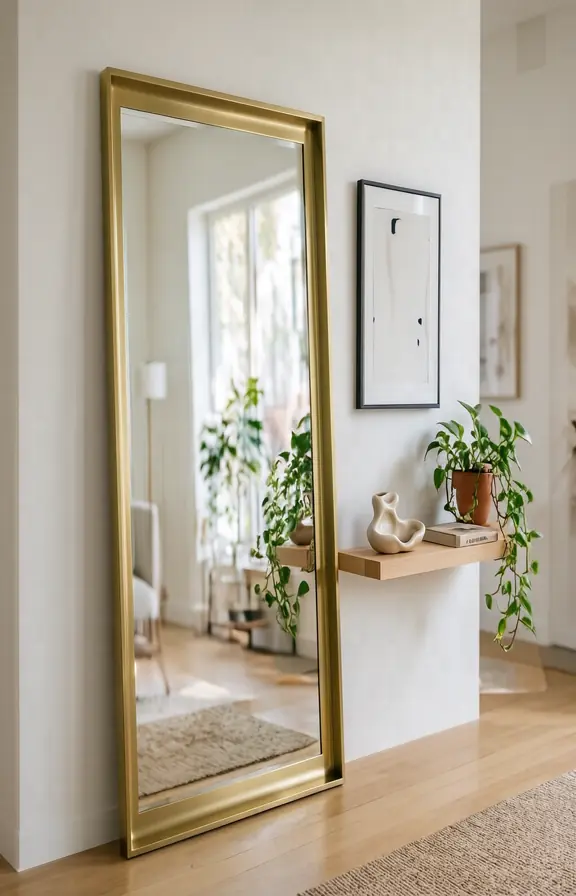
Bare walls and empty corners make bright entryways feel cold and incomplete. The space reads as unfinished rather than minimalist, leaving visitors wondering if you’ve moved in yet.
Blank walls don’t anchor a room or guide the eye. In small entryways, this creates visual emptiness that actually makes the space feel smaller.
Most first-time renters leave walls bare to avoid damage, but this backfires aesthetically.
Add a large leaning mirror in a simple gold or brass frame propped against one wall.
Hang a single piece of framed art at eye level, or display a narrow floating shelf with three objects: a small plant, a ceramic dish, and a book. These pieces add weight without clutter.
Pro Tip: Step into your entryway and look left to right. If your eyes land on nothing, you need a focal point. Add one anchoring piece first.
18. Contain Shoes To Free Space
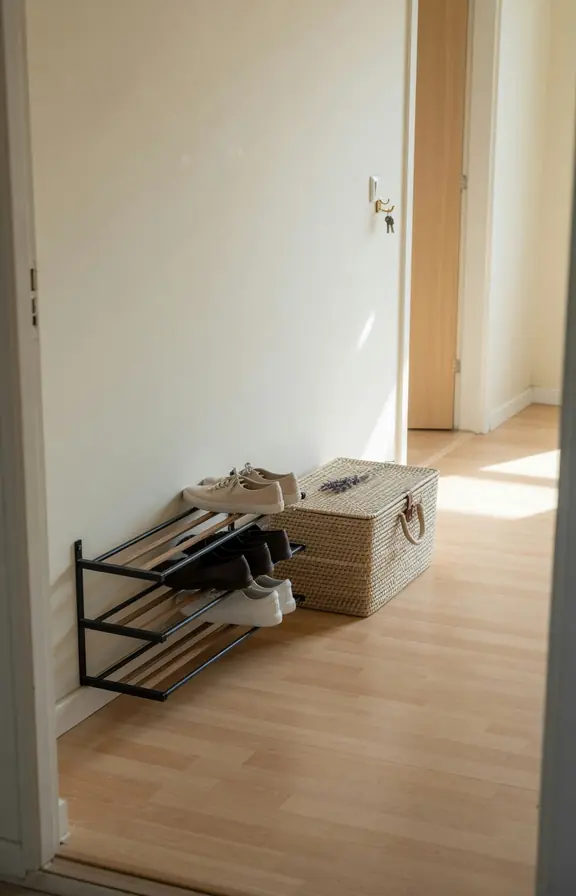
Loose shoes scattered across the floor or stacked haphazardly in the corner visually chop up an entryway. This breaks sightlines and makes a bright, open space feel cramped and disorganised.
Open-pile shoes compete for visual attention with your walls and lighting. Contained storage keeps the eye moving and lets light bounce freely. Most entryways suffer from this single issue.
Install a narrow wall-mounted shoe rack (18 inches deep, placed 12 inches above the floor) or use a low woven basket with a lid. This contains chaos without eating floor space or blocking windows.
Pro Tip: Scan your entry at eye level while standing in the doorway. If shoes break that horizontal line, they’re working against your brightness.
Start with the rug. It is the fastest, cheapest, and most impactful fix for any bright entryway.
Pair it immediately with better lighting below eye level. These two changes work together and solve most brightness problems at once.
Save this article and come back to it as your space evolves. Your entryway can be both bright and genuinely welcoming.