
25 Indoor Plant Decor Ideas for Small Apartments That Actually Work
This platform is proudly ad-free! To keep it that way and support our efforts, some posts may contain affiliate links. These links come at no extra cost to you, but they help us grow and continue providing valuable content. Thank you for your understanding and support!
Small apartments rarely have room to waste, yet empty corners and bare walls can make your space feel cold and unused. Adding plants transforms those forgotten areas into living focal points without requiring a renovation budget or professional designer.
Plants work magic in tight spaces because they add vertical interest, soften hard edges, and bring genuine life to walls that would otherwise stay plain. Most apartments benefit from a strategic approach to placement rather than randomly scattering pots around.
This list gives you complete room concepts you can actually execute. Each idea works within real apartment dimensions and uses plants as a primary design tool, not an afterthought. You will find options for every light level, every corner, and every skill level with plants.
Start scrolling to find the concept that matches your space and your style.
1. Vertical Garden Living Room Wall
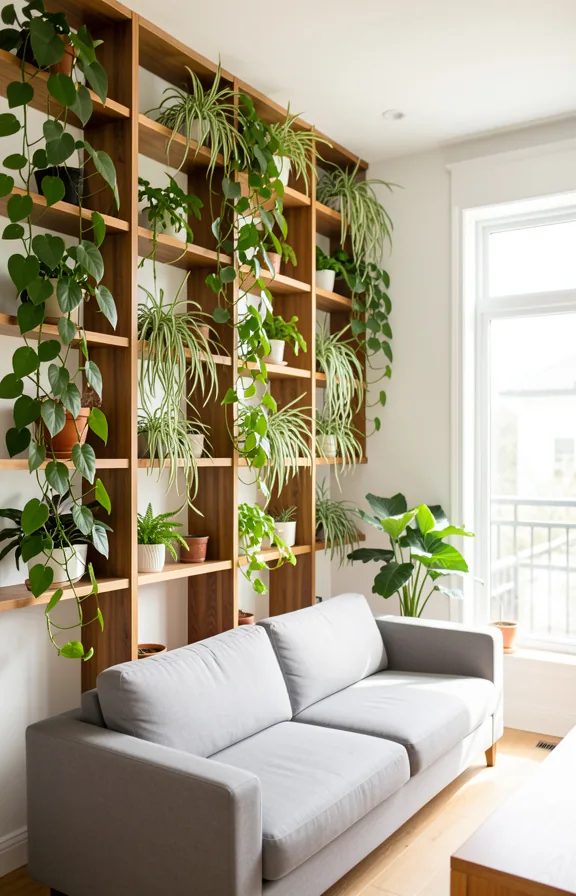
Rough terracotta pots climb a white or soft grey wall in staggered rows, creating living architecture without eating floor space.
The plants themselves, trailing pothos and string of pearls, soften the geometric grid with organic cascades of green and silver foliage.
Natural light from a nearby window hits the leaves at different heights, casting moving shadows that shift throughout the day.
The effect feels botanical and intentional, not cluttered, because each pot sits in deliberate spacing against bare wall.
Your living room gains depth and a focal point without the visual weight of furniture or the footprint of floor planters.
Pro Tip: Mount your wall planters on wood strips or a thin grid frame rather than individual anchors for cleaner lines and easier rearrangement.
2. Trailing Pothos Bedroom Canopy
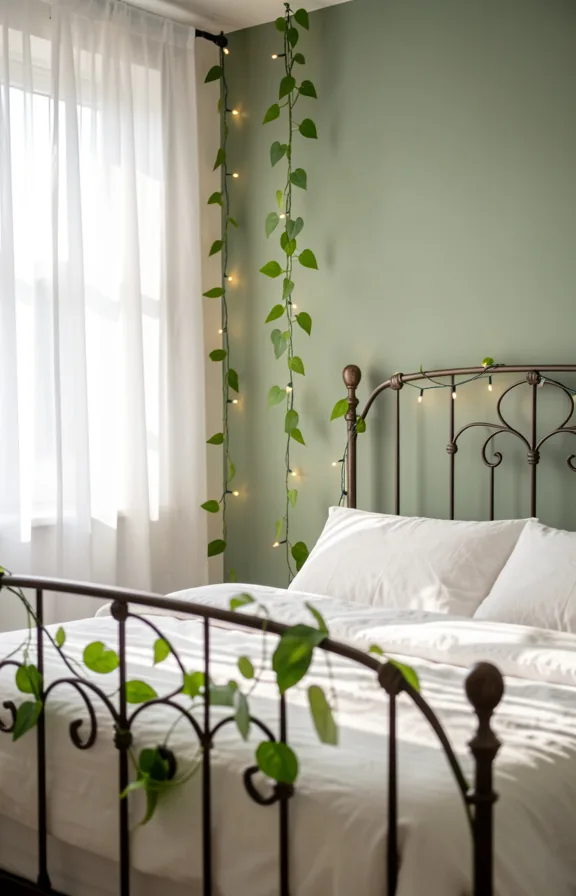
Soft green vines cascade down from your bed frame, creating a natural canopy that frames your sleeping space without taking up floor room.
The trailing pothos follows the metal lines of a wrought iron headboard or frame, adding movement and life to what’s often the largest furniture piece in a small bedroom.
Morning light filters through the leaves, casting dappled shadows on white or cream bedding below, making the space feel both intimate and open.
The pale green foliage pairs well with warm wood nightstands, linen curtains, and soft neutral walls that let the plant become the room’s focal point.
Pro Tip: Train pothos vines along fishing line or thin wire attached to your frame for a floating, organic effect that looks intentional without heavy hardware.
3. Minimalist Plant Shelf Corner
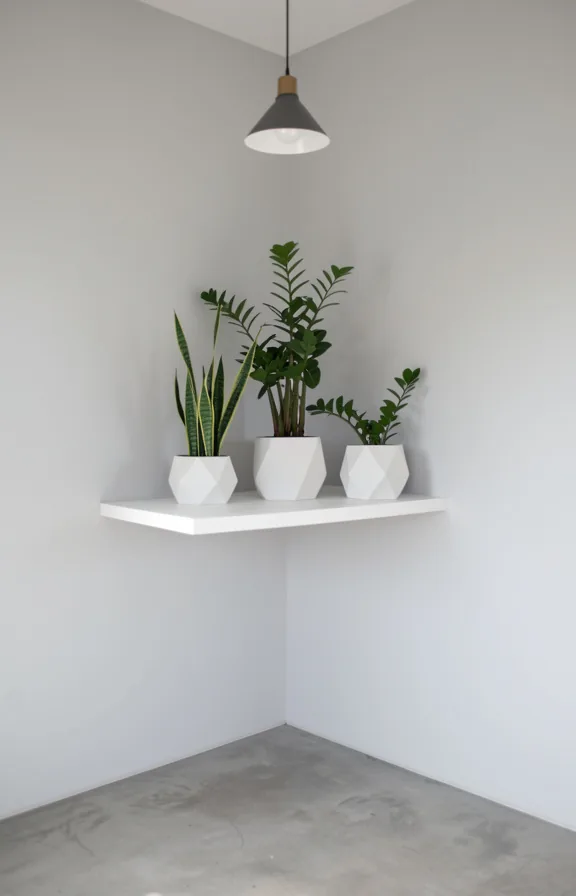
Rough terracotta against clean white walls creates a quiet focal point in your corner space. A single floating shelf in matte white or natural wood holds three to five plants in geometric ceramic pots.
Soft, filtered light from a nearby window makes the leaves glow without casting harsh shadows. The monochromatic palette of whites, grays, and earth tones keeps the eye calm and the room feeling bigger.
Negative space between each plant matters as much as the plants themselves. This restraint prevents visual clutter and lets your corner breathe instead of crowd.
The plants you choose should have similar heights or a clear size progression to avoid looking accidental. Trailing varieties like pothos or string of pearls work well on higher shelves.
Pro Tip: Float your shelf at eye level when seated, not standing. This creates an intimate moment you’ll actually notice daily.
4. Monstera Feature Wall Statement
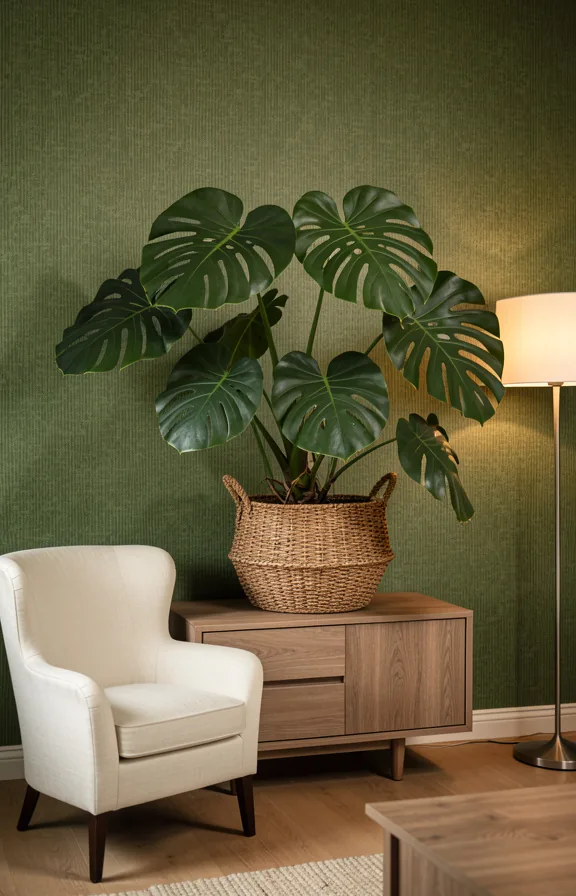
A mature Monstera dominates one wall, its split leaves casting moving shadows across cream or soft white paint. The plant sits in a natural woven basket that grounds the look without competing for attention.
Pale wood furniture, low-pile natural fiber rugs, and soft linen seating create calm around the bold green focal point. Light enters from one side, hitting the leaves and making them glow slightly.
This setup works in small rooms because one large plant occupies visual space better than many small ones crowded together. Your eye lands once and rests there, making the room feel intentional rather than cluttered.
Pro Tip: Position your Monstera near a bright, indirect window on one side of the room. This creates natural backlighting that makes leaves appear alive and draws focus without needing extra lighting.
5. Hanging Macramé Kitchen Garden
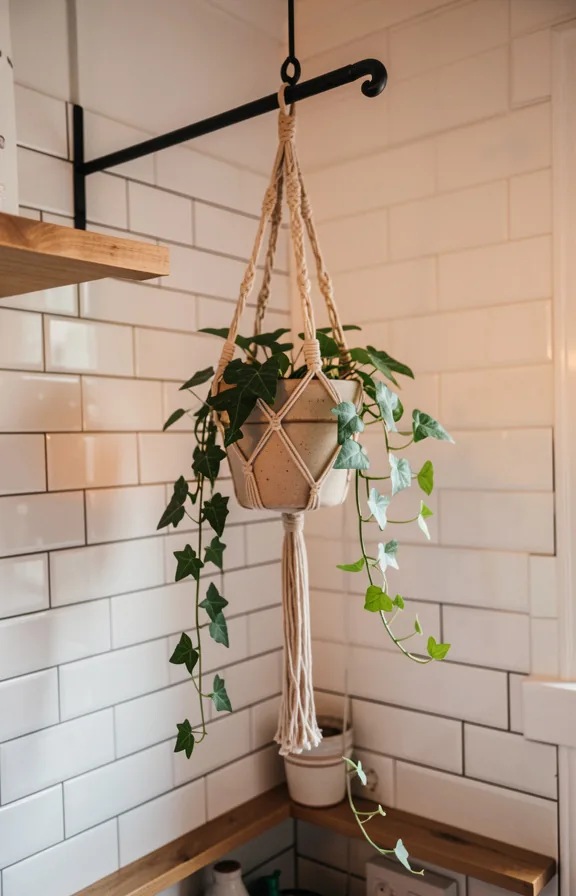
Cream-colored macramé hangers suspend trailing herbs and small leafy plants above your kitchen counter. The natural cotton knots catch soft, diffused morning light from a nearby window.
This setup uses vertical space without eating into your limited counter or shelf room. Three or four hanging plants create visual interest without feeling crowded.
The muted beige tones of the macramé blend with white subway tiles and warm wood cabinetry. Terracotta pots peek through the knotted strands, adding earthy warmth.
You gain functional fresh herbs within arm’s reach while the garden feeling stays lightweight and airy. The arrangement looks intentional but not fussy.
Pro Tip: Anchor your macramé hangers to a sturdy iron or wooden rod fixed between two cabinet frames, not directly into drywall, for a clean look that holds real weight.
6. Low-Light Bathroom Oasis
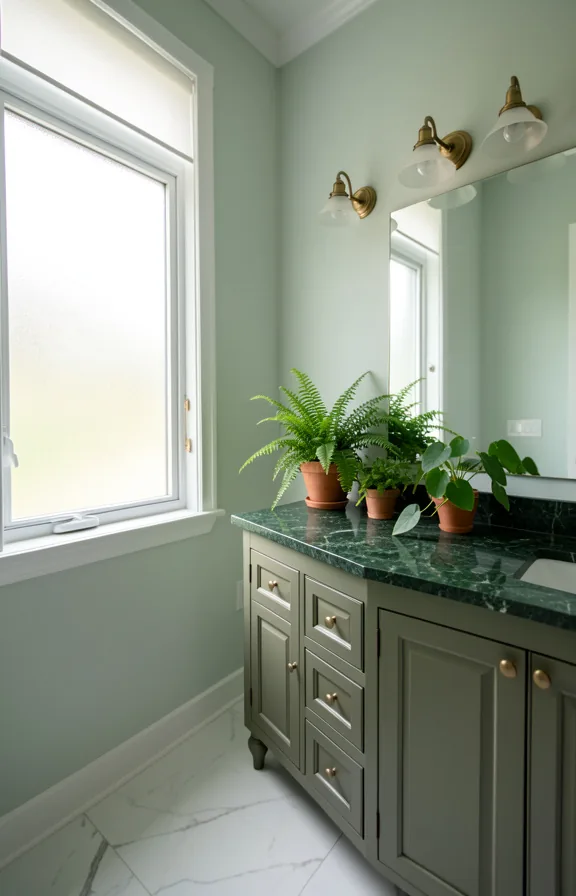
Soft, diffused light filters through a frosted window onto pale tile and matte black fixtures. Your bathroom becomes a pocket garden, humid and enclosed.
Pothos trails from floating shelves above the toilet, while low ferns cluster on the vanity edge. The humidity here actually helps shade-loving plants thrive better than anywhere else in your apartment.
Warm off-white walls ground the space, letting dark green foliage become the visual focus. The combination of cool tile and living plant texture creates a spa-like calm.
Pro Tip: Position plants on shelves or stands rather than directly on surfaces to maximize air circulation and prevent water damage in this moisture-heavy room.
7. Fiddle Leaf Fig Entryway Anchor
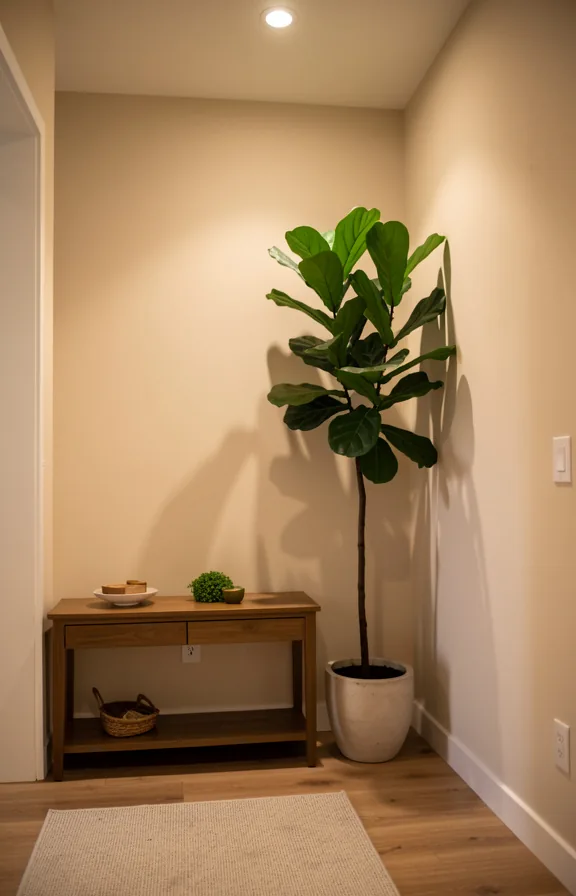
A single tall Fiddle Leaf Fig beside your entryway console creates instant architectural presence. The deep green leaves catch light from your front window and draw the eye upward.
This works well in small apartments because height tricks the eye into perceiving more space. The plant’s vertical lines balance a narrow hallway and anchor the transition between outside and inside.
Pair it with a low wooden console in natural oak or walnut, then add a ceramic dish for keys and a brass mirror above. Pale linen or wool runner underneath grounds the whole arrangement.
The mood shifts instantly: your entryway feels intentional and lived-in, not cramped.
Pro Tip: Position your fig where it receives bright, indirect light from a window to maintain its full leaf structure and prevent leaning.
8. Tiered Plant Stand Dining Nook
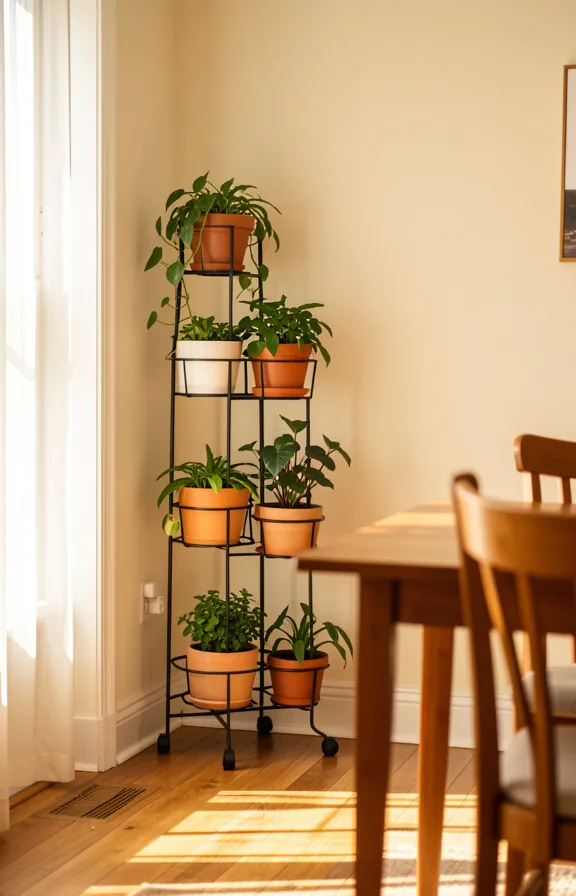
Black metal framework catches light beside your dining table, holding six small plants at staggered heights.
Terracotta pots in natural clay warm against the matte dark finish of the stand itself.
Soft window light filters through trailing pothos and snake plant leaves, casting gentle shadows across your meal table.
The stand occupies a corner without eating into floor space, turning unused vertical real estate into a living green wall.
Your dining area gains texture, color, and a sense of growth without requiring furniture rearrangement.
Pro Tip: Choose a metal stand with powder-coated matte finish rather than glossy for a grounded, intentional look that won’t compete with your plants.
9. Windowsill Succulent Collection
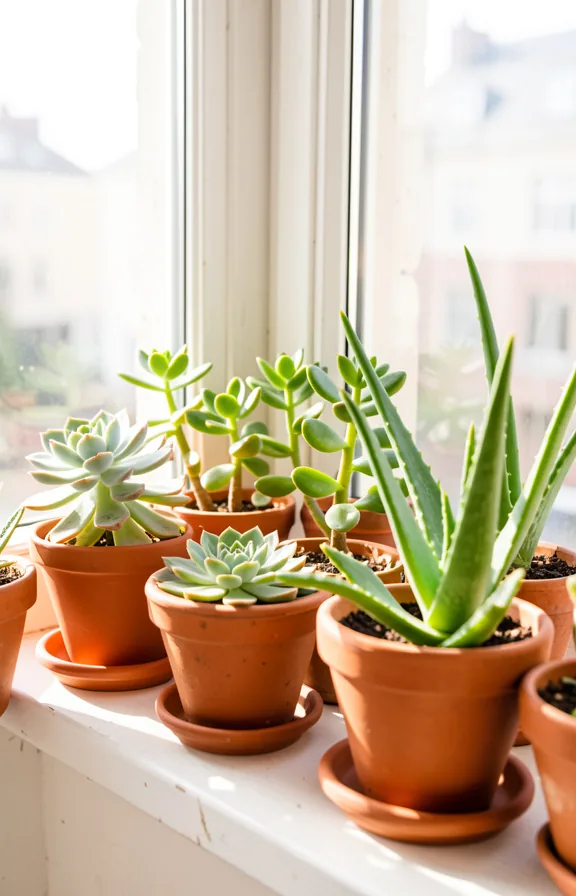
Rough terracotta and glazed ceramic pots line your windowsill in a tight, purposeful row. Each pot holds a different succulent, their fleshy leaves catching afternoon light.
The palette stays neutral: warm clay tones, muted greens, and soft whites. Natural light streams through the glass behind them, casting soft shadows on the wall.
This arrangement works in small apartments because it uses vertical space without eating floor area. Your eye moves horizontally across the window, making the sill feel like a complete, intentional display.
The combination of different pot heights and textures adds visual interest without clutter. Succulents need minimal water, so maintenance stays simple even in tight quarters.
Pro Tip: Group pots in odd numbers and vary their heights slightly to create depth and keep the arrangement from looking uniform or staged.
10. Climbing Ivy Bedroom Headboard
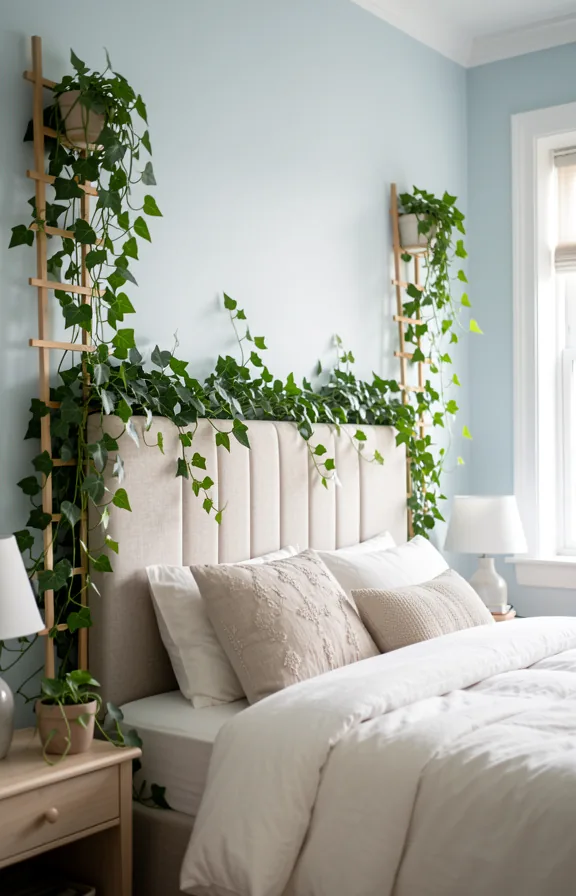
Soft natural light filters across a linen upholstered headboard framed by trailing pothos and climbing ivy.
The plants create a living border that softens the headboard’s hard edges and draws the eye upward.
This vertical garden fills wall space without consuming floor area, perfect for compact bedrooms.
Muted greens against cream or pale grey linen create a calm, grounding atmosphere that feels both fresh and restful.
Small ceramic pots attached to the headboard frame hold each cutting, keeping the look structured rather than wild.
Pro Tip: Train vines along a thin wooden trellis mounted directly behind the headboard for invisible support structure.
11. Open Shelving Herb Kitchen
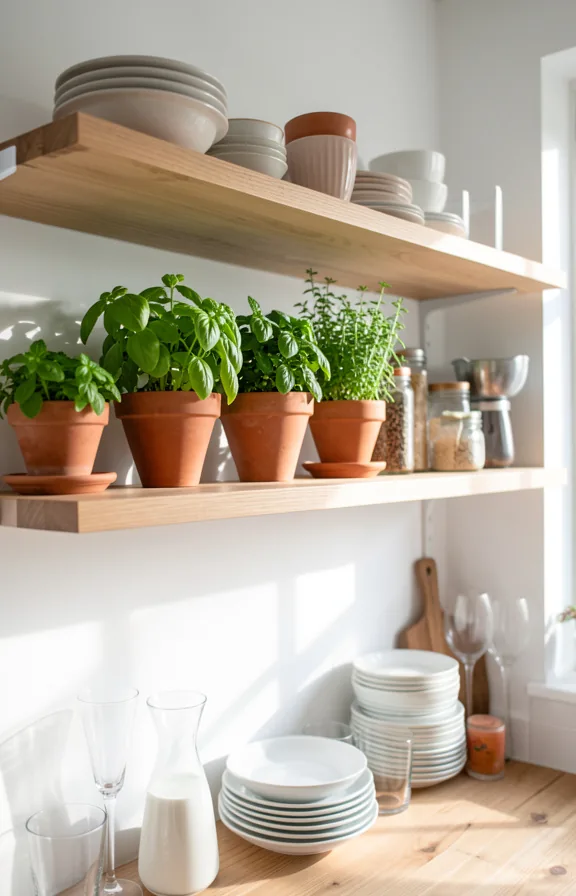
Rough terracotta and ceramic pots line shallow white or light wood shelves above your kitchen counter or sink.
Green basil, oregano, and thyme create a soft, layered backdrop against pale walls and bright window light.
This setup anchors your kitchen with both beauty and function without eating into floor or cabinet space.
The color palette stays warm and neutral: cream walls, natural wood tones, and earth-toned pottery that lets the herbs become the focal point.
Indirect window light from above makes the leaves glow and keeps plants within reach for cooking.
Pro Tip: Mount shelves at consistent heights using a level and wall studs for stability. Shelves that sit too high create dark shadows below and feel disconnected from the work surface.
12. Plant Ladder Living Room Grouping
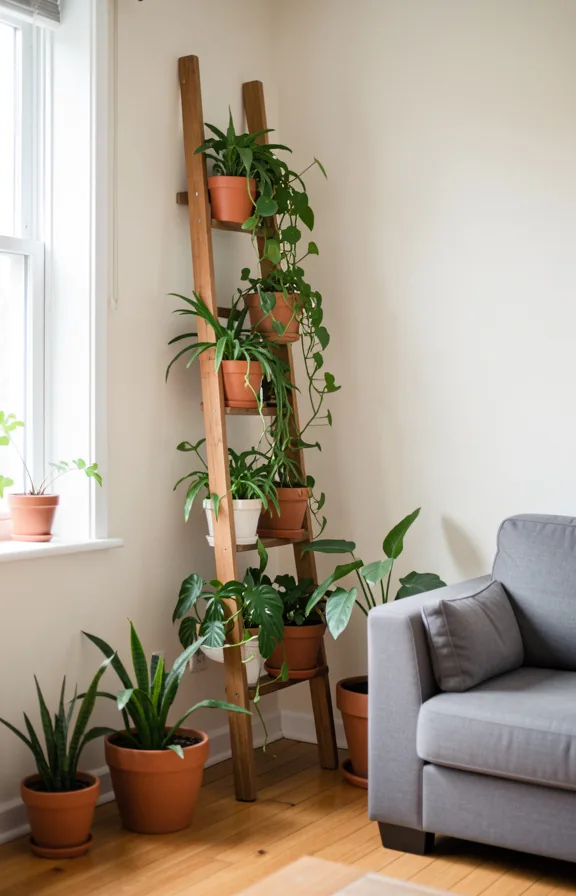
A wooden ladder leaning against a corner wall becomes a vertical garden for your living room. Eight to ten potted plants in varying heights sit on each rung, creating depth without taking floor space.
The natural wood ladder adds warmth against soft, neutral walls. Terracotta, pale ceramic, and brass-rimmed pots create a cohesive, earthy palette that feels intentional.
Soft, filtered light from a nearby window grazes the plant leaves and shadows on the wall. This gentle illumination makes the corner feel alive, not dark or cluttered.
The grouping anchors a corner that might otherwise feel forgotten. It draws your eye upward and turns a blank space into a focal point without overwhelming a small room.
Pro Tip: Lean the ladder at a slight angle rather than standing it upright. This creates visual softness and takes up less visual weight in tight corners.
13. Pedestal Plant Hallway Display
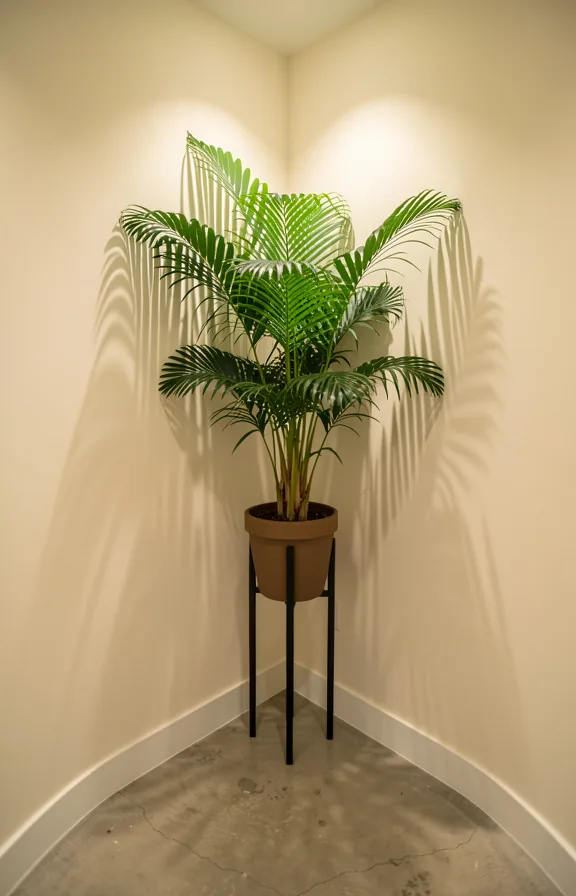
A single pedestal plant stand in your hallway becomes a quiet focal point that breaks up blank wall space. Pale wood or matte black metal pedestals work equally well in tight corridors.
Pair the stand with a trailing or upright plant like a monstera or snake plant. The height draws the eye upward, making narrow hallways feel less cramped.
Soft, indirect light from a nearby window or a small sconce above keeps the plant healthy and casts gentle shadows on the wall. This creates depth without clutter.
The pedestal itself becomes part of the design, not hidden behind other pieces. Your hallway stops feeling like a transition space and starts feeling intentional.
Pro Tip: Choose a pedestal with a slightly smaller diameter than your pot. This creates visual balance and prevents the stand from disappearing behind the plant.
14. Floating Shelf Plant Library
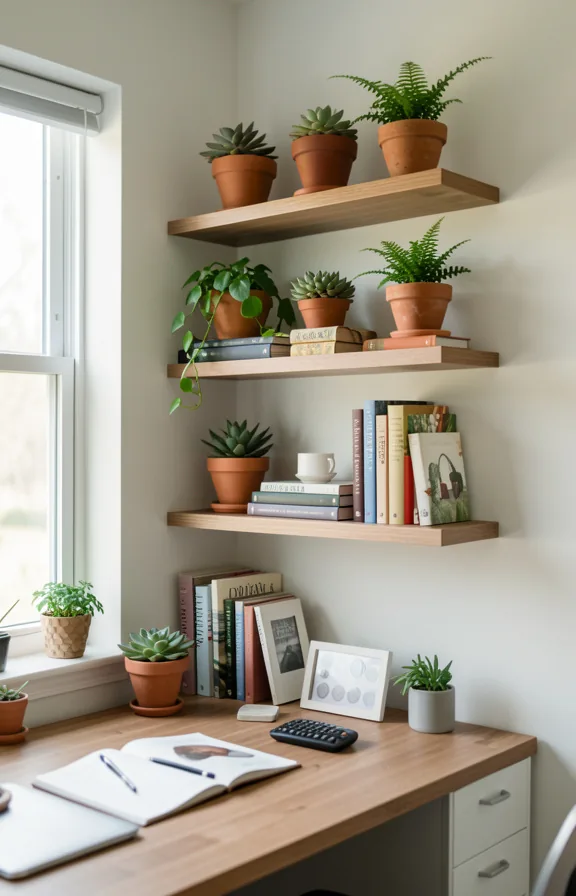
Staggered floating shelves in natural wood or matte black hold small potted plants at different heights across your wall.
This arrangement draws the eye upward, making your ceiling feel higher without taking up floor space.
Pair terracotta and ceramic pots with soft, diffused light from a nearby window or pendant lamp above.
The varying shelf heights create rhythm and prevent your collection from feeling flat or static.
Most small rooms benefit from vertical plant displays because they maximize greenery without shrinking the room visually.
Pro Tip: Install shelves at eye level and above, leaving the wall below clear to keep your space feeling open and breathable.
15. Cascading Fern Bathroom Corner
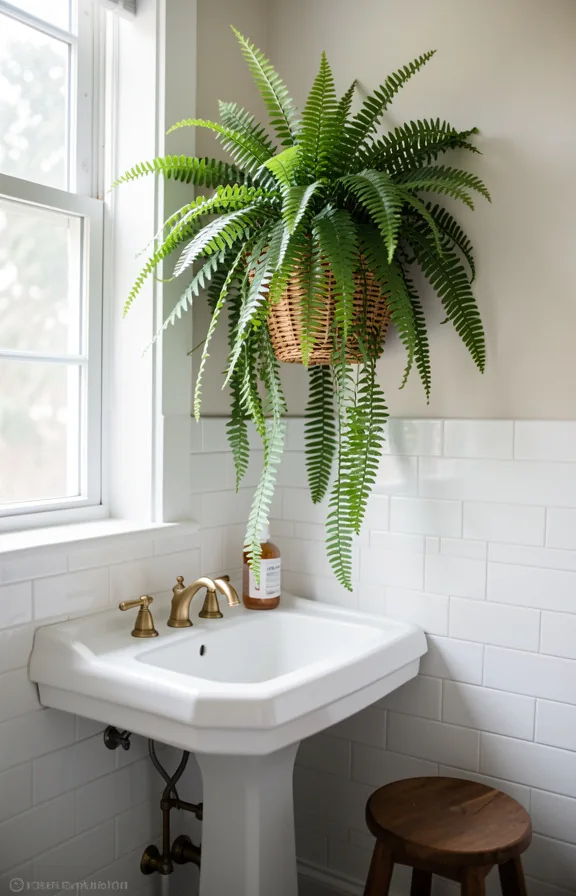
Soft, trailing fronds spill downward from a woven wall-mounted planter in natural rattan or macramé. The fern catches diffused light from a small window or frosted glass fixture above.
Your bathroom corner becomes a living focal point without taking up floor or shelf space. The cascading texture breaks up plain walls and adds organic movement to a compact area.
Pair the planter with soft neutral tiles, pale wood trim, or white subway walls to let the green stand out. The moisture-rich bathroom air keeps ferns thriving better than most rooms in your home.
Pro Tip: Mount the planter at least one foot above sink or vanity to keep water splash away and allow full cascading effect.
16. Snake Plant Tall Entryway
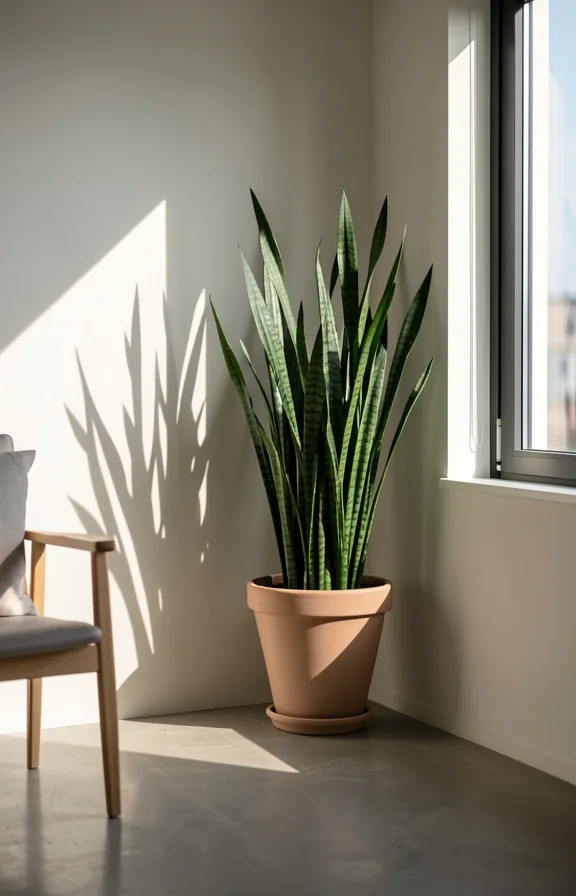
A tall snake plant in a matte ceramic pot commands your entryway without consuming floor space. The narrow vertical form draws the eye upward, making your ceiling feel higher than it is.
Pale terracotta or cream concrete finishes on the planter ground the green against white or soft gray walls. Morning light hits the waxy leaves, creating subtle shadow play on the wall behind it.
This setup works because snake plants tolerate low light and irregular watering. You’ll actually maintain it, unlike fussier plants that demand constant attention in tight quarters.
Pro Tip: Position your tall plant slightly off-center near the entry door to define your space without blocking sightlines through the apartment.
17. Potted Bamboo Room Divider
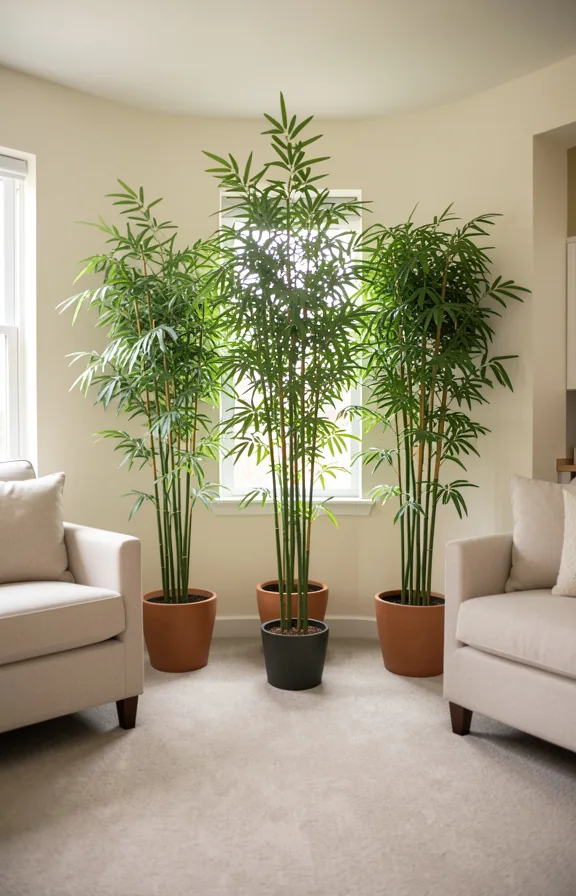
Three tall potted bamboo plants stand in a gentle row, their natural cane stalks catching soft afternoon light. The green fronds create a living wall that separates your sleeping area from your main living space without blocking sightlines.
This setup works in apartments because it divides the room visually while keeping the space open and breathing. The neutral tan of the bamboo trunks pairs well with cream walls, light wood floors, or soft gray upholstery.
The filtered light through the fronds casts gentle shadows on the floor below, creating depth and movement. Your room feels larger because you can see through the plants, unlike a solid wall or traditional screen.
Most small apartments benefit from this approach because it costs less than building a permanent divider. The plants also improve air quality while doing the design work.
Pro Tip: Space your pots evenly and choose containers in matching ceramic or terracotta to feel intentional, not accidental.
18. Corner Plant Cluster Living Space
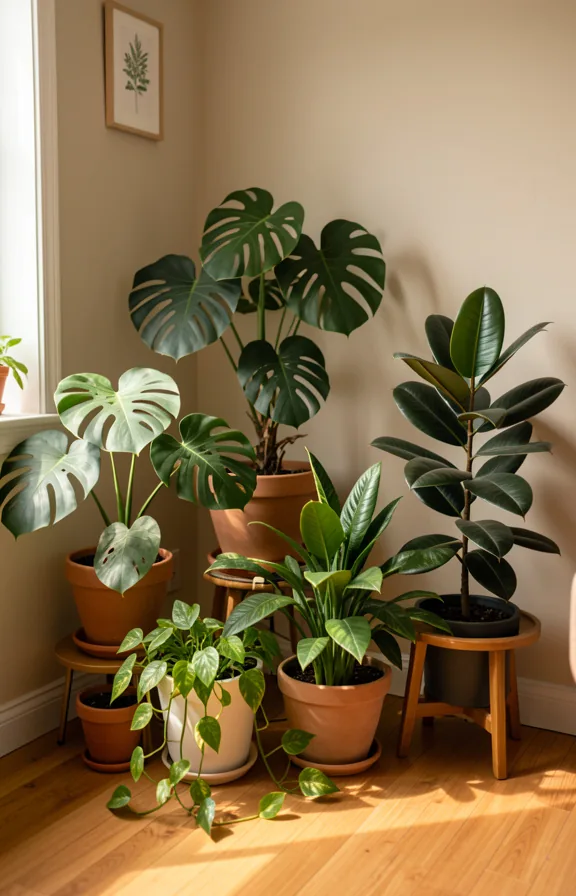
Rough terracotta and ceramic pots in cream, sage, and dusty rose tones fill a corner from floor to waist height.
Your eye travels upward through leafy stems and trailing vines without clutter spreading across the room.
Soft natural light from a nearby window hits the foliage, casting dappled shadows on the wall behind.
The air feels quieter here, more intentional, like a small breathing space within your apartment.
Grays and whites on surrounding walls let the green palette anchor the room without competing.
Pro Tip: Vary pot heights and plant textures to create visual rhythm and prevent a flat, one-note arrangement.
19. Wall-Mounted Planter Bedroom Accent
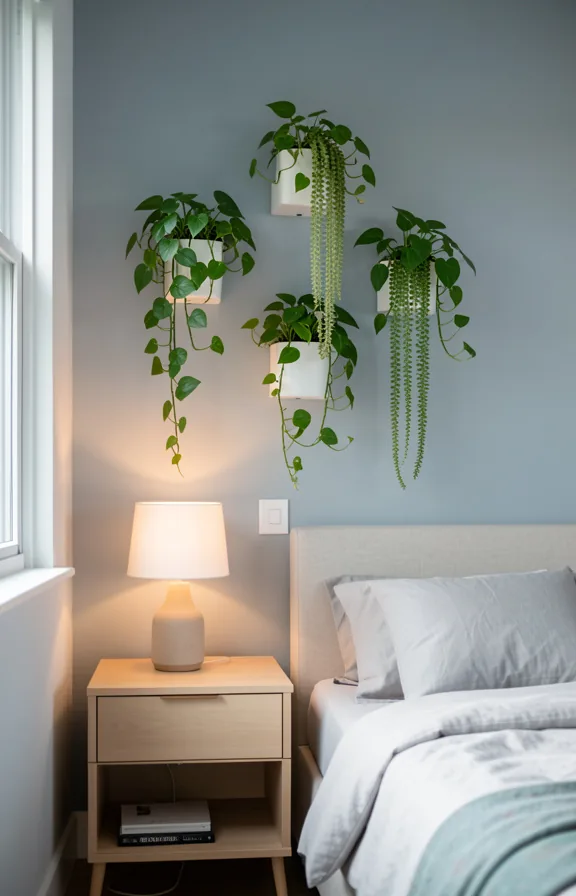
Rough terracotta against a white wall catches soft morning light filtering through linen curtains. Three staggered planters climb the wall above your nightstand, each holding trailing vines or upright foliage in varying heights.
This arrangement pulls your eye upward, making the room feel taller than it is. The soft greens and warm clay tones create a calm, grounded feeling without eating into floor or furniture space.
Matte black hardware or simple wire brackets keep the look minimal and contemporary. The plants cast gentle shadows on the wall as light shifts throughout the day.
Pro Tip: Mount planters at different heights using the rule of thirds, spacing them 8-12 inches apart to avoid a grid-like appearance.
20. Greenhouse Window Sill Garden
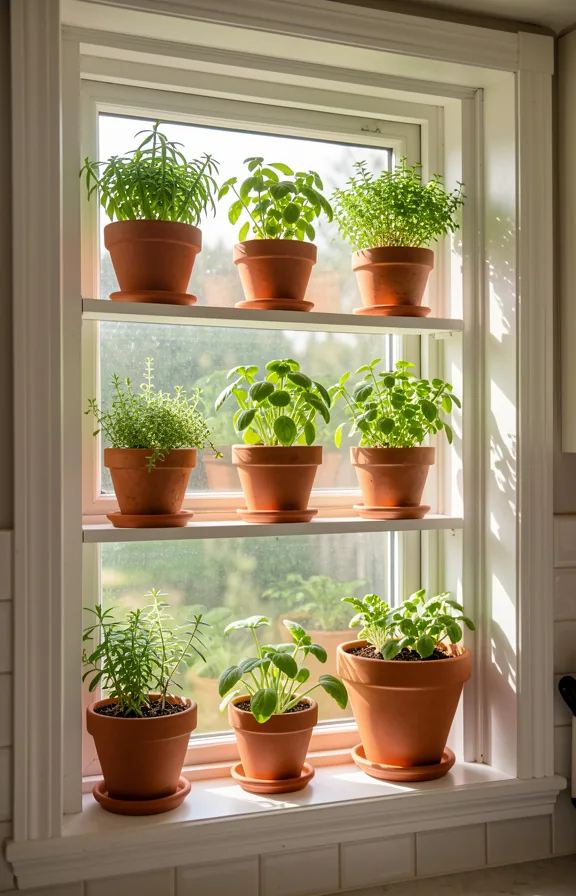
Rows of small terracotta pots line your brightest window, catching natural light throughout the day. Each pot holds herbs, succulents, or trailing plants that spill softly over the edges.
This arrangement works because it uses vertical space without eating into floor or wall real estate. Your window becomes both a functional garden and a living focal point.
Natural wood shelving or simple metal brackets hold the pots at varying heights. This layering catches light differently on each level and adds visual depth to a small space.
Soft morning light passes through the leaves, casting leaf shadows onto your walls and furniture. The effect is quiet and calming, not cluttered.
Pro Tip: Stagger your pot heights and use consistent material (all terracotta or all ceramic) to keep the look cohesive rather than scattered.
21. Pothos Curtain Rod Drape
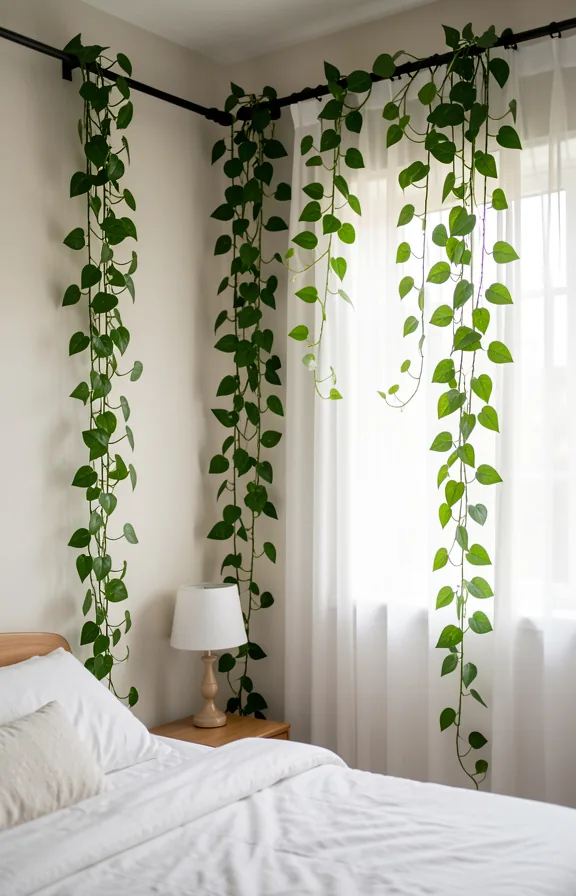
Trailing pothos vines wrapped around a ceiling-mounted curtain rod create a soft green canopy above your window. The pale variegated leaves catch morning light and soften the hard line of the frame itself.
This setup works in tight spaces because it uses vertical real estate you already have. The trailing stems hang at eye level without taking up floor or shelf room.
Pothos tolerates low to moderate indirect light and forgives irregular watering. Most apartment windows provide enough brightness to keep the plant healthy and filling in nicely.
The effect is quieter than a statement plant on a stand. It reads as intentional greenery rather than a decorative object taking up square footage.
Pro Tip: Mount your rod closer to the ceiling than standard curtain height so vines have room to cascade without blocking your view or natural light.
22. Compact Shelf Plant Office Corner
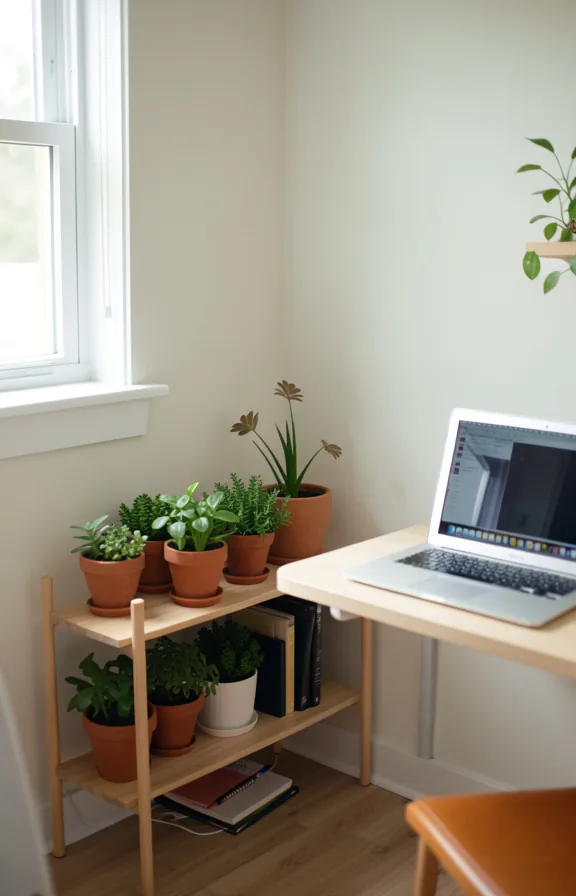
Low and wide across the shelf, six small potted plants sit at varying heights against a pale wall.
Natural wood in a honey or walnut finish anchors the corner, paired with matte ceramic pots in cream and soft grey tones.
Afternoon light filters through a window, casting gentle shadows on the plants and the desk surface below.
The plants catch your eye before the desk itself, turning a working corner into a living, breathing focal point.
Pro Tip: Use a natural wood shelf with open spacing between plants, not a full backing board, so air circulates and light reaches every pot.
23. Philodendron Climbing Wall Feature
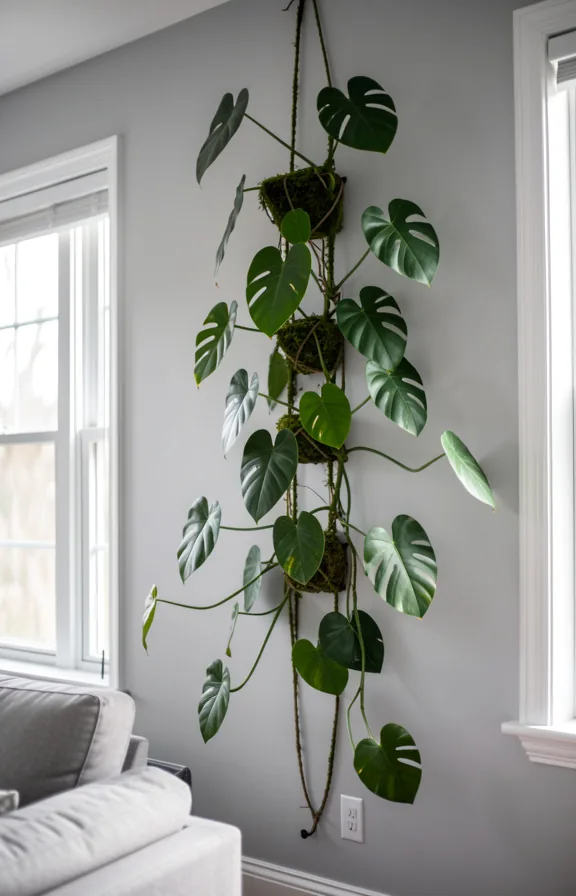
A single accent wall becomes living architecture when a philodendron trails upward along a thin wooden trellis or moss pole.
Soft, diffused afternoon light hits the heart-shaped leaves, casting dappled shadows across pale plaster or whitewashed brick.
The pale green foliage creates breathing room in tight layouts, drawing the eye vertically rather than horizontally.
Matte black or natural wood trim around the base grounds the feature without competing for attention.
This approach works because climbing plants solve two problems at once: they add greenery without taking up floor or shelf space.
Pro Tip: Attach your trellis directly to the wall using flush-mounted brackets so the structure disappears behind the growing vines.
24. Plant-Filled Bookcase Styling
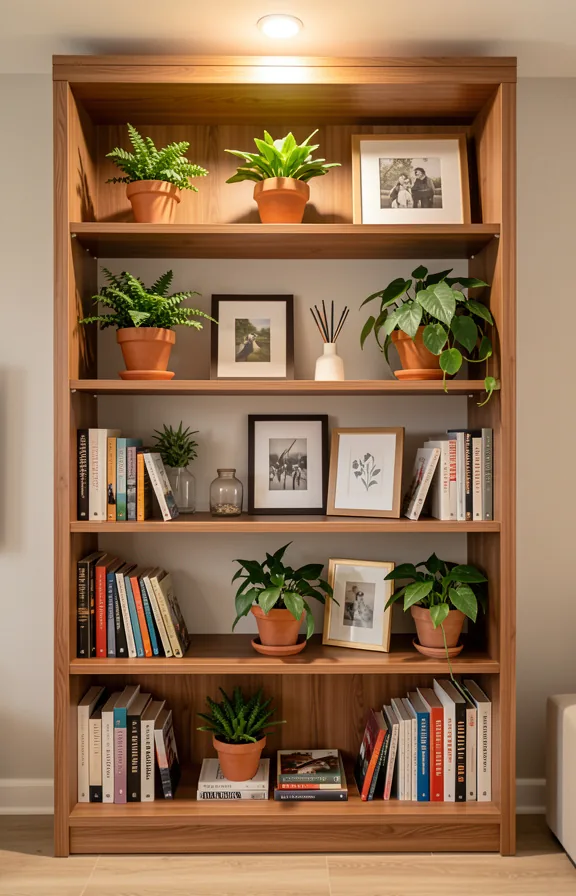
Cream-coloured wooden shelving holds a rhythm of books and trailing pothos vines. Terracotta pots alternate with paperbacks, breaking up the visual weight of solid rows.
Your eye moves across layers: a small snake plant in matte ceramic at eye level, clusters of books behind it, then a trailing string-of-pearls on the shelf above. The spacing matters as much as the plants themselves.
Soft natural light from a nearby window catches the glossy leaves without creating harsh shadows on the wall. The overall effect is lived-in and calm, not overcrowded.
This approach saves floor space while adding greenery and texture to vertical surfaces. It works especially well in one-bedroom apartments where every wall must earn its purpose.
Pro Tip: Alternate plant heights and pot finishes to prevent a monotonous lineup that reads as clutter rather than design.
25. Rolling Plant Cart Studio Space
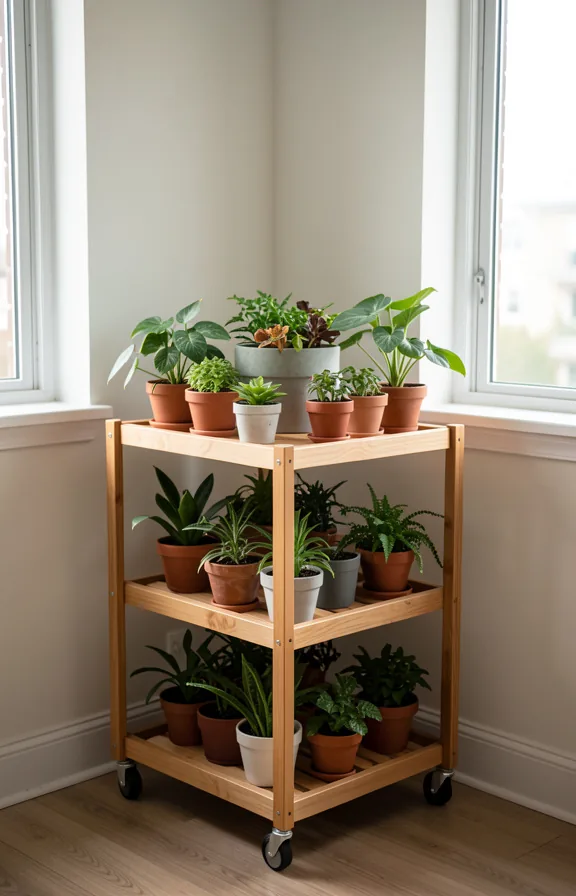
Natural wood and terracotta create a quiet corner garden in your studio without eating floor space.
A three-tier rolling cart holds multiple small plants at varying heights, turning one compact footprint into vertical greenery.
Plants in cream ceramic and terracotta pots echo warm wood tones, creating visual harmony in tight layouts.
Wheels let you move the entire garden toward natural light or rotate it away when you need the corner back.
Soft morning light filtering through leaves casts gentle shadows on the wall behind, adding depth to a minimal room.
Pro Tip: Group plants by watering needs on each tier so you water systematically and avoid overwatering the lower plants.
Start with the vertical garden wall concept if your apartment has one bare corner that catches decent light. It requires no structural work, costs less than most furniture pieces, and delivers dramatic results within weeks as plants grow.
Save this article and return to it when you are ready to try your next plant project. Your small space deserves to feel alive.