

25 Low-Maintenance Plants for Renter Apartments
This platform is proudly ad-free! To keep it that way and support our efforts, some posts may contain affiliate links. These links come at no extra cost to you, but they help us grow and continue providing valuable content. Thank you for your understanding and support!
Renting means your apartment is temporary, but that doesn’t mean it has to feel empty. Most renters avoid plants because they worry about commitment, maintenance, or losing their security deposit to a brown, crispy disaster.
The truth is simpler than you think. Certain plants thrive on neglect, tolerate low light, and actually improve your space without demanding constant attention.
This list gives you genuinely low-maintenance plants that work in real apartments. Each one survives missed waterings, adapts to apartment lighting, and looks intentional in your space without special equipment or expertise.
Pick one that matches your light situation and get started today.
1. Bright Corner Snake Plant Accent
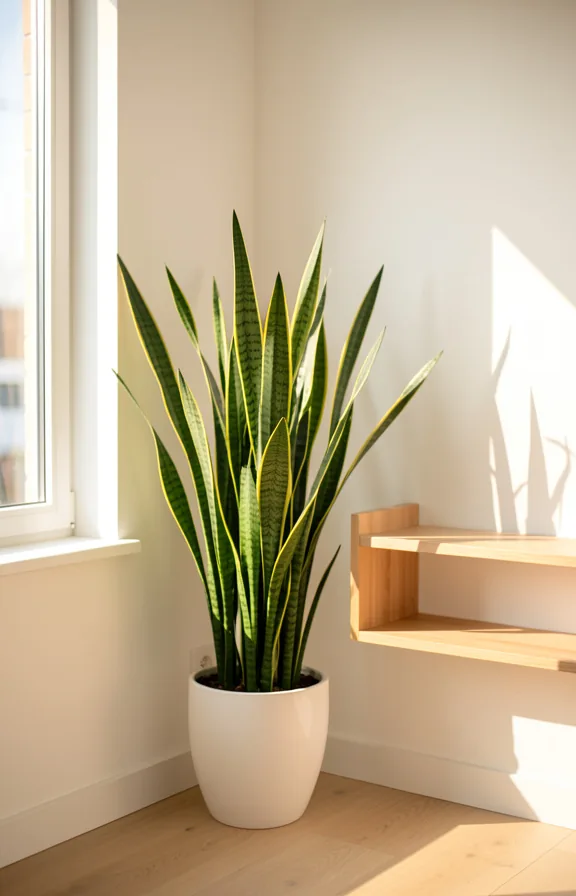
Soft natural light fills a corner where a tall snake plant stands in a simple white ceramic pot. The plant’s deep green leaves catch the daylight, creating quiet vertical interest in an otherwise sparse space.
This corner becomes a focal point without demanding anything from you. The snake plant thrives on neglect, watering once every two to three weeks.
Pale walls around the plant make its architectural shape feel intentional. No fussy styling needed, just a clean pot and good light.
Your apartment gains a living element that actually survives rental life. Most people find tall plants anchor corners that feel empty or awkward.
Pro Tip: Position tall plants in corners where natural light comes from windows, not from room lamps. Corner placement makes the light work harder and looks more intentional than centering it on a side table.
2. Trailing Pothos Bedroom Wall
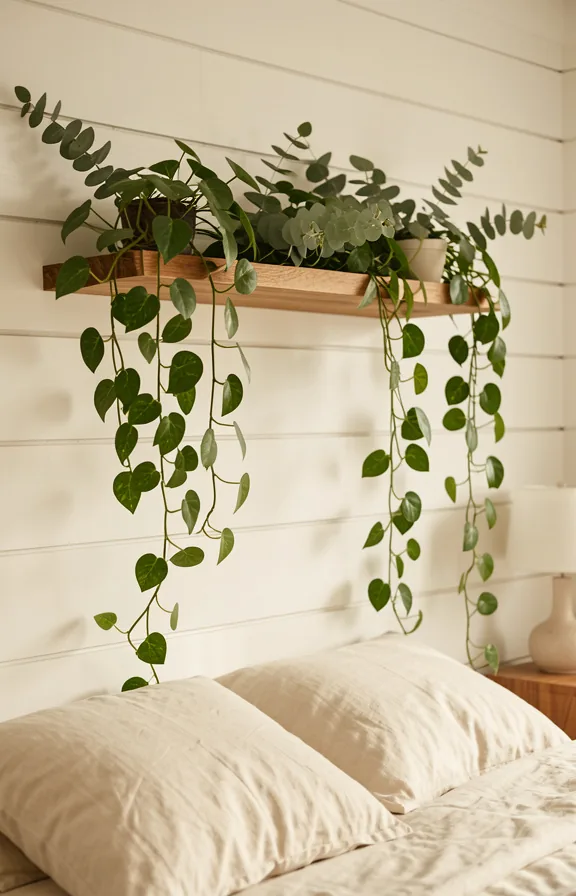
Soft green vines spill down from a natural wood floating shelf, catching filtered morning light. The tendrils create a living texture against your neutral wall, breaking up blank rental space without requiring any drilling or permanent changes.
Pothos grows fast and forgiving, thriving in low light or bright corners alike. Your bedroom feels calmer with that vertical greenery framing the wall behind your bed.
Most people find trailing plants work best on shelves positioned at eye level or slightly higher. This placement lets the vines cascade naturally downward, drawing the eye upward and making your ceiling feel taller.
Water only when the soil feels dry to your touch, roughly every two weeks. The plant handles irregular watering well, ideal for renters with unpredictable schedules.
Pro Tip: Use a lightweight floating shelf in warm oak or whitewashed wood to anchor the space without heavy hardware or wall damage.
3. Minimalist Fiddle Leaf Corner
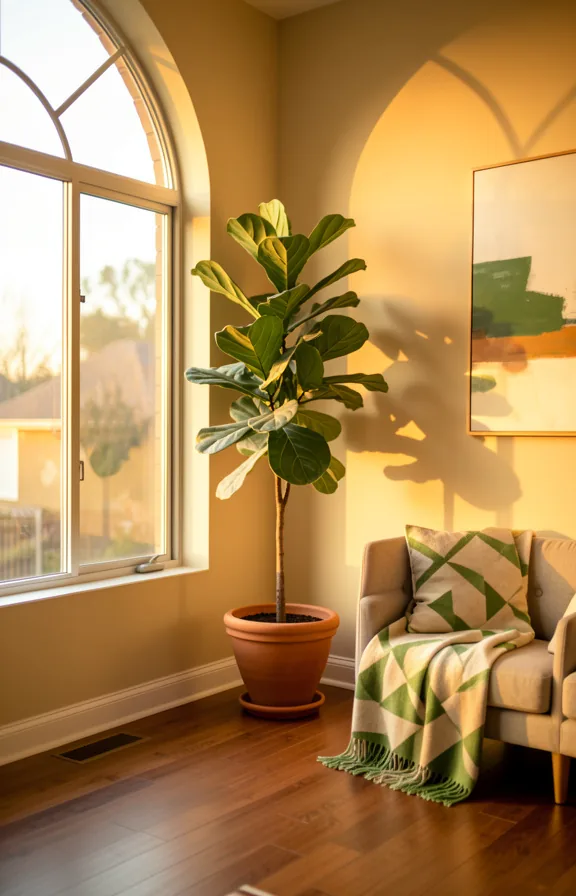
Rough terracotta against a white wall creates instant visual calm in any corner.
A single fiddle leaf fig becomes architecture in a sparse room, drawing the eye upward without clutter.
Pale wood flooring and soft, diffused natural light from a nearby window complete the effect.
The plant’s broad green leaves anchor the space while keeping the aesthetic open and breathable.
Your corner feels intentional, not empty, because one statement plant does the work of ten accessories.
Pro Tip: Position your plant where indirect light hits it throughout the day, not in a dim corner pretending to be minimal.
4. Sunny Windowsill Succulent Display
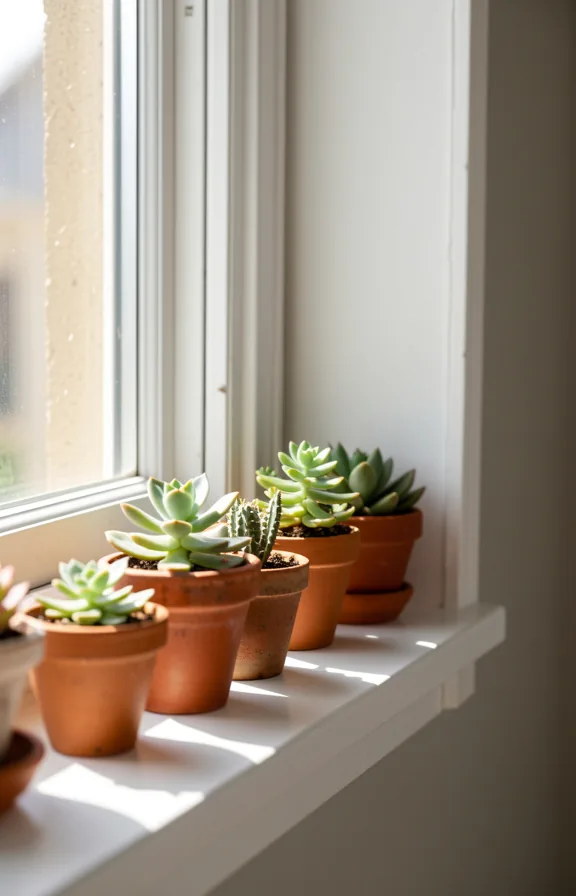
Warm afternoon light hits a deep windowsill lined with clay and ceramic vessels of varying heights. Each pot holds a different succulent, their fleshy leaves catching the sun in dusty greens, soft grays, and pale jade tones.
The pots themselves tell the story: unglazed terracotta, speckled stoneware, matte white ceramic. No matching set required. This mix feels intentional, not accidental.
The space stays airy and uncluttered. Light passes through the leaves without obstruction. Your room feels brighter because of it, not crowded.
Succulents ask for almost nothing in return. Water them once every two weeks. They survive neglect better than most plants survive attention.
Pro Tip: Layer your pots at different depths by stacking small saucers or wooden blocks beneath them. This creates visual rhythm and ensures every plant catches equal sunlight.
5. Low-Light Zz Plant Nook
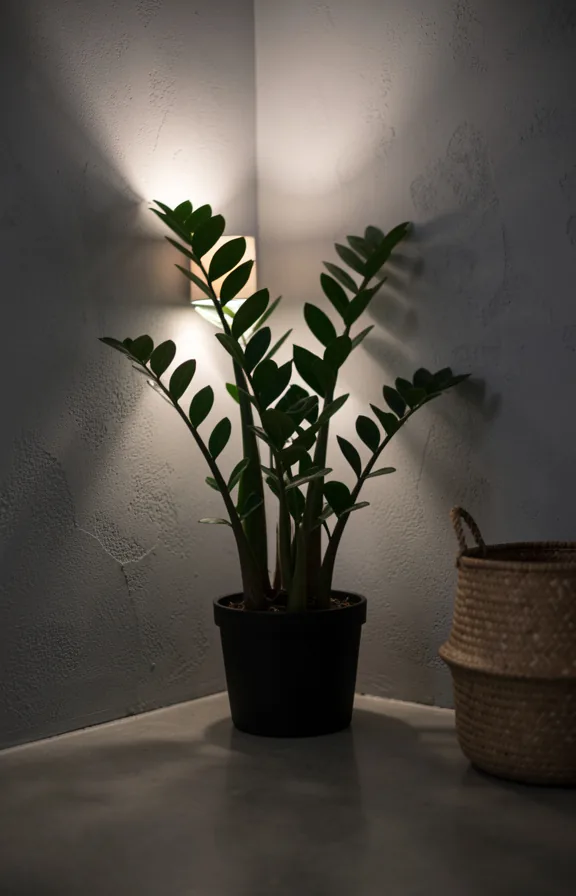
Warm amber tones from a single brass floor lamp cast soft shadows across your corner space. A ZZ plant in a matte black ceramic pot sits low on a cream-colored floor cushion or small wooden stool.
The walls stay bare and neutral, letting the dark glossy leaves become your focal point. Rough concrete or plain drywall feels intentional here, not empty.
This corner works best in hallways, bedrooms, or beside a radiator where you rarely move furniture. The ZZ thrives in dim light and actually prefers neglect over fussy watering schedules.
Layered texture matters more than color in low-light spaces. Pair the matte pot with a woven jute rug and one cream linen throw draped nearby.
Pro Tip: Position your single light source below eye level and aim it at the plant’s upper leaves. This creates depth and makes small corners feel intentional, not forgotten.
6. Cascading String of Pearls
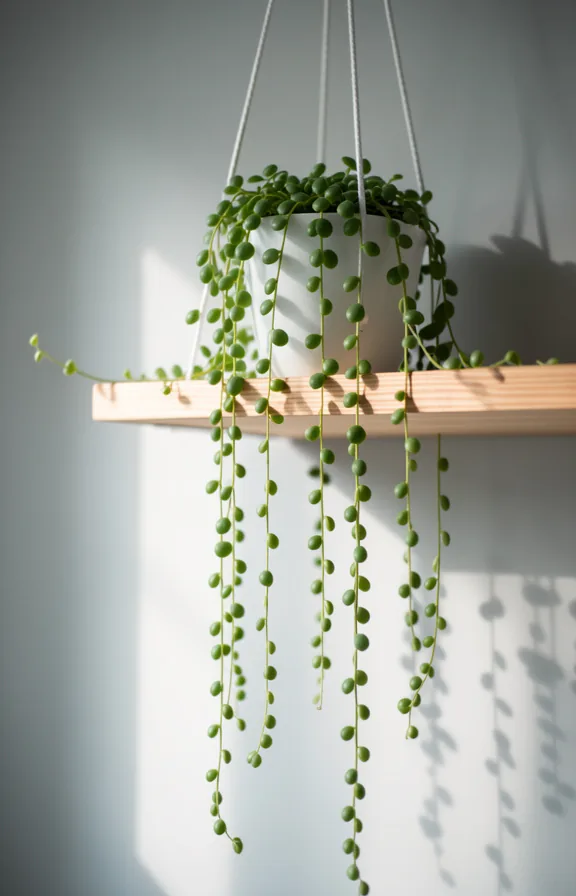
Trailing strands of pale green beads spill over your shelf edge, creating soft movement without taking up floor space. The delicate texture reads as sculptural against bare walls or wood shelving.
String of Pearls thrives in bright, indirect light and needs water only when soil dries completely. It’s nearly impossible to overwater, which suits rental living perfectly.
The trailing form works beautifully in hanging planters or on high shelves where the strands can cascade freely. Your space gains layered depth without requiring floor real estate.
Pro Tip: Install floating shelves at varying heights to create visual rhythm and give trailing plants room to cascade naturally.
7. Modern Monstera Living Room
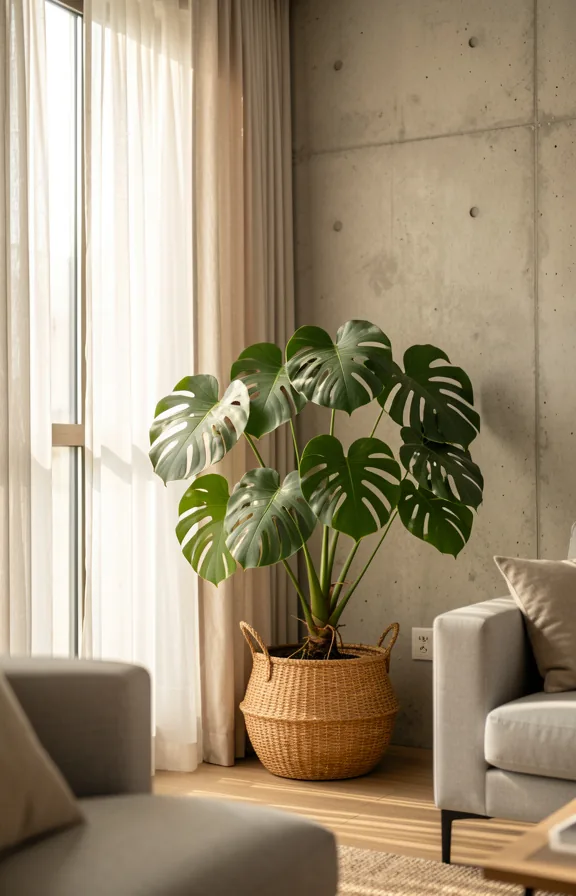
Warm natural light streams through floor-to-ceiling windows onto pale oak flooring. A large monstera anchors the corner in a woven rattan basket, its split leaves casting soft shadows across cream-coloured linen seating.
The room balances minimalist geometry with organic texture. Concrete accent walls pair with a low-profile sectional in natural linen, while wool area rugs in warm grey ground the space.
Brass fixtures catch light from pendant lamps overhead. The monstera becomes sculptural here, not decorative—its growth pattern echoes the room’s calm, uncluttered rhythm.
Most monsteras need only bright, indirect light and water every 10 days. They thrive in rooms with good airflow and no drafts from vents.
Pro Tip: Place your monstera where it fills vertical space without blocking windows; tall plants draw the eye upward and make rooms feel larger.
8. Compact Dracaena Plant Grouping
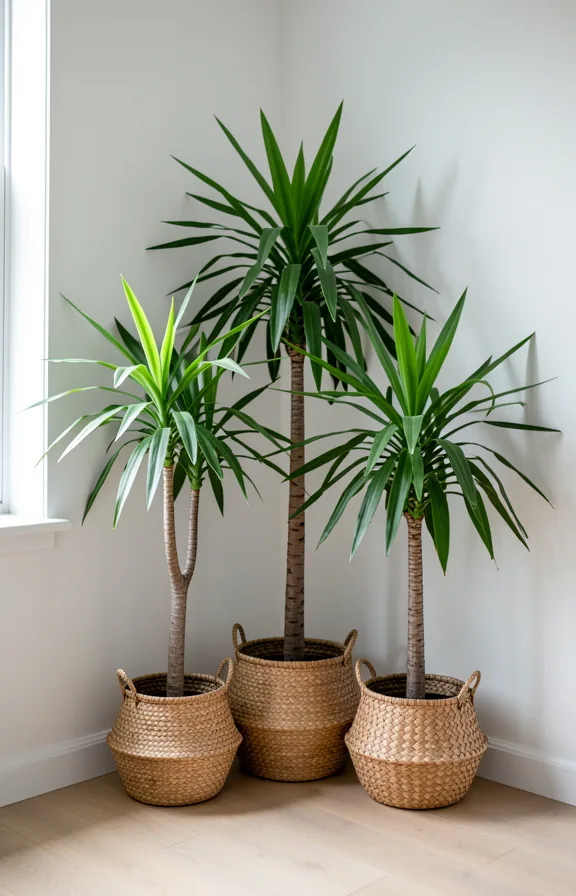
Three dracaena plants in ceramic pots create quiet vertical interest without demanding floor space. Stagger their heights so shorter plants sit forward, taller ones recede slightly behind.
The soft, strappy foliage catches indirect light and doesn’t drop leaves on your carpet. Dracaenas tolerate low light and irregular watering, making them forgiving in busy rental schedules.
Place your grouping in a corner or against a blank wall to anchor the space. A corner gets overlooked in apartment design, but plants there soften hard edges and draw the eye upward.
Water when soil feels dry to your touch, roughly every 10 to 14 days. They’re genuinely hard to kill, which matters when you’re not sure how long you’re staying.
Pro Tip: Group plants of different heights in odd numbers to create visual rhythm without looking staged or overly designed.
9. Bathroom Humidity Fern Garden
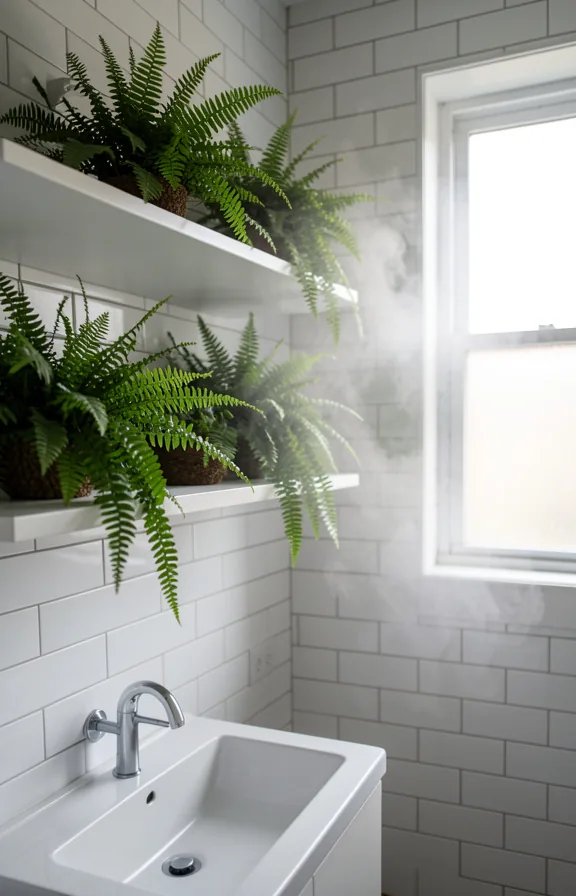
Soft, diffused light filters through a frosted window onto clustered ferns in ceramic pots.
White floating shelves hold trailing Boston ferns and maidenhair varieties in neutral earthenware.
Steam from your shower naturally keeps fronds lush without daily watering or misting routines.
Pale tile walls and a simple mirror frame let the layered green foliage become your focal point.
The air feels fresher, the space transforms into a spa-like refuge that requires almost no effort.
Pro Tip: Bathrooms with no direct sun work best for ferns. Position shelves near the window to catch indirect light bouncing off tile.
10. Desktop Jade Plant Arrangement
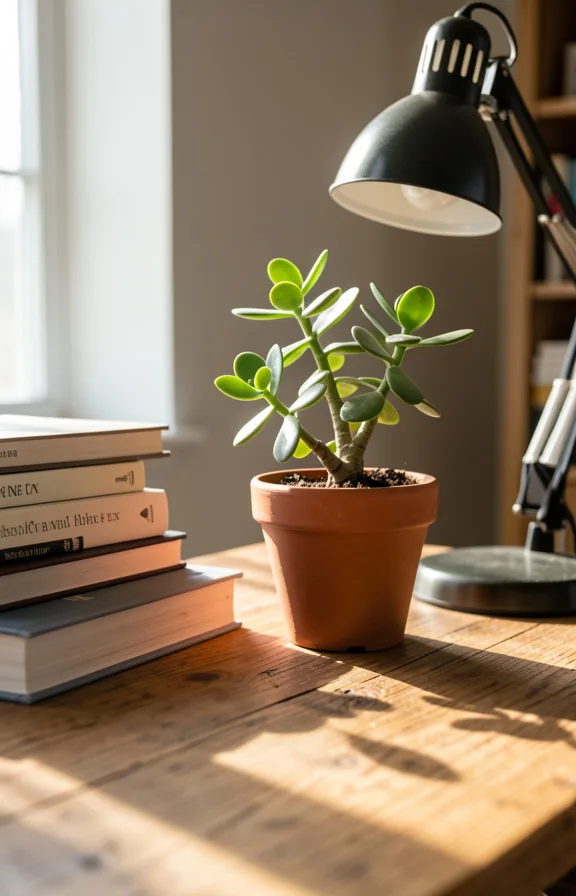
Rough terracotta against a white desk creates a simple, grounded focal point for your work area. A single jade plant in a modest clay pot reads as intentional, not cluttered.
Jade plants thrive on neglect and bright, indirect light from a nearby window. Water only when soil is completely dry, roughly every two to three weeks.
The compact size works on narrow shelves, nightstands, or desk corners without demanding floor space. Their slow growth means you’ll rarely need to repot.
Terracotta dries faster than plastic, which actually helps prevent root rot in humid apartments. The warm earthiness also pairs naturally with books, wood, and neutral linens around it.
Pro Tip: Group terracotta pots of varying heights on one shelf to create visual rhythm without adding clutter to your rental space.
11. Hanging Spider Plant Cluster
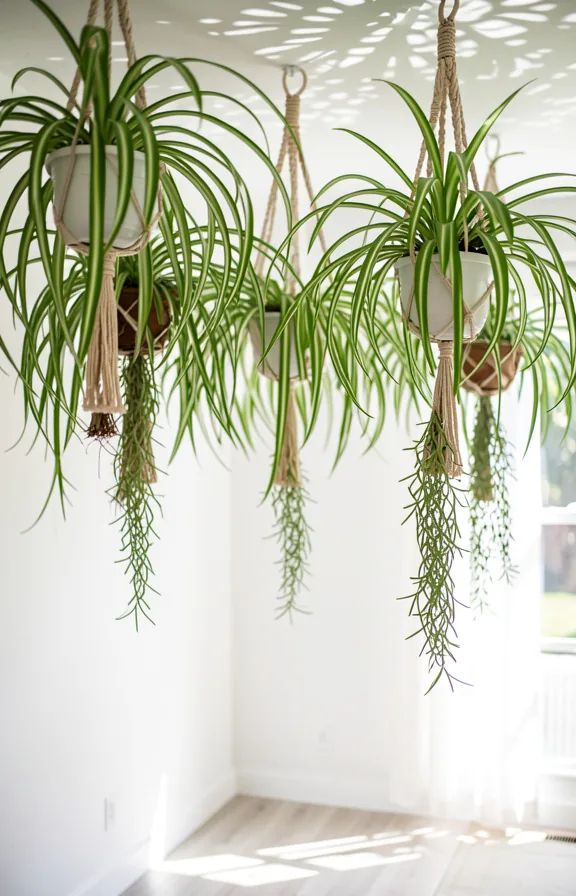
Macrame plant hangers suspended from a ceiling hook create soft vertical layers without floor space. The pale cream rope contrasts cleanly against white drywall while trailing variegated foliage adds movement and depth.
Spider plants cascade naturally, their arching leaves catching light near a bright window. The effect feels both minimal and botanical—a living mobile for your corner.
This setup works in tight apartments because it pulls your eye upward. Your ceiling becomes part of the design rather than blank space.
The plants survive weeks without water and tolerate average apartment light conditions. You’ll spend two minutes watering every ten days, nothing more.
Pro Tip: Hang clusters of three at varying heights using adjustable rope, not fixed hooks, so you can lower them for watering and adjust as they grow.
12. Rubber Plant Entryway Statement
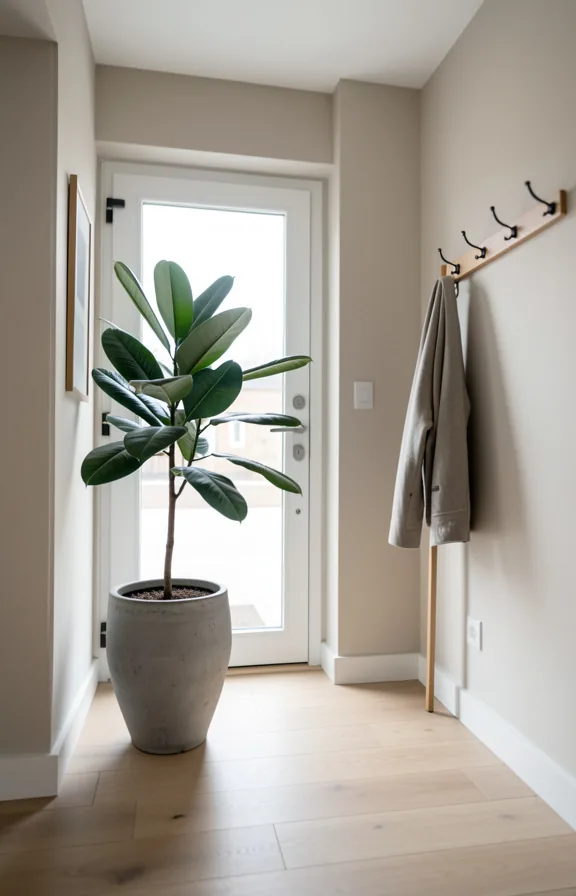
Warm natural light floods through your front door and lands on deep green, waxy foliage. A rubber plant in a matte grey ceramic planter anchors the corner where entryway meets living room.
The plant’s glossy leaves reflect soft morning sun, creating quiet movement without fuss. Grey and neutral tones keep the space calm and grounded.
Rubber plants grow slowly and forgive sporadic watering, making them perfect for rental spaces. One plant in the right spot does the work of multiple smaller pieces.
The large scale creates an immediate sense of arrival, signaling care without demanding it. Your eye lands on the plant first, not on bare walls.
Pro Tip: Place tall plants in corners or against blank walls to define the entryway’s boundaries and give small rentals a sense of intentional design.
13. Shelf-Bound Aloe Vera Garden
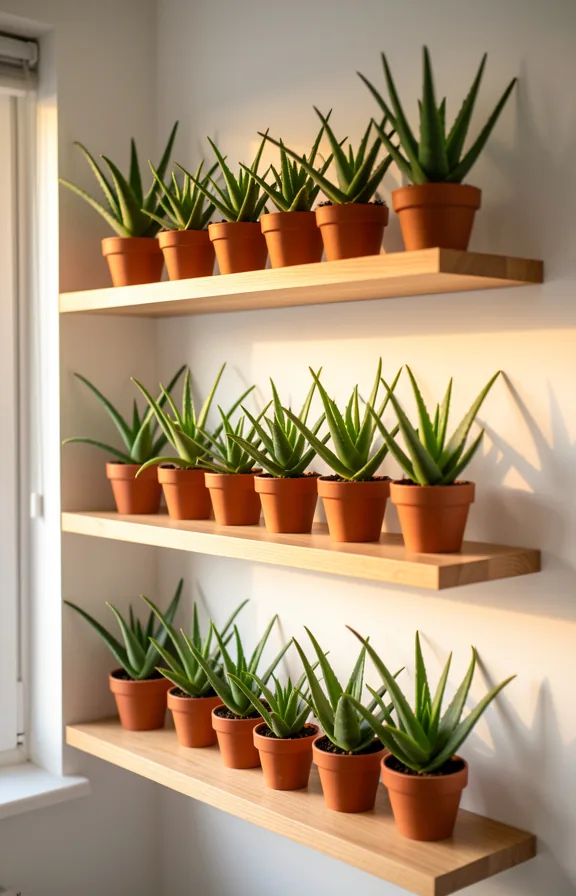
Rough terracotta pots sit low and wide across simple wooden shelving, catching soft natural light from a nearby window.
Each aloe plant has thick, pale green leaves that create clean geometric shapes against the neutral wall behind.
The arrangement feels intentional but never fussy, like something that grew organically over time rather than all at once.
No soil shows, no clutter surrounds them—just plants, pots, and open air between each one.
Warm sunlight filters across the spines of the leaves, casting faint shadows on the shelf below.
Pro Tip: Space plants at least four inches apart on shelving to allow airflow and prevent moisture from pooling where pots touch the wood.
14. Parlor Palm Tropical Vibe
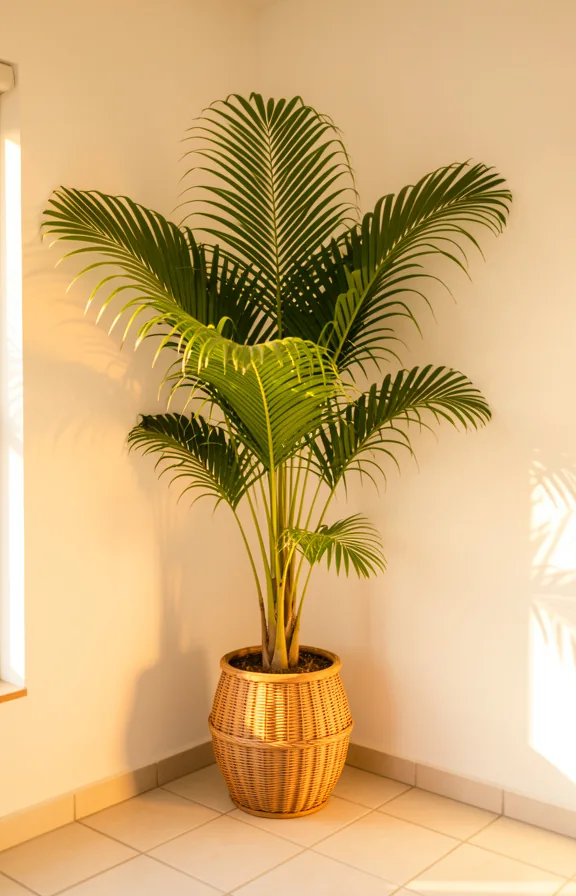
Warm amber light filters through gauzy linen curtains onto terracotta and woven rattan textures. A tall parlor palm anchors the corner, its feathery fronds catching soft afternoon glow.
This style pairs natural wood furniture, cream-colored walls, and layered woven baskets. The effect feels borrowed from a beachside cottage, not a rental.
Parlor palms grow slowly and tolerate low light better than most tropical plants. They need water only when soil feels dry, making them realistic for busy renters.
Place your palm where indirect light reaches it for at least a few hours daily. A corner near a window works perfectly without demanding direct sun.
Pro Tip: Let natural light angles guide your furniture layout rather than fighting them. This creates rooms that feel intentional, not makeshift.
15. East-Facing Peperomia Collection
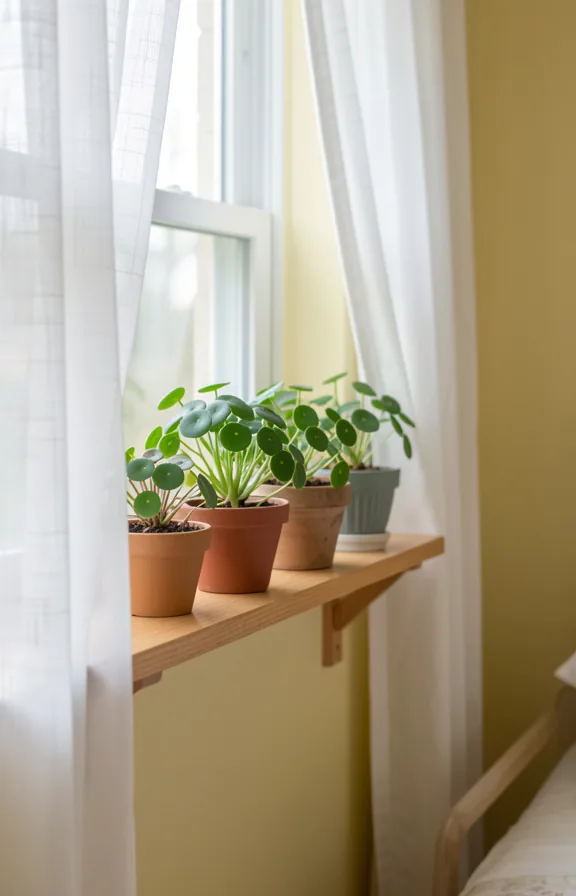
Low and wide across a natural wood shelf, a cluster of peperomia plants catches soft morning light. Their deep green, textured leaves create gentle shadows on pale plaster walls.
The room feels intentional but unhurried. Simple ceramic pots in cream and warm terracotta ground the collection without competing for attention.
Peperomias thrive in bright, indirect light, making east-facing windows ideal. They need water only when soil feels dry to the touch, and they stay compact without pruning.
Most renters find these plants work well on shallow shelves, desks, or windowsills. Their small scale fits tight spaces without overwhelming a room.
Pro Tip: Group plants in odd numbers and varying pot heights to create visual interest on a narrow shelf.
16. Bookshelf Sansevieria Spacing
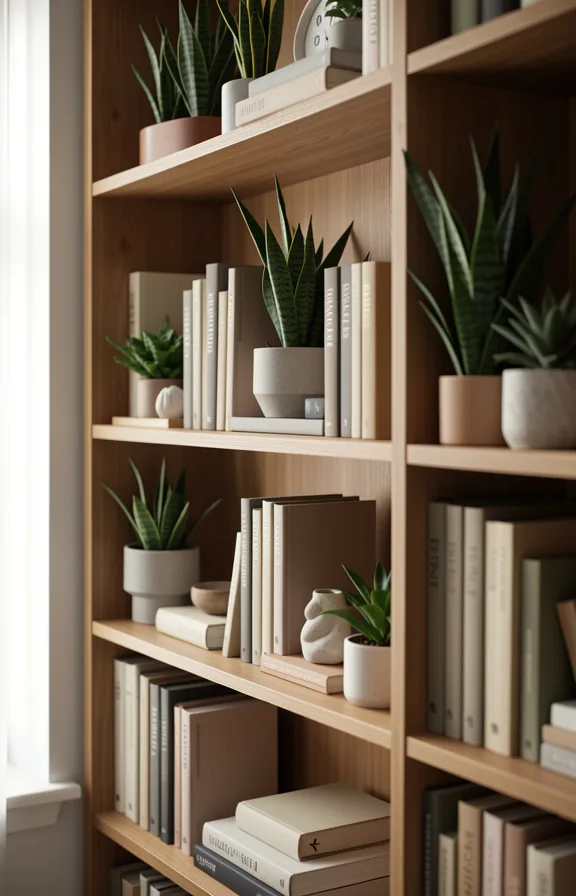
Tall sansevierias stand upright between stacked paperbacks and ceramic vessels on wooden shelves. Their vertical stripes catch soft, diffused window light from the side.
The shelf depth feels intentional, not crowded. Books lean at angles, small planters rest in gaps, and negative space lets each object breathe.
This creates a collected-over-time feeling rather than a styled photoshoot. Your eye moves naturally across the shelf without landing on clutter.
Sansevieria’s architectural shape does the work for you. No trailing vines to tame, no flowers to deadhead.
Pro Tip: Space plants and objects at varying heights by stacking books under smaller pots. This breaks up the flat line and makes shelves feel more dynamic.
17. Pilea Pot Scattered Placement
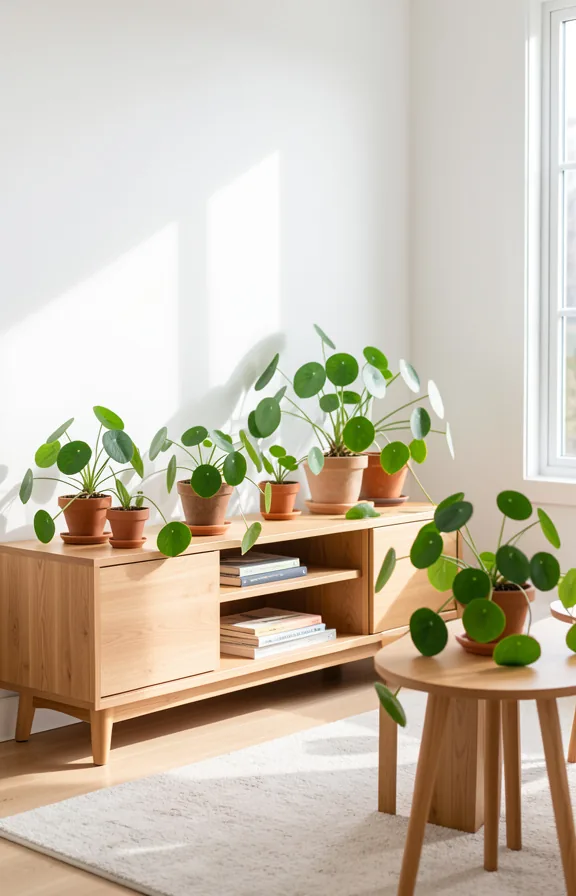
Low and wide across your shelving, a cluster of pileas in matching terracotta creates rhythm without overwhelming the space.
Natural wood furniture grounds the look, while soft window light hits each plant at different angles throughout the day.
The pale, neutral walls let the plants become the focal point, their coin-shaped leaves catching light as you move through the room.
Grouping multiple pots at varying heights breaks up flat surfaces and makes your apartment feel intentional, not sparse.
Pro Tip: Stagger your plants across shelves rather than centering them. Asymmetry reads as more designed and less like a plant shop display.
18. Low-Maintenance Philodendron Trail
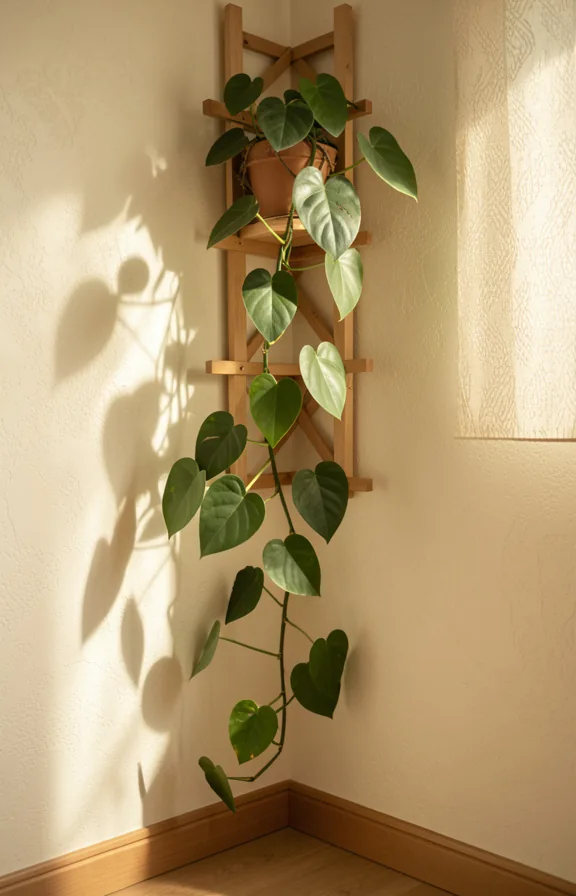
Rough terracotta against a white wall catches the eye first. A wooden trellis leans in the corner, wrapped with trailing philodendron vines that cascade downward in loose, organic loops.
This corner setup works because it uses vertical space without drilling holes or permanent damage. The natural wood trellis blends into most apartment interiors and feels intentional rather than temporary.
Trailing philodendrons thrive on neglect and adapt to low or medium light. Water only when soil feels dry to touch, usually every 10-14 days.
Pro Tip: Lean a wooden trellis against the wall instead of mounting it. This lets you reposition it anytime and removes all landlord concerns at move-out.
19. Ceramic Pot Aglaonema Setup
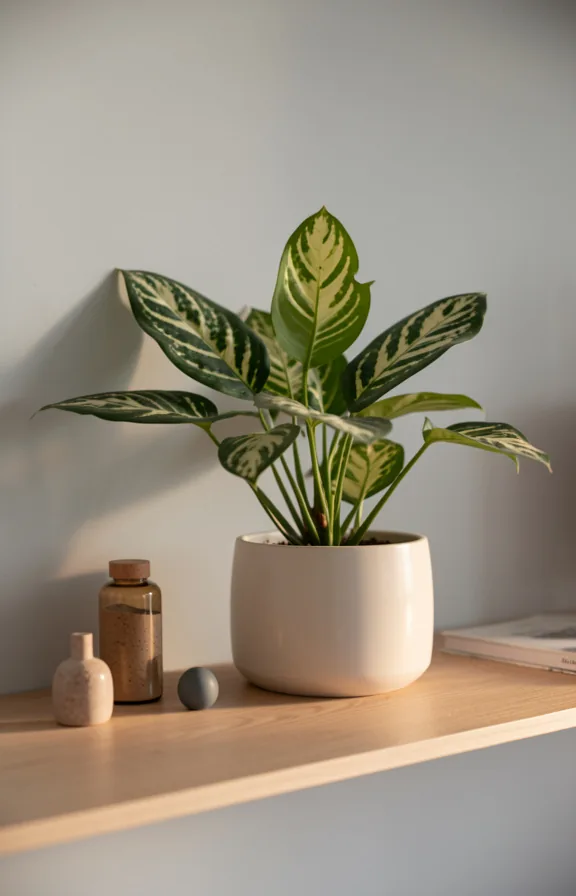
Low and wide across your shelf sits a matte ceramic pot in soft sage or cream. Inside, the aglaonema’s variegated leaves catch indirect window light in pale greens and silvery tones.
The pot’s clean lines anchor a small vignette without demanding attention. Pair it with a single paperback or a small brass trinket tray for visual balance.
Aglaonemas thrive on neglect and adapt to low light, making them perfect for apartment corners far from windows. Water once every two weeks and you’re done.
The ceramic material breathes better than plastic, so roots stay healthier with less fussing. This setup works in bedrooms, offices, and living rooms alike.
Pro Tip: Choose unglazed or matte ceramic pots over shiny finishes; they photograph better and feel more grounded in smaller spaces.
20. Corner Cast Iron Plant
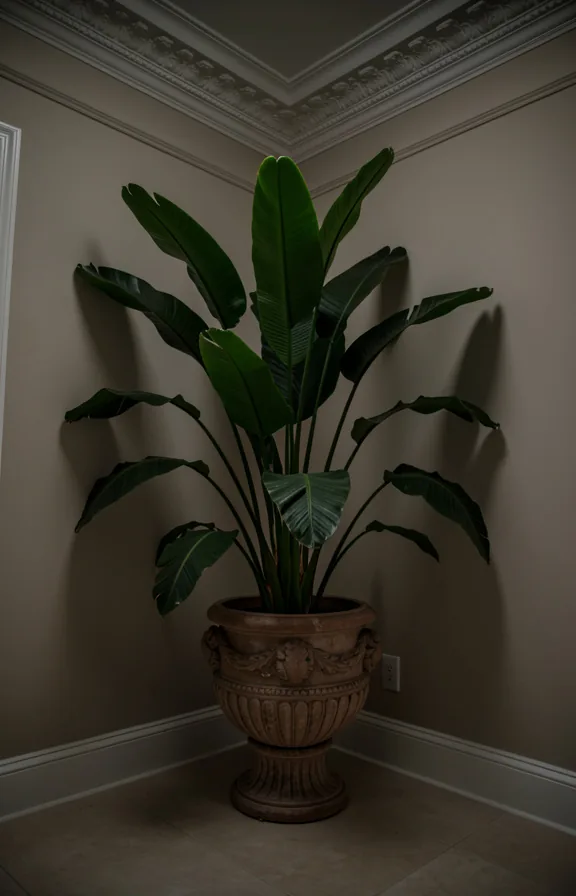
Warm amber tones from a north-facing corner catch soft, filtered light across deep green foliage and terracotta clay.
The cast iron plant fills awkward dead space with architectural presence, its large paddle-shaped leaves adding scale without demanding attention.
Your room gains a grounded, lived-in quality that reads expensive but asks almost nothing from you in return.
Water once every two weeks, ignore it for months if life gets busy, and it survives low light better than most plants.
Pro Tip: Place larger plants in corners with a slightly oversized terracotta pot to anchor empty walls and create visual weight naturally.
21. Living Wall Pothos Framework
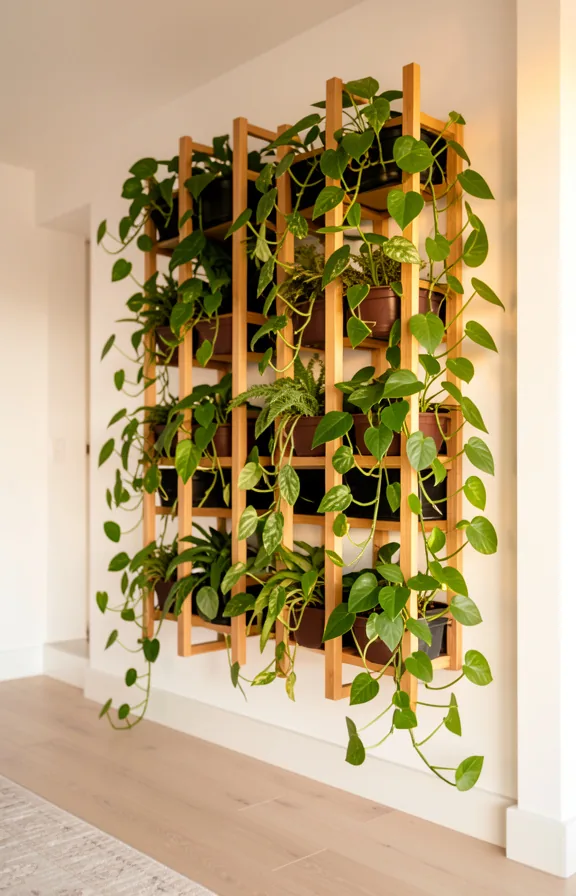
Natural wood slats form a simple geometric grid against your bare wall, anchoring trailing pothos vines as they grow across the frame.
Soft, diffused light from a nearby window catches the heart-shaped leaves at different angles, creating depth without needing bright direct sun.
The pale green foliage softens hard corners and adds oxygen to the room while the wooden framework stays neutral enough to work with any decor style.
Your eye travels upward and across, following the living branches like a natural piece of wall art that actually cleans your air.
Pro Tip: Mount your frame at least 12 inches from the wall to allow air circulation behind the vines, preventing moisture damage to rental walls.
22. Desk Echeveria Succulent Study
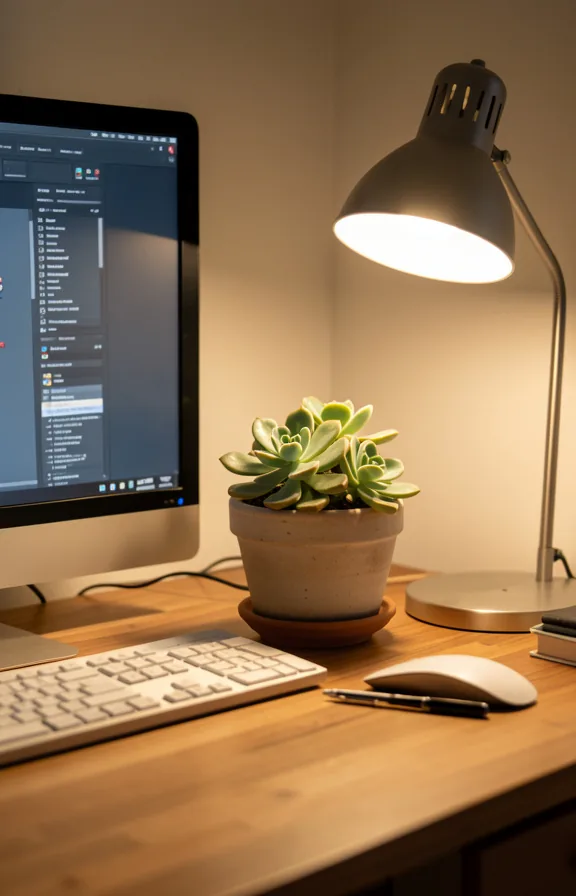
Warm afternoon light falls across a minimal work surface where a small echeveria sits in a matte ceramic pot. The succulent’s dusty blue-green rosette catches the sun without needing your attention.
Your desk stays functional and uncluttered because the plant takes up almost no space. It thrives on neglect, watered only when the soil is completely dry.
Pale wood desk, soft white walls, and natural light create an atmosphere where work happens quietly. The succulent adds a single point of organic texture without demanding care routines.
Most people find that echeveria works best on south or west-facing desks where it gets 4+ hours of direct sun. Without enough light, it stretches and loses its compact shape.
Pro Tip: Position succulents on the corner of your desk farthest from your main work zone to protect them from accidental water spills.
23. Bathroom Pothos Moisture Haven
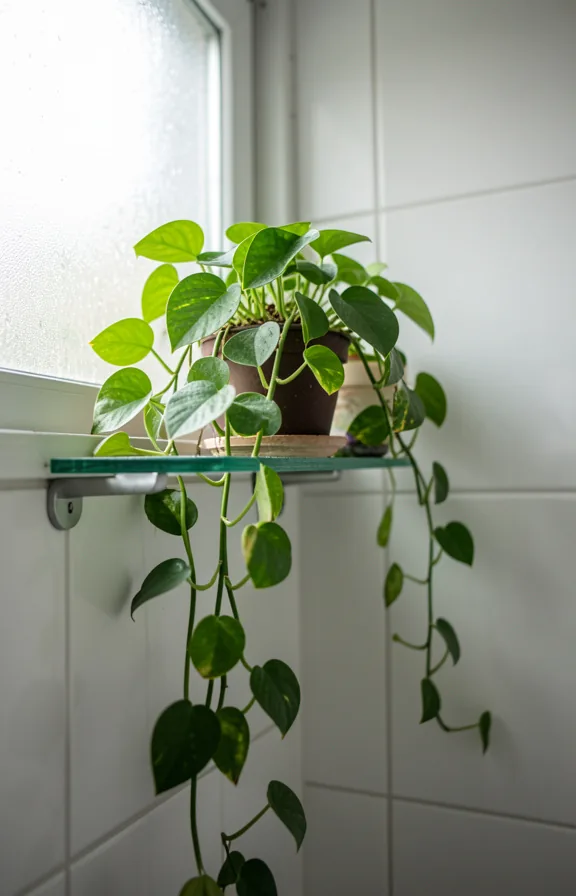
Warm steam rises from a morning shower, and your pothos thrives without asking for water.
This is the room where humidity does the work for you. Tile walls and a moisture-laden air create the exact microclimate pothos loves most.
Your plant trails from a floating shelf above the sink, with soft vanity lighting catching the leaves from below. No direct sun needed here.
Most bathrooms stay naturally humid from daily showers, so your pothos stays hydrated between waterings. You water every two weeks instead of every week.
The pale ceramic shelf and white subway tiles become a calm backdrop for trailing green vines. Minimal decor means maximum plant focus.
Pro Tip: Position trailing plants on high shelves so vines cascade downward and your floor stays clear and clutter-free.
24. Floor Standing Clivia Display
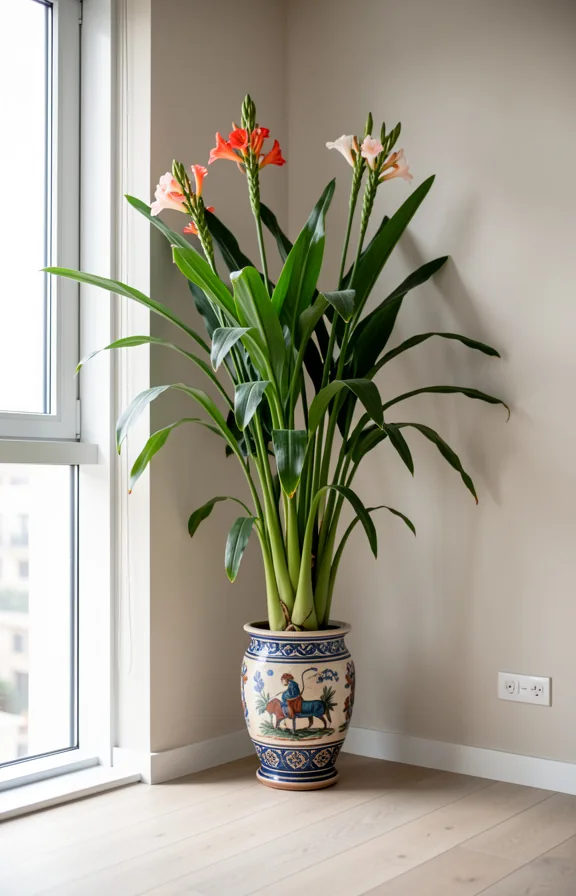
Warm amber tones fill a corner where a tall clivia reaches toward soft natural light from a nearby window. The plant’s dark green, strap-like leaves create vertical rhythm against bare walls or light-colored furniture.
A simple ceramic or concrete planter grounds the display without competing for attention. The plant itself becomes your room’s quiet focal point, needing water only every two weeks or so.
Clivias handle neglect well and actually bloom better with a winter rest period. You can leave it in one spot for months without fussing over it.
Pro Tip: Place floor plants in corners to anchor empty wall space and make compact rooms feel intentionally designed rather than sparse.
25. Renter-Friendly Propagation Station
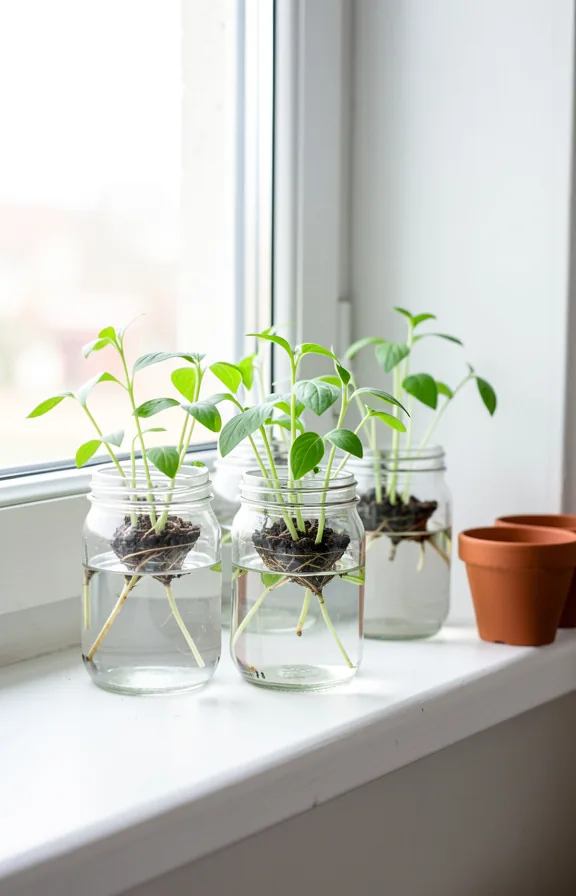
A shallow shelf against a bright window holds clear glass jars in varying heights, filled with water and fresh plant cuttings.
Pale wood shelving keeps the look minimal and non-committal for renters who can’t drill into walls. The glass containers sit on a white linen runner to catch drips without damage.
Soft, diffused daylight passes through the jars, casting moving shadows that bring the cuttings to life. Most viewers notice the pale green stems first, then the calm rhythm of the arrangement.
You root new plants while the old ones sit nearby, creating a living learning center. It costs nothing once you start propagating from friends’ plants or your own.
Pro Tip: Use adhesive shelf strips instead of nails to keep your arrangement truly renter-friendly and damage-free.
Start with the snake plant if you’re unsure about your lighting. It survives almost anywhere and asks for water only once a month, making it the easiest entry point for apartment plant parents.
Save this list and return to it as your confidence grows. Your space will feel more like home sooner than you expect.