

22 Tiny Hallway Decor Ideas That Make a Big First Impression
This platform is proudly ad-free! To keep it that way and support our efforts, some posts may contain affiliate links. These links come at no extra cost to you, but they help us grow and continue providing valuable content. Thank you for your understanding and support!
Your hallway is often the first space guests see when they enter your home. It deserves the same attention you give your living room or kitchen.
Most hallways feel like afterthoughts because they are narrow and receive little natural light. This creates a real decorating challenge. The right design choices can make even the smallest entry feel intentional and inviting.
This list gives you 25 complete room concepts you can actually implement, regardless of your budget or timeline. Each idea works in tight spaces without cluttering walls or floors. Pick one approach that resonates with you and start there.
Your hallway can be beautiful. Let’s make it one of the best rooms in your home.
1. Gallery Wall Black Frame Corridor
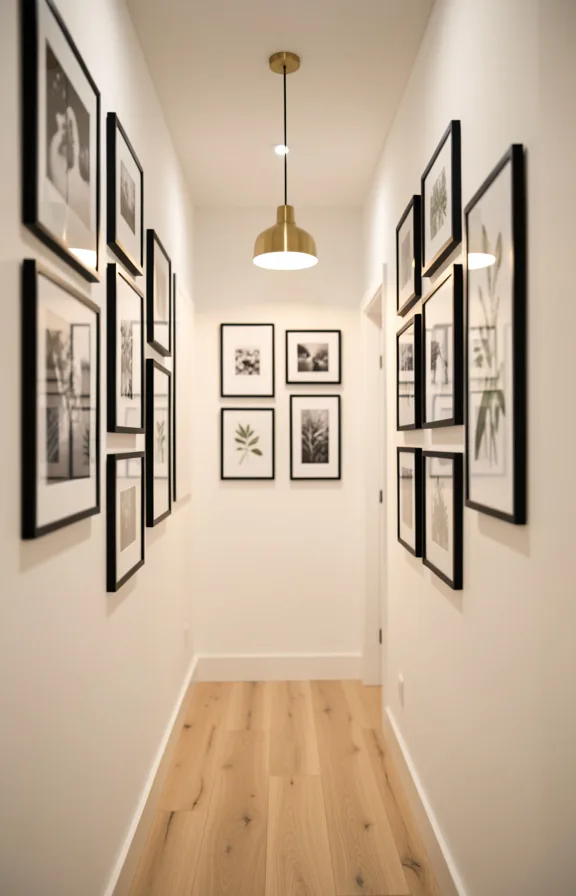
Black-framed prints stacked vertically draw the eye upward in a narrow hallway. This creates the illusion of height and pulls attention away from tight walls.
Mix black and white photography with botanical line drawings for visual rhythm. The monochrome palette feels intentional, not cramped.
Matte black frames keep the look modern and grounded. They don’t compete with art or reflect too much light in small spaces.
Hang frames 12 to 18 inches apart to create breathing room between pieces. Uneven spacing feels more personal than a rigid grid.
White or neutral walls behind the gallery wall amplify the contrast. This prevents the hallway from feeling dark despite the heavy frame color.
Pro Tip: Anchor a gallery wall with one larger frame in the center, then build outward asymmetrically. This technique balances visual weight in tight corridors.
2. Jewel Tone Accent Wall Entry
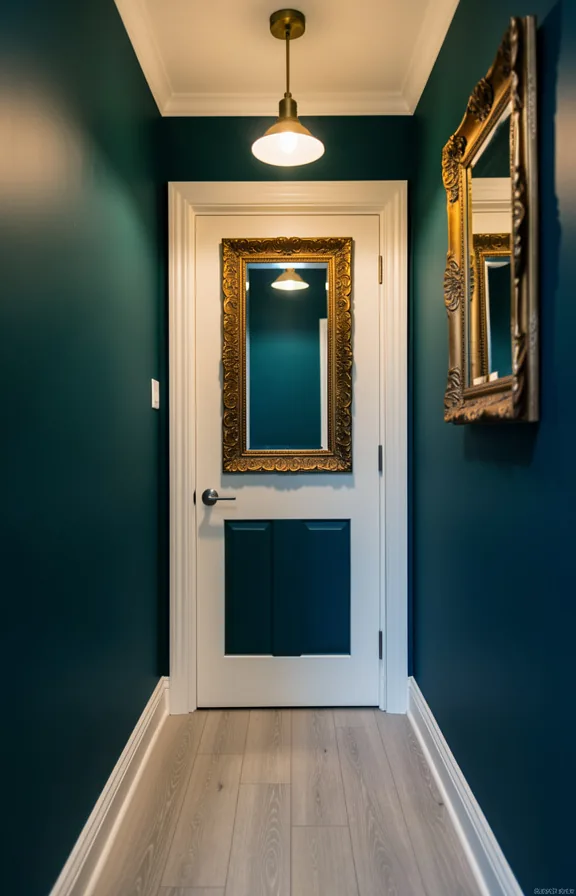
Deep emerald, sapphire, or rich plum paint on one hallway wall stops visitors the moment they step inside. The color absorbs light rather than bouncing it, making your narrow entry feel intentional and grounded.
Pair the jewel tone with warm brass or gold hardware on hooks and mirrors. Cream or soft white trim around doors keeps the space from feeling claustrophobic.
A single large mirror with a metallic frame reflects what little light enters, adding depth without crowding the walls. The jewel backdrop makes the reflection feel like a deliberate design choice, not a space-saving hack.
Warm lighting from a brass wall sconce or pendant works better than cool overhead fixtures. The amber glow against deep color creates luxury in a compact footprint.
Pro Tip: Paint only one wall to avoid boxing yourself in; the jewel tone works hardest when it has breathing room around it.
3. Botanical Print Narrow Passage
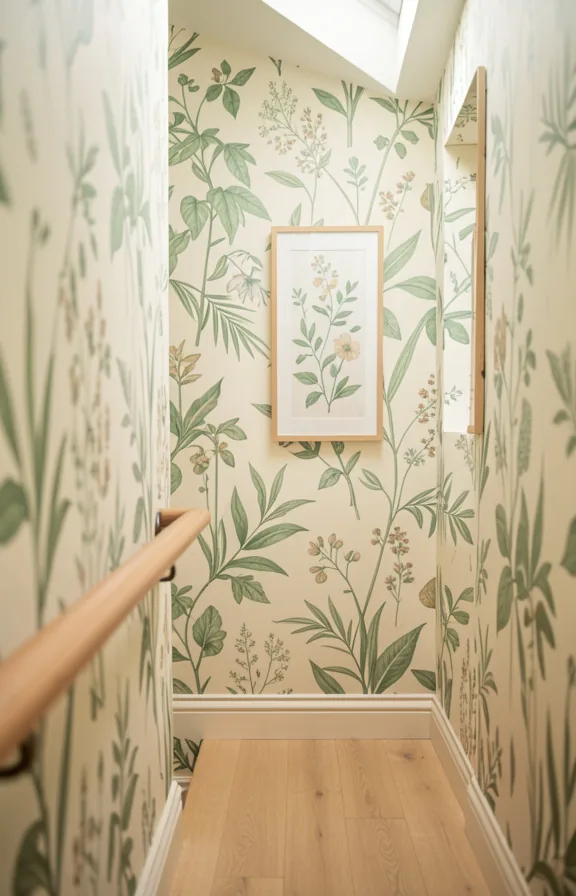
Soft sage and cream botanical wallpaper wraps your narrow passage in natural pattern and depth. The repeating leaf motifs draw the eye forward without feeling cramped or heavy.
Warm white trim around doorways and baseboards keeps the space feeling clean and contained. Matte finishes on walls and woodwork absorb light rather than reflect it, reducing glare in tight quarters.
A single pendant light with frosted glass hangs at eye level, casting gentle illumination that reaches corners. This prevents the hallway from feeling like a tunnel.
The botanical theme connects your entry visually to living spaces beyond, creating flow through the home. Visitors notice a thoughtful design choice, not a desperate squeeze of decoration.
Pro Tip: Choose wallpaper with a matte or textured finish rather than glossy to avoid visual strain in narrow spaces with limited natural light.
4. Geometric Tile Floor Hallway
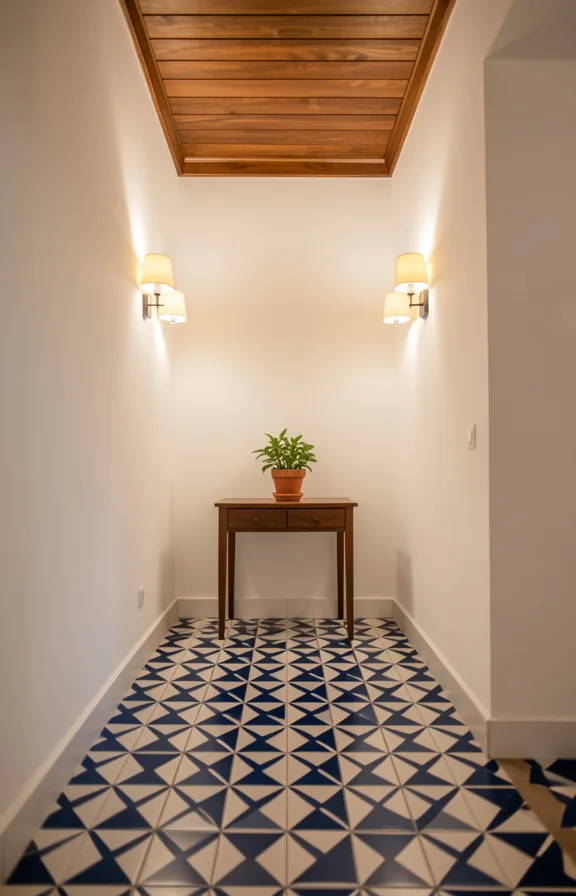
Navy and white encaustic tiles anchor your hallway with instant visual interest and architectural weight.
The geometric pattern draws the eye down the length of the space, making narrow corridors feel longer and more intentional.
Pair the bold floor with crisp white walls and minimal trim to let the tiles command attention without overwhelming the room.
Brass or matte black wall sconces flanking a mirror above a narrow console table amplify the sophisticated geometry you’ve established.
Pro Tip: Geometric tiles work best when your grout lines are clean and consistent; this emphasizes the pattern rather than breaking it into visual noise.
5. Shiplap White Coastal Entryway
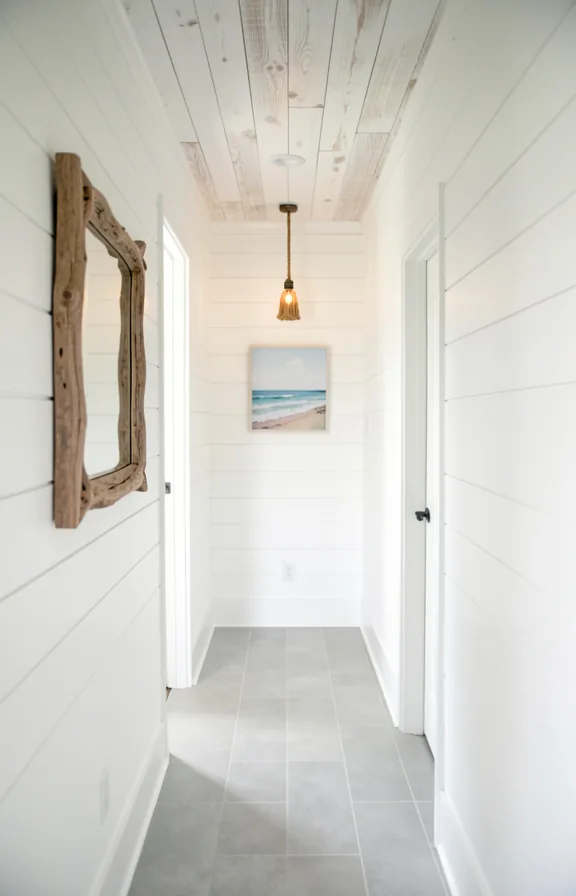
Horizontal white shiplap covers every wall, creating rhythm and visual calm in your narrow entry. The horizontal lines actually expand the space, drawing your eye wider rather than taller.
Soft, diffused natural light bounces off the matte finish, keeping the hallway bright without harsh shadows. A simple driftwood mirror leans against one wall, paired with a woven jute runner underfoot.
Floating shelves in light oak hold a few pieces: a clear glass vase, rolled linen towels, small potted succulents. The palette stays neutral so nothing competes for attention.
The result feels like stepping into a beach cottage. Your guests notice the calm before anything else.
Pro Tip: Install shiplap horizontally rather than vertically in narrow hallways to visually widen the space and create a more restful entry.
6. Warm Wood Paneled Walkway
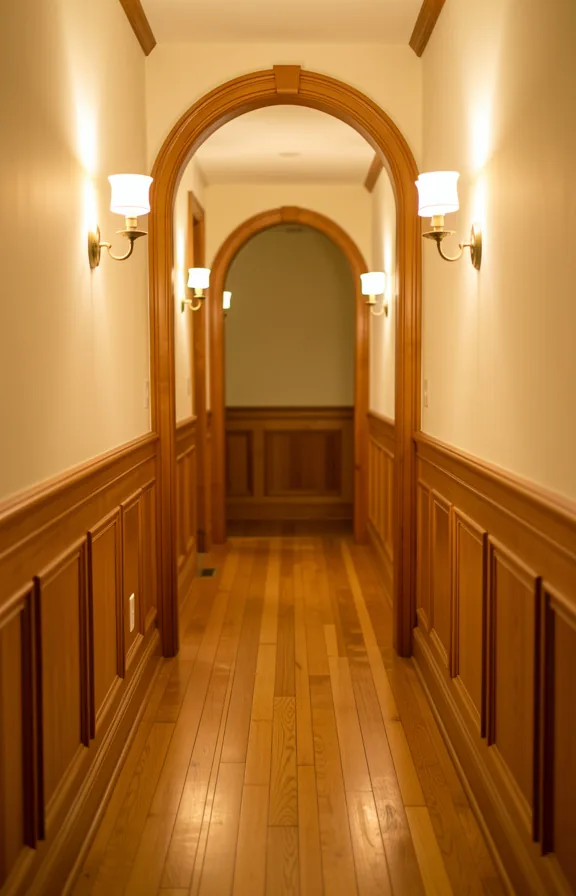
Honey-toned wood paneling lines the lower half of your hallway walls, with cream paint above. This creates instant architectural depth in a narrow space.
The wood catches soft overhead and wall-mounted lighting, making the passage feel warmer and more lived-in. Darker wood would shrink the space visually.
Your eye travels down the paneled wall naturally, guiding visitors deeper into your home. The two-tone split balances visual weight and proportion perfectly.
A simple runner rug in natural fiber ties the palette together without competing with the wood grain. Brass or bronze fixtures complement the warmth throughout.
Pro Tip: Wainscoting works best when it stops at chair rail height, leaving breathing room above for light and openness in tight hallways.
7. Monochromatic Neutral Hallway
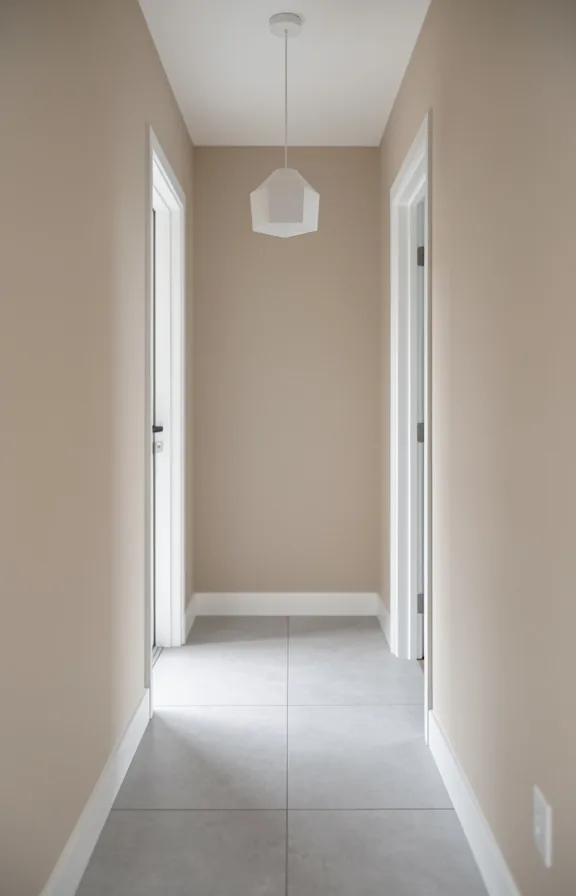
Soft beige walls paired with warm gray flooring create a quiet, cohesive foundation that feels both grounded and spacious.
The monochromatic approach works because your eye doesn’t fragment across competing colors. Smaller hallways read as longer.
Layer in varying textures to keep the space alive: a natural linen runner, whitewashed wood trim, and matte plaster finishes break up flatness.
A single brass or matte black wall sconce positioned at eye level adds gentle warmth without visual clutter.
Pro Tip: Use matte or eggshell finishes instead of glossy paint. They absorb light subtly, which makes narrow spaces feel intentional rather than bare.
8. Pendant Light Linear Corridor
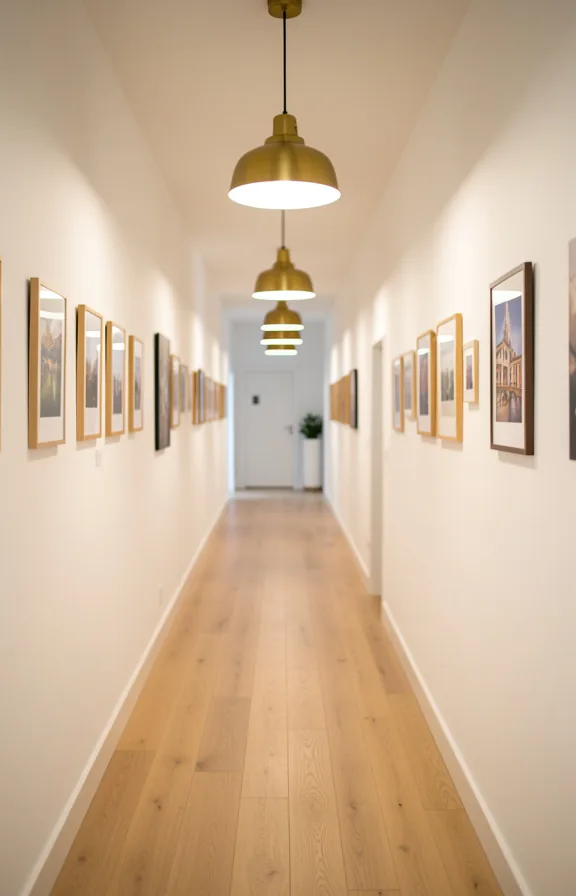
Warm amber tones drift down from a series of pendant lights strung along your hallway ceiling. Each globe casts a soft pool of light onto pale walls below, making the narrow passage feel purposeful instead of cramped.
The linear arrangement creates rhythm and draws the eye forward. White or soft gray walls reflect this gentle light, while natural wood flooring anchors the space with warmth.
This setup works well in tight corridors because overhead fixtures waste precious wall space. Pendant lights free up your surfaces for mirrors, hooks, or artwork.
The pendants themselves have simple, clean silhouettes—think frosted glass, brushed brass, or matte black metal. Nothing ornate competes for attention in a narrow passage.
Pro Tip: Space pendants roughly 4 to 5 feet apart for even illumination and visual balance in tight hallways.
9. Arched Doorway Architectural Detail
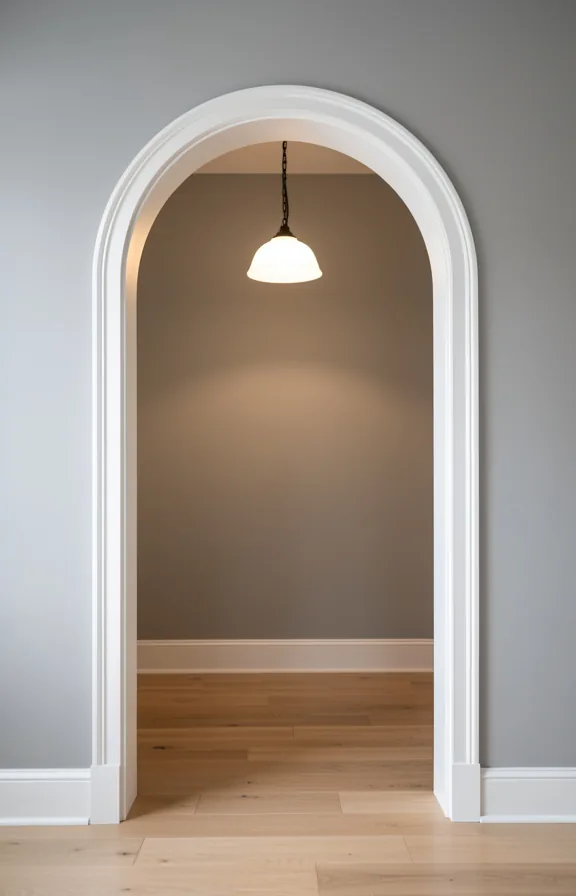
Soft curves frame the passage where your hallway meets the next room, drawing the eye forward naturally.
The arch itself becomes the focal point, finished in crisp white or soft plaster to catch overhead light.
Pale neutrals on surrounding walls let the curved geometry stand alone without competing for attention.
A single pendant light hung at the arch’s center creates warm pools of light that emphasize the shape.
This architectural bones approach works because it costs nothing to notice what you already have.
Pro Tip: Paint the arched trim a shade lighter than your walls to create depth and make the curve read as intentional architecture.
10. Patterned Wallpaper Bold Hallway
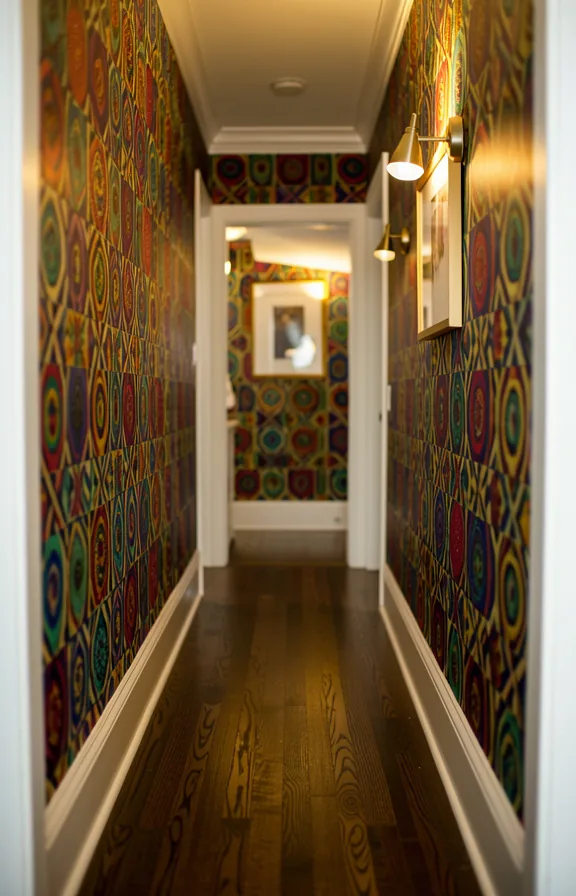
A geometric or botanical wallpaper in jewel tones transforms your narrow entryway into a statement room. Deep emerald, sapphire, or terracotta backgrounds with contrasting patterns create depth without adding bulk.
The pattern draws the eye forward, making the hallway feel longer and more intentional. Overhead lighting bounces off the textured paper, adding dimension to tight walls.
Keep trim and doors white or natural wood to let the walls breathe. A simple console table or narrow mirror breaks up the visual weight and adds function.
Pro Tip: Apply wallpaper to one accent wall only if your hallway is under four feet wide. This balances visual impact with the space’s actual scale.
11. Runner Rug Layered Hallway
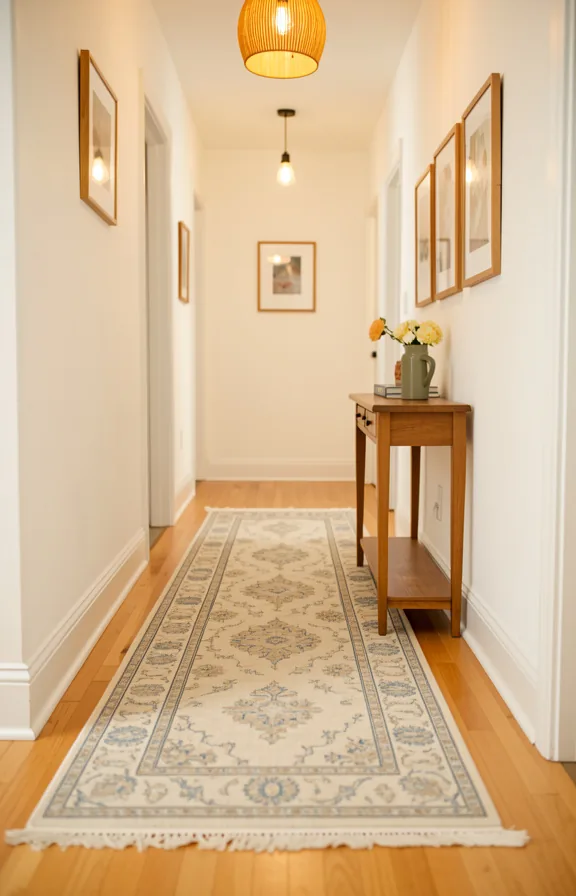
Cream and soft blue geometric patterns anchor your hallway floor, creating visual rhythm along a narrow space.
A patterned wool runner sits layered over light oak or maple hardwood, grounding the entryway with texture and warmth.
The dual-layer effect makes the floor feel intentional, not bare, while keeping your hallway from feeling cramped.
Neutral walls in soft white or warm greige let the rug become the focal point without overwhelming small square footage.
Pro Tip: Layer a patterned runner over solid hardwood using a natural jute or felt underlay to prevent slipping in tight passages.
12. Recessed Niche Storage Passage
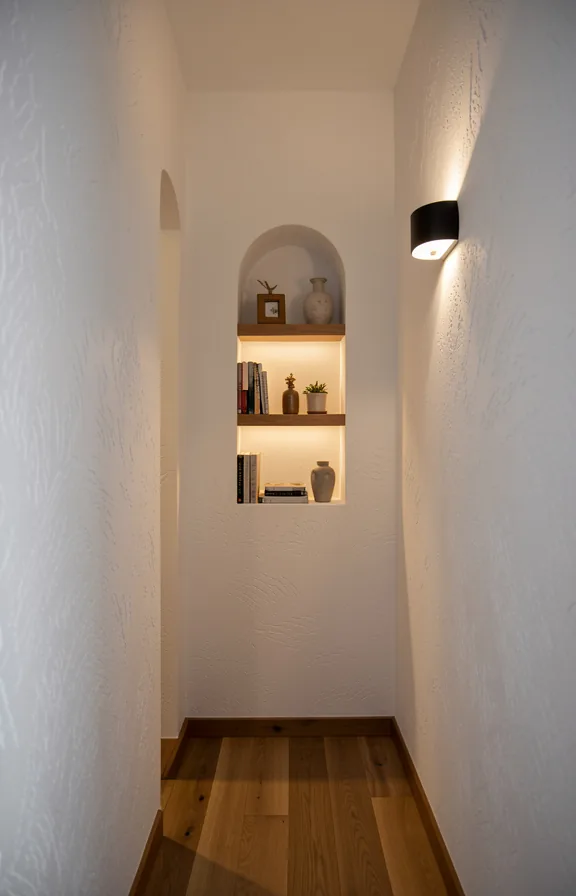
Warm amber tones from recessed lighting hit pale plaster walls in a narrow hallway. A single rectangular niche, cut into the wall’s depth, creates an architectural pocket that catches your eye.
Inside sit leather-bound books, a small ceramic vessel, and a framed photograph on natural wood shelving. The niche has soft, concealed LED strips running along the top edge, creating a gentle glow without a visible source.
The passage itself feels intentional and curated, not cluttered. The niche breaks up the visual monotony of a long, tight space while storing items you actually use.
Matte plaster or drywall creates a subtle texture around the opening. The shelving inside stays neutral to let displayed objects stand out.
Pro Tip: Cut a niche only 8 to 12 inches deep so it doesn’t weaken the wall structure or disrupt plumbing and electrical runs.
13. Skylighted Airy Hallway
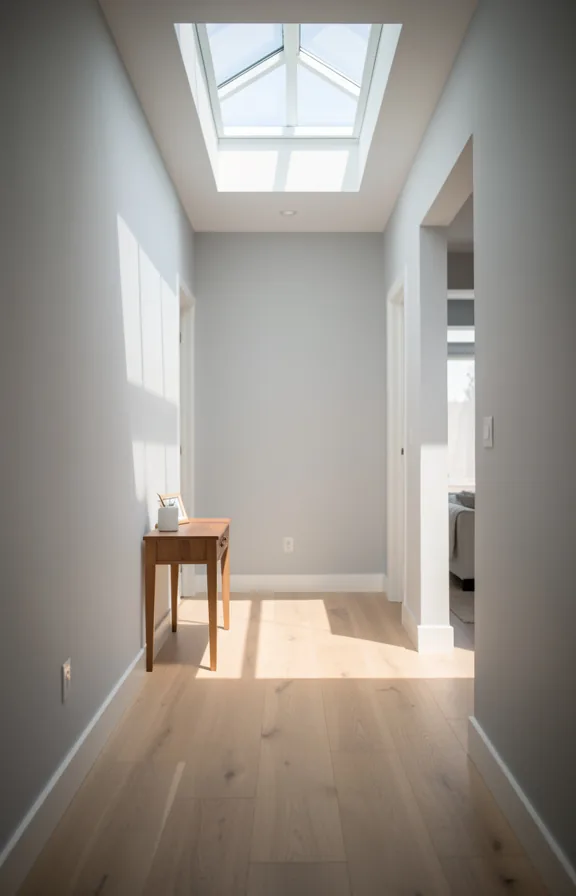
A skylight floods your hallway with natural light from above, erasing shadows and creating height you didn’t know existed.
Walls in soft gray or off-white reflect that light downward, multiplying its effect without feeling cold or clinical.
The floor might be light wood or polished concrete, cool underfoot and bright enough to bounce light back up.
Minimal furniture keeps the space open: perhaps a single floating shelf in matte black or natural wood, holding a ceramic vase or small sculpture.
The feeling is calm and open, like stepping into a gallery rather than a cramped passage.
Pro Tip: Paint walls a soft warm gray rather than pure white. This catches skylight beautifully while staying warm and inviting.
14. Wainscoting Traditional Entrance Hall
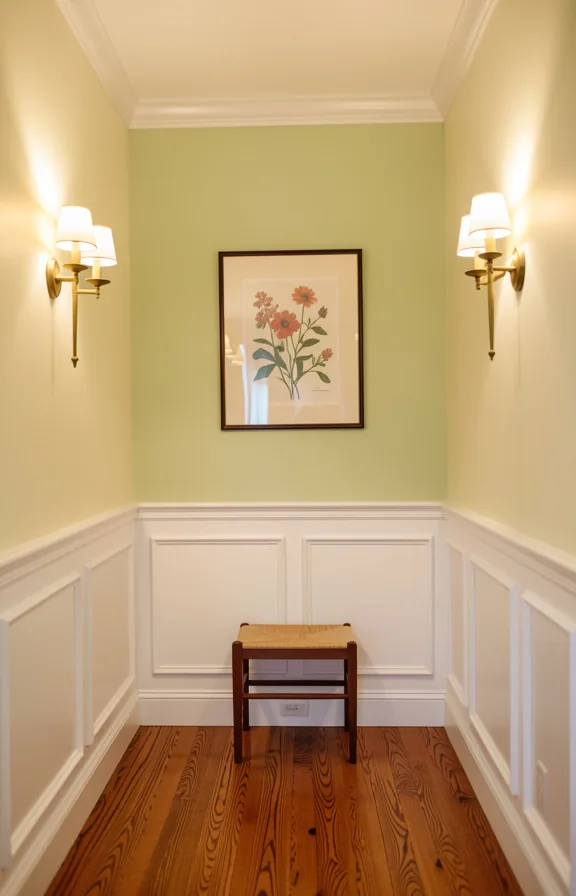
White painted wainscoting wraps the lower half of your hallway walls, creating a crisp horizontal line that anchors the space. The upper walls stay soft cream or pale gray, letting the paneling do the visual work without overwhelming a narrow entry.
Natural wood trim frames doorways and baseboards in warm honey or deeper espresso tones. A single brass fixture casts warm light across the wainscoted walls, making the paneling catch and glow slightly.
The floor is either polished hardwood or light-colored tile that reflects that overhead glow back upward. A small runner rug in muted green linen adds texture without visual clutter.
Pro Tip: Wainscoting works in tight hallways because the horizontal line visually widens the space without adding furnishings.
15. Sconce Lit Moody Corridor
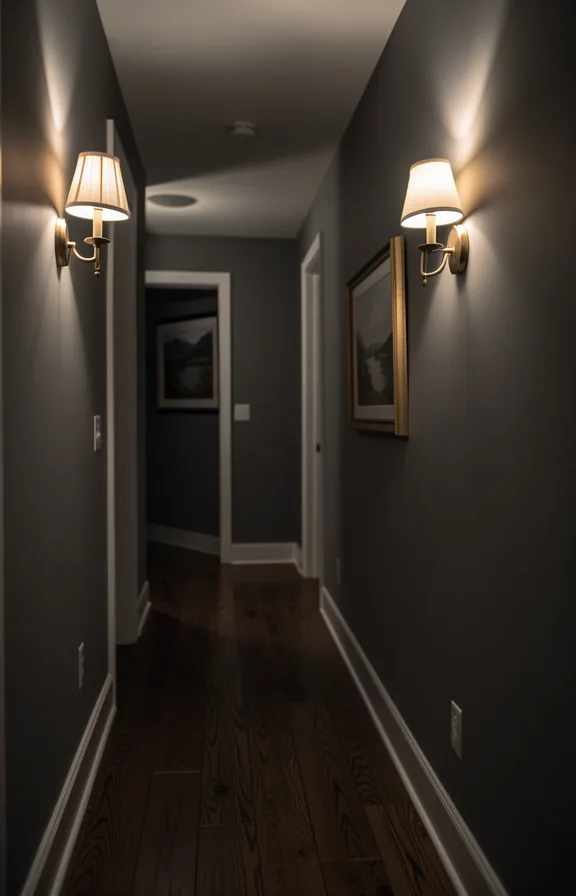
Warm amber light pools from brass sconces mounted at eye level along charcoal or deep gray walls. Your hallway becomes a gallery passage, not a forgotten transition space.
Dark hardwood flooring grounds the room in richness. Matte or slightly textured paint finishes absorb light rather than reflect it, creating depth.
This lighting strategy works because sconces at human height make narrow spaces feel intentional and layered. Low, warm light signals arrival without brightness that flattens small rooms.
A single framed print or mirror between sconces breaks the wall rhythm. This pauses the eye and prevents the corridor from feeling like a tunnel.
Pro Tip: Install sconces at 60 inches from the floor and space them 4 to 6 feet apart for balanced, intimate lighting that suits any hallway width.
16. Hardwood Warm Wood Tones
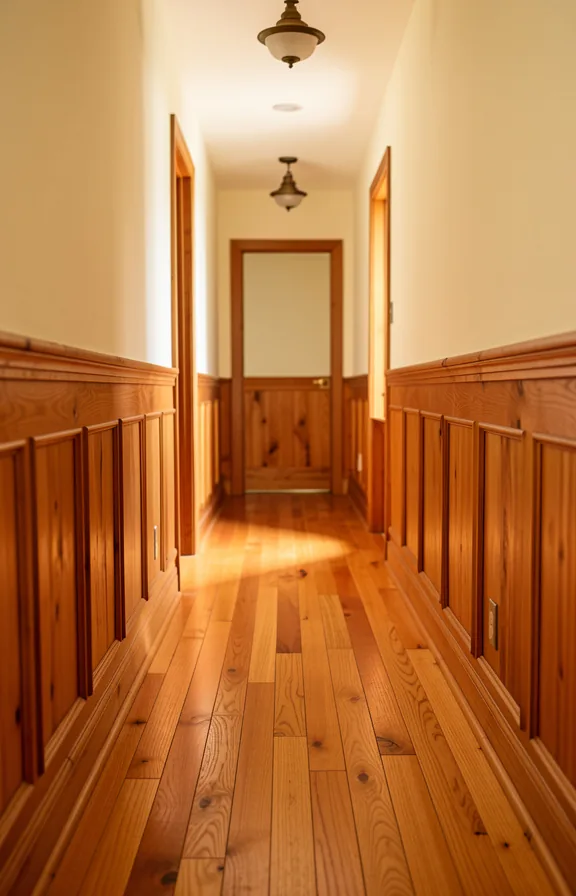
Warm amber and honey-toned hardwood flooring grounds your hallway in immediate authenticity. The wood grain catches natural light and creates subtle movement across the floor.
Add matching wainscoting halfway up the walls to anchor the space visually. This architectural detail makes narrow hallways feel proportionate and intentional.
Keep walls neutral above the wood to let the flooring be your statement. Soft cream or pale greige allows the wood’s warmth to dominate without overwhelming.
Layer in brass or bronze hardware on any doors or built-ins nearby. These metals echo the wood’s warmth and tie everything into one cohesive palette.
Pro Tip: Sand and seal existing hardwood rather than replacing it. Refinishing in a warm matte finish costs far less and still transforms the entire entry.
17. Painted Door Statement Entry
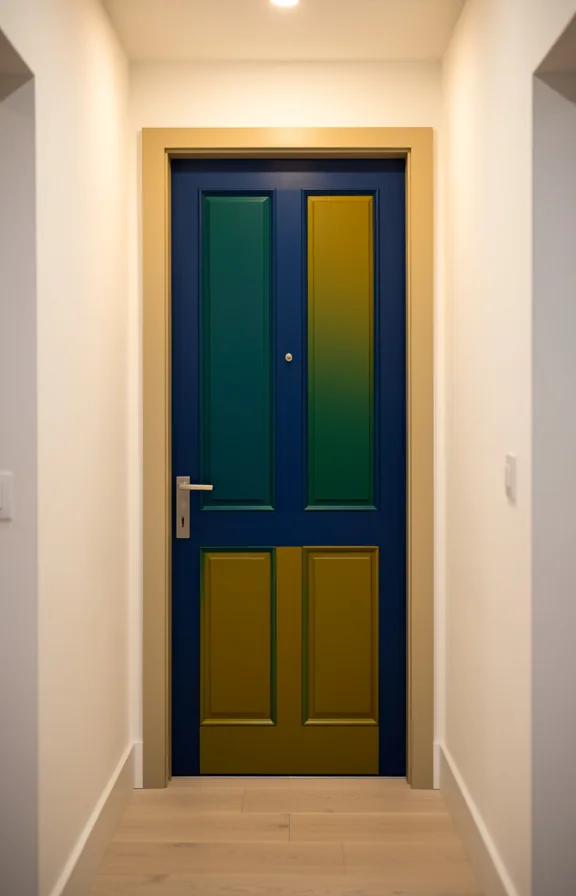
A deep jewel-toned door stops you the moment you step inside. The colour dominates the narrow space without overwhelming it because the walls stay neutral and plain.
Soft white walls frame the entry and let your eye land exactly where you want it. Matte or satin-finish paint on the door absorbs light rather than bouncing it back harshly.
Simple hardware in brushed brass or matte black keeps the focus on the colour itself. A small console table beside the door grounds the space and gives you a place to set keys.
Your hallway becomes a mini art installation the moment someone opens your front door. The boldness tells visitors something true about how you live.
Pro Tip: Paint the interior side of your door a softer shade so the impact lands on guests, not on you every time you leave your home.
18. Textured Plaster Wall Hallway
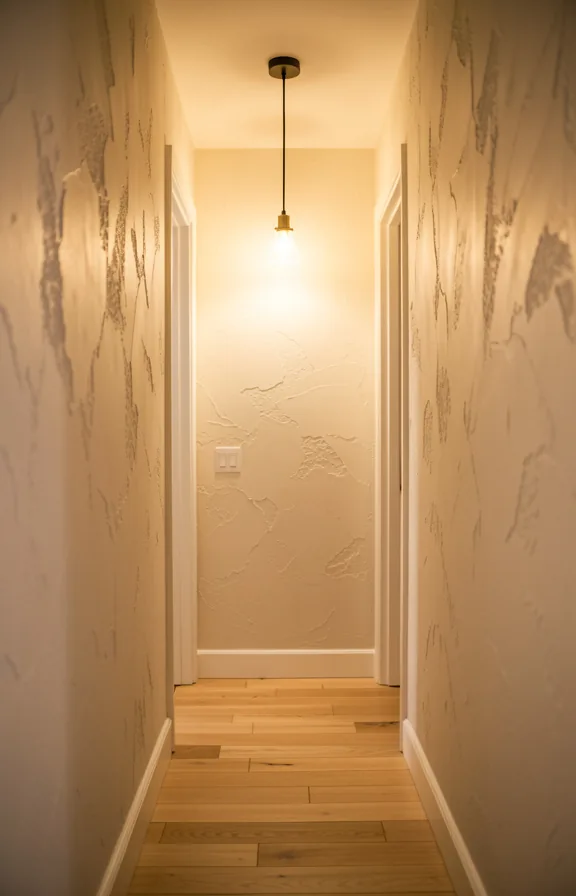
Rough plaster walls in warm cream or soft taupe create instant architectural character in a narrow space.
The uneven surface catches light differently throughout the day, making your hallway feel larger and less flat.
Pair textured walls with simple brass or matte black fixtures to let the walls do the talking.
Natural or soft warm lighting highlights the plaster’s depth without washing it out.
Pro Tip: Textured plaster works best when walls stay unfussy. Skip gallery walls and let the surface itself become your focal point.
19. Lantern Style Pendant Passage
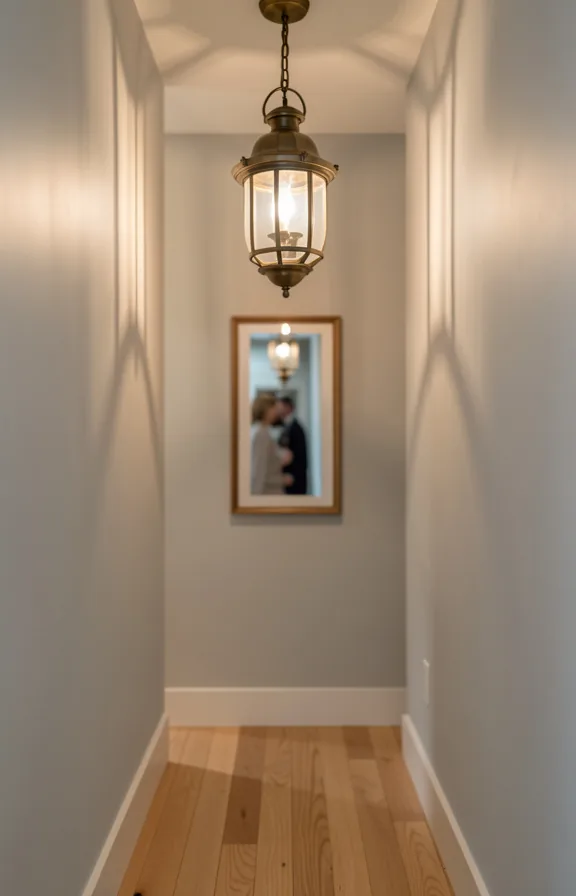
Warm amber tones pool downward from a single brass or bronze lantern pendant hung at eye level.
The fixture becomes your hallway’s anchor, casting soft light on cream or pale grey walls below.
This approach works in narrow spaces because it draws the eye upward without cluttering floor or wall space.
Pair the lantern with simple baseboards and a single narrow console table to keep sightlines clean.
The warm glow makes even a tight passage feel intentional and welcoming rather than purely functional.
Pro Tip: Install your pendant 6.5 feet above the floor to avoid bumping it while maintaining visual impact.
20. Minimal Modern Clean Hallway
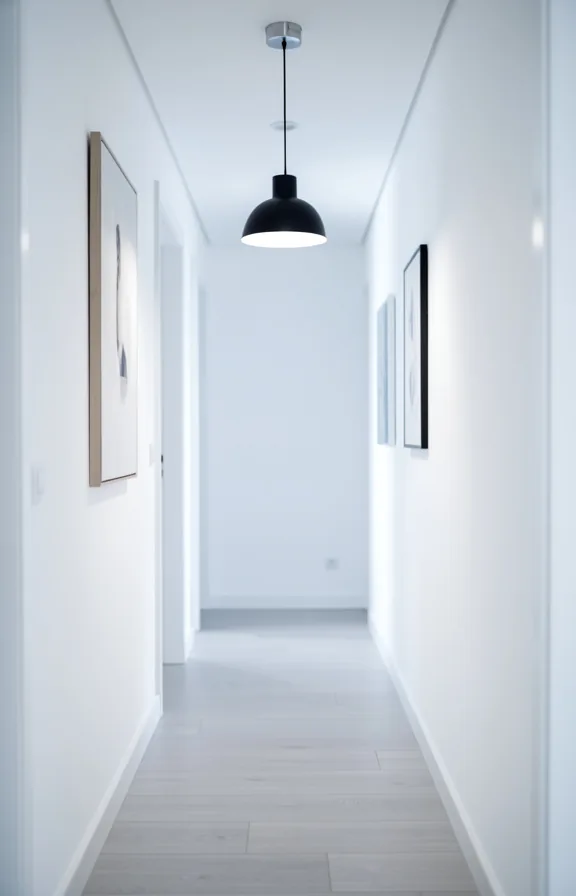
Crisp white walls paired with light gray polished concrete flooring create the foundation for this restrained approach.
Recessed ceiling lights cast even illumination without visual clutter, while a single statement piece anchors the space.
Think a narrow console table in natural oak or a tall mirror with a matte black frame, placed strategically near the entry.
The colour palette stays neutral: whites, grays, and warm wood tones only.
This design works because simplicity makes small spaces feel larger and more intentional.
Pro Tip: Use recessed lighting instead of wall fixtures to avoid visual bulk and maintain clean sight lines.
21. Decorative Baskets Organized Entryway
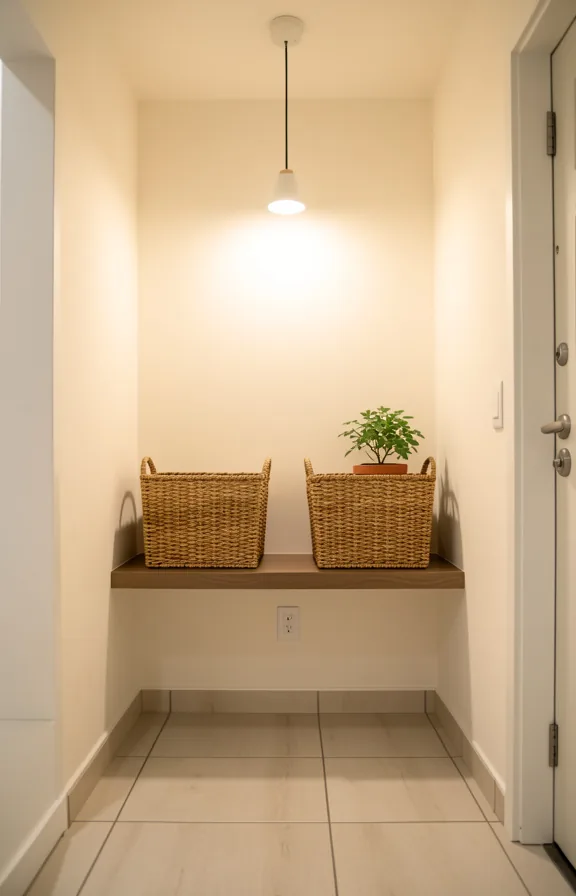
Woven baskets in natural fiber sit low on a console table or floating shelf. They anchor the entryway with texture and warmth.
The baskets hold everyday clutter out of sight: mail, shoes, keys, pet supplies. Your hallway stays calm and organized without looking staged.
Pair them with a neutral backdrop like white walls or soft gray paint. Add a thin mirror above to bounce light and create depth in narrow spaces.
Warm wood tones in the baskets echo any wooden door frames or trim. This repetition of material makes small hallways feel intentional rather than cramped.
Pro Tip: Use baskets of different heights rather than matching pairs. Varied heights create visual rhythm and prevent your entryway from feeling flat.
22. Ceiling Detail Coffered Hallway
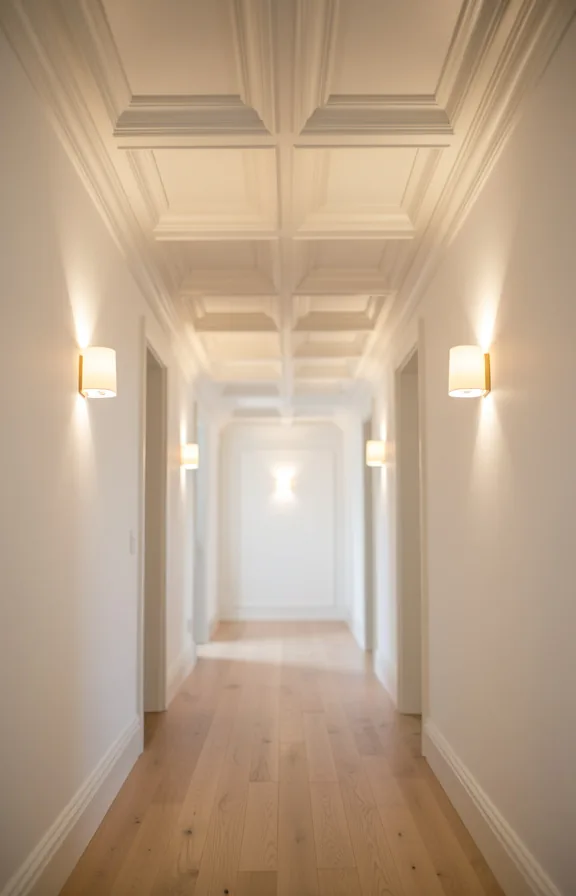
Cream-painted wooden coffered panels divide your ceiling into a geometric grid, anchoring the entire hallway with architectural depth and intention.
The recessed panels catch shadow and light differently throughout the day, creating natural dimension without extra decor.
Soft white or pale gray walls let the ceiling become the focal point, while warm wood tones in your flooring ground the space.
This detail makes a narrow hallway feel taller and more structured, turning a transit space into something people actually notice and remember.
Pro Tip: Coffered ceilings work best with indirect lighting tucked into the panel recesses, which highlights the geometry without harsh shadows.
Start with the Gallery Wall Black Frame Corridor idea. It requires only a hammer, nails, and art you likely already own or can print affordably.
This approach works because it transforms blank walls into a curated focal point without taking up floor space. Save this article and return to it each time you pass through your entryway.