

24 Summer Decor Swaps That Make Small Apartments Feel Bigger
This platform is proudly ad-free! To keep it that way and support our efforts, some posts may contain affiliate links. These links come at no extra cost to you, but they help us grow and continue providing valuable content. Thank you for your understanding and support!
Small apartments feel cramped when heavy colors and bulky furniture dominate the space. Summer is the perfect season to lighten your home by swapping darker pieces for airy, bright alternatives.
The good news: summer decor swaps don’t require a full renovation or a large budget. Most of these ideas cost under fifty dollars and take less than an afternoon to implement.
Light colors, minimal styling, and strategic placement are the real tricks to making small rooms feel open and bigger. These swaps work because they reduce visual clutter and reflect available natural light throughout your apartment.
This list walks you through concrete swaps you can start today. None of these require tools, painting expertise, or permanent changes to your rental.
The floating shelf idea at number ten costs under thirty dollars and opens up wall space instantly. Start there, then layer in the mirror placement strategy for even greater impact.
1. Crisp White Linen Living Room
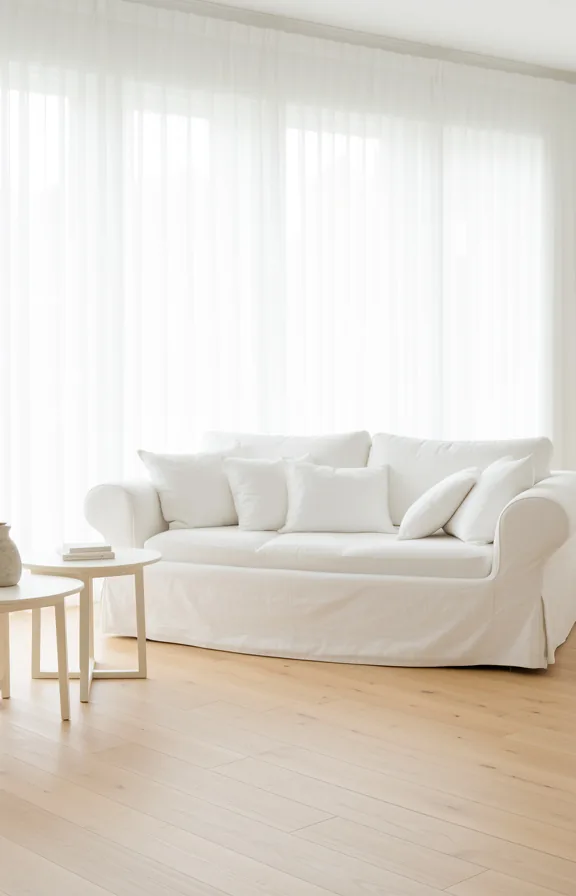
Cream-coloured linen upholstery anchors a room that breathes. White walls and pale wood floors stretch your visual space immediately.
Natural light floods through sheer curtains without heavy shadows. The palette reflects sunlight back into the room constantly.
Most of this look comes from paint and textiles. No structural changes needed to feel the full effect.
Pro Tip: Choose warm white paint over cool white. It keeps small rooms from feeling clinical or cold.
2. Pale Seafoam Bedroom Retreat
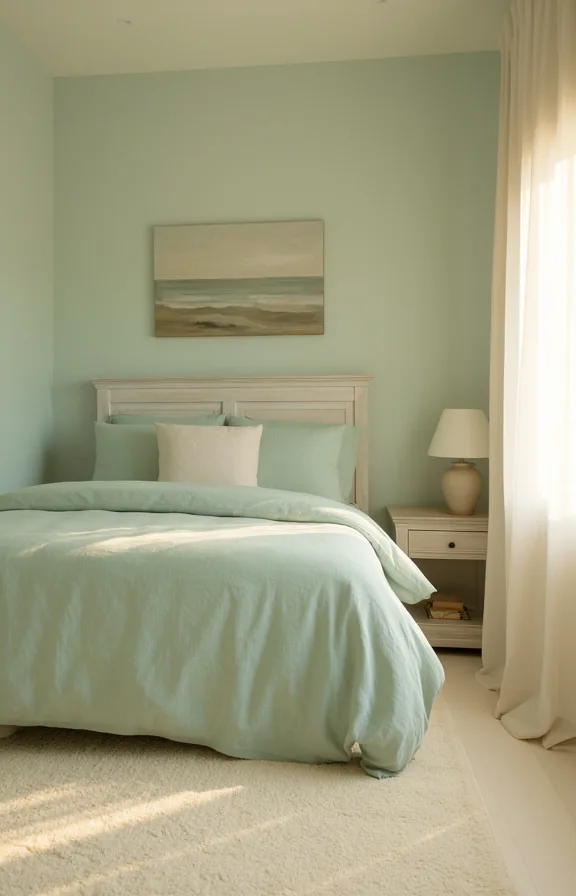
Soft seafoam walls create an airy backdrop that recedes visually. This pale, cool tone makes corners feel further away than they are.
Natural linen in cream or ivory softens the color without adding weight. Layer it with white pillows and a lightweight throw for breathing room.
This works best with minimal window treatments like linen panels or sheer curtains. Most of this look comes from paint and textiles. No structural changes needed.
Pro Tip: Paint all four walls the same seafoam shade, including trim. Unified color erases visual division and makes the room feel larger.
3. Sheer Curtain Layering Strategy
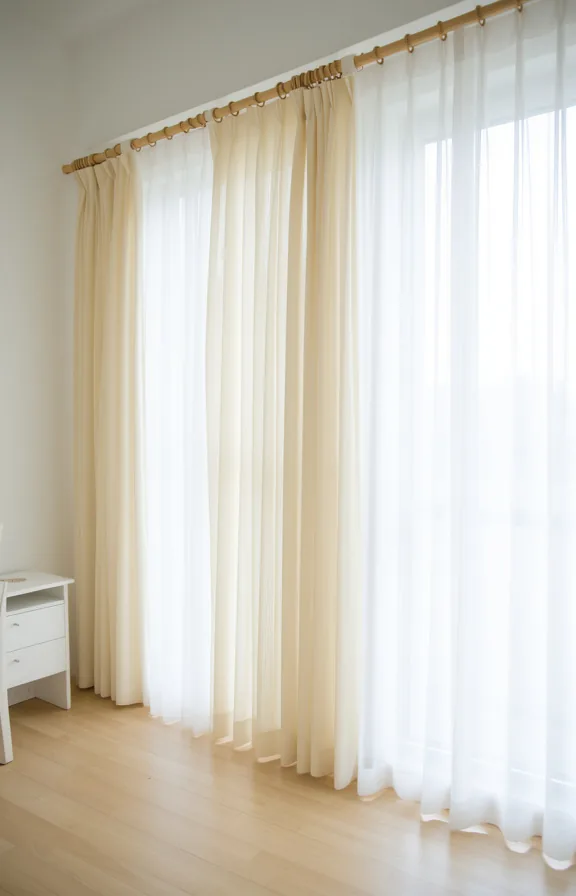
Lightweight linen sheers hang floor-to-ceiling in ivory or pale grey. A second layer of cotton voile filters harsh afternoon light without blocking the window frame.
The effect is pure airiness. Your eye travels straight through to the outside world. Small rooms gain instant depth when walls disappear behind transparent fabric.
This works in any apartment because it requires no installation beyond standard rods. Most of the impact comes from fabric choice. Natural fiber sheers age beautifully and cost less than solid alternatives.
Pro Tip: Hang sheers just inside the window frame, not beyond it. This preserves your wall space visually.
4. Minimal Wood Floor Staging
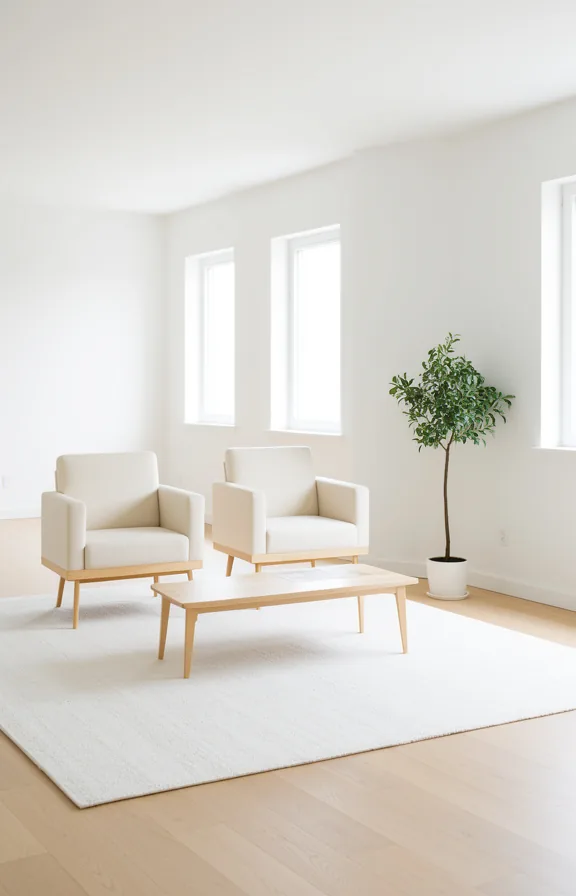
Light honey-toned wood floors anchor this room without overwhelming it. Your furniture sits low and wide. The baseline is bare floor, visible between pieces.
A cream linen rug defines your seating zone without cutting the room in half. Keep at least twelve inches of wood visible on all sides. This gap creates the illusion of space.
Summer light floods through windows and hits the wood at different angles throughout the day. The floor becomes a design feature itself. This works best in homes with decent natural light. The wood’s warmth does the visual work for you.
Pro Tip: Leave your floor mostly empty. More visible wood equals a larger-feeling room.
5. Light Neutral Wall Canvas
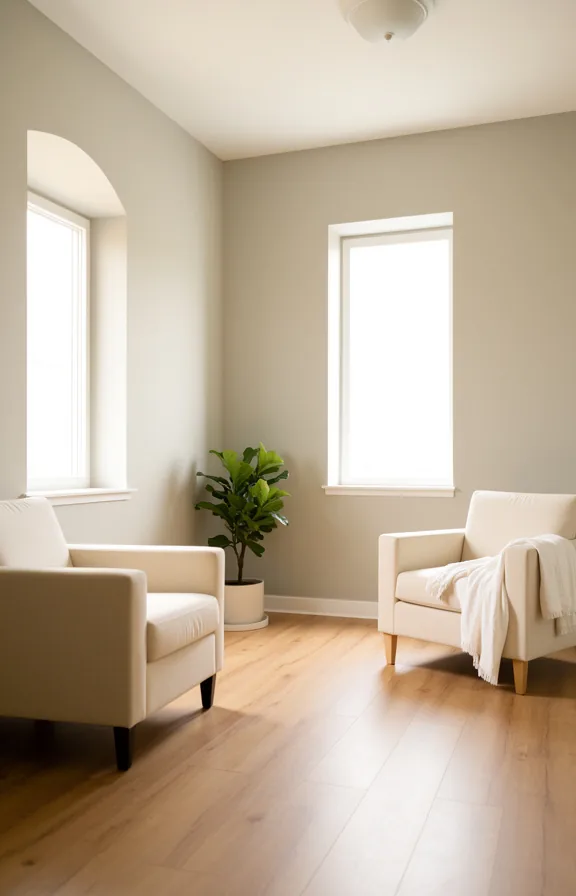
Cream walls paired with soft white trim create architectural clarity in tight spaces. The pale backdrop lets your furniture breathe instead of closing in.
Your ceiling becomes a design tool when painted in off-white or pale grey. Light overhead draws the eye upward naturally and adds perceived height.
Linen curtains in natural beige frame windows without darkening corners or eating visual space. This approach works best in homes with smaller windows. No structural changes needed.
Pro Tip: Choose matte finishes over glossy paint. Matte absorbs light evenly and prevents walls from feeling reflective or cramped.
6. Airy Glass Furniture Arrangement
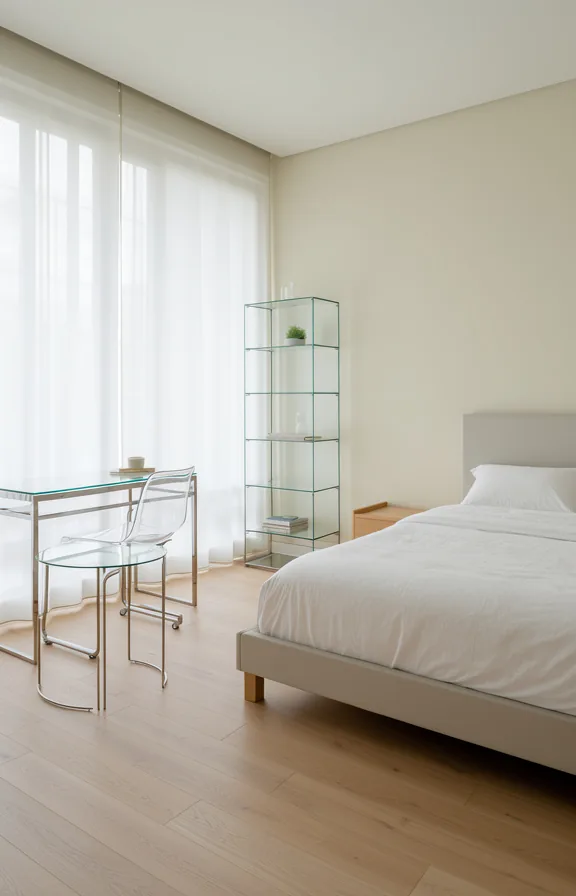
Glass and metal frames replace solid wood throughout the room. Light passes through instead of stopping at furniture edges.
Your eye moves past the pieces to the wall beyond. This creates depth where none exists physically.
The colour palette stays neutral: whites, soft grays, pale wood tones. Brass or chrome hardware catches light and adds warmth without bulk.
This works best in rooms with natural windows. The glass only performs this trick when sunlight travels through it.
Pro Tip: Swap one solid nightstand for a glass top on metal legs.
7. Soft Cream Textile Refresh
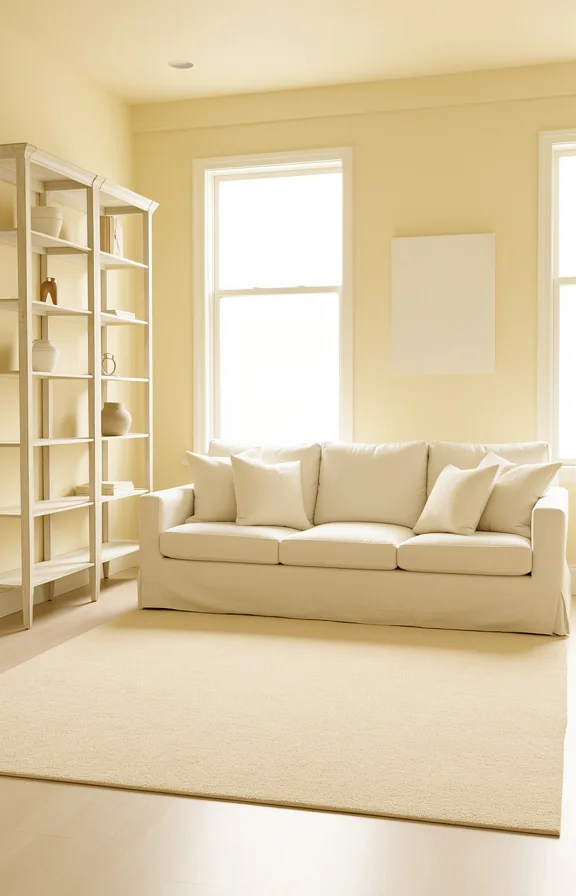
Warm cream linen upholstery against pale walls creates visual continuity. Your eye travels without stopping, which makes compact rooms read larger.
Layer in natural fiber textures like jute rugs and cotton throws. These materials catch light differently than hard surfaces.
This works best in homes with good natural light. Most of this look requires only textile swaps, no furniture replacement.
Pro Tip: Choose textiles in one cream family rather than pure white to avoid a sterile, clinical feel.
8. Tall Vertical Plant Display
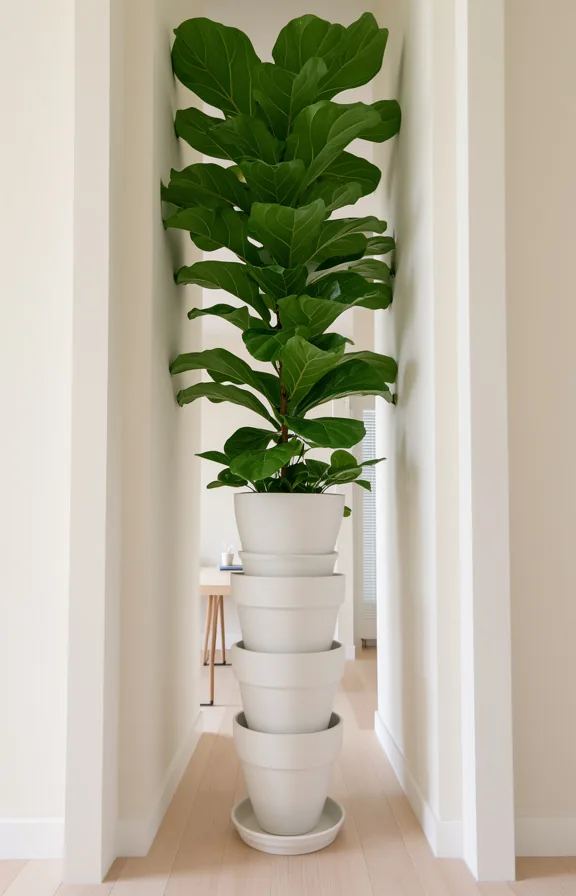
Rough terracotta pots in graduating sizes stack upward along one wall. Your eye travels up instead of scanning outward across your floor.
A single fiddle leaf fig or monstera dominates the corner in soft, indirect light. The vertical scale makes your ceiling feel higher than it is.
Cream-colored ceramic planters contrast against bare white drywall or soft sage paint. This works best in homes with decent natural light. Most of the effect comes from placement and restraint, not quantity.
Pro Tip: Group plants in odd numbers and stagger the heights unevenly. Repetition feels intentional, not accidental, on camera and in person.
9. Pale Yellow Accent Wall
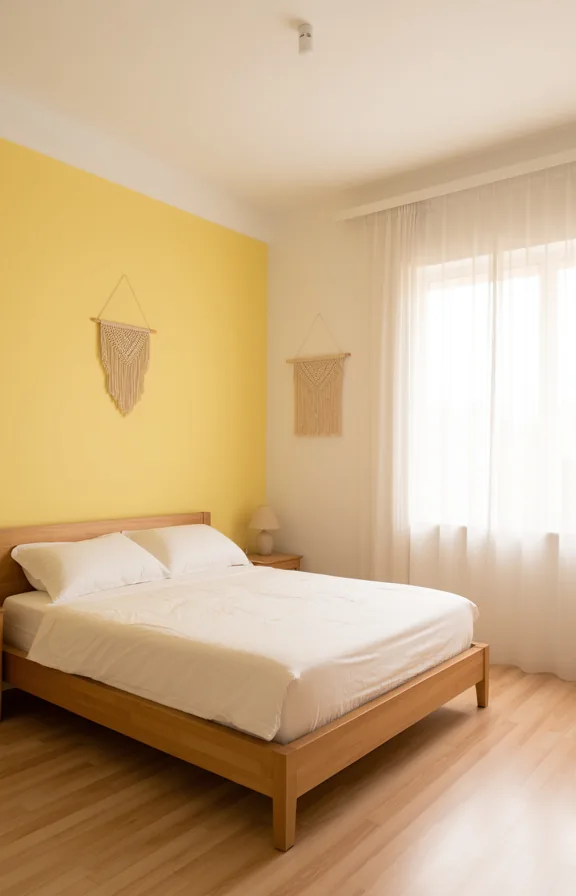
Warm amber tones wash across one wall. A soft yellow matte finish catches morning light without glare.
Your eye travels to that wall first, making the room feel intentional. The remaining walls stay crisp white or pale cream. Most of this look comes from paint and textiles. No structural changes needed.
Pale yellow creates depth without darkening your space like navy or charcoal would. Pair it with natural wood furniture and white bedding for a clean, airy feel. This works best in rooms with at least one natural light source.
Pro Tip: Paint only one wall. This anchors the room and makes small spaces feel larger than covering all walls.
10. Simple Floating Shelf Corner
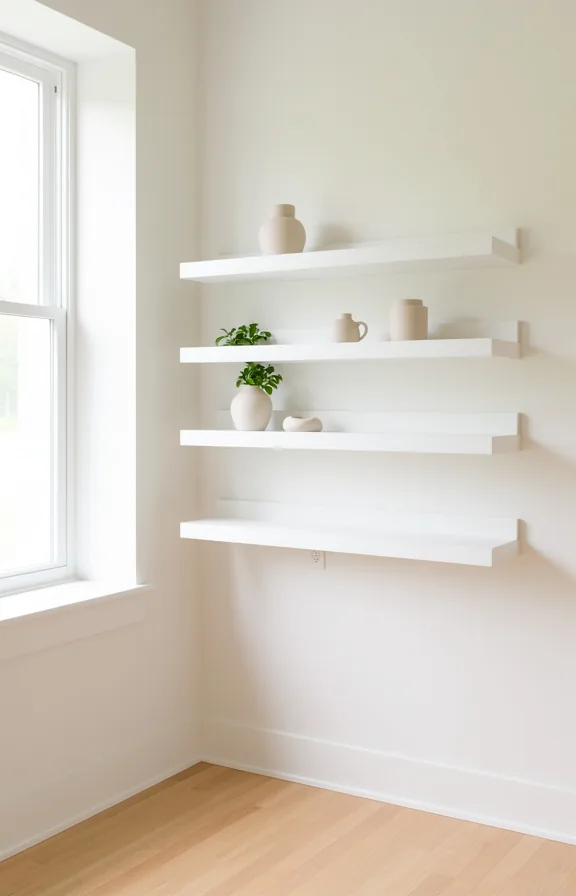
Pale ceramic vessels sit low on white-painted shelves. A single trailing plant breaks the horizontal line above.
This corner works because it pulls your eye upward. The vertical space suddenly becomes useful instead of wasted.
Most of this look comes from restraint and paint. The shelf itself costs little; the effect comes from what you choose to display.
Pro Tip: Mount shelves just below eye level. Higher shelves feel cramped in small rooms.
11. Bleached Wood Coastal Kitchen
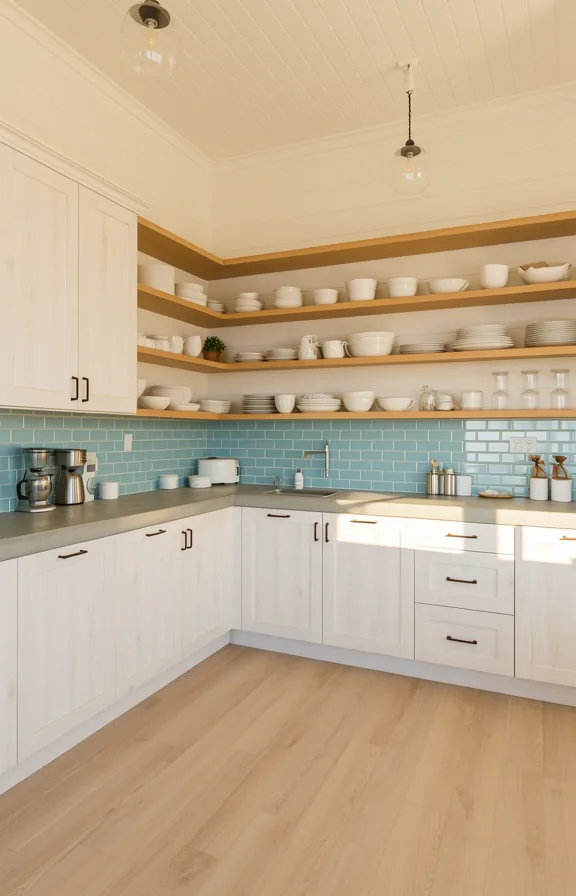
Pale bleached oak shelving lines your walls instead of cabinets. White dishware and glassware fill the open space without visual clutter.
The colour palette stays soft: off-white, cream, pale grey, and warm sand tones. Natural light bounces across every surface in your kitchen.
This works best when your kitchen catches morning sun. Most of the effect comes from removing upper cabinets and choosing pale materials.
Pro Tip: Install open shelving at eye level or slightly below. Higher shelves make tight kitchens feel cramped and harder to access.
12. Natural Fiber Floor Layering
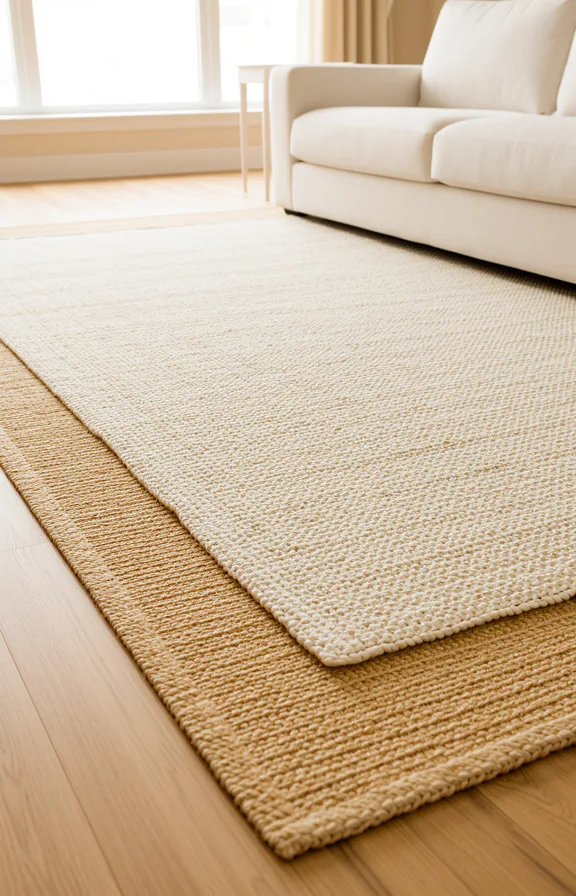
Warm sisal or jute anchors your seating area with texture. Cream and honey tones keep the floor visually light.
A smaller natural fiber runner layered on top defines your walkway without blocking sight lines. Your eye travels farther across the room.
Gaps of bare floor show between rugs, breaking up visual weight. This works best in homes where light streams across low furniture pieces.
Pro Tip: Choose flatweave rugs over plush pile. Flat textures reflect light better in compact spaces.
13. Open Shelving Bedroom Storage
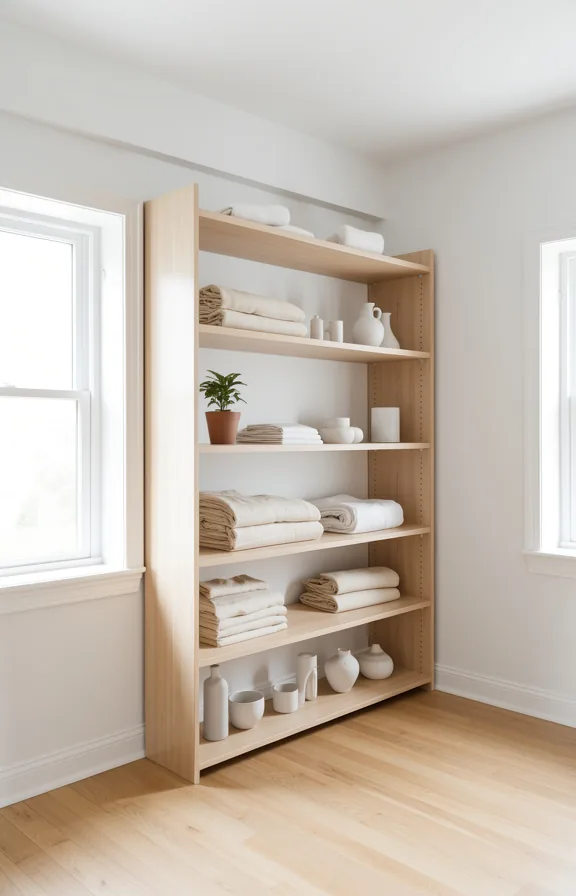
Pale natural wood shelves run the full bedroom wall. White walls behind them keep everything light.
Folded linens in cream and soft grey sit neatly stacked. A few books stand upright between them.
Your eye travels upward instead of stopping at a wall. This works best with consistent styling because clutter reads heavy. Most of this look comes from paint and smart editing. No structural changes needed.
Pro Tip: Leave the bottom shelf mostly empty to anchor the wall visually and maintain breathing room.
14. Monochrome Neutral Palette Approach
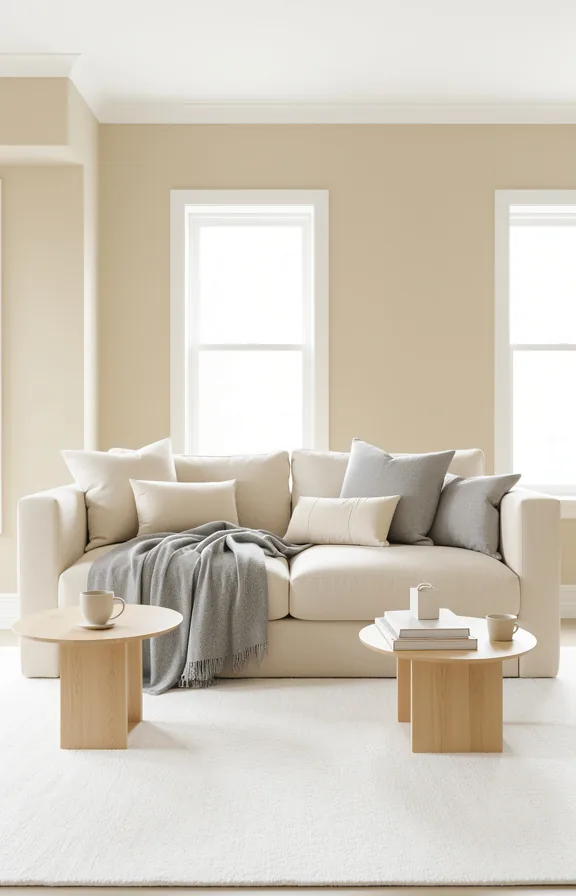
Warm cream walls meet natural linen upholstery in this quiet room. Pale oak furniture and soft taupe textiles create one flowing colour story.
The eye travels uninterrupted across surfaces. This continuous palette makes your small space feel larger than walls alone suggest.
Most of this look comes from paint and textiles. No structural changes needed to pull off a monochrome room that breathes.
Pro Tip: Vary your texture, not your colour, to keep the room from feeling flat or boring.
15. Strategic Mirror Placement Strategy
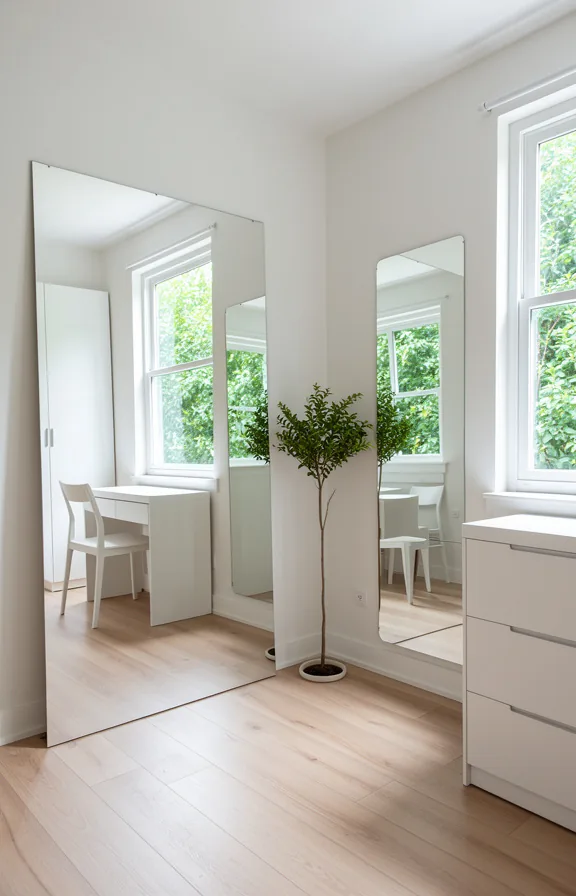
Pale wood floors and white walls become the canvas here. Large mirrors in thin brass frames bounce natural light across the entire room.
Position a floor mirror opposite your brightest window. This multiplies afternoon sunlight without adding fixtures or taking up floor space.
Smaller round mirrors cluster on one wall at eye level. They reflect greenery, sky, and the feeling of depth you actually need.
Pro Tip: Hang mirrors slightly off-center on walls. Symmetry reads as staged. Offset placement feels discovered and intentional.
16. Light Marble Accent Pieces
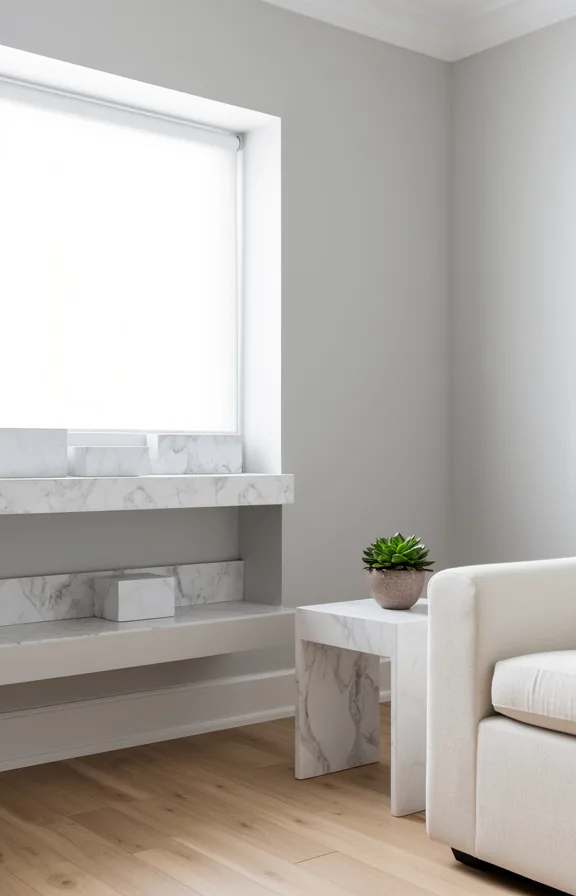
Low and wide across your shelf, light marble pieces catch and reflect natural light. This quiet material reads as expensive without heavy visual weight.
Pale stone in summer makes your room feel cooler and more open. The soft grey or cream tones recede into background space.
This works best with minimal styling around it. Most of the effect comes from material choice, not arrangement.
Pro Tip: Place marble on lower shelves where it grounds the eye without crowding upper space.
17. Sage Green Botanical Corner
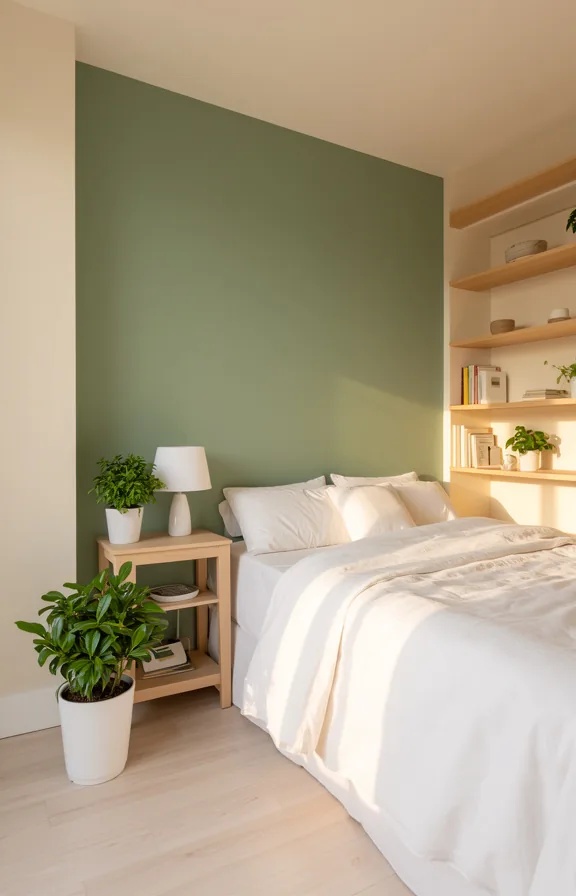
Soft sage green walls recede visually from your eye. White trim and pale wooden furniture keep the space open. A tall potted plant draws attention upward, not outward.
Natural light passes through leaves without heavy shadows. The corner becomes a breathing space inside your room. This works best with a single window nearby.
Most of this look comes from paint and textiles. No structural changes are needed to achieve it. The vertical scale of the plants is part of the effect.
Pro Tip: Place your largest plant in the corner behind furniture, not in front of it. This trick opens your floor plan visually.
18. Minimal Metal Frame Decor
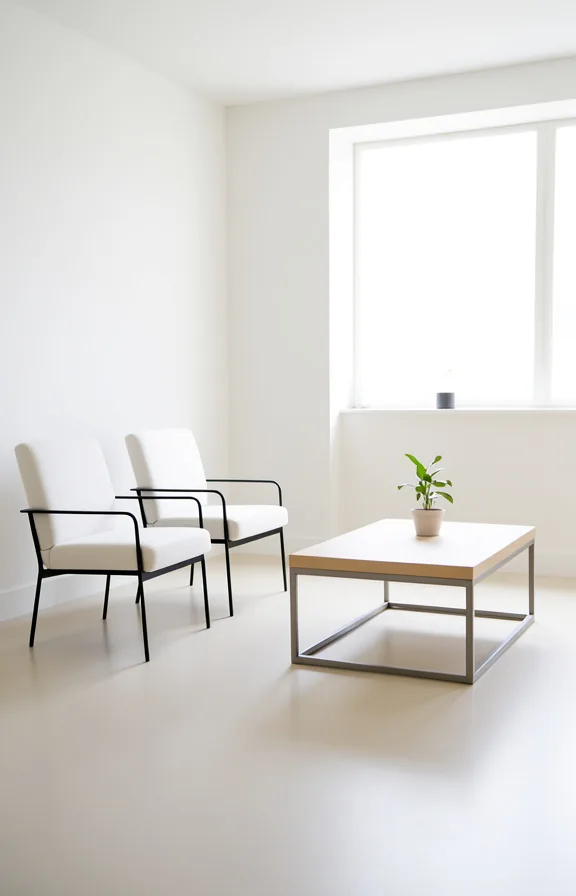
Slender metal frames create visual lightness in tight spaces. Black or brass legs on furniture expose floor area underneath.
This approach works in rooms with limited square footage. The architectural honesty of visible frames makes walls feel farther away.
Your summer palette stays cool with white upholstery and pale textiles. Metal reflects natural light without taking up visual weight.
Pro Tip: Choose open-frame designs over solid bases. Your eyes travel through the furniture rather than stopping at it.
19. Natural Linen Sofa Grouping
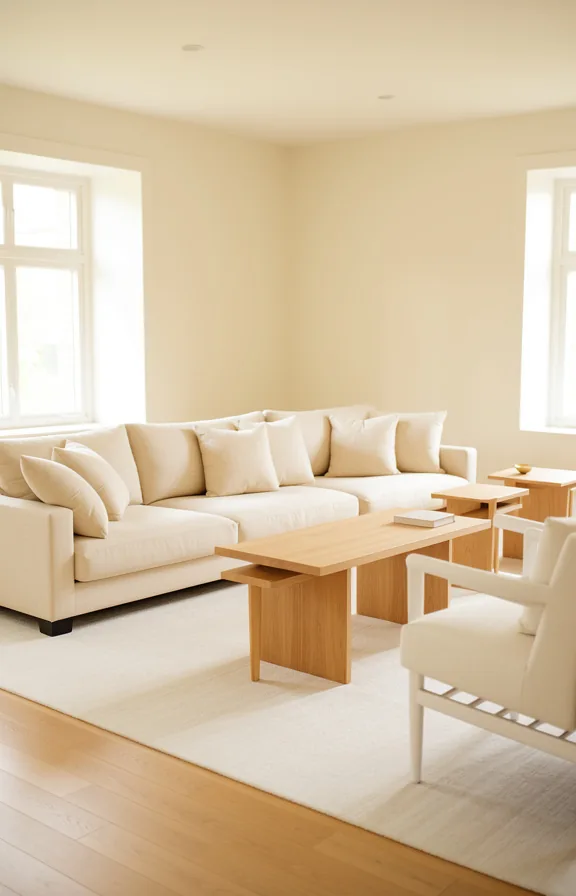
Cream and natural linen upholstery creates an open, breathing quality. The soft fabric absorbs light instead of reflecting it back.
Pair your sofa with pale wood frames on side tables and chairs. Light wood recedes visually, making your space feel wider.
Layer in white linen throws and cream-toned pillows to multiply the effect. This works best in homes with good natural light. Most of this look comes from fabric choices. No furniture replacement needed.
Pro Tip: Keep sofa legs exposed and thin, never skirted. Visible floor underneath reads larger than a bulky silhouette.
20. Pale Greige Accent Nook
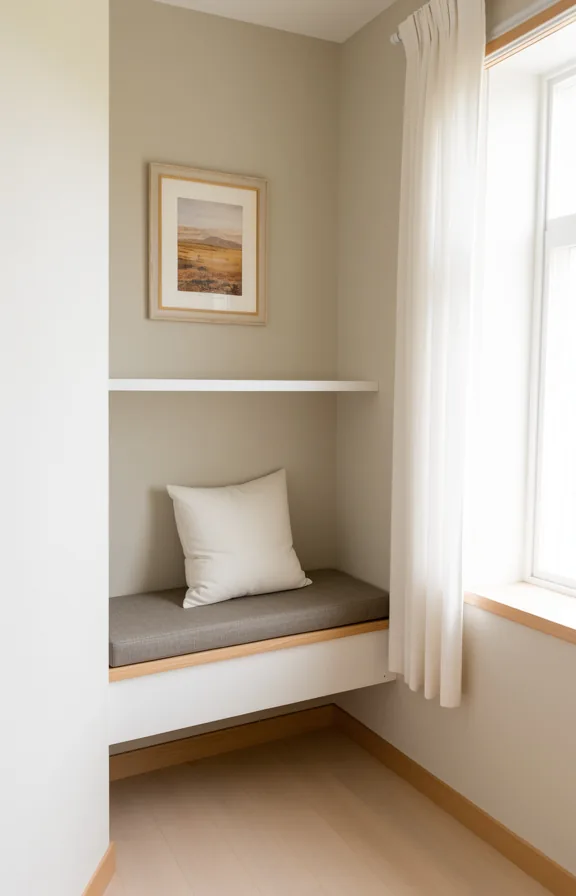
Soft pale greige walls create a recessed corner that feels intentional, not cramped. A single white floating shelf anchors the space without visual weight.
Natural light floods across the neutral surface throughout the day. This colour absorbs brightness rather than bouncing it back aggressively.
Most of this look comes from paint and careful negative space. No structural changes needed to achieve this quiet, expansive feeling.
Pro Tip: Paint only the nook wall, leaving adjacent walls white. This creates depth without darkening your entire room.
21. Sparse Accessory Styling Method
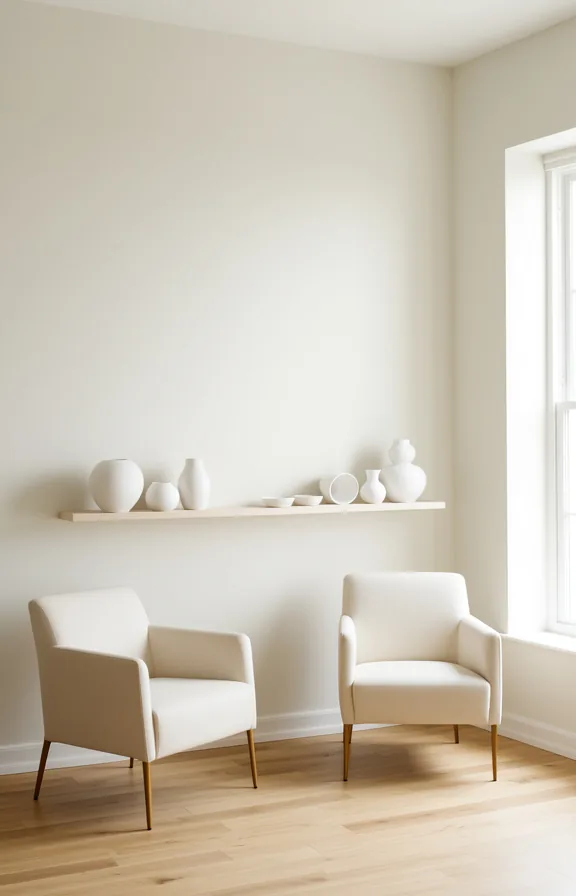
Three ceramic vessels sit on a single shelf. The rest of the surface stays completely bare.
White walls stretch uninterrupted. Negative space becomes your most important material here.
This works best in homes with existing natural light. Empty surfaces amplify brightness and make rooms read larger instantly.
Pro Tip: Group objects in odd numbers on one shelf only. Leave all other surfaces completely clear for maximum visual rest.
22. Light Oak Furniture Selection
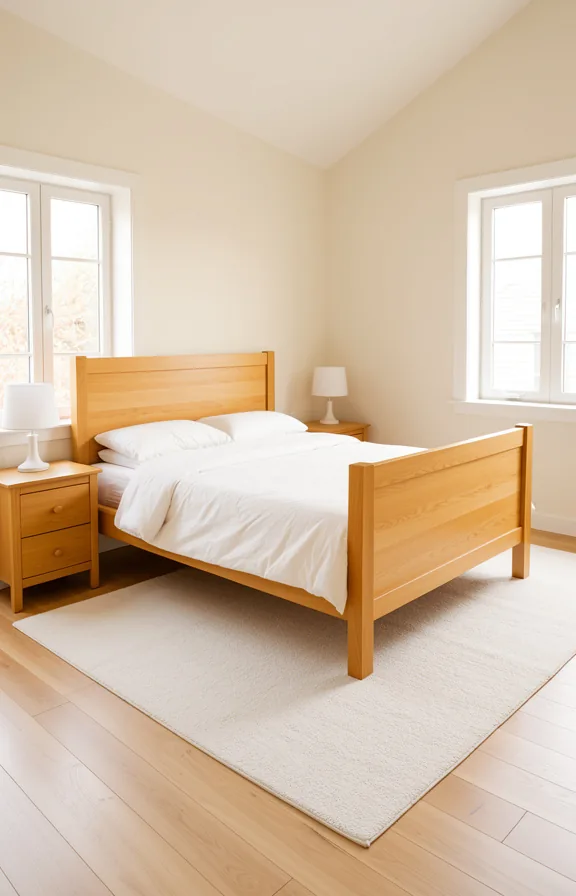
Pale oak wood frames your room with warmth without visual weight. The grain reads soft. The colour recedes into the background instead of anchoring it.
Your walls stay bright because furniture doesn’t compete for attention. Light wood pairs with cream, white, and sand tones naturally. The whole room breathes as one palette.
This works best in rooms where you can control natural light sources. Most of the effect comes from material choice. No structural changes required at all.
Pro Tip: Choose solid wood over veneers so the wood tone stays consistent as light moves through your space.
23. Soft Shadows Ambient Lighting
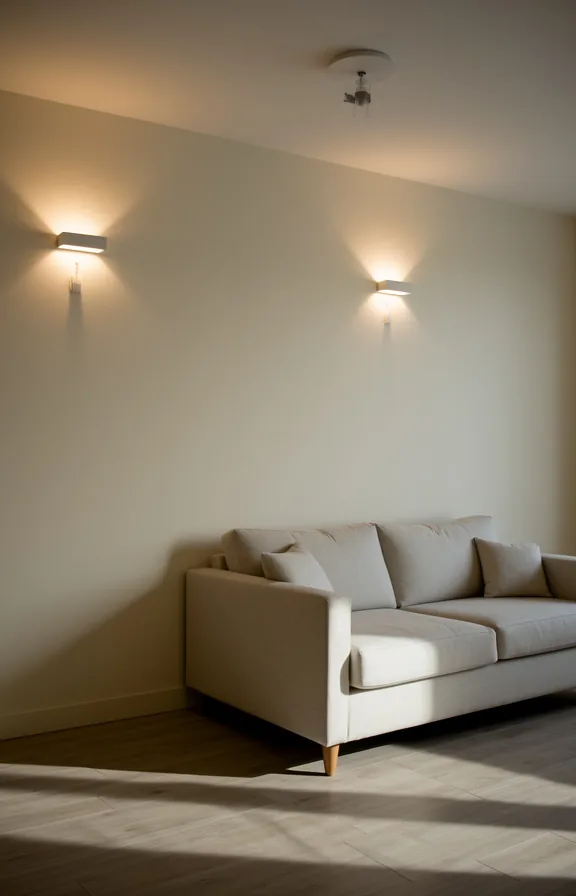
Warm amber tones pool across pale walls from low-level light sources. Shadows stretch long and gentle across your floor.
This room breathes because the light sits below eye level. Uplighting and side-mounted fixtures create architectural interest without clutter.
Cream walls, pale linen, and soft brass hardware anchor the palette. This works best with minimal furniture and natural wood textures. Most of this effect comes from fixture placement, not new purchases.
Pro Tip: Place light sources on lower shelves or floor level. Shadows on walls make rooms feel larger than overhead fixtures.
24. Uncluttered Summer Entry Foyer
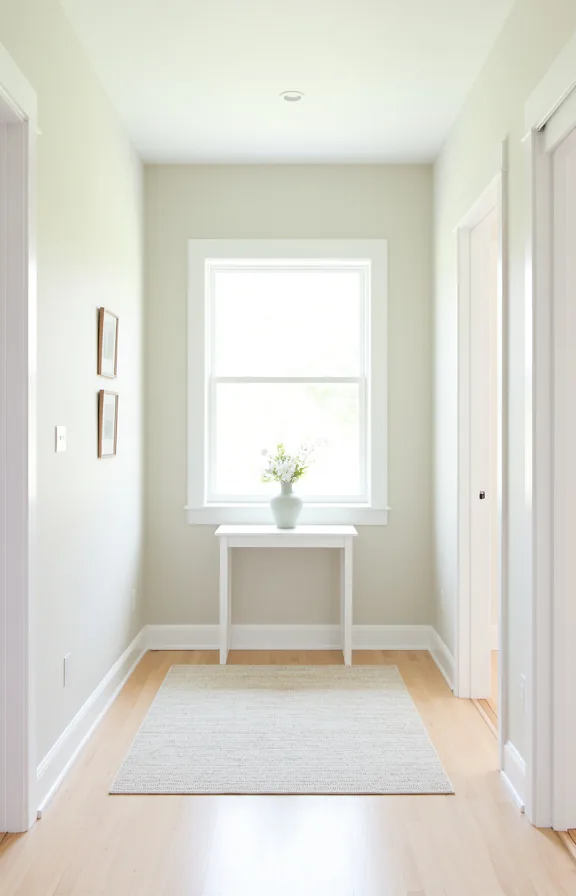
Pale cream walls meet natural light from a single window. The space holds only what enters and exits daily.
A woven wall hook in light oak hangs keys and a linen tote. The floor stays clear except for one shallow ceramic tray near the door.
This concept works in any apartment size. Most of the impact comes from removing items rather than adding them.
Pro Tip: Paint your entry in the same colour as your main room. This erases visual boundaries and doubles perceived depth.
Begin with the crisp white linen living room swap at number one. It is the easiest first step because swapping your existing sofa cushions for white linen pillows takes one hour and costs almost nothing.
Pair this with the sheer curtain layering strategy from number three. Together, these two changes flood your space with light and create an immediate sense of openness.
Save this article to your home decor board and return to it as seasons change. Your small apartment will feel infinitely larger with just these simple swaps in place.