

19 Small Living Room Layout Ideas for Long Narrow Apartments
This platform is proudly ad-free! To keep it that way and support our efforts, some posts may contain affiliate links. These links come at no extra cost to you, but they help us grow and continue providing valuable content. Thank you for your understanding and support!
Long narrow living rooms are notoriously difficult to arrange. The length works against you, pulling furniture far apart and making the space feel more like a hallway than a gathering place.
This layout challenge stops many people from enjoying their apartments fully. You end up with awkward gaps, furniture pushed to the walls, and a room that never quite feels purposeful or welcoming.
This list offers complete layout ideas you can implement immediately, regardless of your budget or how much furniture you own. Each concept is designed to work with the narrow proportions of your space, not against them.
Pick one that matches your style and your room’s dimensions. Your narrow living room can become the most functional and beautiful room in your home.
1. Floating Furniture Conversation Zone
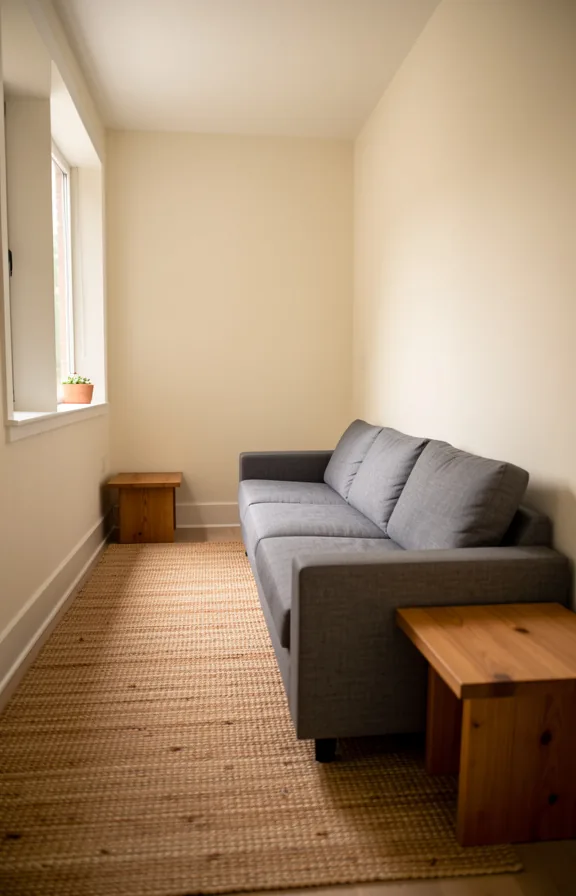
A low sectional or two facing armchairs sit anchored on a natural fiber rug, pulled away from the walls entirely.
Warm wood side tables flank the seating, with a brass or ceramic table lamp casting soft light at shoulder height.
Cream linen upholstery, layered with sage or charcoal throw pillows, creates an intimate gathering spot in the room’s center.
The floating arrangement breaks up your narrow corridor visually and invites conversation rather than broadcasting a television.
Pro Tip: Float your seating perpendicular to the long walls instead of parallel, which visually widens the room and stops the hallway feeling from taking over.
2. Angled Sectional Corner Setup
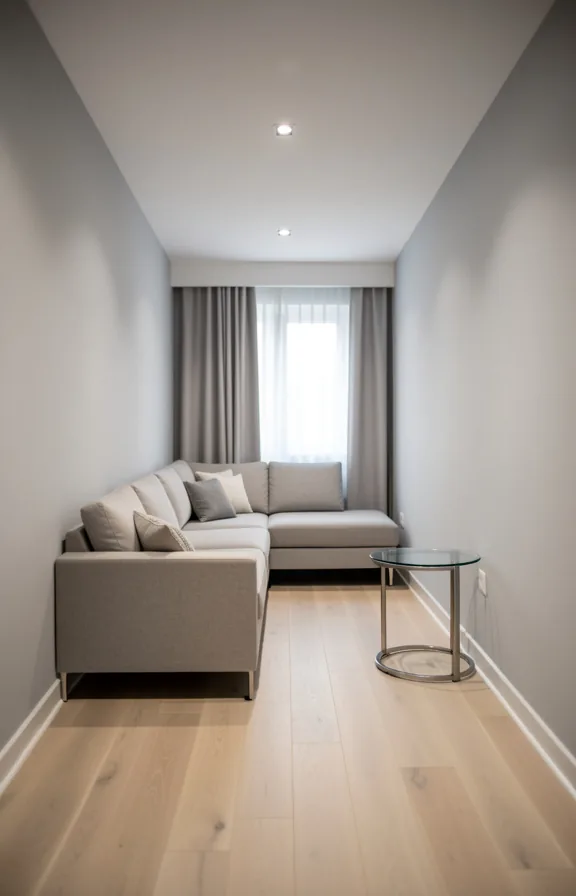
Warm gray upholstery anchors the corner while the angled frame breaks up the rectangular awkwardness of a narrow room.
A low wooden console table sits perpendicular to the sectional, creating a natural seating zone without blocking sightlines down the length of the space.
Soft white walls and cream linen throw pillows keep the palette calm and open, preventing the corner from feeling cramped.
A brass floor lamp stands beside the angled armrest, casting warm light directly into the seating area where you actually sit.
This layout works well because the angled placement stops the eye from traveling straight down the room’s long axis.
Pro Tip: Angle your sectional at 45 degrees rather than flush to the corner. This breaks visual monotony and makes the room feel intentionally designed instead of stuck.
3. Double-Sided Console Room Divider
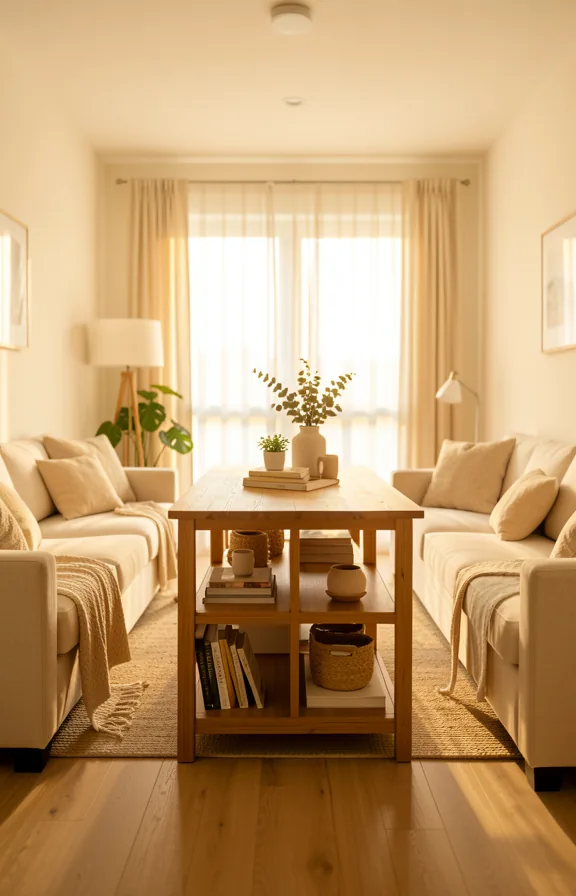
Light oak wood and open shelving break your narrow space into two functional zones without blocking sightlines.
The console sits low and horizontal, anchoring the room visually while letting light pass through above it.
You get display surface on both sides for books, plants, and framed photos that face either direction.
Natural wood tones warm the space while the open structure keeps the room feeling spacious, not boxed in.
Soft lighting reflected off the wood grain adds depth without creating harsh shadows in tight quarters.
Pro Tip: Choose a console with open legs and shelving rather than a solid base to maintain sight lines across your length.
4. Layered Lighting Gallery Wall
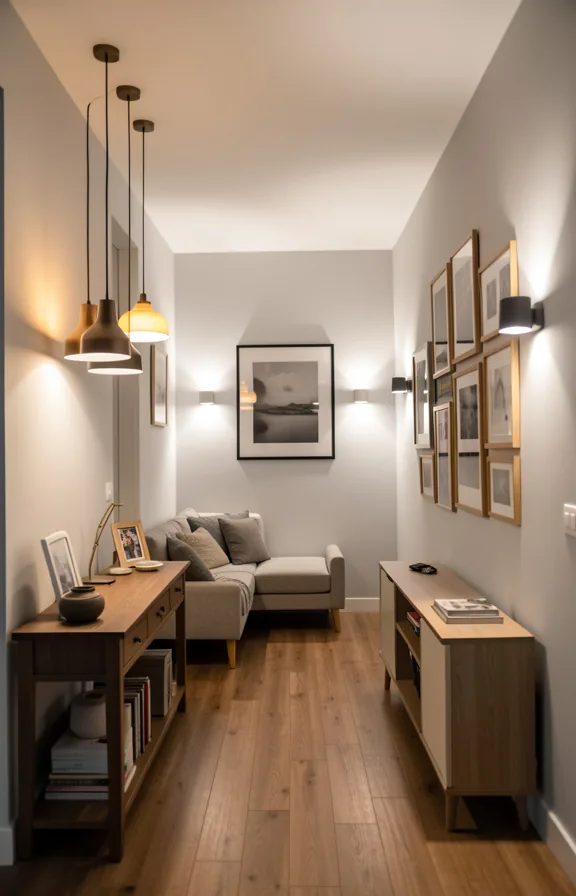
Warm amber tones pool from brass wall sconces flanking a gallery of framed prints in matte black.
The prints sit low, just above your sight line as you sit, anchoring the narrow wall without drawing the eye upward.
This arrangement works because lighting below eye level makes compact rooms feel intimate rather than exposed.
Your gallery stays tight and clustered, never stretching the full width of the wall.
A single accent color in the frames (warm metal, cool black, or natural wood) keeps the composition grounded.
Pro Tip: Install sconces at seated eye height, roughly 48 to 60 inches from the floor, to anchor the wall and make the space feel proportional to your body.
5. Diagonal Area Rug Foundation
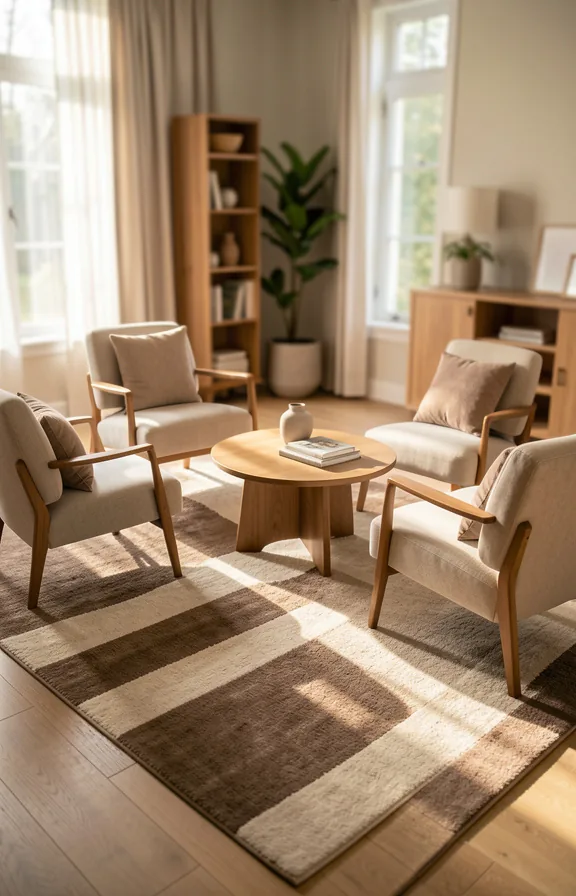
A diagonal area rug breaks the rigid geometry of a long, narrow room instantly. Instead of running parallel to the walls, angle your rug 45 degrees to create visual width and flow.
Warm cream or soft grey wool anchors a low seating cluster at one end. Two modern armchairs in linen sit perpendicular to a compact sofa, all four legs grounding on the rug.
Natural light from a single window reflects across the rug’s surface, making the space feel less corridor-like. A low brass or oak side table sits within the rug’s border, reinforcing the zone.
Cooler walls in soft white or pale taupe let the rug’s warmth define the living area without closing it in further.
Pro Tip: Angle your rug 45 degrees to the longest wall, not the short ends, to visually widen the room’s apparent depth.
6. Modular Sofa Configuration System
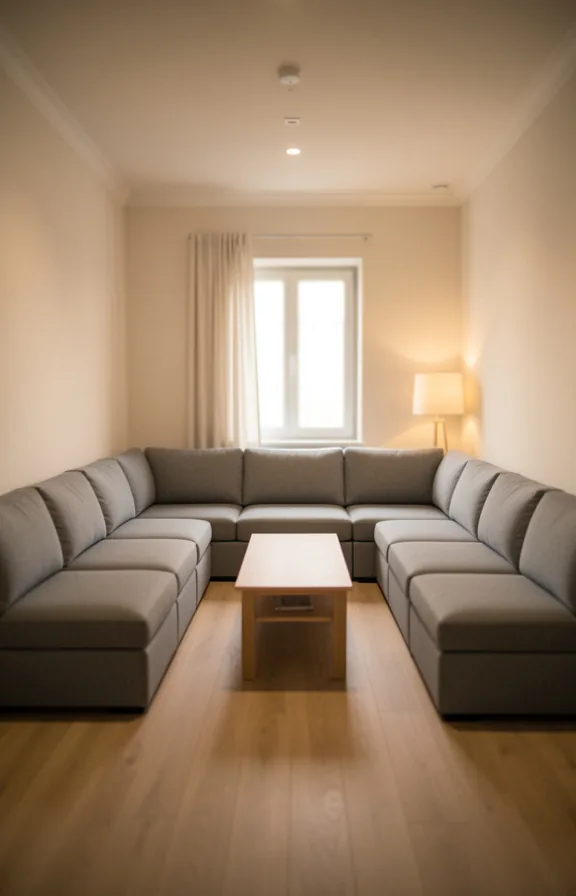
Low-profile modular pieces in neutral linen or performance fabric break up your narrow space without blocking sightlines.
An L-shaped configuration hugs the corner, creating a defined seating zone that feels intentional, not cramped.
Pair this with a small side table in wood or metal to anchor one end and provide surface space for lamps.
The real advantage: you can rearrange or remove individual sections as your needs shift over time.
Pro Tip: Choose a sofa with exposed wooden legs rather than a skirted base to keep the room feeling open and airy.
7. Window Seat Built-In Bench
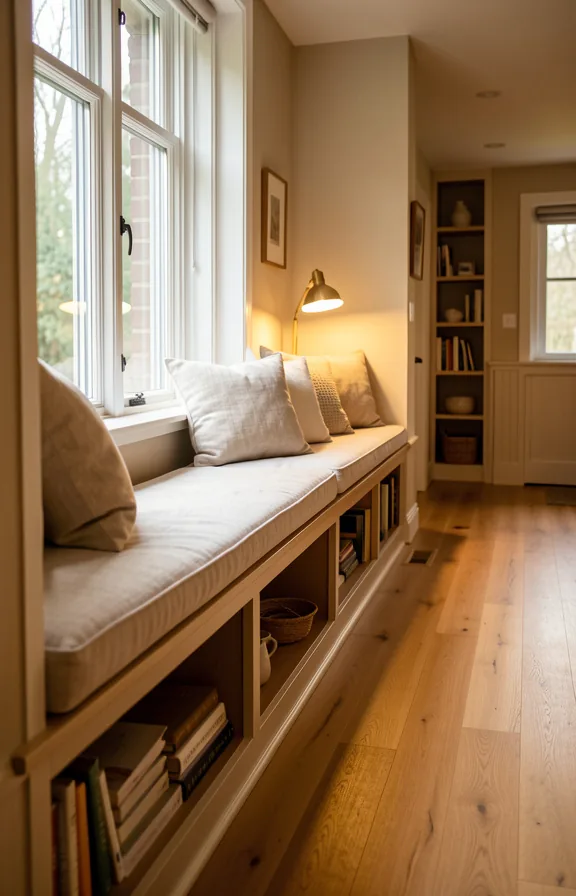
Warm amber light pools across a linen-upholstered bench tucked beneath your window. The seat runs the length of the frame, creating a natural focal point in your narrow room.
Below the cushion, built-in shelving holds books, storage baskets in natural wicker, and decorative objects. This anchors your space without eating into floor area.
Soft grey or sage linen covers the seat, layered with textured throw pillows in cream and muted blue. A brass reading lamp arches overhead, casting light directly onto the cushion.
The bench becomes your room’s gathering place. It’s a spot for morning coffee, reading, or just sitting with natural light on your face.
Pro Tip: Use built-in seating to double as hidden storage, keeping your living area visually clear and functional.
8. Sunken Floor Lounge Pocket
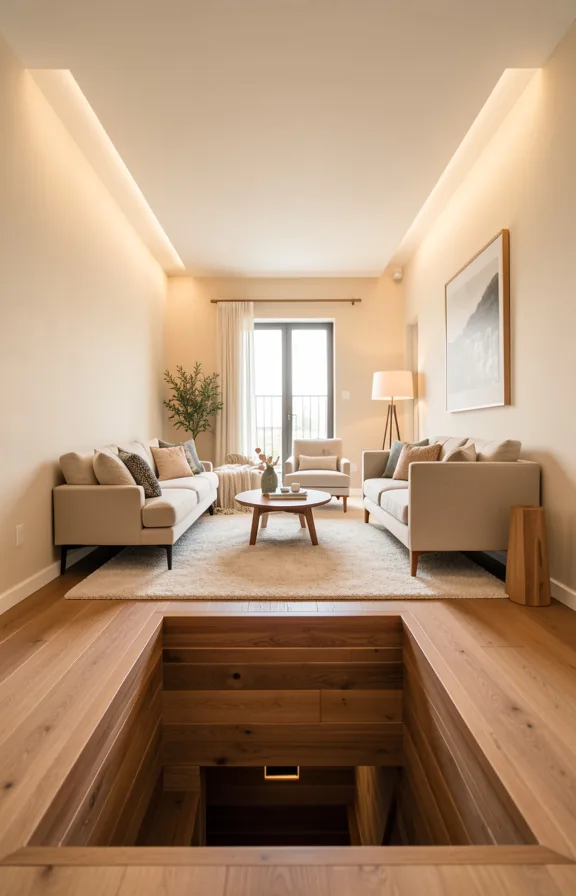
A recessed seating area breaks up the visual length of your hallway-shaped living room and creates natural zones without walls.
The sunken floor itself becomes the architectural anchor, dropping 4 to 8 inches below the main level to define a distinct lounge pocket.
Wrap the edges with low-pile charcoal carpet or light oak hardwood to anchor the space visually and make the step-down feel intentional.
Layer in a deep charcoal sectional or low-slung sofa that sits naturally in the pocket, with cream linen throw pillows and a chunky wool blanket across the back.
Warm brass floor lamps positioned at the corners cast soft light downward, making the sunken area feel cozy rather than cave-like.
The rest of your narrow room stays open and flows uninterrupted, giving the eye a rest from the length.
Pro Tip: If you cannot modify your actual floor, create the same visual effect using a platform bed frame or a thick area rug with a 2-inch raised border to anchor your seating zone.
9. Multipurpose Ottoman Coffee Table
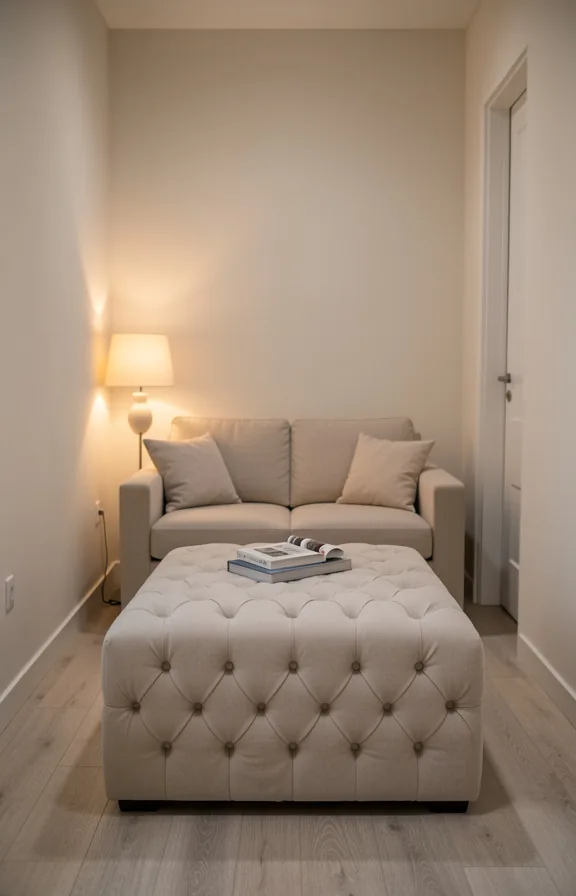
A low, upholstered ottoman in warm taupe or soft grey anchors your narrow living room without creating visual clutter.
Its generous surface holds drinks and remotes during the day, then becomes extra seating or a footrest at night.
Pair it with a compact sofa pushed against one long wall to free up walkable floor space down the center.
The soft fabric absorbs sound and softens hard corners, making tight layouts feel less cramped and more livable.
Pro Tip: Choose a low profile ottoman (14-16 inches high) rather than tall furniture to maintain sightlines across your narrow space.
10. Pendant Light Focal Point
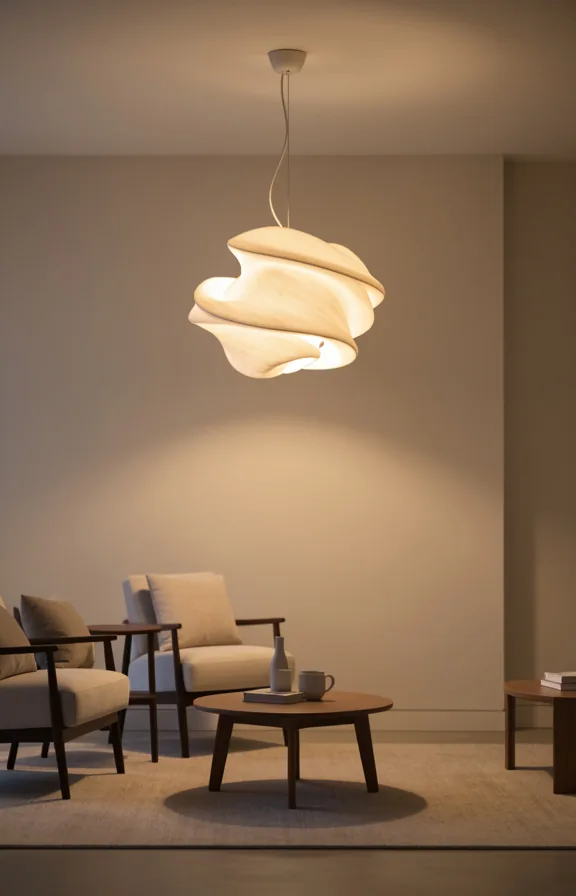
A sculptural pendant light anchors your narrow living room by drawing the eye upward and inward. This stops the room from feeling like a hallway and creates a natural gathering point.
Choose a fixture with visual weight: brushed brass, matte black, or ceramic. Position it over a low seating cluster rather than centered in the space.
Warm bulbs (2700K) cast soft, directional light that makes the room feel grounded and intimate. The fixture becomes the first thing visitors notice when they enter.
Pair it with a neutral palette of cream walls, natural wood, and linen furniture to keep the focus entirely on the light itself.
Pro Tip: Hang your pendant 30 inches above a coffee table or low ottoman to create intimacy without blocking sightlines across the room.
11. Bookshelf Room Division Screen
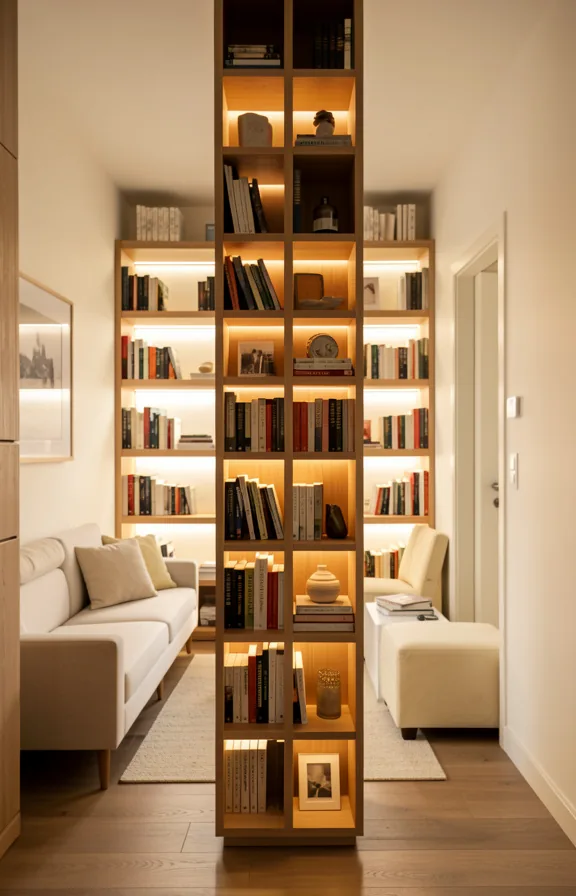
Low and wide across the middle of your room, a natural wood bookshelf acts as a gentle divider without blocking sightlines.
Both sides feel open and connected, yet each zone has its own purpose and breathing room.
Warm wood tones reflect soft afternoon light through gaps between books, plants, and decorative objects.
Your seating arranges on either side, creating two distinct areas that still share the same air and light.
Cream ceramics, pale linen throws, and low brass lamps anchor the quieter side of the room.
Pro Tip: Choose a bookshelf no taller than 48 inches so light flows through and the space doesn’t feel cut in half.
25. Curved Furniture Flow Pattern
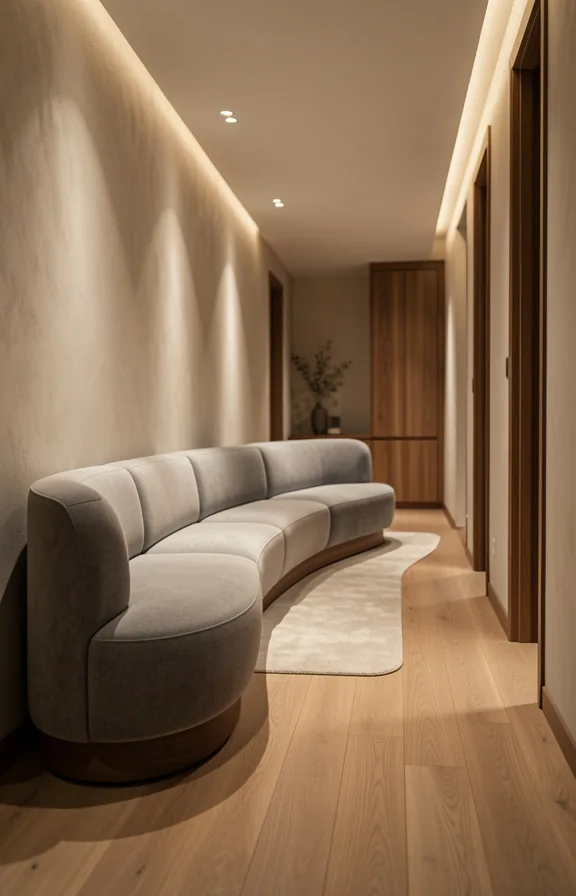
A rounded sofa anchors one end of your narrow room, softening hard angles and breaking the tunnel effect instantly.
Pair it with a curved side table in light oak or walnut, then angle your accent chair to face inward rather than straight ahead.
This circular arrangement creates natural conversation zones and makes the space feel wider because your eye follows the curves instead of the walls.
Soft cream and sage tones on upholstery keep the flow calm and cohesive without visual clutter.
Pro Tip: Curved furniture works best when legs stay visible, so choose pieces with tapered or splayed legs to maintain visual lightness.
13. Minimalist Scandinavian Living Space
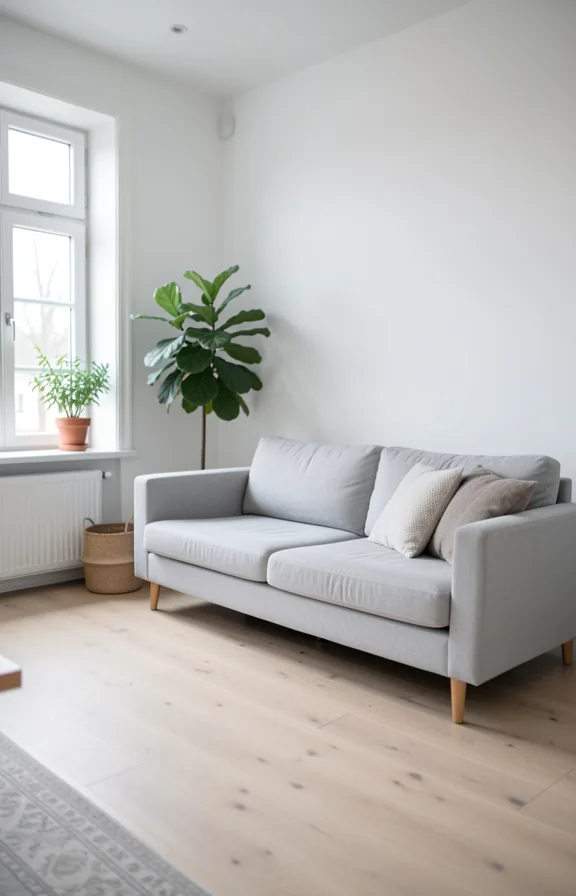
Pale wood floors and white walls create an open, breathable foundation for your narrow room. A single low-profile sofa in natural linen anchors one long wall without blocking sightlines.
Soft, diffused light from paper pendant fixtures and small brass table lamps sets a calm evening mood. Layered textiles like a chunky knit throw and wool area rug add warmth without clutter.
Storage happens in simple wooden shelving or a whitewashed cabinet, keeping visible surfaces nearly bare. A few potted plants and a stack of books are all the decoration your space needs.
This approach works well in narrow rooms because emptiness itself feels spacious and restful. Your eye travels the full length of the room without stopping.
Pro Tip: Use floor-to-ceiling shelving on one wall to draw the eye upward and stretch the room visually.
14. Monochromatic Tone-On-Tone Palette
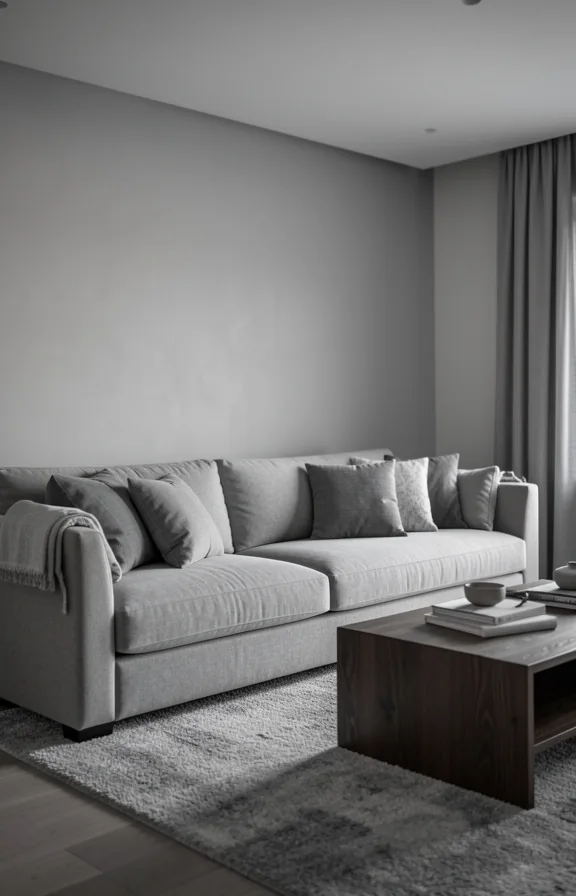
Soft gray walls meet a slightly deeper charcoal sofa, layered with cream wool throws and pale linen cushions. The palette feels intentional, not boring, because texture does the work that color usually does.
Your eye moves across the room slowly, catching the matte finish on the walls, then the nubby weave of a jute area rug, then the smooth leather of a low-profile ottoman. This visual rhythm makes the narrow space feel wider.
Natural light from your window bounces across these lighter tones without creating harsh shadows. The room stays calm and focused, which is essential when your walls feel close.
A single brass floor lamp with a linen shade adds subtle warmth without introducing color. Your gaze naturally travels upward, which helps a narrow room feel taller.
Pro Tip: Layer your neutrals by texture, not shade. A matte wall paired with a gloss-finish console and a nubby upholstered chair creates depth without requiring multiple colors.
15. Japandi Zen Retreat Corner
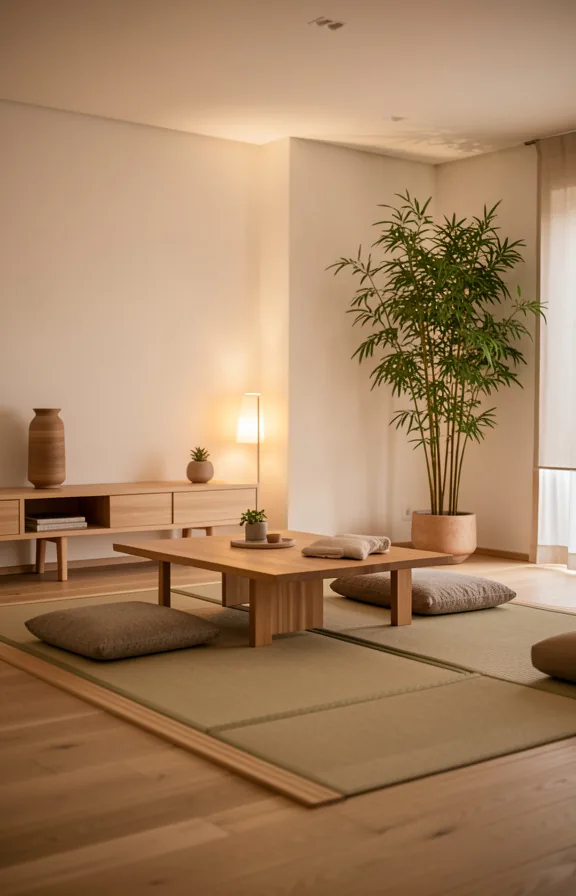
Warm amber tones from low wooden shelving anchor one corner of your narrow room, creating visual pause in an otherwise linear space.
Light ash wood, cream linen, and soft sage accents form your colour palette here. These neutrals prevent the corner from feeling cramped.
A single woven floor cushion sits on natural jute matting, paired with a low wooden side table holding a ceramic vessel and dried grasses.
Soft floor lamps with paper shades cast gentle light downward, making the corner feel intimate without closing off your sightlines.
The effect is a quiet refuge within your long living space, not a separate room dividing it.
Pro Tip: Keep furnishings low and sparse in retreat corners. Tall pieces interrupt sightlines and make narrow rooms feel boxed in.
16. Art Deco Geometric Layout
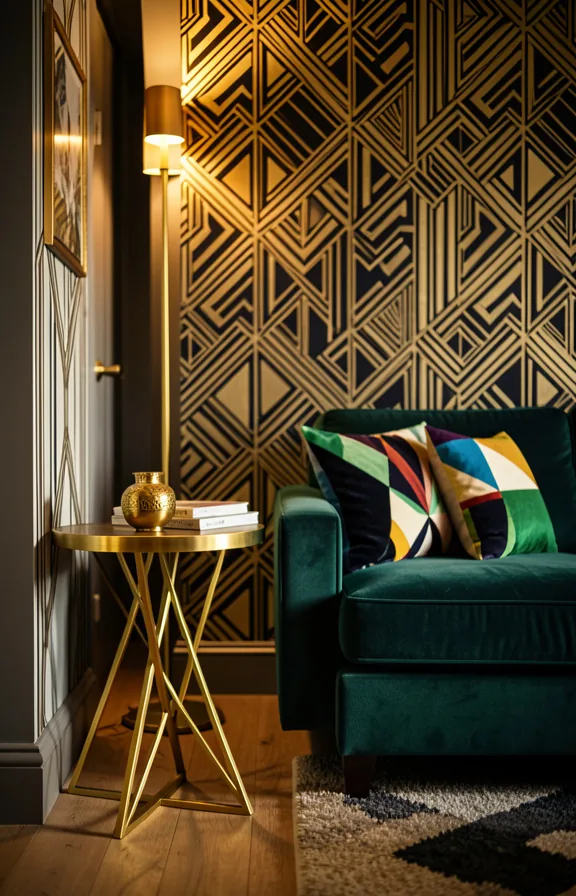
Geometric wall panels in jewel tones anchor one long wall, immediately breaking up the tunnel effect that narrow rooms create. Think deep emerald, gold trim, and sharp angular lines that draw the eye upward.
A low, linear sofa runs parallel to the patterned wall, paired with a brass-framed side table that mirrors the angular aesthetic. This placement maximizes floor space while reinforcing the horizontal flow your room needs.
Warm brass sconces on either side of the sofa replace overhead lighting, creating pools of amber that make the space feel intentional and curated. This layered lighting approach works especially well in narrow layouts where ceiling fixtures can feel too harsh.
A dark terrazzo or black tile accent strip on the floor grounds the composition without stealing square footage. The geometric repetition ties everything together cohesively.
Pro Tip: Use geometric wall paneling or removable wallpaper on your longest wall to create visual interest without consuming floor space.
17. Bohemian Layered Texture Living
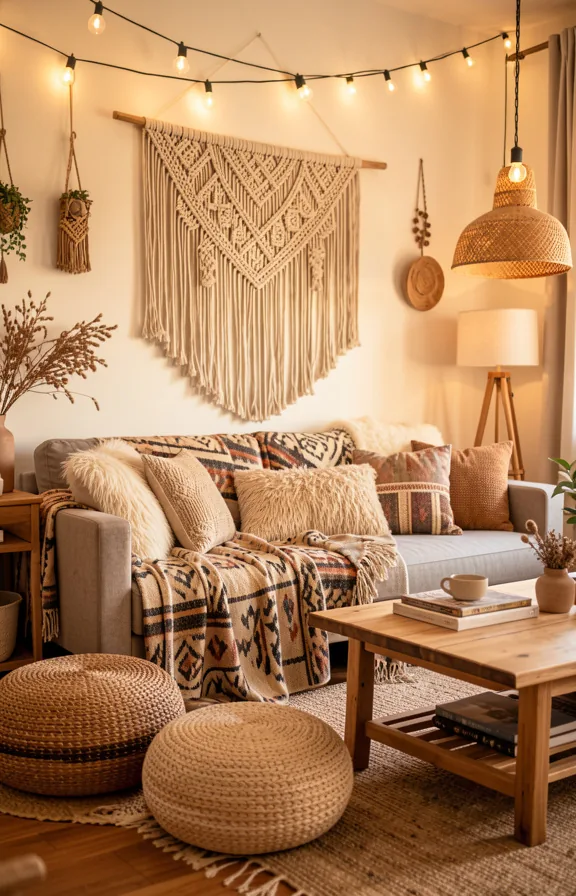
Warm terracotta and cream walls create a foundation that feels grounded and lived-in. Macramé wall hangings, woven poufs, and natural wood shelving fill the vertical space without crowding your floor.
Your narrow room gains depth through layered textures rather than color. A jute rug anchors low seating, while linen throws and patterned pillows break up the length visually.
Soft ambient lighting from brass or copper fixtures adds warmth at eye level. Paper or fabric pendant shades diffuse light gently, making the space feel intentional, not sparse.
The atmosphere is calm and tactile. You move through the room noticing raw wood edges, knotted cord details, and the weight of natural fibers underfoot.
Pro Tip: Layer your textures by mixing matte and natural finishes. Rough linen against smooth wood creates visual interest without adding square footage.
18. Mid-Century Modern Clean Lines
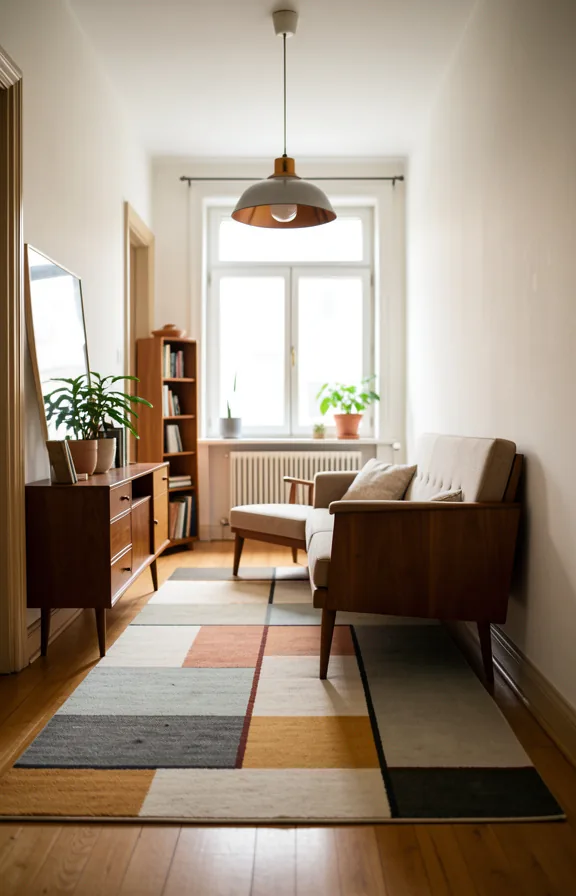
Warm wood tones and pale linen create the foundation here. Tapered furniture legs expose floor space, which makes narrow rooms feel longer rather than cramped.
The colour palette stays minimal: soft whites, warm greys, and natural wood. A geometric rug grounds the seating area without visual clutter.
Low-slung furniture and brass or chrome accents catch light without reflecting it harshly. Overhead lighting stays soft and directional, not bright or fluorescent.
The result feels calm, intentional, and lived-in. Nothing fights for attention in the room.
Pro Tip: Choose furniture with exposed legs instead of solid bases to anchor your layout and trick the eye into perceiving more floor space.
19. Mediterranean Terracotta Warmth Setting
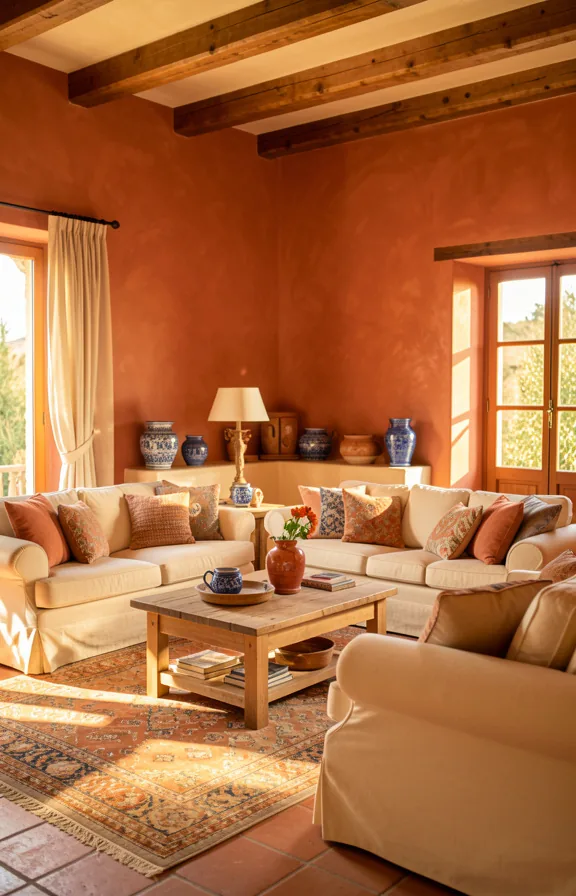
Rough terracotta against a white wall anchors your narrow space with instant warmth and depth.
One accent wall in matte terracotta stops your eye from tracking the length of the room. The color grounds the space without closing it in.
Cream linen, natural wood frames, and brass hardware complete the palette. These materials age gracefully in smaller rooms, so the space feels intentional rather than cramped.
Low ceramic side tables and woven baskets keep sightlines open. Warm table lamps with cream shades cast soft light at seated height, making the narrow layout feel cozy instead of sparse.
The result feels like a quiet coastal home, not a showroom. Your living room breathes.
Pro Tip: Paint one short wall terracotta to anchor the room without overwhelming it. In narrow spaces, this works better than painting the long walls.
Start with the floating furniture conversation zone. It is the easiest shift to make and requires no renovation or new purchases.
Simply pull your seating away from the walls and face it inward. This single move transforms how your room functions and how it feels.
Save this list and return to it as your style evolves. Your narrow living room has more potential than you realize.