

22 Small Living Room Layout Ideas for L-Shaped Apartments
This platform is proudly ad-free! To keep it that way and support our efforts, some posts may contain affiliate links. These links come at no extra cost to you, but they help us grow and continue providing valuable content. Thank you for your understanding and support!
L-shaped apartments demand thoughtful furniture placement that actually works. Your living room likely feels awkward at first, with two walls meeting at an odd angle that fights traditional seating arrangements.
This layout challenge is real, but it is also your biggest design opportunity. The L-shaped living room gives you two distinct zones to work with instead of one single space.
Every idea in this list requires minimal budget and no renovation work. Most solutions cost under $300 total and take an afternoon to arrange.
You will find practical setups you can copy today, from floating sofas to corner shelving. The floating sofa idea at number one costs nothing and opens up your entire room instantly.
1. Floating Sofa Anchors Corner
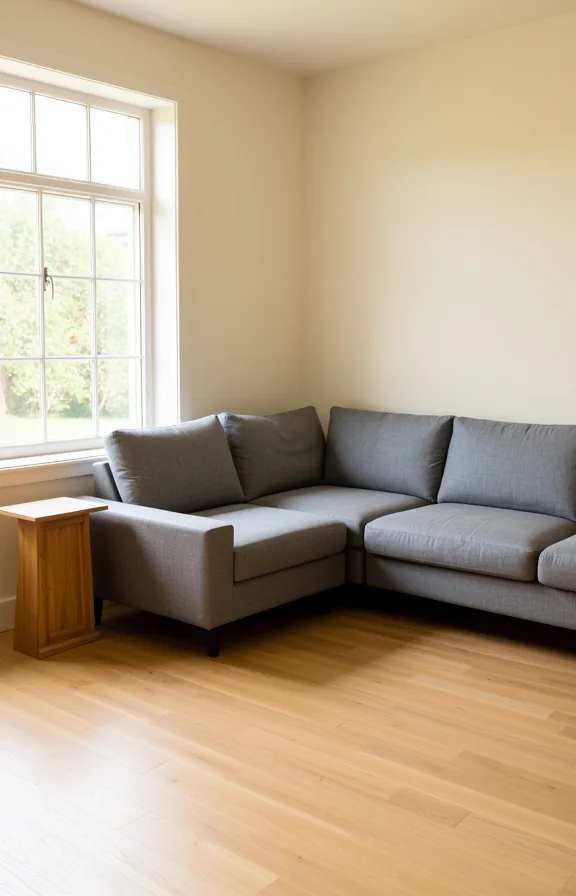
A low-slung sofa pulled away from the corner breaks the L-shape’s natural geometry. This single move turns a cramped nook into a real seating zone.
The sofa floats on warm light oak flooring that extends the entire length of the room. Negative space beneath the cushions makes the whole apartment feel taller.
Pale neutral linen covers the upholstery in cream or soft greige tones. A natural wood side table anchors one arm without blocking sightlines.
Warm white walls recede behind the furniture arrangement. Soft, directional light from a corner floor lamp pools around the seating area.
The colour palette stays minimal: cream, warm wood, pale grey accents. This restraint makes the small room feel intentional rather than crowded.
A low-pile or flat-woven rug defines the floating sofa’s footprint. The rug grounds the seating without demanding visual weight.
Storage stays vertical in this layout: wall-mounted shelves or a tall narrow cabinet behind the sofa. This works best in L-shaped apartments where you can claim wall space without blocking windows.
Pro Tip: Pull your sofa out at least 18 inches from the corner wall to trigger the floating effect and improve traffic flow.
2. Vertical Shelving Maximizes Wall Space
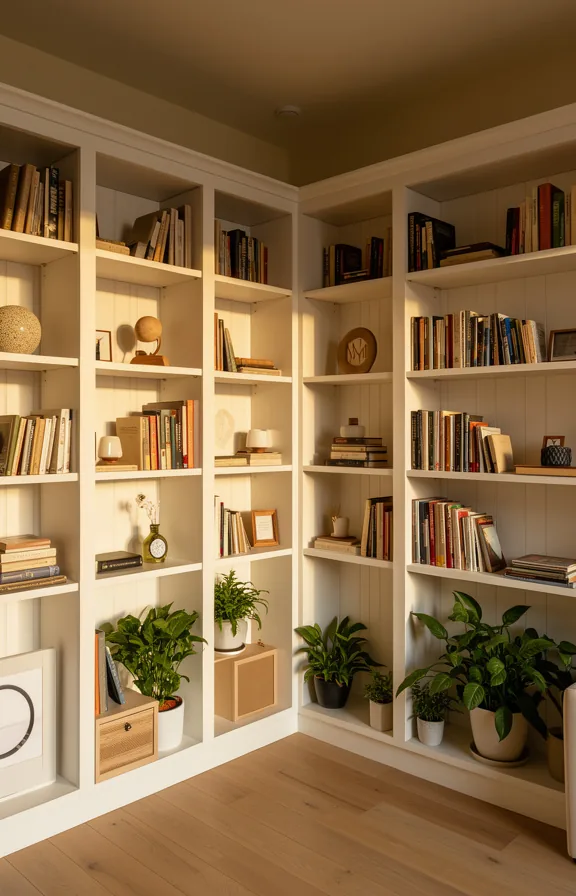
Floor-to-ceiling wooden shelving in natural oak or walnut transforms your L-shaped living room into a gallery-like space. The vertical lines draw your eye upward, making low ceilings feel taller than they actually are.
Your shelves become your wall colour, so material choice matters more than paint. Light wood finishes keep small rooms feeling open and airy; darker stains add weight and drama.
Layer your shelves with a mix of books, plants, and objects in warm tones. Books standing upright anchor the display, while trailing pothos or string-of-pearls add living texture.
Keep the lower third clear or use low open baskets for visual breathing room. This prevents your walls from feeling cluttered or top-heavy.
Warm brass or bronze shelf brackets add architectural detail without taking up surface space. The metal catches light and creates visual interest at scale.
Small spotlights mounted above or inside shelves illuminate your collection and add layered lighting. This works best in apartments where you cannot install overhead fixtures.
Most of this look comes from the shelving system itself and careful styling. No structural changes needed if your walls can support the weight.
Pro Tip: Mount shelves at eye level or just below, not higher. Most people hang them too high, which makes them feel decorative rather than functional.
3. Two-Zone Seating Arrangement
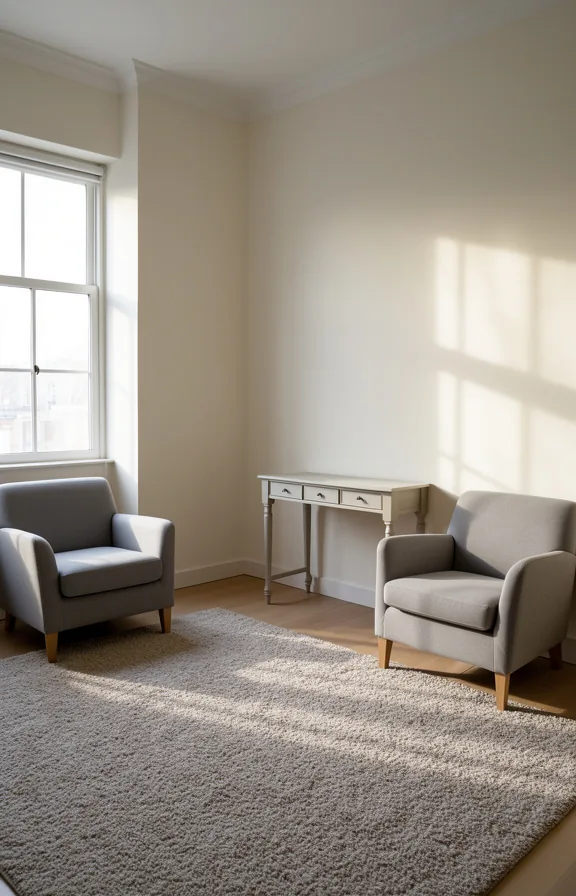
Warm oak flooring anchors two distinct seating zones that face different directions. One compact sofa angles toward the window for natural light. The other cluster pulls toward a low console table.
Your L-shaped walls become an asset instead of a constraint. Each zone feels separate without any visual division needed.
A neutral linen palette ties both areas together seamlessly. Cream, warm gray, and soft taupe prevent the room from feeling choppy.
Overhead ceiling lights stay minimal to avoid heaviness in a compact space. Task lighting near each seating area does the real work.
The window-facing zone becomes your reading corner with soft morning light. The console-facing zone works better for conversation and television.
Your eye travels naturally between the two arrangements without confusion. This layout actually makes a small room feel more intentional than one huge seating block.
Most of this look comes from how you position existing furniture. No structural changes needed.
Pro Tip: Float both seating pieces slightly away from walls to define each zone clearly.
4. Window-Facing Reading Nook
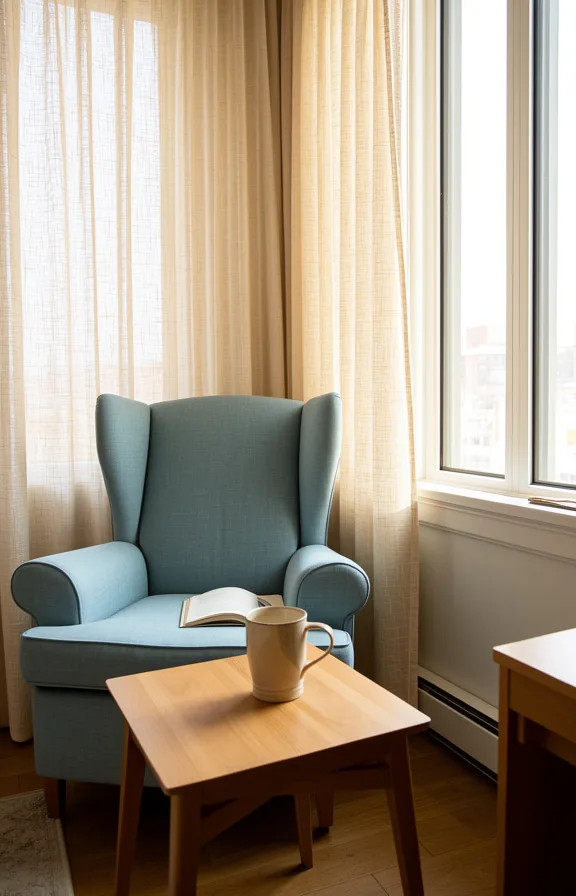
Soft natural light floods across a low-backed armchair positioned directly beneath your windows. The chair sits at an angle to the wall, claiming the corner without blocking sightlines into the rest of your room.
Your colour palette is quiet and grounded: warm cream walls, soft sage or muted blue upholstery, and pale natural linen. This restraint lets daylight be the star, shifting in tone throughout the afternoon.
Beside the chair, a slim wooden side table holds a ceramic mug or stack of books without eating floor space. A woven floor basket tucks underneath, storing blankets and magazines close at hand.
Overhead, sheer linen curtains frame the window without blocking light or requiring mechanical adjustments. They soften harsh glare while keeping the view open and the room feeling larger.
Layered lighting matters here because midday brightness fades by evening. A small brass or ceramic reading lamp with a cream shade sits on the side table, angled toward your lap.
This concept works best in L-shaped apartments with a shorter wall segment and windows. The nook anchors that awkward corner and turns it into the most livable spot in your home.
Pro Tip: Choose a chair with exposed legs rather than a skirted base. Visible floor underneath makes even tight corners feel spacious and intentional.
5. Open Kitchen Visual Flow
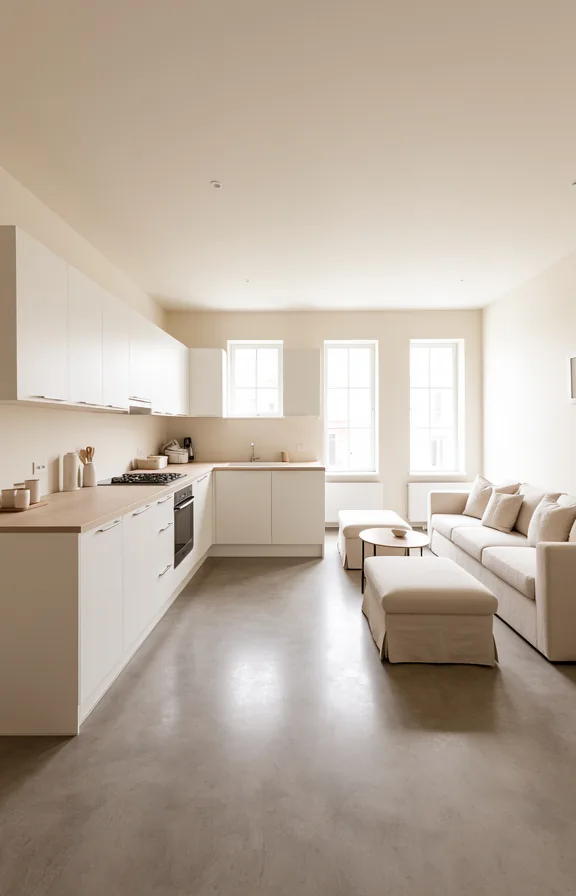
Light oak cabinetry and pale stone countertops blur the line between kitchen and living room. Your eye travels unbroken from the sofa through the cooking zone without visual stops.
This happens because matching colour palettes erase visual boundaries. White walls, cream millwork, and natural wood tones create one continuous backdrop.
The kitchen counter height matches your sofa arm level. This alignment makes the whole L-shape feel like one planned room, not two separate zones fighting for space.
Pendant lights hang low over a small kitchen island or bar. They anchor the kitchen within your sightline without dominating the room.
Open shelving instead of upper cabinets keeps sight lines clear. Your gaze flows straight through to any window or wall beyond.
Flooring runs the same throughout, whether light wood or pale tile. Consistent flooring is the strongest signal that the space is unified.
Most of this look comes from paint, cabinetry choices, and lighting placement. No structural changes needed if your kitchen is already open-concept.
Pro Tip: Keep kitchen counters clear of small appliances and clutter to maintain visual flow.
6. Corner Entertainment Console Setup
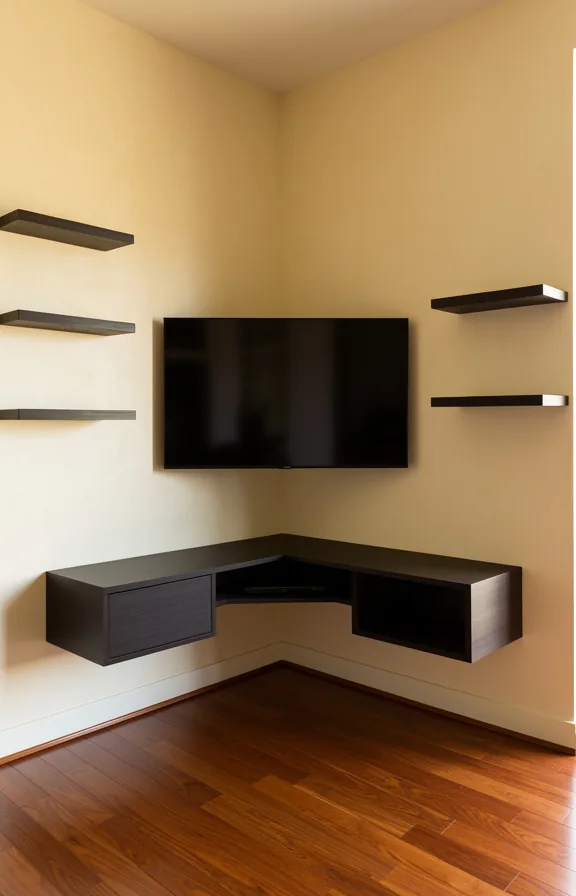
Warm walnut wood meets soft cream walls in this corner console arrangement. Your television floats at eye level above a low, deep media cabinet that anchors the entire corner.
The cabinet itself is open below the mounted screen, which prevents the space feeling boxed in. Floating shelves flank both sides of the screen for books, plants, and small objects.
Soft brass task lighting sits on the console surface itself. This places light below eye level, where it makes the room feel more intimate than overhead fixtures.
The colour palette stays neutral: warm greys, natural wood tones, and black metal shelf brackets. This restraint keeps your eye moving through the room instead of stopping at the corner.
In an L-shaped apartment, this setup uses your architectural dead zone as a purpose-built hub. Your seating naturally angles toward the screen without claiming the centre of the room.
This works best when your console depth matches your sofa arm depth. Visual alignment makes the room feel intentional, not accidental.
Pro Tip: Mount your television on a solid wood backing panel, not directly on drywall. This small detail makes the setup feel built-in rather than temporary.
7. Rug Placement Defines Seating
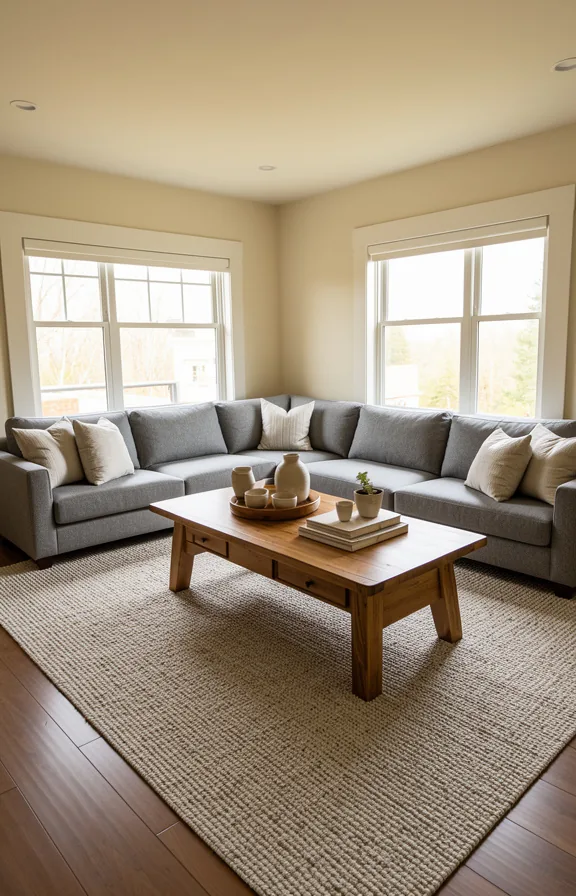
A large area rug anchors your seating in an L-shaped room where boundaries blur. The rug tells your brain exactly where to sit and gather.
In small apartments, your rug does heavy lifting that walls cannot. It creates an invisible boundary around your conversation zone without construction or paint.
Neutral textures like jute or wool blend work best in tight quarters. They ground the space without visually shrinking it further.
Position the rug so all seating pieces sit partially on it. Front legs on the rug, back legs off the edge, works perfectly.
This placement method works in rooms under 200 square feet especially well. The rug gives your furniture arrangement permission to exist.
Warm taupe, cream, or soft grey rugs won’t fight with natural light. They reflect daylight and keep the room feeling open despite the tight layout.
Your rug’s edge creates a visual stopping point for the eye. This prevents the awkward sprawl that often happens in L-shaped corners.
Layering a smaller patterned rug on top adds depth without overwhelming scale. Keep the base rug solid and neutral for the strongest anchor effect.
Pro Tip: Choose a rug at least 5 feet by 7 feet. Anything smaller fails to define the zone and actually makes the room
8. Multipurpose Ottoman Coffee Table
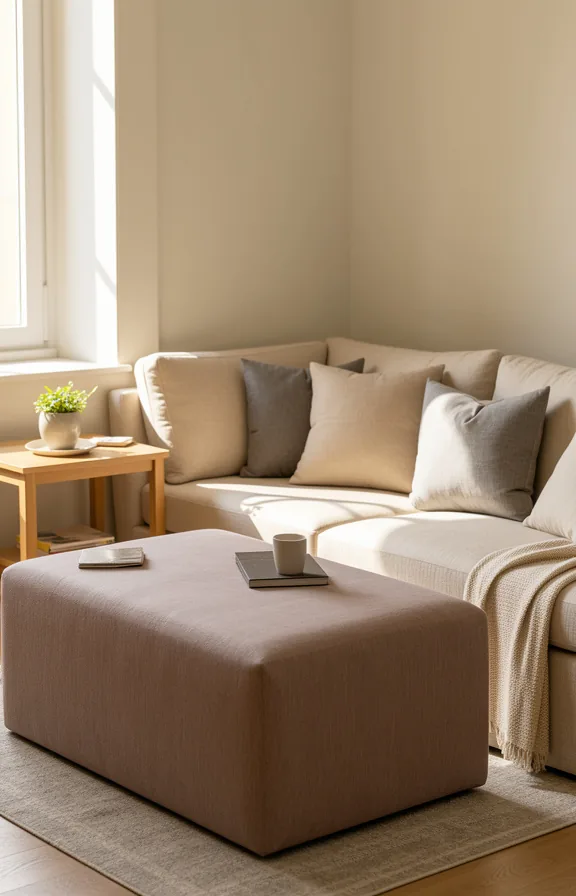
A low upholstered ottoman in warm grey linen sits at the center of your L-shaped room. It doubles as seating, a footrest, and hidden storage all at once.
This piece solves the scale problem most small living rooms face. Your room stays open and uncluttered because the ottoman replaces a bulky coffee table.
Pair it with a natural wood frame that echoes the warmth in your walls. The exposed wood keeps the piece feeling intentional, not cheap or cramped.
The linen fabric catches light differently depending on where you sit in the L. This creates subtle visual rhythm without adding pattern or color clutter.
Storage inside means throws, magazines, and remotes stay hidden from sight. You gain usable floor space while keeping necessities within arm’s reach.
This concept works best in homes where you value flexibility over permanence. Most of this look comes from choosing the right scale and fabric weight.
Pro Tip: Choose a square or rectangular ottoman rather than round. Straight edges align better with L-shaped rooms and read more spacious on camera.
9. Sectional Wraps Inner Angle
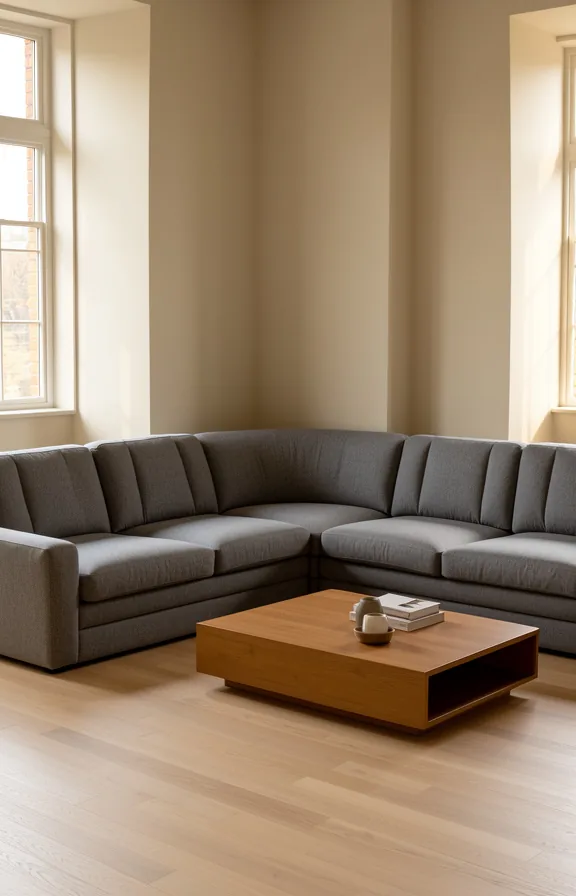
A neutral sectional curves into your apartment’s inner corner like it was built there. The sofa anchors the entire room and erases the awkward angle.
Warm grey upholstery against white walls keeps the space feeling open. The sectional’s low profile prevents the room from feeling hemmed in.
Layered textures soften the geometry: a chunky knit throw drapes one arm. Linen pillows in cream and taupe invite you to settle in.
Lighting pools downward from a brass arc floor lamp positioned behind the sectional. This creates a reading nook within the larger seating area.
A simple wooden coffee table sits perpendicular to the longer section. It floats just enough to keep sight lines clear to windows beyond.
The room breathes because vertical space stays clear. Wall-mounted shelving above the sofa holds books and objects without crowding the seating zone.
This concept works best in L-shaped apartments where the corner is your strongest architectural feature. Most of the impact comes from choosing one substantial piece of furniture and building everything else around restraint.
Pro Tip: Measure your corner angle before selecting a sectional to ensure the fit is snug without forcing the pieces together.
10. Pendant Lighting Over Seating
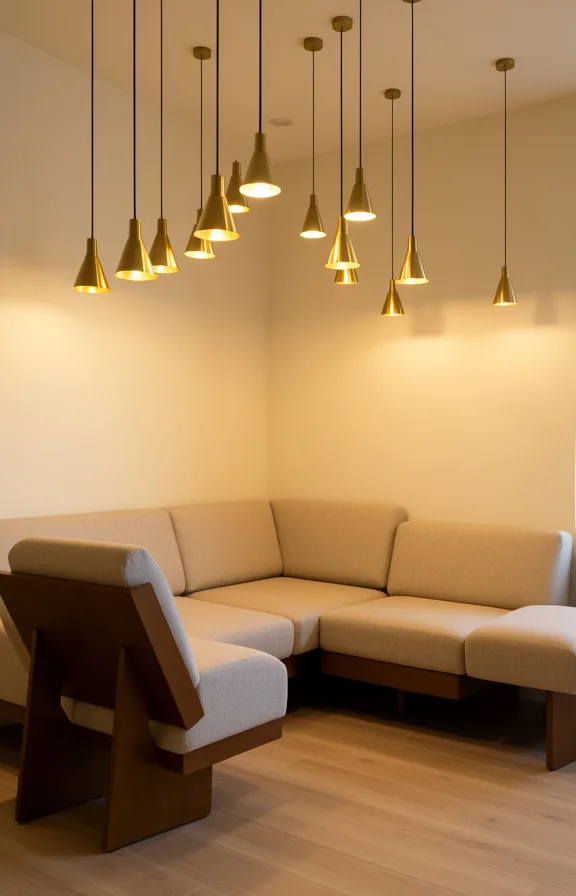
Warm amber tones pool across your seating area from a single pendant suspended low. The light creates a cocoon effect that makes your L-shaped corner feel intentional rather than cramped.
Your pendant shade is milk glass or frosted ceramic, diffusing light evenly without glare. This material choice matters in small rooms because harsh shadows make spaces feel smaller.
The cord or chain is visible and minimal, in matte black or brass. Your eye travels straight from the fixture to the upholstered furniture below, anchoring the whole seating zone.
Neutral linen wraps your sofa in warm grays and soft whites. A single accent pillow in a deeper tone sits where the light naturally lands.
Your side table holds a brass lamp and a single ceramic vessel. The layered lighting keeps the corner from feeling cold or one-dimensional.
Most of this look relies on placement and fixture choice. No electrical work or structural changes needed if you use a plug-in pendant or hardwire during renovation.
This works best in L-shaped apartments where one corner catches traffic less. The focused light signals ‘this is the gathering spot’ without overwhelming compact square footage.
Pro Tip: Hang your pendant 24 to 30 inches above seating height. This distance creates intimate light without casting shadows on faces during conversation.
11. Low-Profile Media Stand
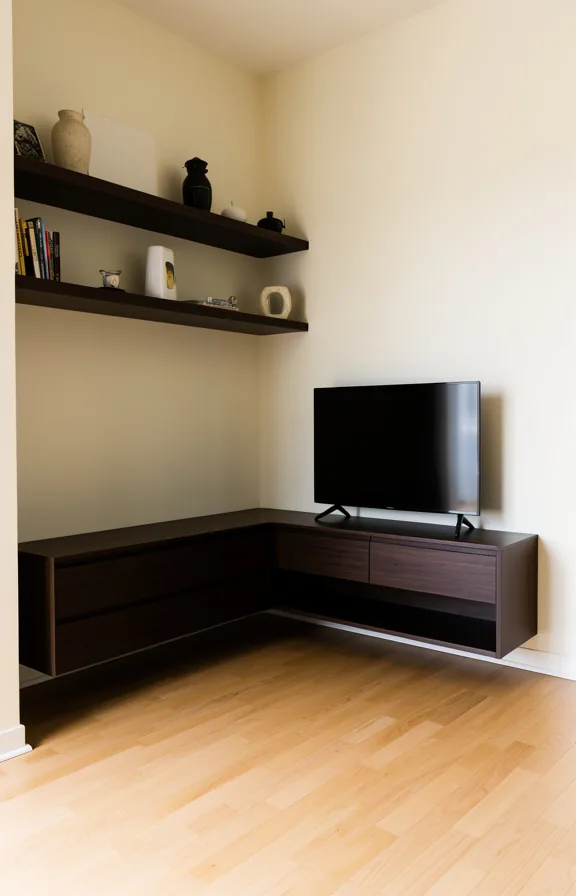
Low and wide across the wall, a shallow media stand anchors your L-shaped living room without stealing floor space. The absence of height means your sightline stays open through the entire room.
Choose a stand in natural wood or matte black to ground the space visually. These finishes read as intentional and work with both minimal and layered interiors.
Open shelving on lower tiers keeps your TV equipment visible but organized. A closed cabinet or drawer at the base hides cables and storage.
Position the stand along the shorter wall of your L-shape. This prevents the furniture from competing with your seating layout.
Keep the surface mostly bare except for one potted plant or a small ceramic object. Restraint makes the room feel larger and more curated.
Warm lighting from a table lamp on an adjacent shelf creates depth. Light at sitting height reads better than overhead fixtures in small rooms.
Pair the stand with a low-backed sofa on the opposite wall. The lack of visual bulk between pieces makes the room feel less crowded.
Most of this look comes from the furniture choice and placement. No structural changes needed to achieve the effect.
Pro Tip: Choose a stand with open legs rather than a solid base. The gap underneath visually expands the floor.
12. Curved Furniture Softens Edges
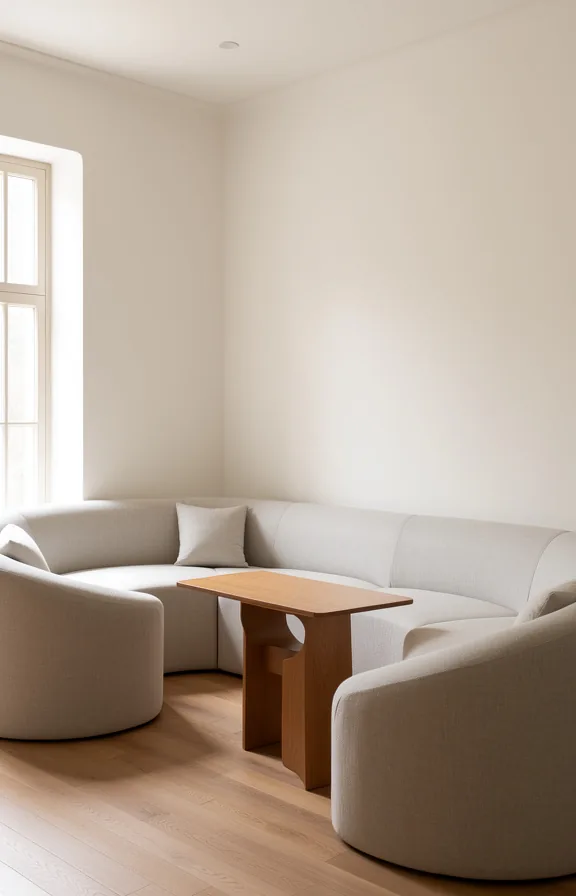
A curved sofa anchors the corner where your walls meet at sharp angles. The rounded shape pulls the room inward instead of pushing into the tight geometry.
Cream linen or warm grey upholstery absorbs light rather than reflecting it. This makes the space feel more spacious even though you’re filling the corner deliberately.
Pair the sofa with a round side table in natural wood or brass. Angular furniture reinforces the awkward corner; curves dissolve it.
A curved floor lamp with an arcing brass arm bends toward your seating. It breaks up the hard lines created by walls meeting at ninety degrees.
Round throw pillows in linen or linen blend sit on the sofa. Oval area rugs beneath the seating anchor the zone without adding more angles.
The colour palette stays soft: warm whites, soft greys, natural wood tones. This quiet palette lets the curved silhouettes do the visual work.
Most of this look comes from furniture choices. No structural changes needed; swap rectilinear pieces for curved ones.
Pro Tip: Curved furniture works best when its arc complements your room’s corner angle. Measure your seating nook before purchasing any pieces.
13. Bedroom Divider Room Separation
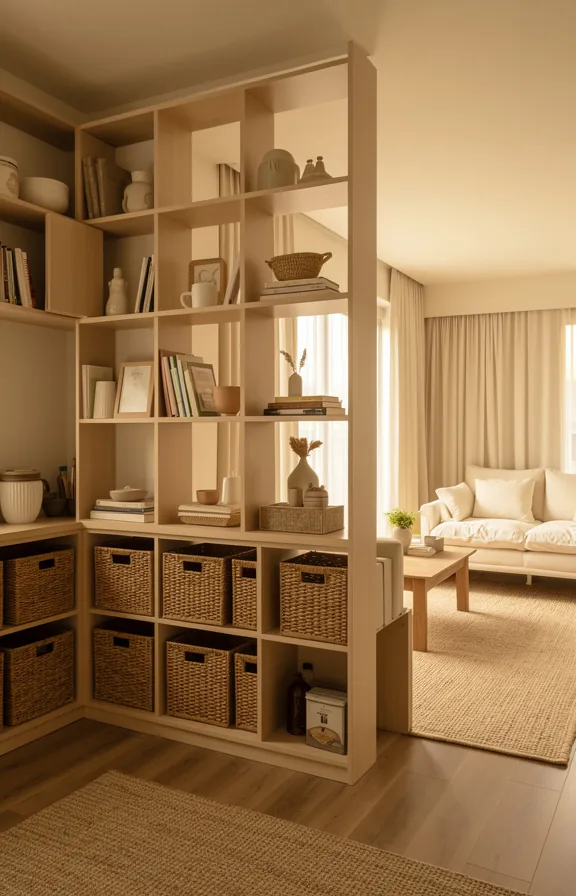
A floor-to-ceiling room divider in natural wood creates two distinct zones without closing off your L-shaped living space. The divider sits where the living room meets the sleeping area, using vertical lines to add height and structure.
Warm honey or light oak tones keep the divider from feeling heavy or institutional in a compact room. The lattice or slatted design allows light and air to flow between zones while still providing visual separation.
Your living side stays bright and social while the bedroom side gains privacy and calm. Warm-white or cream walls on both sides of the divider soften the division and keep the space feeling open.
Layer in a neutral linen throw on the living room sofa to echo the wood tones. Low pendant lights on the living side and softer table lamps on the bedroom side define each space’s purpose.
The bedroom side benefits from a low wooden platform bed that doesn’t fight the divider for attention. A single potted plant or small side table on the living side grounds that zone without clutter.
This works best in apartments where the bedroom doesn’t have a door. Most of the effect comes from thoughtful placement and lighting rather than expensive structural work.
Pro Tip: Choose a divider with open slats rather than solid panels to preserve the sense of space.
14. Natural Light Window Dressing
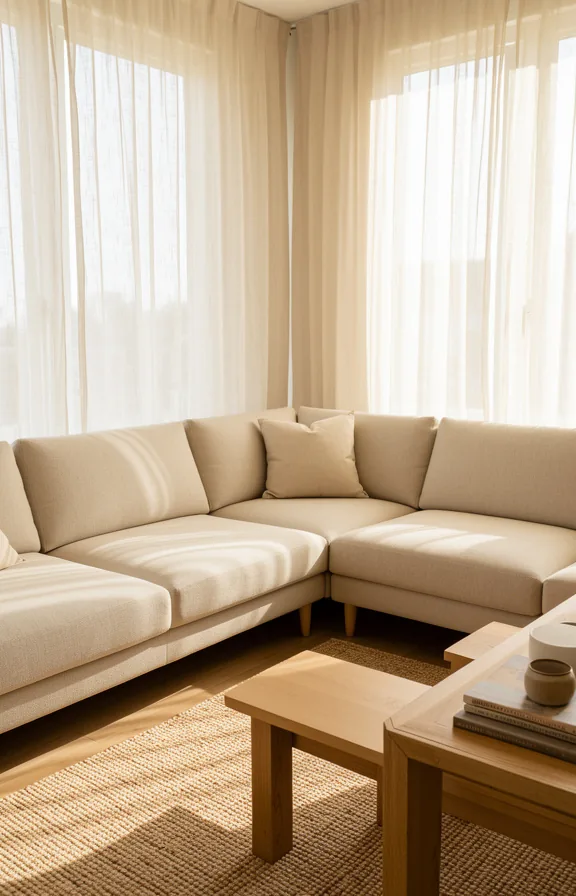
Sheer linen curtains hang floor-to-ceiling along your longest wall. Soft morning light filters through, casting gentle shadows on pale plaster.
Your seating floats beneath the window in neutral tones. This pulls the eye upward and makes the room feel taller.
The colour palette stays warm: cream, soft grey, and natural wood. No heavy fabrics or dark rods compete for visual space.
Light bounces off white or dove-grey walls and reflects deeper into your L-shaped corner. The entire room feels airier without adding square footage.
Layered textures emerge when sunlight hits: linen weave, wool upholstery, bare wood frames. Depth comes from light quality, not pattern clutter.
This concept works best in homes with good natural light. The window treatment itself stays minimal so nothing blocks your view.
Pro Tip: Hang curtains from ceiling to floor, even if your window is shorter. This optical illusion adds perceived height to small rooms.
15. Floor Cushion Flexible Seating
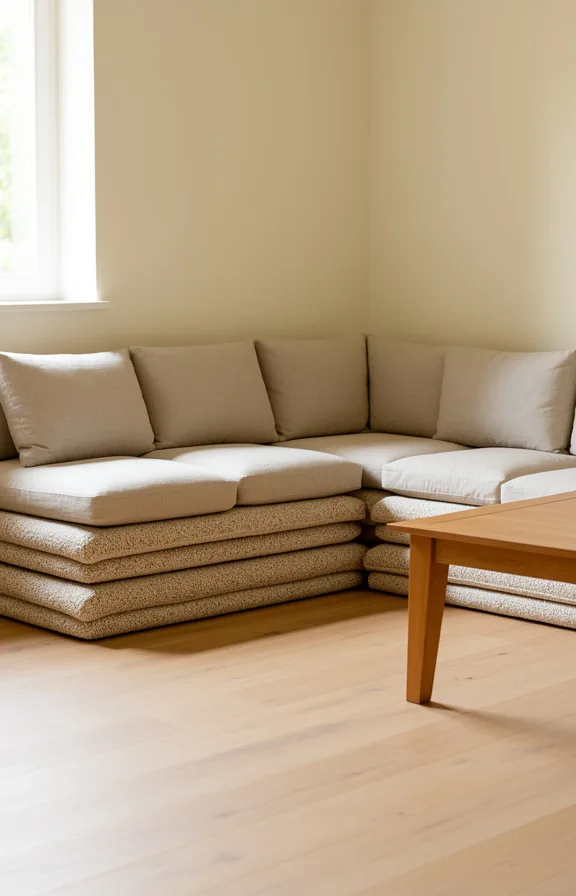
Layered floor cushions in natural linen and wool create a low, grounded seating zone. This approach opens up your wall space and keeps sight lines clean across the L-shaped room.
The palette stays soft and neutral: cream, oatmeal, and warm grey tones. This material choice feels collected over time, not trendy or temporary.
Light filters across the cushions in the afternoon, casting subtle shadows on the woven textures. Warmth comes from the natural fibers themselves rather than from overhead fixtures.
An atmosphere emerges that feels calm and intimate without clutter. Your eye rests; your body has room to settle.
This works best in rooms where you can dedicate one corner fully to seating. You’ll lose the ability to walk straight through, so the trade-off matters.
Most of this effect comes from natural textiles and careful editing. You need only a few cushions in quality materials, not a pile of cheap throw pillows.
Pro Tip: Layer cushions in two or three different heights and depths. Varied sizes prevent uniformity and make the arrangement feel intentional rather than staged.
16. Bookcase Room Divider Wall
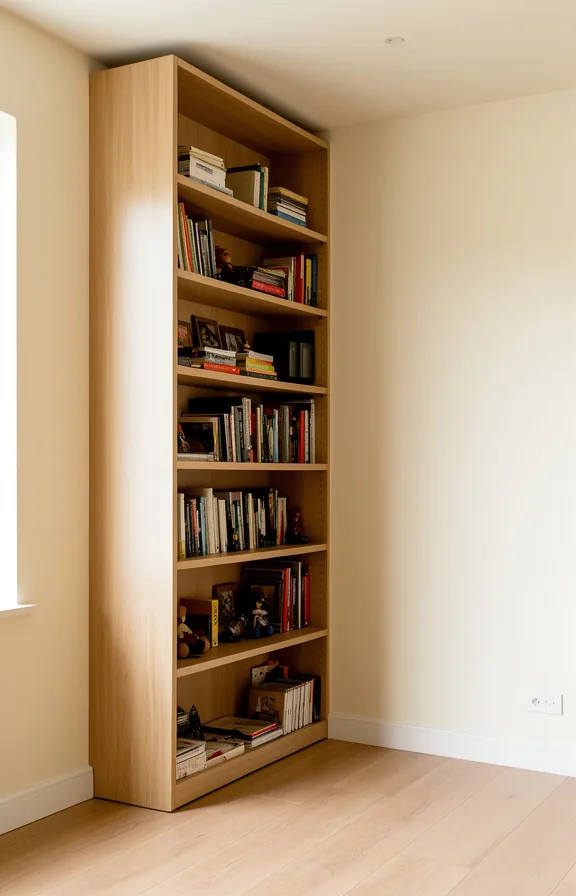
Natural wood shelving runs floor-to-ceiling across your corner zone. The open bookcase becomes both storage and a soft boundary between seating areas.
Your L-shaped apartment gets visual separation without walls blocking light. This works well because an open divider lets air and sight lines move freely through the space.
Fill shelves with natural linen book spines, ceramic vessels, and woven baskets. Leave some shelves sparse so the eye has room to breathe and the room stays light.
Warm wood tones in honey or light oak pair with cream upholstery on both sides. The colour palette stays neutral and connected across both living zones.
Soft overhead lighting hits the shelves from above, casting gentle shadows on spines and objects. Lower accent lighting on the lower shelves creates an intimate pocket on each side.
Each half of your L-shape feels like its own room without the claustrophobia of a real wall. This setup works best in apartments with at least one longer wall you can dedicate to shelving.
Pro Tip: Offset your shelf heights at irregular intervals rather than matching rows. Asymmetrical spacing reads less institutional and feels more like collected pieces over time.
17. Accent Wall Color Depth
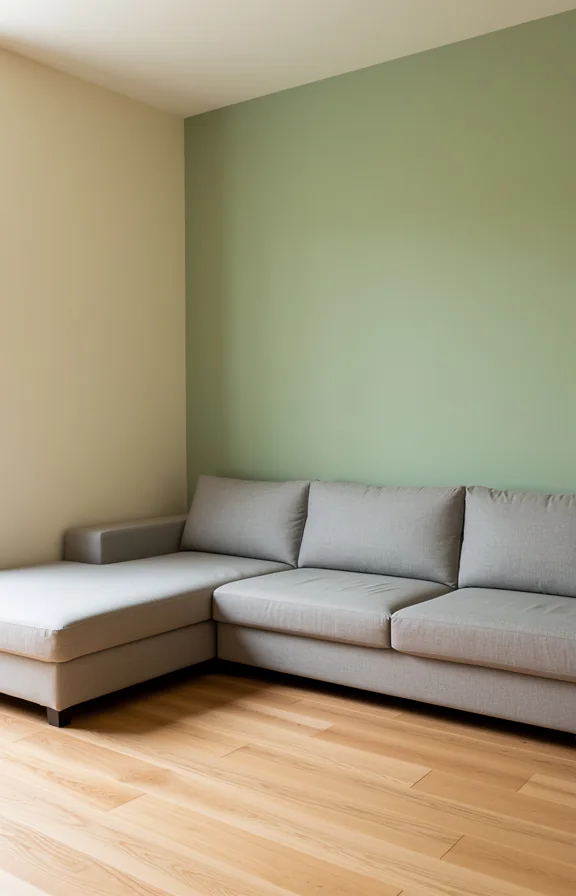
A deep accent wall draws your eye inward and anchors the longest wall of your L-shaped living room. The remaining three walls stay in warm cream or soft greige, letting the darker surface do the visual work.
Choose a matte finish in charcoal, forest green, or dusty navy for the accent side. Matte paint absorbs light rather than reflecting it, which keeps the color from feeling too heavy.
Your neutral sofa sits perpendicular to the accent wall, so the color frames seating without overwhelming it. A low wooden console table in natural ash or walnut runs along the accent wall behind the sofa.
Lighting becomes critical here. Position a brass floor lamp with a linen shade on the accent wall side. This prevents the dark wall from reading as a cave in evening light.
Layered textiles in cream, grey, and warm white keep the room feeling open despite the color depth. A wool area rug grounds the seating zone and separates it visually from the accent wall.
This concept works best when your L-shape has one long wall that naturally reads as a focal point. The color depth strategy requires good natural light from a window on an adjacent wall.
Pro Tip: Test your accent color on a large foam board first, and observe it at three different times of day. Paint color reads completely different in morning light versus evening lamp light.
18. Under-Window Storage Bench
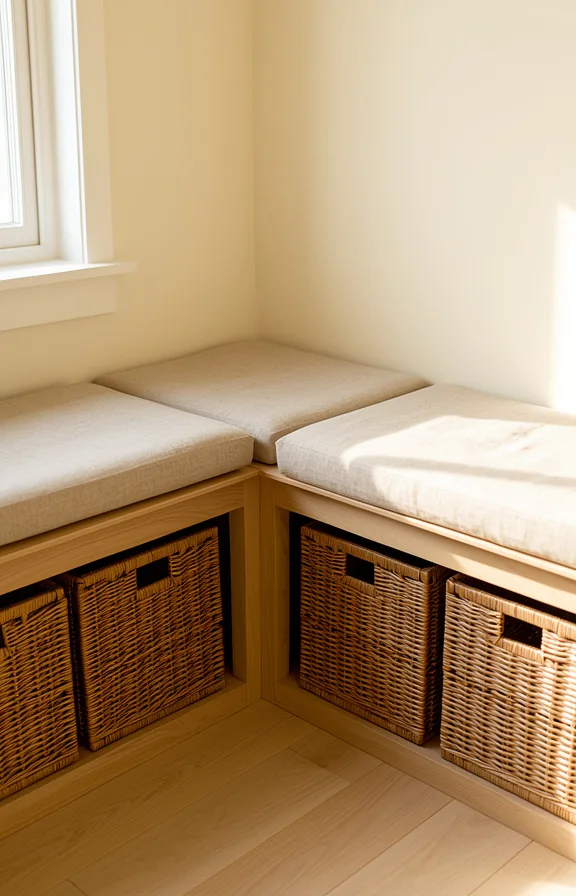
Warm oak or walnut wood runs the length of your window wall. Cushioned linen in cream or soft grey sits on top, catching natural light.
The bench becomes your anchor piece, grounding the room visually. Low-slung proportions keep sightlines open and the space from feeling cramped.
Inside, woven baskets or wooden dividers hold throws, books, and seasonal items. You see nothing but a clean, composed surface from the seating area.
Soft afternoon light filters through the window onto the cushion. The whole corner reads as intentional rather than improvised.
A small side table or floor lamp beside the bench extends functionality. Both reading and storage happen in one compact footprint.
This works best when the window has decent depth. You need at least 12 to 16 inches of wall space to make the bench feel proportional.
The colour palette stays neutral: wood tones, cream, grey, and natural textiles. One throw pillow in sage or muted blue adds warmth without clutter.
Most of this look comes from choosing the right bench depth and cushion quality. The rest is restraint with styling and what you choose to hide inside.
Pro Tip: Size your bench to fit the usable window wall, not the full architectural width. This makes the L-shape
19. Mirrored Surfaces Reflect Light
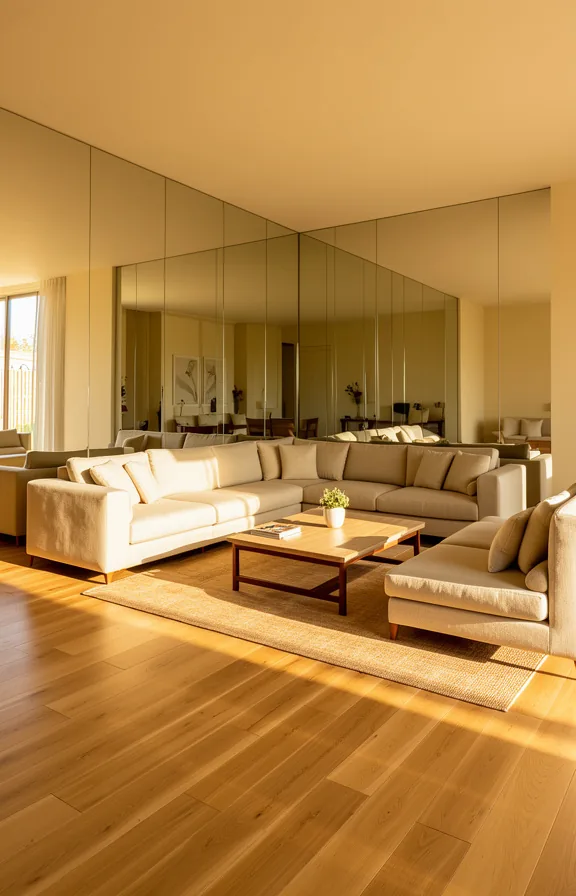
Glass and mirror panels bounce natural light deep into corners. This matters most in L-shaped rooms where one wall receives less direct sun.
A large leaning mirror opposite your main window doubles the brightness. The reflection creates visual depth without eating floor space.
The colour palette stays neutral: soft whites, warm greys, and natural wood tones. Light bounces better off these surfaces than darker finishes.
Layered lighting becomes more important here. A floor lamp positioned to reflect in the mirror spreads warmth evenly through the room.
This concept works well in apartments with one or two good light sources. The mirror becomes your tool for redistributing what light already exists.
Textiles stay soft and uncluttered to let reflections travel uninterrupted. A cream linen sofa and pale throw pillows maintain visual flow.
The atmosphere shifts from enclosed to open. Your eye travels further, and the room feels less cramped.
Pro Tip: Hang mirrors opposite windows or light fixtures, not beside them. Opposite placement reflects light into dark zones.
20. Modular Furniture Flexible Layout
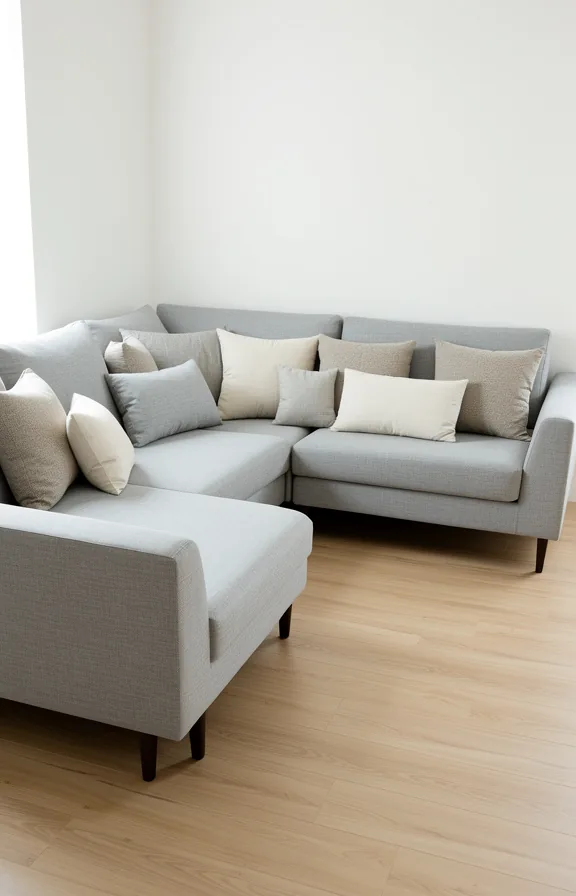
Low seating in soft greige upholstery anchors the corner where your L-shape bends. Each piece sits independent, ready to shift when your needs change.
You can separate sections into conversation nooks or push them tight. Removable cushions in linen and cotton mean you swap covers seasonally without replacing frames.
Metal legs in brushed chrome or matte black keep the visual weight down. This hardware choice matters more than you’d expect in tight rooms.
The colour palette stays neutral across upholstery, wood tones, and accents. Warm whites and soft greys read spacious without feeling cold or temporary.
Natural light hits the fabric differently as pieces move around. Matte finishes work better than glossy ones in shifting layouts.
Open floor space between modules becomes your actual living room. You’re not building a fixed arrangement; you’re defining zones that breathe.
This works best in homes where furniture movement won’t damage walls. Most of this look comes from piece selection and material choice.
Pro Tip: Stick to one upholstery brand for all seating pieces. Visual continuity hides the fact that everything can move.
21. Track Lighting Adjustable Zones
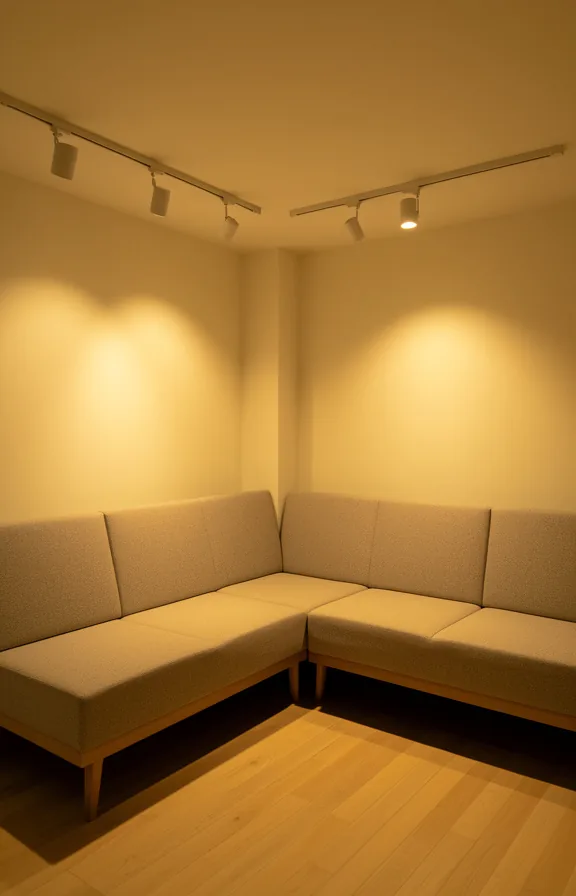
Warm amber light pools over your reading corner while the seating area stays softly lit. Track lighting mounted along the ceiling edge lets you aim each fixture exactly where you need it.
The L-shape of your apartment becomes an advantage here, not a constraint. Each arm of the room gets its own lighting zone that you control independently.
Matte black or brushed brass track fixtures disappear visually against most ceilings. The light itself becomes the design feature, not the hardware.
Your walls stay clear because lighting comes from above, not from table lamps stealing surface space. This matters enormously in a room where every corner counts.
The color palette stays warm and grounded when you choose bulbs in the 2700K range. Harsh white light would make a small room feel clinical instead of welcoming.
You can pivot one fixture to highlight a gallery wall or your plant collection. Adjust another to create a soft glow over your sofa without reading it as overhead lighting.
This setup works best if you have eight-foot or higher ceilings. Lower ceilings might feel too exposed with visible track systems running across them.
Pro Tip: Install track on the wall that divides your L, not the outer edges. Light bounces inward and fills both zones more naturally.
22. Fireplace Feature Wall Focal Point
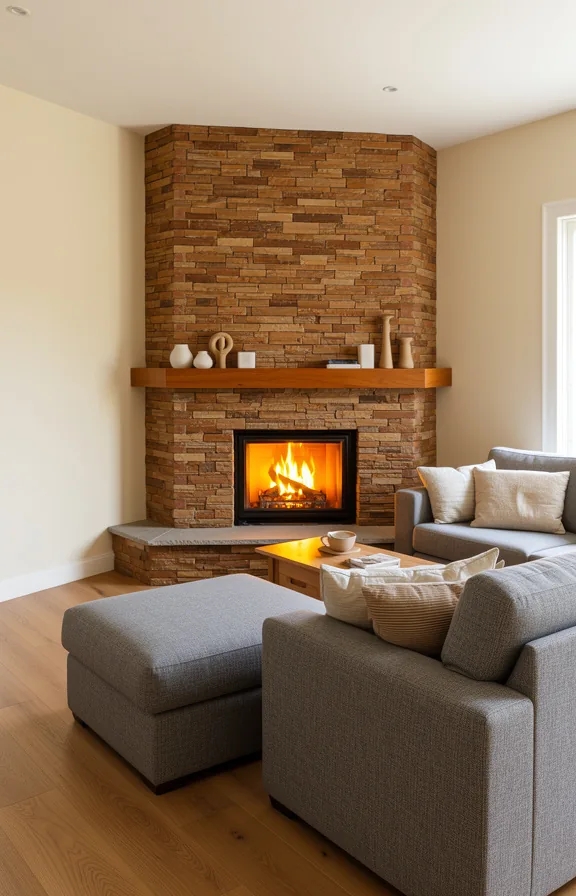
Warm amber tones glow from the firebox opening as your eye lands there first. The fireplace sits at the inner corner of your L-shape, anchoring both arms of seating.
Your feature wall rises in natural brick or stacked stone, unadorned and textured. A simple floating mantel in dark wood or metal brackets holds pillar candles and minimal decor.
Seating arranges perpendicular to the fire, with your sectional or two chairs facing inward. This layout maximizes the room’s depth without blocking sightlines across the L.
Lighting comes from the fire itself and warm wall sconces flanking the mantel. Overhead fixtures stay dimmed or hidden to let the glow do the work.
The colour palette stays warm and neutral: cream walls, dark flooring, burnt sienna accents. Textiles in linen and wool echo the fireplace’s natural warmth.
This concept works in apartments where the fireplace sits at an interior corner. Most of this effect comes from wall treatment and furniture placement.
Pro Tip: Paint walls behind and beside the fireplace in a warm grey or warm white. This makes the stone or brick read louder without competing colour.
Start with the floating sofa arrangement from idea one. Moving your seating away from walls immediately makes an L-shaped room feel larger and more intentional.
Pair that with the rug placement trick from idea seven to ground your seating visually. These two steps together transform how the space functions without spending money on new furniture.
Save this post to reference as you test different layouts in your apartment. Your L-shaped living room has potential you have not seen yet.