

25 Ways to Make Your Small Kitchen Look Expensive with Plants
This platform is proudly ad-free! To keep it that way and support our efforts, some posts may contain affiliate links. These links come at no extra cost to you, but they help us grow and continue providing valuable content. Thank you for your understanding and support!
Small kitchens often feel cramped and uninspired, no matter how clean you keep them. Adding plants transforms a tight space into a luxurious botanical retreat that feels intentional and expensive.
Plants work because they cost less than most decor upgrades but deliver immediate visual impact. The right placement makes your kitchen feel curated, lived-in, and full of sophisticated personality.
This list gives you specific plant styling concepts you can implement today. Most require just a few pots and a decent plant or two under thirty dollars each.
You will find ideas for every kitchen layout, wall type, and light condition available. The floating shelf arrangement at number two works in almost any space and costs under fifty dollars to set up.
Save this post now and pick your first idea before you scroll away.
1. Trailing Ivy Wall Garden
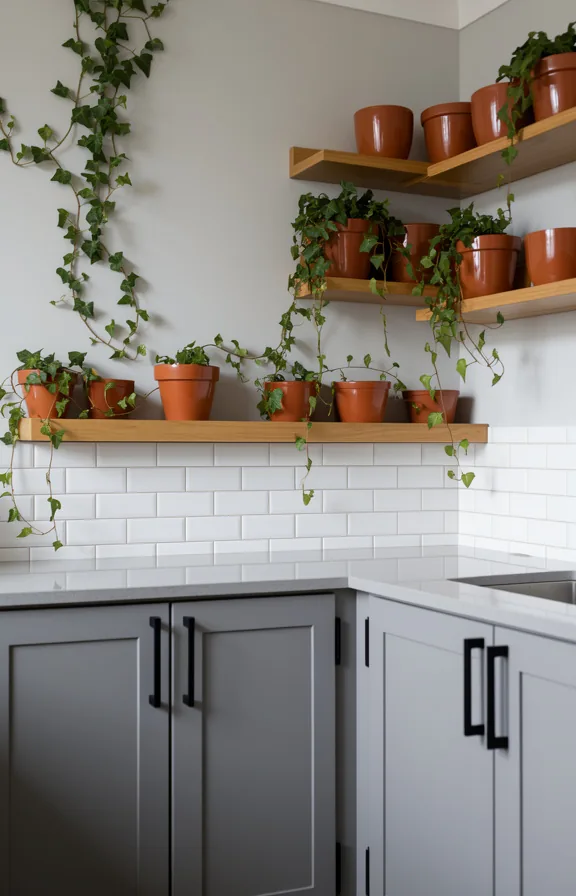
Rough terracotta against a white wall creates instant architectural interest. Trailing ivy cascades downward in soft, layered waves.
The vines soften hard kitchen edges and corners. Green leaves catch light as they move and shift.
This look requires mounting narrow wooden ledges at staggered heights. Most kitchens have at least one blank wall that works well.
Warm terracotta pots age gracefully over time. Their texture reads expensive without costing much.
Trailing varieties like pothos or philodendron grow fast. They fill vertical space in under three months.
The gaps between cascading vines feel intentional, not sparse. Light passes through the strands to the wall behind.
This concept works best in kitchens with natural side light. The morning or afternoon sun makes the green glow.
Pale walls amplify the effect of trailing foliage. Darker walls absorb the greenery instead of highlighting it.
The overall mood is garden-like and collected. It feels lived in, not staged or sterile.
Pro Tip: Space your ledges 18 to 24 inches apart to allow ivy room to cascade between levels naturally.
2. Marble Shelf Plant Display
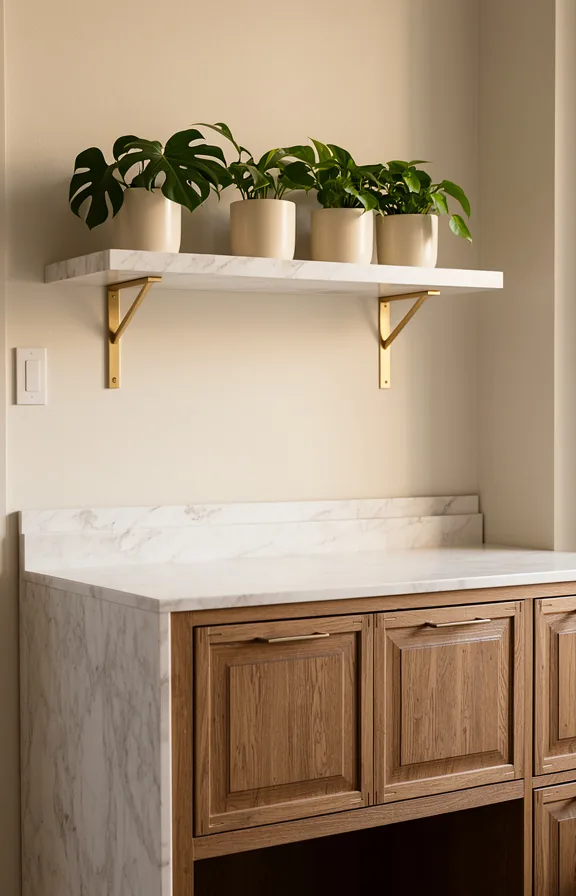
Low and wide across the shelf, marble shelving becomes the anchor of your kitchen. White or grey-veined marble reads as intentional and polished without feeling cold.
The surface reflects light downward and softly illuminates the plants below. This quiet luxury works in small kitchens because marble takes up no visual noise.
You’ll pair the shelf with ceramic planters in warm cream or soft grey tones. The pots stay simpler than the marble, letting the material do the talking.
Plants like pothos, ZZ, or monstera grow tall enough to break up kitchen lines. Their green softens the hard geometry of the marble surface.
Most homes work best with a single marble shelf rather than stacked shelving. Repetition dilutes the expensive feel you’re building.
Position your shelf at eye level or just below where you naturally look. This placement feels more refined than shelving mounted high on the wall.
This concept suits kitchens with open wall space between counters and upper cabinets. Paint the wall behind the shelf in warm white or soft taupe.
Pro Tip: Keep the marble surface mostly clear of objects. One or two potted plants create more impact than a crowded display.
3. Brass Hanging Planter Corner
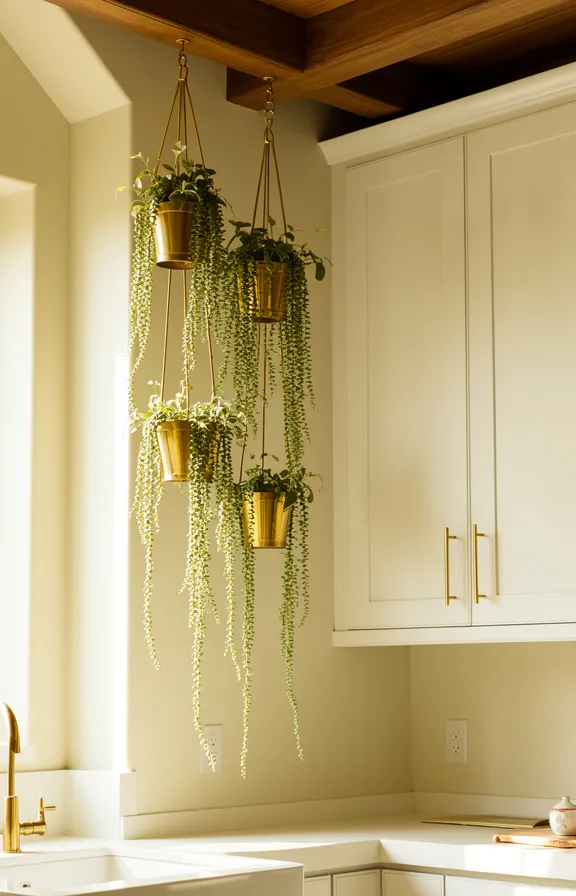
Warm brass chains suspend potted plants from a wooden ceiling beam in your kitchen corner. The metal catches light and creates soft shadows across white or cream walls.
This corner becomes a vertical garden without eating counter or shelf space. Trailing plants like pothos or string of pearls drape naturally downward, drawing the eye upward.
The brass finish feels intentional and collected, not accidental or sparse. It reads as a deliberate design choice rather than plants you couldn’t find room for elsewhere.
You’ll want natural light from a nearby window for the plants to thrive. East or west-facing corners work better than rooms with only artificial light.
The overall effect is an affordable luxury corner that costs far less than a decorator would charge. Most of this look comes from ceiling hardware, rope, and patient plant growth.
Pro Tip: Install a hook into a solid ceiling beam or joist, not drywall alone. The weight of moist soil and mature vining plants is heavier than it looks.
4. Minimalist Kitchen Window Sill
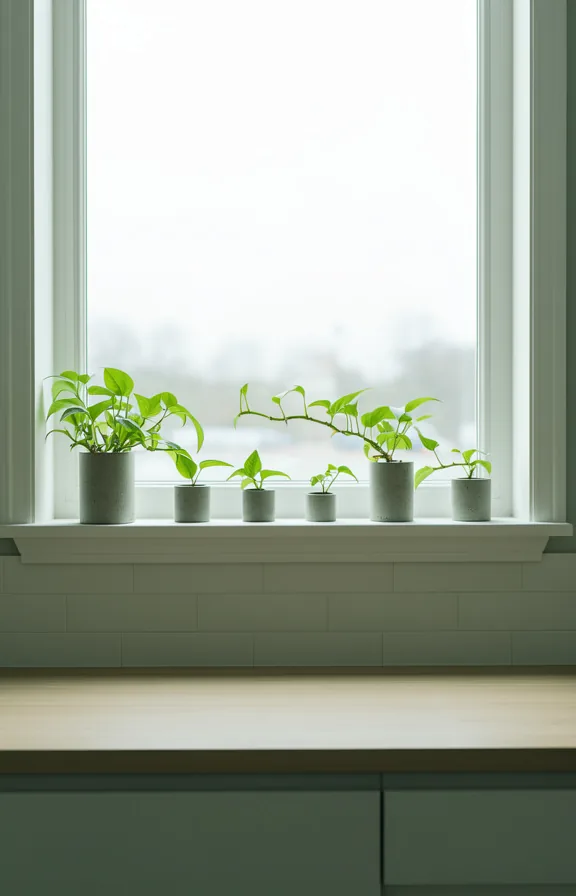
White painted trim frames a single row of matching pots along the sill. Natural light floods through without obstruction or clutter.
Each plant sits in an identical ceramic vessel in soft cream or chalk white. The repetition creates rhythm and calm.
One trailing pothos or philodendron per pot is all you need. Three pots maximum across most window widths.
The negative space matters as much as the plants themselves. Empty sill shows intention, not emptiness.
Morning light travels through the leaves and casts soft shadows on the wall behind. This natural movement costs nothing.
Most small kitchens benefit from this restraint because clutter makes rooms feel smaller. Minimalist styling does the opposite.
Pro Tip: Match your pot material to your cabinet hardware finish. Consistency across small details reads as expensive in tight spaces.
5. Fiddle Leaf Fig Statement Wall
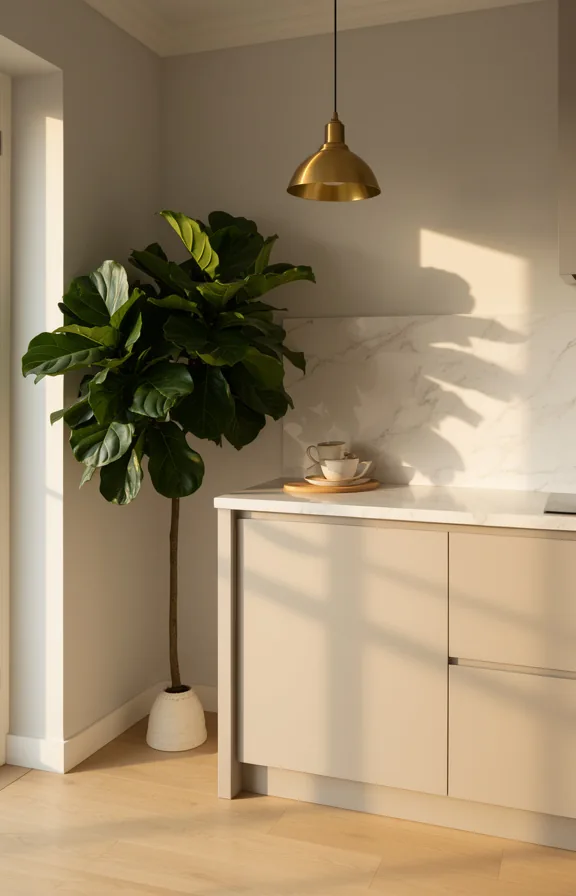
One tall fiddle leaf fig anchors an entire wall with architectural presence. The oversized leaves catch light and create depth that makes your kitchen feel larger.
Position it in a corner or against bare wall space where it becomes a living focal point. This works best in kitchens with at least one window for bright, indirect light.
Pair the deep green foliage with soft neutral walls in warm grey or creamy white. The contrast makes the plant’s scale impossible to ignore.
The room gains a gallery quality when you add minimal styling around it. Leave breathing room on the floor and shelf space nearby, no clutter.
Most people find that matte white or pale oak shelving beside the plant reads more expensive than dark wood. It keeps the eye on the foliage itself.
Soft, warm lighting from below or to the side elevates the whole effect. Avoid harsh overhead light that flattens the leaves.
This concept suits homes with high ceilings and corner space to spare. The visual impact relies on scale and clean surroundings.
Pro Tip: Place your fiddle leaf fig on the floor in a simple ceramic or concrete planter, never a decorative pot. The planter should blend in, not compete.
6. Ceramic Pot Plant Cluster
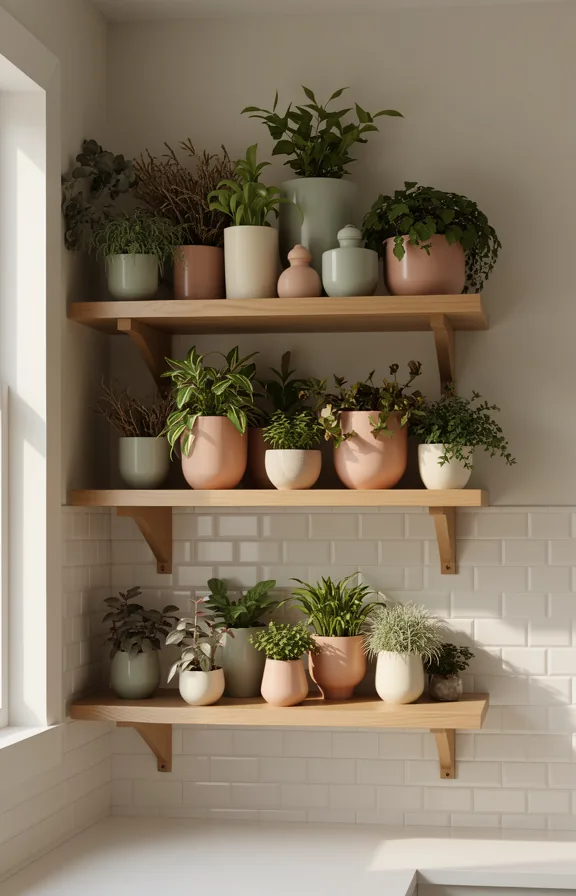
Low and wide across the shelf, three to five ceramic pots in matching neutral tones create quiet luxury. The cluster feels intentional without looking staged or overstuffed.
Your eye lands on the pot surfaces first, not individual plants. Matte finishes in cream, sage, or soft grey read more expensive than glossy.
Varying pot heights by two to four inches creates visual movement. All pots stay the same diameter or within one inch of each other.
Fill each pot with trailing or soft-edged foliage. Pothos, string of pearls, or philodendron edges soften the ceramic geometry.
Group the cluster on an open shelf at eye level. This placement makes the pots the focal point, not background noise.
The ceramic material itself does the heavy lifting here. One cohesive material family makes small spaces feel more refined.
This works best in kitchens with simple cabinetry and minimal competing textures. The cluster needs clear space around it to read as luxury.
Pro Tip: Choose handmade or textured ceramic surfaces over smooth finishes. Subtle surface variation costs nothing but reads expensive in every light.
7. Glass Shelf Herb Garden
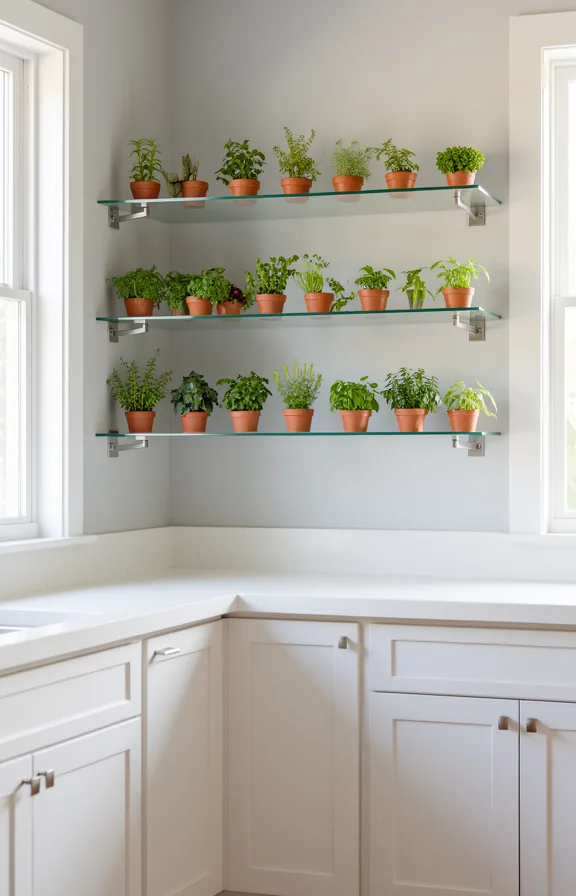
Low and wide across the open shelf, small terra cotta pots hold fresh herbs in soft clusters. The glass shelf itself disappears against the wall, letting the plants float like they belong there naturally.
Warm light hits the pots from the side, casting soft shadows on the wall behind. This creates depth without taking up any counter space or visual clutter.
Your eye travels across the shelf and sees texture, greenery, and purpose all at once. The arrangement feels lived-in because it actually is, which reads as expensive and intentional.
The terra cotta material picks up warm tones from your kitchen lighting, whether morning sun or pendant lights. Most kitchens already have warm metallics in hardware or faucets that echo this naturally.
This concept works best in kitchens with at least one window or strong task lighting. The glass shelf only reads as sophisticated when light can move through and around it.
Most of the effect comes from placement and simplicity, not from spending much money. You likely already have the pots and the plants at home.
Pro Tip: Mount the glass shelf at eye level or just below, where light hits it directly from a side window or pendant fixture above.
8. Monstera Corner Anchor Piece
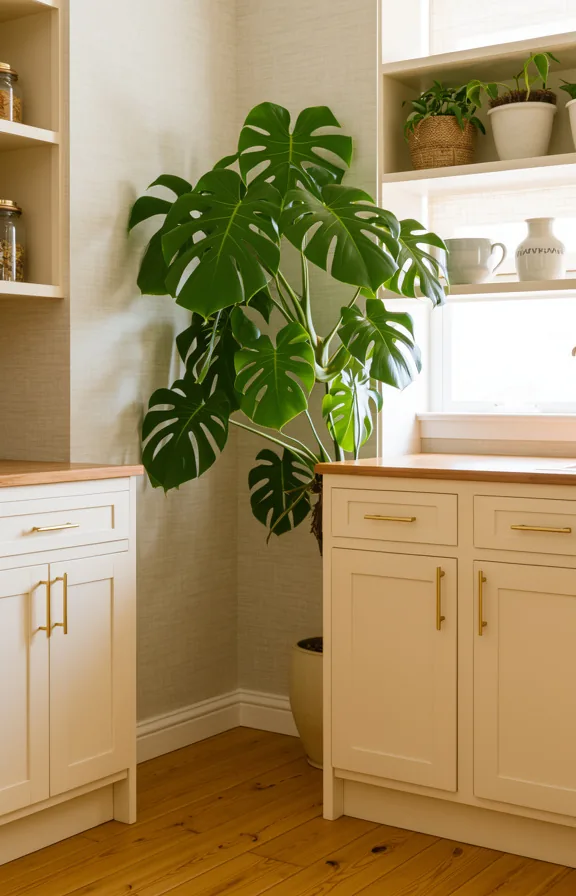
A large Monstera deliciosa in the corner signals intentional design immediately. Its scale fills vertical space without crowding your counters or workspace.
Position it where natural light hits the leaves from behind. Backlighting makes the split foliage glow and adds depth to a tight room.
Pair it with a woven basket planter in natural fiber or pale linen. The texture contrast between glossy leaves and matte materials reads expensive.
Keep the area around the pot completely clear. Visual breathing room makes even small kitchens feel collected and deliberate.
Use a slim brass or matte black plant stand if your corner sits on tile. Elevation separates the planter from the floor and adds architectural interest.
This works best in homes with corner windows or consistent indirect light. The Monstera needs stability, and corners provide it naturally.
Pro Tip: Wipe leaves monthly with a soft, damp cloth. Clean foliage reflects light better and looks far more intentional than dusty leaves.
9. Copper Wire Plant Hanger
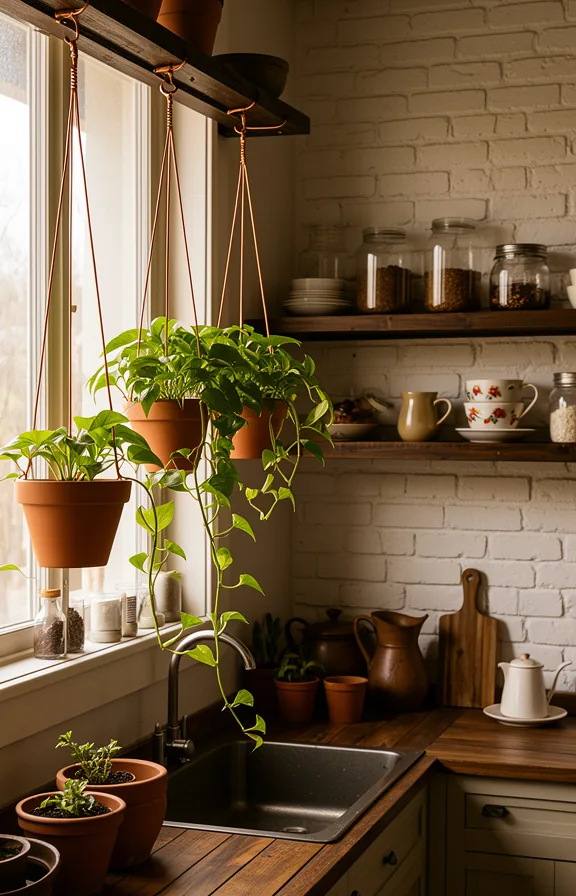
Warm amber tones catch the light where thin copper wire suspends trailing plants overhead. The hangers create vertical movement without bulk or visual weight.
Your kitchen gains gallery-wall depth when plants hang at varying heights. This layering makes the room feel intentional and collected over time.
Copper pairs naturally with warm wood shelving and cream-colored walls. The metal develops a soft patina that looks more refined than bright shine.
Small kitchens feel larger when plants float in the air rather than sit on counters. Overhead placement keeps your work surfaces clear and functional.
The hangers work best with lightweight trailing plants like pothos or string of pearls. Heavy ceramic pots will pull the wire taut and look strained.
Morning light through a kitchen window will glow through the copper wire. This creates a warm, filtered quality that reads expensive in person and in photos.
This look suits homes with open shelving or kitchen windows that get decent light. No structural changes are needed beyond finding secure anchor points.
Pro Tip: Space your hangers at least twelve inches apart to avoid a crowded, tangled appearance overhead.
10. White Subway Tile Green Wall
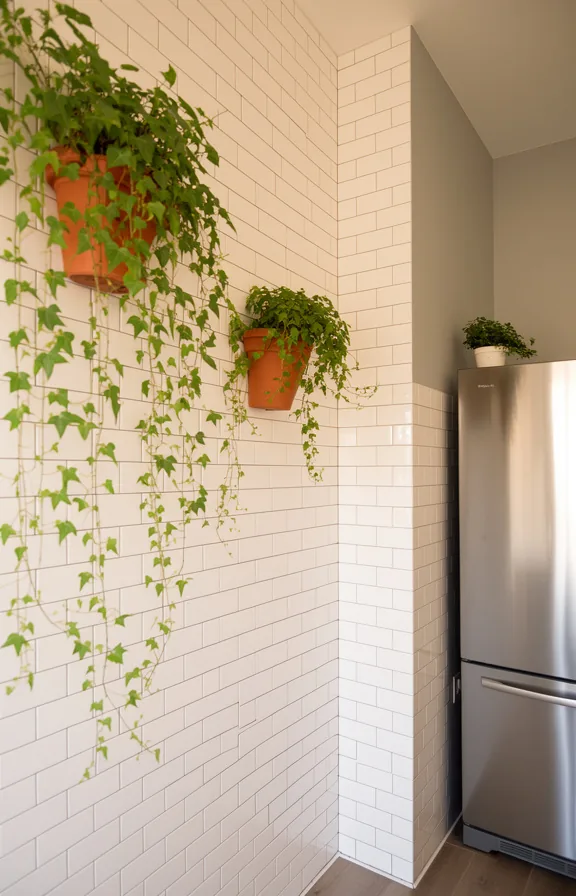
Rough terracotta planters hang against soft sage green paint. White subway tile runs waist-high along one wall, catching light.
The green wall sits opposite your cooking zone. This placement makes it the architectural anchor of your small kitchen.
Trailing ivy and pothos spill from wall-mounted planters in clay. The vines soften the geometric grid of the subway tile.
Warm wood shelving sits above the tiled section. Daylight reflects off the tile and bounces onto plant leaves above.
The colour palette moves from warm whites to soft green to terracotta. No bold contrasts mean the space reads calm and expensive.
Your kitchen feels like a small study or gallery corner. Most of this effect comes from paint and tile placement. No structural changes needed.
Pro Tip: Paint your green wall two shades deeper than you think you want. Pale greens often read washed out in kitchen lighting.
11. Terrarium Windowsill Collection
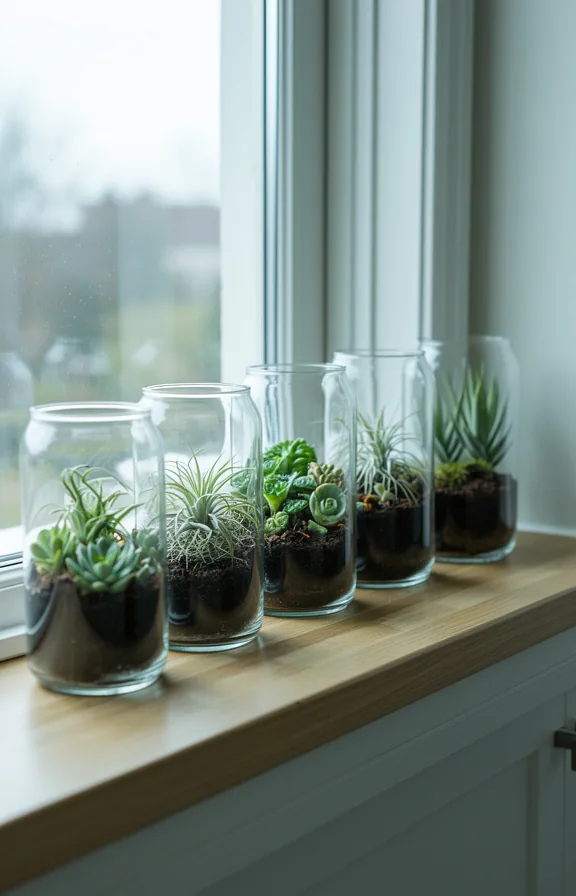
Low and wide across your kitchen window sits a lineup of glass terrariums. Each one holds a different micro-landscape: moss, small ferns, a single succulent catching filtered light.
This arrangement costs far less than statement planters. Yet it reads as deliberately collected and botanically thoughtful.
The glass containers stay mostly transparent, letting light pass through to your counters below. Natural sunlight catches the moisture inside, creating a soft, layered glow.
Your kitchen feels like it has a living greenhouse built in. The visual weight stays light because glass disappears against the window.
Pale wood or white painted windowsills work best for this look. The contrast between clear glass and solid background makes each terrarium pop.
The colour palette stays muted: greens, pale sand, soft greys. Nothing competes with the texture of the glass and plant life inside.
Terrarium arrangements add architectural interest without taking up counter or shelf space. This matters most in kitchens where every surface counts.
This concept works best where your window gets consistent indirect light. Morning or afternoon sun works equally well for moss and small ferns.
Pro Tip: Group terrariums in odd numbers and vary their heights slightly for depth. Uneven grouping reads more intentional than a perfectly matched row.
12. Floating Wooden Plant Ledge
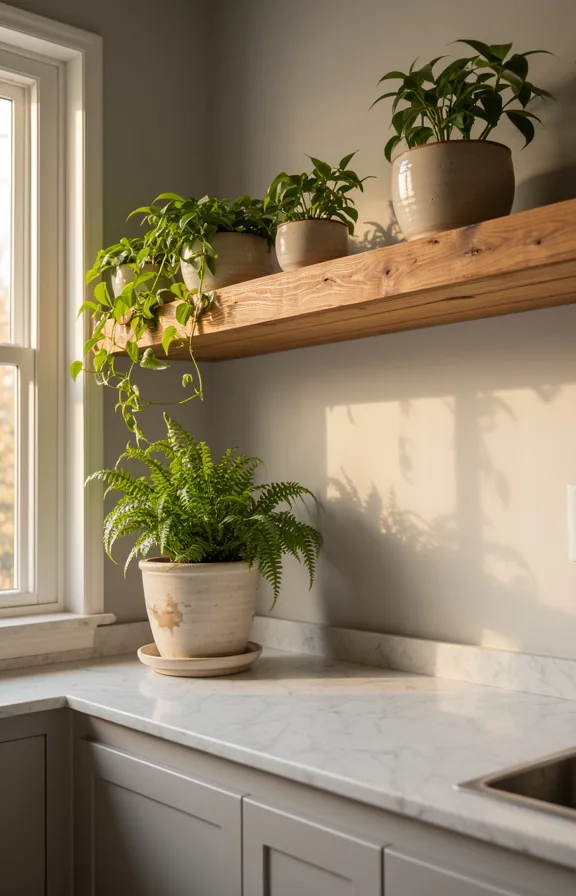
Reclaimed wood mounted at eye level across your kitchen wall creates instant architectural interest. The warm grain reads expensive without costing a fortune.
Your shelf becomes a horizontal line that visually widens a narrow kitchen. Low-maintenance plants like pothos and philodendron sit naturally on the uncluttered surface.
Soft, warm lighting underneath the ledge—think brass picture lights or warm LED strips—casts the plants in a gentle glow. This lighting technique makes the space feel more curated than clinical.
The ledge works best in kitchens with neutral walls in white, soft grey, or warm cream. The wood then becomes the room’s visual anchor point.
Space your plants with purpose, leaving sections of bare wood visible between clusters. This breathing room prevents your shelf from looking cluttered or overwhelming.
Most of this effect comes from installation height and material choice. No structural changes needed, just careful placement.
Pro Tip: Mount your shelf slightly below true eye level, around 52 to 56 inches. This proportion reads better in small spaces than shelves positioned too high.
13. Pothos Chain Ceiling Drape
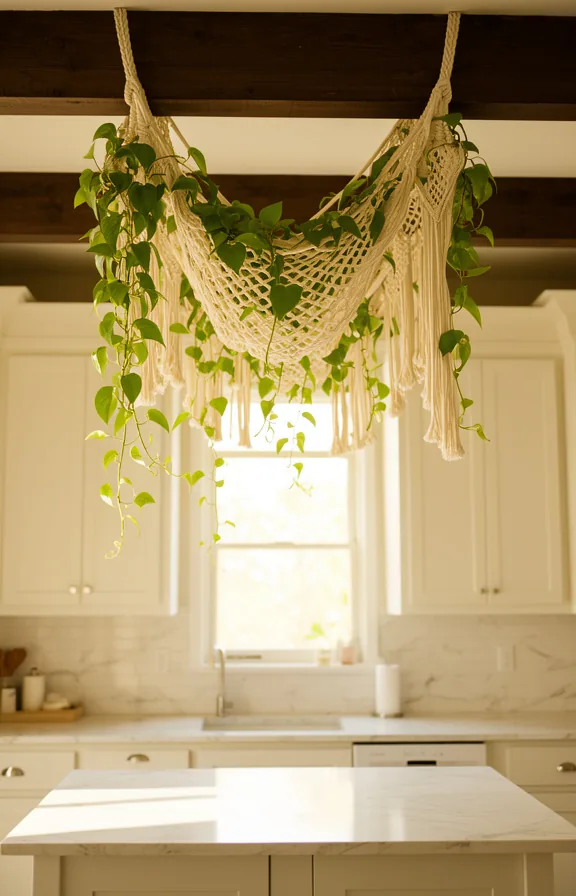
Trailing stems hang in gentle swoops from your kitchen ceiling. You’ve created a living canopy that softens hard architectural lines.
This concept uses height strategically in a compact space. The eye travels upward, making your ceiling feel taller and less confined.
The room gains a botanical density without crowding your counters or shelves. Open surfaces stay clear for functionality and visual breathing room.
Soft afternoon light filters through the translucent leaves overhead. The space feels less institutional, more like a curated garden room.
The colour palette stays neutral at counter level. Green foliage in the upper zone adds depth without visual weight.
This approach works best in kitchens with recessed lighting or natural ceiling height. The drape needs at least seven feet of clearance to avoid feeling cramped.
Most of this effect comes from thoughtful anchor points and spacing. Structural changes aren’t required; you’re working with what already exists.
Pro Tip: Install thin stainless steel cable clips to support weight evenly. Distribute anchor points widely to prevent sagging over time.
14. Charcoal Cabinet Plant Styling
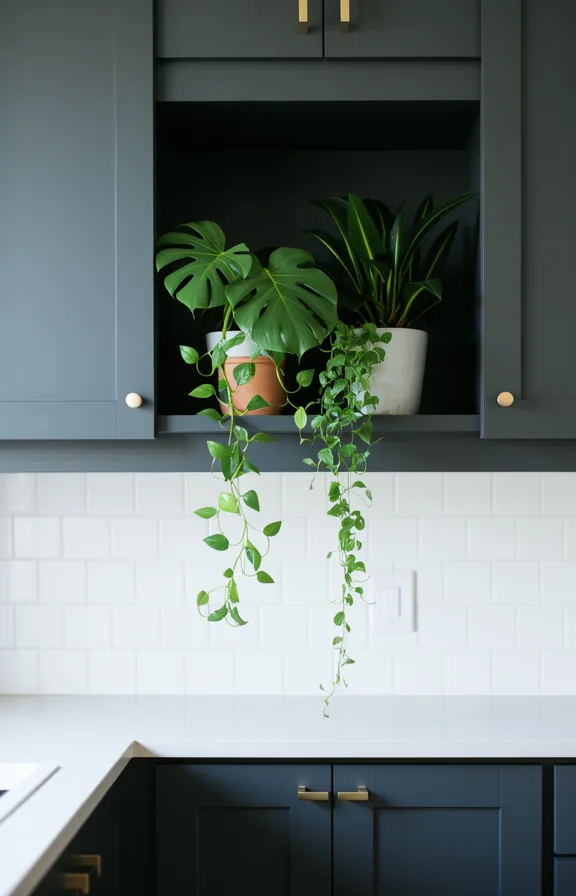
Low and wide across the shelf sits a charcoal grey cabinet with matte finish. It holds three potted plants in varying heights, creating a layered green composition against white walls.
The charcoal tone reads as intentional and grounded in a small kitchen. This darker cabinet anchors the space without feeling heavy or closing in the room.
Your plants sit in simple ceramic pots, mostly white or pale grey. The pots don’t compete with the cabinet’s texture, so all attention lands on the foliage.
A rubber plant with broad leaves takes the back position for height. Two trailing varieties cascade gently over the cabinet edge, softening its geometric shape.
Warm pendant lighting from above casts gentle shadows across the plant leaves. This creates movement and depth that a flat lit kitchen would lose entirely.
The overall effect feels curated without looking staged or overstuffed. Your eye moves naturally across the composition instead of landing on clutter.
This works best in kitchens with open shelving or glass cabinet doors. The visibility of plants matters more than the cabinet style itself.
Pro Tip: Place your tallest plant in the back third of the shelf. This single principle of perspective makes any plant arrangement read as expensive and intentional.
15. Succulent Granite Countertop Garden
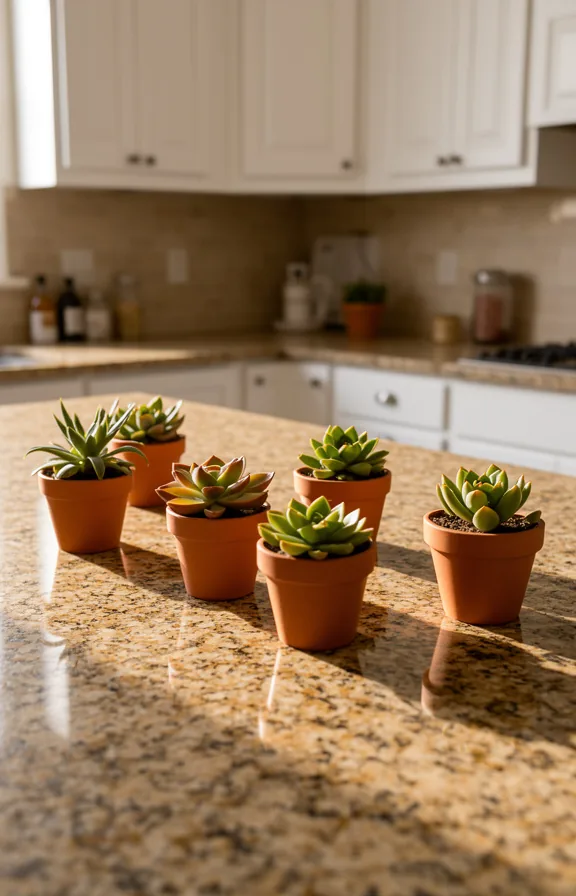
Smooth granite countertop edges become a living display when clustered with shallow-rooted succulents. Your small kitchen reads instantly more intentional and collected when plants sit low and wide across the stone.
The grey-veined granite creates a cool, neutral backdrop for soft greens and dusty rose echeverias. Sunlight catches the stone’s natural flecks while casting gentle shadows around the plant grouping.
This concept works best in kitchens with direct afternoon or morning light on the counter surface. Most of the visual weight comes from plant placement and spacing, not from buying rare varieties.
Arrange three to five plants in graduated heights across one corner or section of countertop. Uneven groupings feel more expensive than symmetrical rows.
Choose low ceramic pots in matte white, terracotta, or soft grey to ground the arrangement. Matching pot finishes create visual calm even when plant shapes vary.
Leave negative space between pots so each plant reads as a separate object, not a crowded mass. Your eye needs room to rest for the display to feel curated rather than cluttered.
Pro Tip: Place succulents on granite away from your main prep zone to protect both the plants and your workflow.
16. Stone Alcove Plant Nook
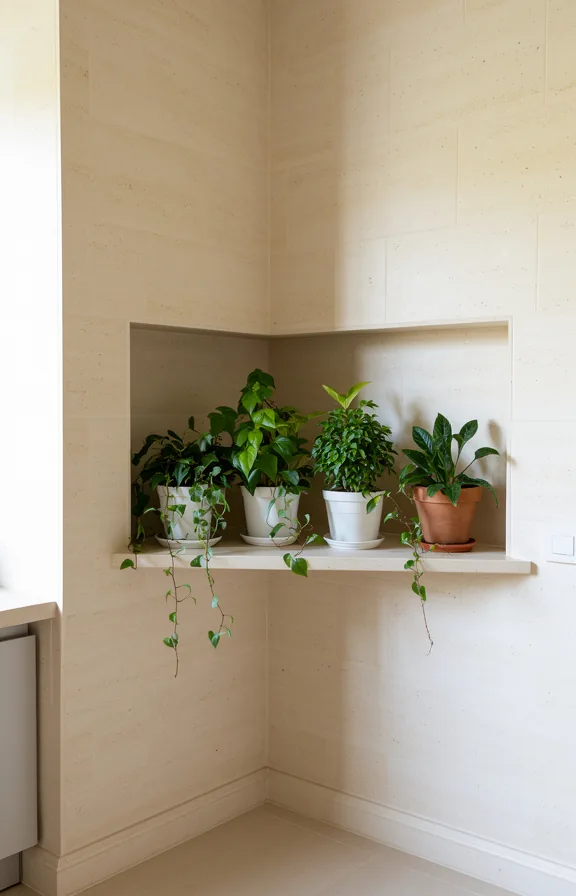
Rough pale stone walls frame a shallow kitchen corner. Your eye lands on the texture first, then notices the green.
The alcove becomes a living display rather than wasted space. Trailing pothos and small-leaf ficus climb invisible wires along the stone, creating vertical interest without taking counter room.
Warm ambient light from a single recessed fixture above softens the stone and brings out the plants’ depth. The whole corner glows at dusk, not bright but deliberate.
Colour stays neutral: stone, deep green foliage, terra-cotta soil visible in glass containers. Nothing competes for attention in a small kitchen.
The atmosphere reads intentional and grounded. Plants growing from stone feels architectural, not decorative. This costs almost nothing if your kitchen already has an alcove or unused corner.
Most of the impact comes from good light positioning and choosing trailing plants that match your stone’s warmth. Structural changes are not required.
Pro Tip: Install one recessed light directly above the alcove, angled downward. Upward light reads cheap; downward light always looks expensive.
17. Industrial Pipe Plant Shelf
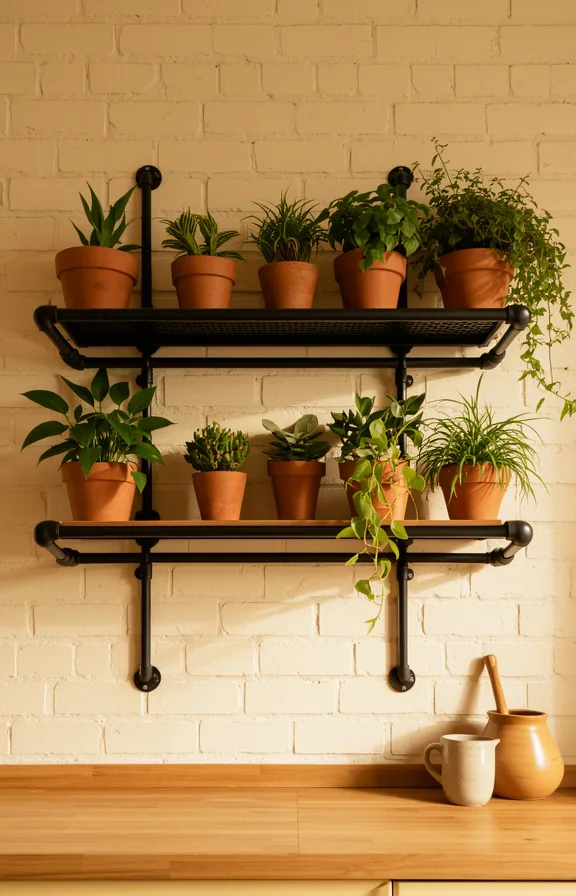
Exposed black iron pipes run horizontally across your kitchen wall. Green trailing plants spill from ceramic pots positioned at varying depths.
The pipes themselves become architectural detail, not just brackets. This works best in kitchens with white or cream walls that let the metal read as intentional.
Most of this look comes from finish choices and spacing. No structural changes needed beyond basic wall anchors and simple assembly.
Your eye travels from the geometric pipe lines to the organic plant shapes. The contrast between hard metal and soft foliage creates visual interest instantly.
Warm wood tones on your countertop ground the look and prevent it from feeling too industrial. Natural light hitting the metal pipes creates subtle shadows throughout the day.
The atmosphere feels curated without trying too hard. This appeals to homes with minimalist leanings or those mixing rustic and modern styles.
Plants in matte ceramic or concrete pots sit better on pipes than glossy or decorative vessels. Neutral tones keep focus on the plant foliage itself.
Low-hanging trailing plants like pothos or string of pearls catch light beautifully. Upright plants in the middle section balance the composition visually.
Pro Tip: Space your pipes 18 to 24 inches apart on the wall. This gives plants room to cascade without crowding the frame.
18. Sage Green Kitchen Island Plants
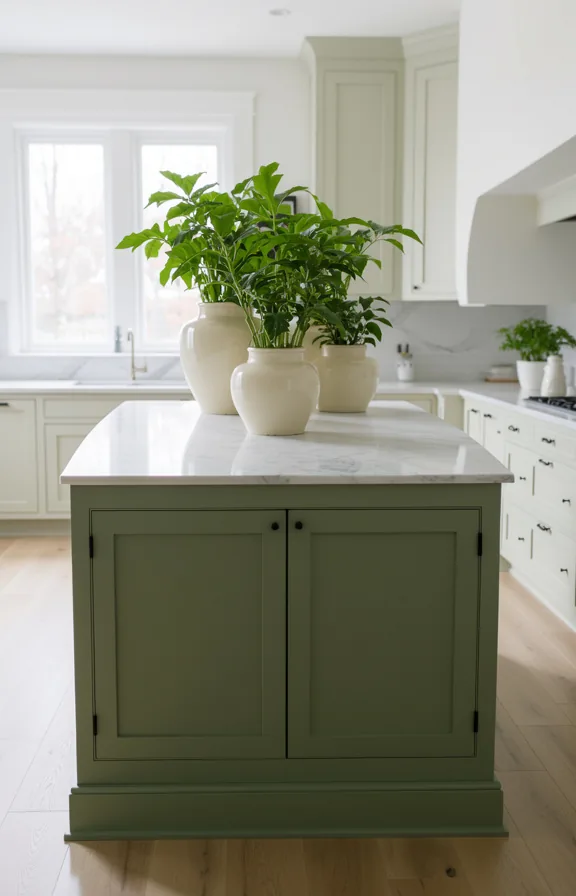
Cream ceramic pots hold trailing pothos and compact ferns across your island surface. The sage green foliage picks up soft light from above without darkening your work zone.
Your island becomes a living centerpiece that costs less than a single décor object. Three medium-sized plants create fullness without blocking sightlines or eating prep space.
The neutral pot finish reads as intentional, not accidental plant placement. Ceramic holds moisture longer than terracotta, which matters in a kitchen’s heat and humidity.
Low-light tolerant plants work here because kitchens often lack direct window access at counter level. Pothos survives weeks of neglect if you travel or forget to water regularly.
Group odd numbers together for visual balance, never pairs or even rows. This arrangement works best in homes where the island sits central to the layout.
Pro Tip: Keep pots the same height or within one inch of each other for a deliberate, designed look.
19. Macrame Wall Hanging Display
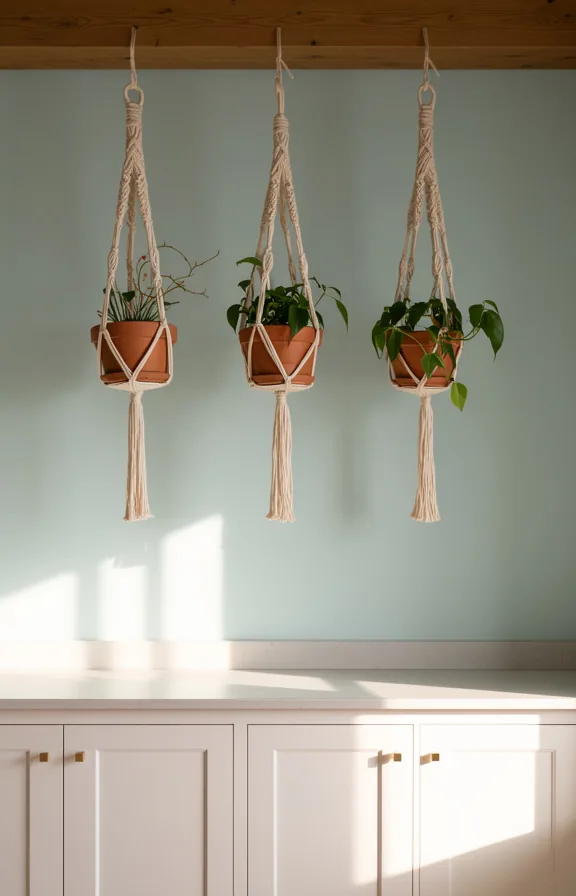
Cream macrame cord hangs from a wooden ceiling beam at different lengths. Each holds a trailing plant in a terracotta or ceramic pot.
This arrangement creates vertical rhythm without taking up counter or shelf space. The layered heights draw the eye upward and make low ceilings feel taller.
Natural light filters through the leaves and catches the knot texture. The effect is warm, handcrafted, and deliberately slow rather than mass-produced.
Terracotta and cream tones against white or soft grey walls feel grounded. The palette reads as thoughtful and collected, not trendy or rushed.
Your kitchen gains a gallery quality without renovating or rewiring. The look works in homes with exposed beams, open shelving, or plain walls.
Most of this effect comes from material choice and spacing. No structural changes are needed; you only need a hook rated for weight.
Pro Tip: Vary the knot density and pot heights to avoid a symmetrical, staged look. Real collections develop unevenly over time, and that reads as intentional.
20. Bronze Frame Glass Plant Box
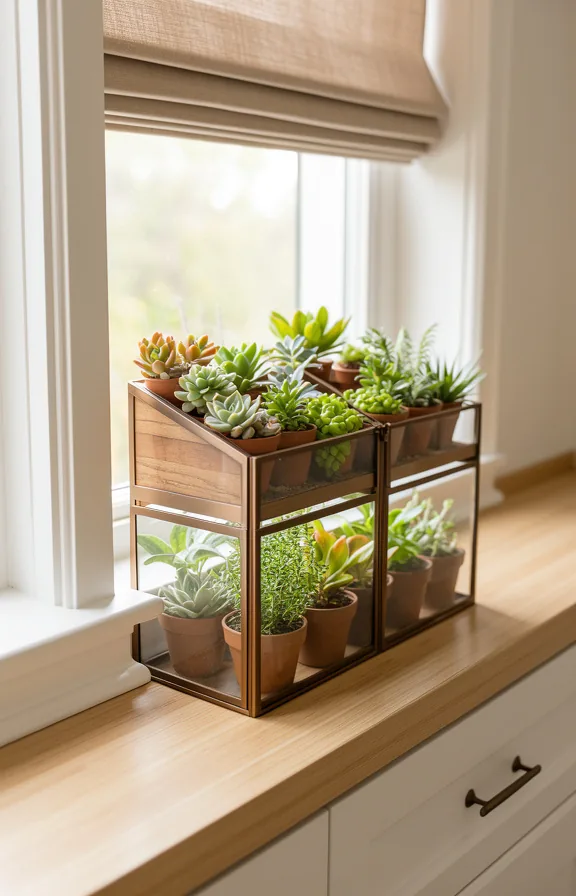
Warm bronze metal frames hold clean glass panels in a geometric display case. Inside, trailing pothos and compact herbs catch light from every angle.
The metallic finish reads as intentional craftsmanship without demanding much space. Glass walls let you see the full arrangement from across the room.
Your eye travels through the transparent box to the kitchen behind it. This layering effect makes the entire counter feel deeper and more curated.
Bronze sits between brass and black in warmth, which anchors smaller kitchens. The frame gives structure to trailing vines that would otherwise feel chaotic.
Most kitchens benefit from at least one closed container that protects plants. Dust settles less on herbs kept inside glass than on open shelves.
Fill it with low-water plants like succulents, string of pearls, or dwarf basil. The sealed environment means less frequent watering and fewer browning leaf edges.
Position the box where morning or afternoon light hits the glass directly. Backlighting through the bronze frame creates shadows that add visual weight.
This concept works best in kitchens with at least one open counter edge. The box itself becomes furniture, not just a plant holder.
Pro Tip: Place the box slightly off center on your counter to avoid a staged look. Asymmetrical placement feels more intentional than dead center.
21. Linen Cabinet Open Shelf Plants
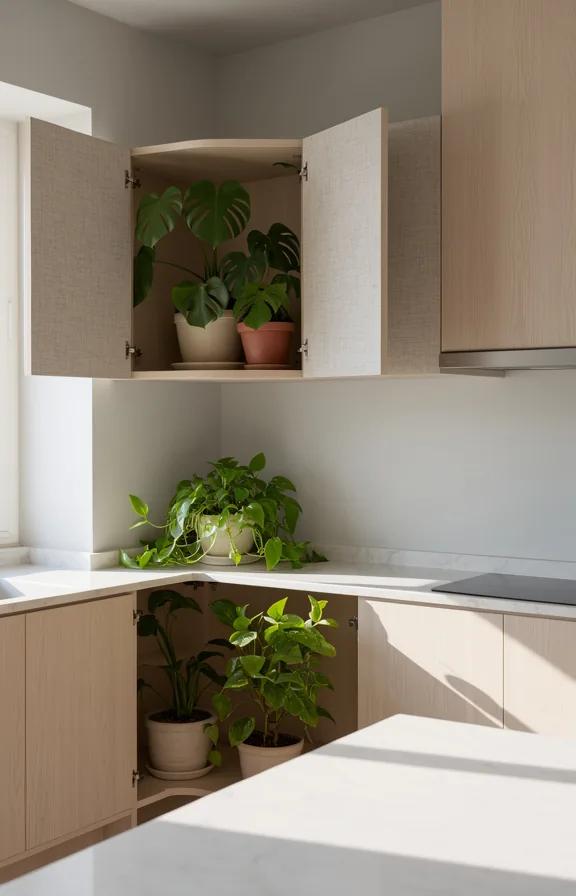
Soft cream linen lines open shelves behind glass cabinet doors. Trailing pothos and small ferns nestle between folded textiles and ceramic vessels.
This concept pairs pale wood cabinetry with cream, sage, and warm white tones. The kitchen feels layered and intentional without feeling crowded.
Natural light filters through the glass, casting shadows across folded linens and plant leaves. The effect reads as collected and quiet, not staged.
Plants soften the geometric lines of open shelving while linen adds texture. Together they create depth that makes a small kitchen feel more established.
Ceramic pots in matte white or soft terracotta sit on the same shelf as rolled kitchen towels. This mixing of textures signals knowledge and restraint.
The atmosphere is calm and organised, like a curated pantry someone actually uses daily. Most people find this works best with cabinets at least shoulder-height.
Pro Tip: Place plants on lower shelves and linens higher up. This balances visual weight and keeps soil away from fabric.
22. Concrete Planter Kitchen Corner
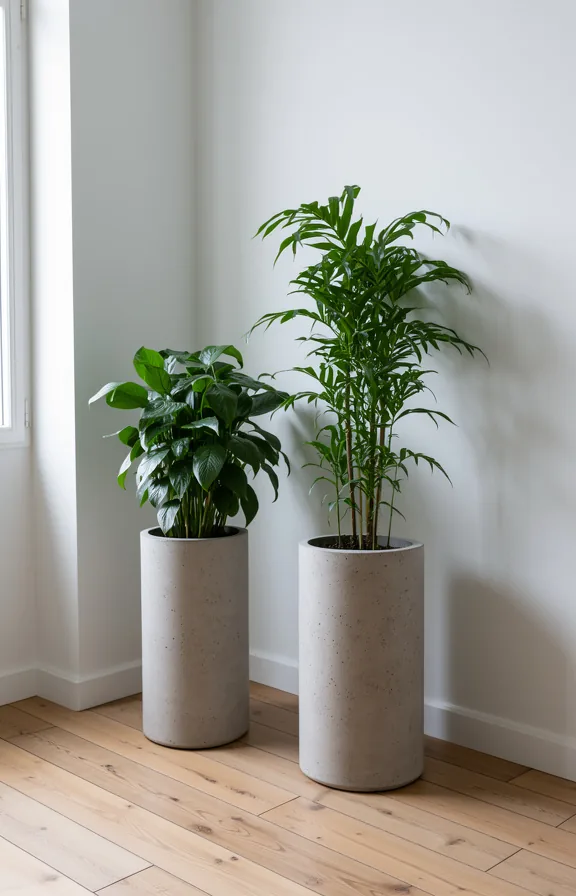
Two concrete cylindrical planters in a corner create quiet, deliberate architecture. Their rough texture reads as intentional rather than sparse.
Concrete absorbs light and sits neutral against most kitchen palettes. This material choice signals restraint and expense without fussy detail.
The varying heights matter more than the plants themselves here. One tall, one shorter creates visual rhythm in a tight footprint.
Scale up the planters relative to your corner space. Small pots disappear; medium to large ones anchor the whole zone.
Pair concrete with plants that have clean, upright form. Fiddle leaf figs, snake plants, or dracaena work better than trailing vines.
Grey concrete mellows against warm wood cabinets and pale counters. In darker kitchens, it grounds the room and prevents visual chaos.
Light hits concrete differently depending on window direction. Morning or afternoon sun on raw texture creates depth and shadow play.
This concept works best in kitchens with at least one empty corner. The isolation is part of what makes it feel like art.
Pro Tip: Choose concrete planters with simple cylindrical shape over textured or ridged designs. Plain geometry reads as more expensive.
23. Woven Basket Undercarriage Planter
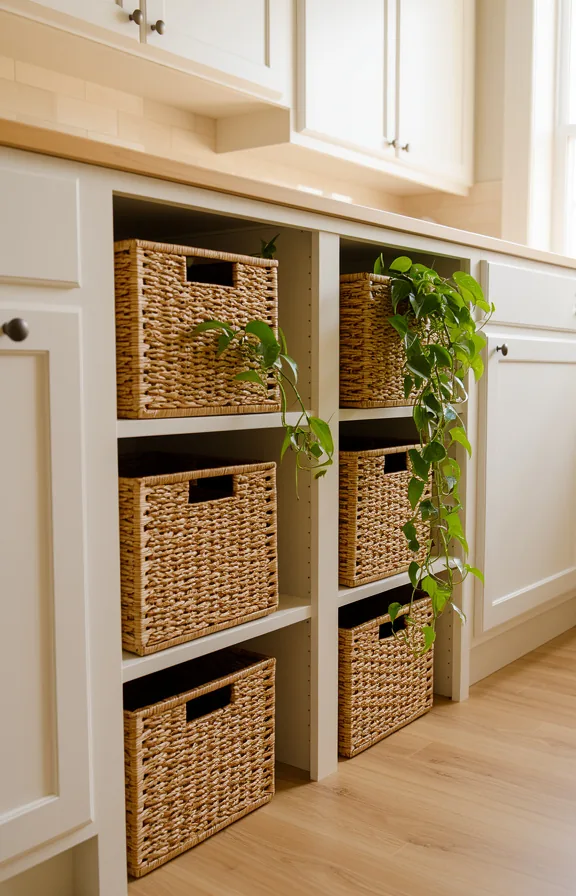
Low and wide across your counter sits a woven basket planter holding trailing greenery. The basket’s natural fibre texture catches light differently than ceramic or plastic would.
Your kitchen feels like a Scandinavian workspace when baskets ground the design at human eye level. Cream cabinetry floats above while plants occupy the zone where you actually work and move.
The colour palette stays neutral: cream, soft grey, pale wood, and the golden tones of natural rattan or seagrass weave. Leafy green adds just enough colour without competing with your functional pieces.
Morning light hitting the basket’s texture creates soft shadows across your countertop. These shadows add depth to a small space without clutter or visual noise.
The atmosphere reads intentionally minimal, not sparse or cold. A single well-placed basket says you’ve thought about your space.
This approach works best in kitchens with open shelving or limited cabinet depth. You need visual breathing room for the basket to feel like design, not storage.
Pro Tip: Place your basket on the counter edge closest to natural light, not against a dark wall. Texture needs light to show its value.
24. Stainless Steel Vertical Garden
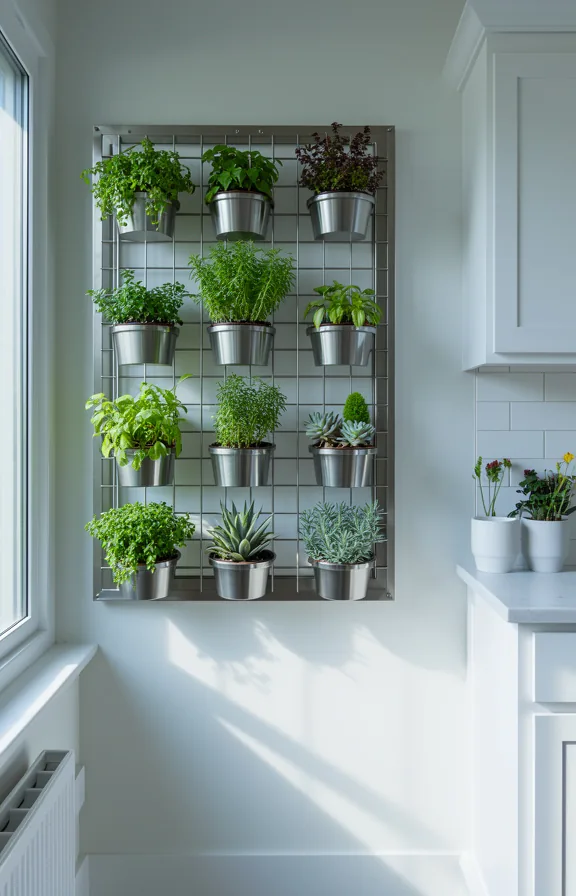
Brushed stainless steel catches light in a way that reads instantly expensive. A vertical wall garden in this material creates architectural interest without eating floor space.
The grid structure holds small potted herbs and succulents in clean rows. Each plant sits in its own pocket, creating rhythm and order that feels intentional.
Soft overhead lighting reflects off the metal, adding depth to your kitchen walls. This reflection makes even a narrow galley kitchen feel more open.
The cool metallic tone pairs beautifully with warm green foliage and terracotta pots. This contrast reads as thoughtful design, not an afterthought.
A vertical garden keeps plants at arm’s reach for cooking and watering. You get fresh herbs exactly where you need them most.
Most of this look comes from the frame material and placement itself. No renovation required. Most kitchens have one blank wall that’s perfect for this.
Pro Tip: Mount your vertical garden at eye level or slightly above. Plant placement at shoulder height draws the eye upward and makes ceilings feel taller.
25. Olive Accent Wall Living Green
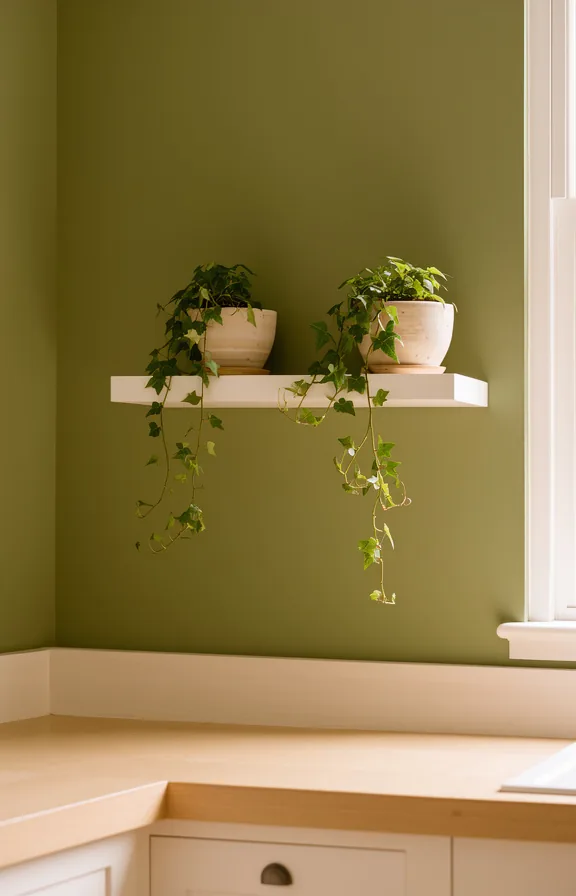
Soft olive green paint on a single wall gives your kitchen immediate depth. The colour sits somewhere between grey and gold, never looking trendy or forced.
White or cream cabinetry stays sharp against the muted green backdrop. Open shelving in natural wood then grounds the space with warmth and material contrast.
Large potted plants cluster along the olive wall at varying heights. This creates a living gallery that makes the painted surface feel intentional, not empty.
Brass or gold hardware on cabinet doors catches light against the cool wall tone. The metals feel luxe without reading as cold or sterile.
Morning light hits the olive wall differently than evening light does. This shift keeps the room from feeling static, even in a compact footprint.
Your kitchen reads like a considered space with real thought behind the colour choice. Most of this look comes from paint and plant placement. No structural changes needed.
Pro Tip: Paint only the wall where you spend the most visual time. Leave the other walls neutral to keep the room feeling open and spacious.
Start with the marble shelf arrangement featured in idea number two. It requires minimal setup, works above most countertops, and immediately signals luxury through material and scale.
Once your shelf is installed, pair it with the ceramic pot cluster concept from number six. These two ideas together create a polished, expensive-looking kitchen corner.
Bookmark this list and come back when you have thirty minutes free and a willing trip to the plant shop. Your small kitchen is ready for this transformation.