

24 Dark Academia Living Rooms for Renter That Feel Like a Private Library
This platform is proudly ad-free! To keep it that way and support our efforts, some posts may contain affiliate links. These links come at no extra cost to you, but they help us grow and continue providing valuable content. Thank you for your understanding and support!
Dark academia living rooms pull from a specific emotional world: one of leather-bound books, muted jewel tones, and spaces that feel more like private libraries than casual lounges. This aesthetic isn’t about maximalism or chaos.
Most renters think achieving this look requires permanent changes like wall painting or built-in shelving. The truth is that many of these ideas work within a standard lease and cost under $200 to implement.
Your living room can become a moody sanctuary for reading, working, and quiet reflection. All it takes is knowing which elements matter most and how to layer them intentionally.
This list focuses on dark academia ideas for renters that avoid damage deposits and build real atmosphere. You’ll find furniture arrangements, color combinations, and styling tricks that work in apartments with standard walls and hardwood or carpet floors.
By the end, you’ll know exactly which three pieces to buy first and how to arrange them for maximum impact. Start with the ideas that require the least effort and build from there.
1. Burgundy Velvet Sofa Statement
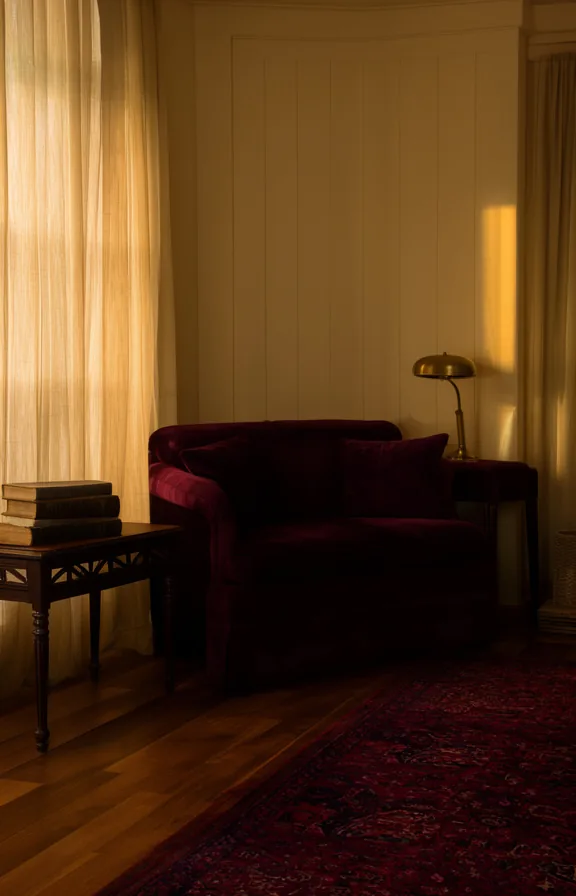
A burgundy velvet sofa commands the room like a leather-bound collection demands attention. Deep jewel tones ground a space in intellectual warmth while soft pile catches candlelight beautifully.
Pair it with dark wood panelling or book-lined shelves running floor to ceiling. Brass floor lamps, forest green accent chairs, and cream-coloured throws layered across the arm create that lived-in scholar’s retreat.
This look suits readers, collectors, and anyone drawn to moody, purposeful interiors. It requires commitment to layered lighting and patience building a book collection that feels genuine rather than styled.
Pro Tip: Place the sofa perpendicular to a window rather than facing it. This allows afternoon light to illuminate the velvet’s texture while keeping the room’s intimate, cave-like quality intact.
2. Floor-to-Ceiling Bookshelf Wall
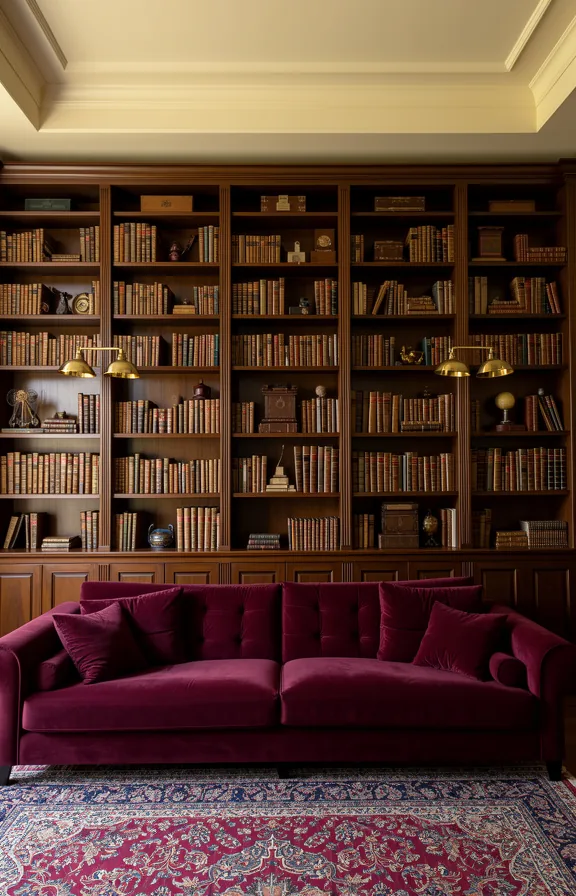
Dark wood panelling climbs from floorboard to crown moulding, creating an architectural anchor that feels both scholarly and intimate. Books in leather spines, forest green, and navy fill the shelves in clustered groups, interrupted by brass bookends and small objects that tell a story.
Warm brass or bronze reading lights mounted between shelf sections cast soft pools of light across the spines. A burgundy velvet sofa positioned in front absorbs the depth and creates a natural reading nook that feels wrapped by knowledge.
This concept works best in rooms with existing moulding or the budget to add it. Most people find that leaving 15 to 20 percent of shelf space empty prevents the wall from feeling claustrophobic or cluttered.
Pro Tip: Use adjustable shelving so you can vary spacing between shelves. Taller stacks of books look intentional; uniform heights feel institutional.
3. Leather Wingback Chair Nook
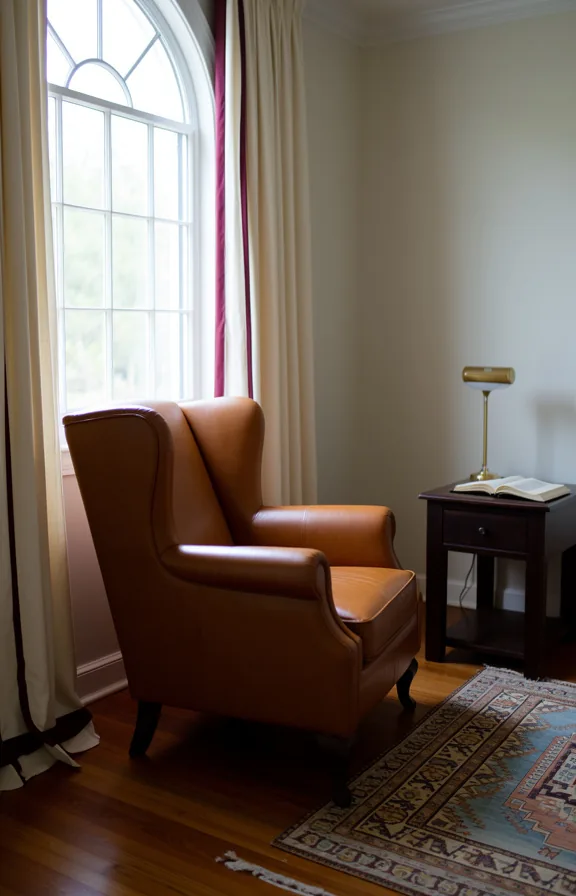
A cognac leather wingback anchors a quiet reading corner with vintage gravitas. The high-backed silhouette frames tall windows, allowing natural light to pool across worn pages and warm wood tones.
Pair the chair with a low side table in dark walnut or brass-fitted wood. Layer in a wool throw, leather-bound books stacked nearby, and a single brass floor lamp casting soft light at reading height.
This concept works best in rooms with architectural features like crown moulding, book-lined walls, or window alcoves. The chair becomes both furniture and focal point, requiring only thoughtful placement and restraint elsewhere in the room.
Pro Tip: Position the wingback perpendicular to the window rather than facing it. This creates a secondary view line and makes the nook feel intentional, not overlooked.
4. Vintage Brass Floor Lamp
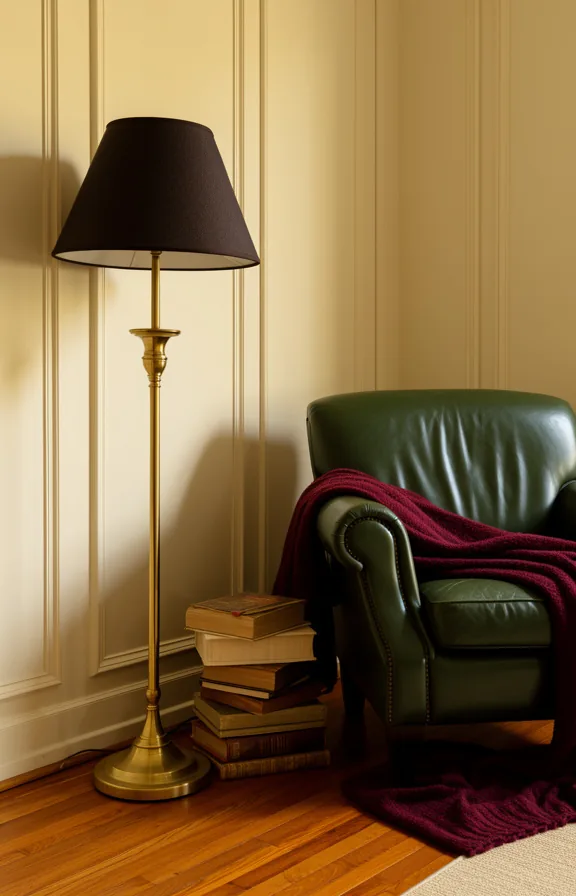
Warm amber light pools across leather armchairs and open book pages. A vintage brass floor lamp anchors the reading corner, its patinated finish catching shadows from burgundy walls and forest-green velvet seating.
The dark linen shade softens the glow to an intimate warmth, never harsh or clinical. Brass catches light differently than polished chrome, creating that lived-in, scholarly atmosphere that modern fixtures cannot replicate.
This concept suits readers who spend evenings in one spot and want lighting that flatters aging book spines and leather-bound collections. Position the lamp slightly behind or beside seating, never in front, for shadow play and depth.
Pro Tip: Place brass lamps on darker wood side tables to let the metal glow stand out. The contrast between warm metal and dark surfaces reads richer in photos and feels more intentional in person.
5. Dark Green Shiplap Accent
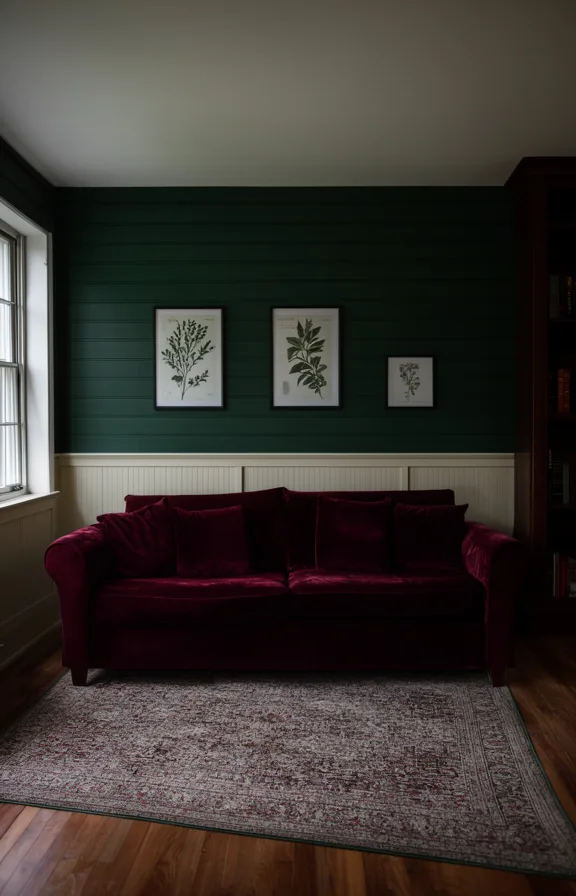
Deep forest green shiplap creates an architectural backbone that reads as both literary and lived-in. The horizontal boards catch soft lamplight and add texture without feeling precious.
Pair this wall with mahogany or walnut furnishings, warm brass fixtures, and cream-coloured upholstery to balance the richness. The colour grounds a room while allowing shelving, artwork, and vintage finds to take focus.
This concept suits homes with good natural light and requires commitment to a single accent wall rather than competing patterns. The effect is immediate and transforms a plain room into a scholar’s retreat.
Pro Tip: Paint shiplap matte rather than satin. Matte finish absorbs light and deepens the colour, making the wall feel less reflective and more authentically moody.
6. Oriental Rug Layering
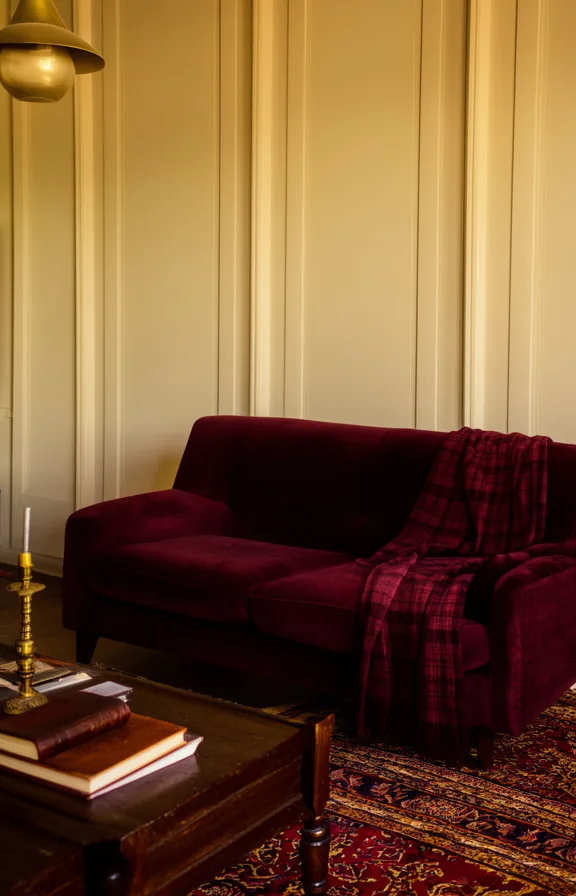
Layered Persian and Turkish rugs in deep jewel tones anchor the room with scholarly gravitas. A larger vintage rug in burgundy or navy forms the base, while a smaller geometric or floral runner overlaps at an angle for visual depth.
This approach works best in rooms with dark wood flooring and built-in shelving. The overlapping textures create the impression of a space that has evolved over decades, exactly what a private library should feel like.
Warm lamplight catches the rug’s silk threads and fringe, casting subtle shadows that deepen the room’s moody atmosphere. This technique suits readers and collectors who want their space to feel inhabited by history.
Pro Tip: Use a non-slip rug pad between layers to keep them anchored and prevent creeping during everyday use.
7. Floating Wooden Shelves
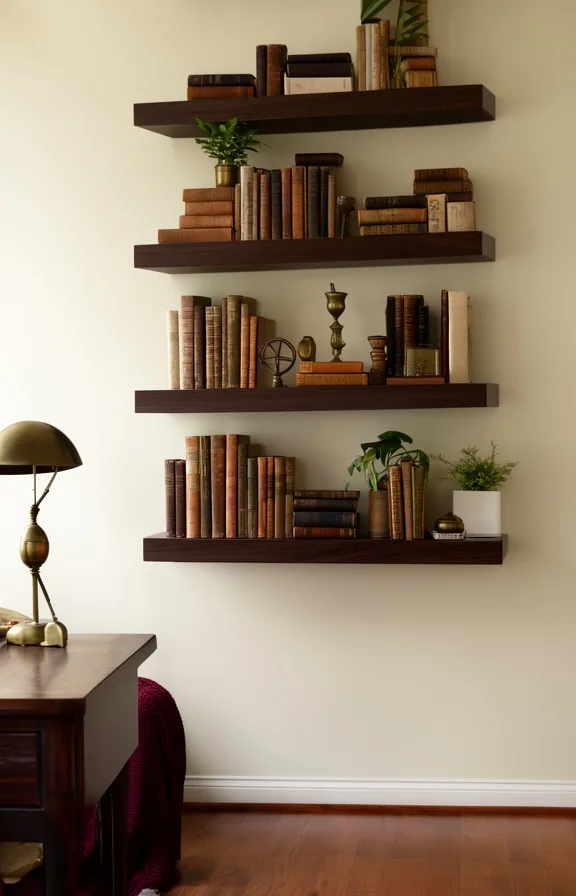
Dark walnut shelves mounted at eye level create clean architectural lines against cream or soft grey walls. Vintage leather-bound books, brass bookends, and scattered leather-bound journals fill each shelf with intentional gaps for breathing room.
The warm wood tone anchors the room while soft brass or bronze brackets remain visible underneath, adding metalwork detail. This setup works best in rooms with 9-foot ceilings and natural light from a single window or vintage brass reading lamp.
Styling these shelves requires restraint. Books spine-out and spine-in alternate, with occasional stacked volumes and small marble or brass objects to break the visual rhythm. Most people benefit from planning shelf layouts on paper before mounting.
Pro Tip: Mount shelves slightly below eye level rather than at it. They photograph better and feel more proportional in rooms with lower furniture arrangements.
8. Emerald Linen Curtains
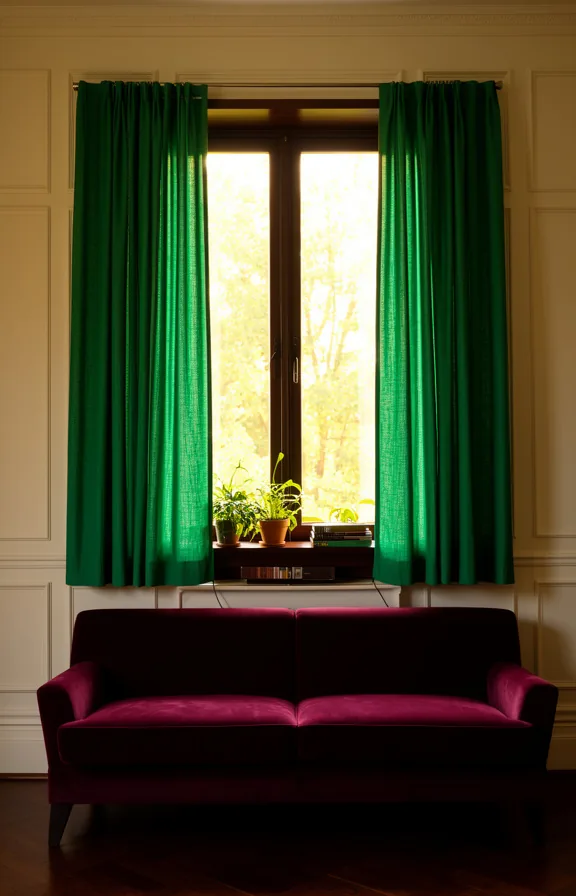
Emerald linen pooling from ceiling to floor frames tall windows with scholarly restraint. Pair them with deep mahogany bookshelves, leather wingback chairs, and oil paintings in gilded frames for a room that feels like inherited wealth and endless reading time.
The jewel tone absorbs light beautifully, creating rich shadows across cream plasterwork and worn leather spines. Most people find this colour works best in rooms with northern or eastern light, where it deepens without turning grey.
This setup requires generous ceiling height and substantial windows to feel intentional rather than heavy. The reward is a space that photographs beautifully and feels both intimate and grand.
Pro Tip: Let the curtains hang straight and full without tiebacks. The clean lines keep the focus on their dense colour and linen texture.
9. Dark Wood Coffee Table
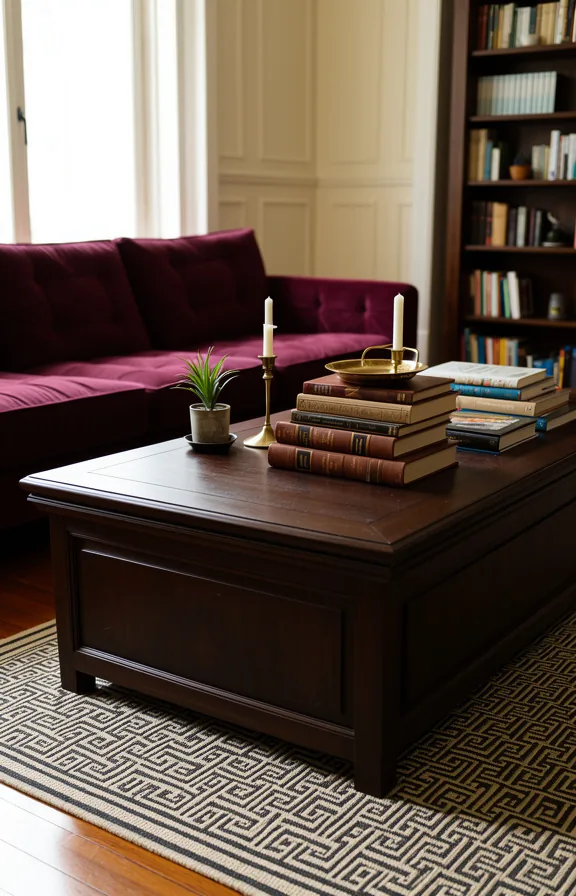
A dark wood coffee table anchors the seating area with solid, grounding presence. Walnut or ebony-stained oak works best, paired with cream upholstered seating and brass reading lamps on either side.
Stacked leather-bound books, a ceramic vessel, and brass candlesticks rest on the surface. Wool area rugs in charcoal or sage define the space beneath, while floor-to-ceiling bookshelves frame the entire composition.
This setup suits homes with dark wood flooring and high ceilings. Warm overhead lighting plus task lighting creates the intimate reading atmosphere that makes this concept work.
Pro Tip: Keep the table surface intentionally sparse. One curated stack and a single candle work harder than multiple objects.
10. Leather Desk in Living Room
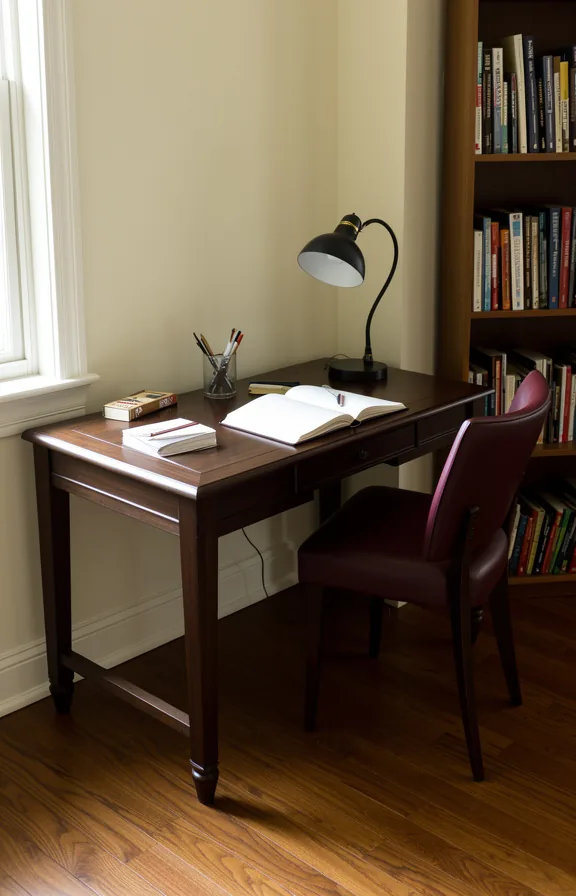
A weathered leather desk tucked into a corner transforms a living room into a study without replacing it. Dark wood paired with cognac or oxblood leather grounds the space in scholarly tradition.
Position the desk perpendicular to shelving or beneath a window for natural reading light. Brass desk lamps with cream shades add focused warmth for evening work while maintaining the library mood.
Brass drawer pulls, a leather desk pad, and stacked reference books on the surface create layers of texture. This works best in rooms with high ceilings and enough floor space to keep the sitting area separate and uncluttered.
Pro Tip: Keep the desk surface visible and minimal. Clutter reads chaotic instead of scholarly on mobile photos.
11. Candle and Glass Styling
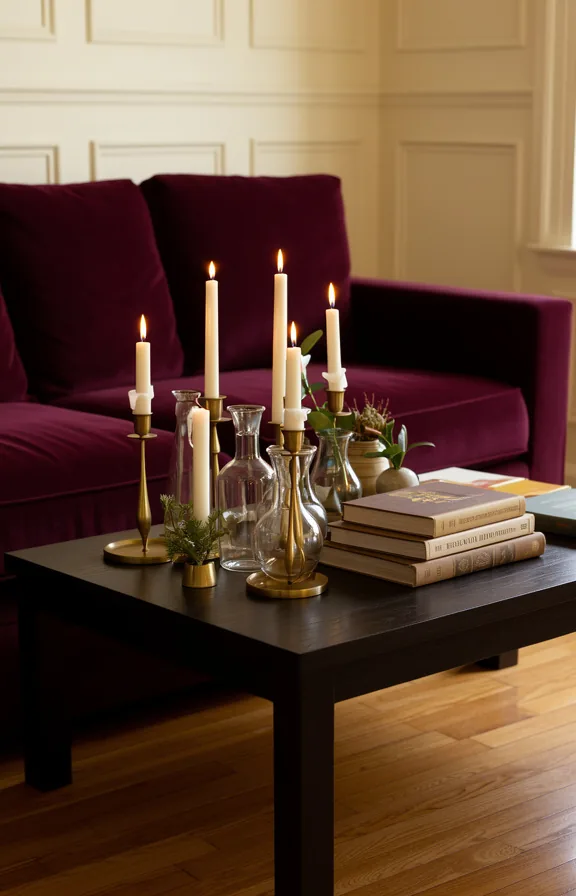
White pillar candles in brass holders clustered across dark wood surfaces create the heart of this look. The warm amber glow softens the room after sunset and feels intentional rather than decorative.
Pair candles with glass vessels holding dried botanicals, leather bookmarks, or single branches. Clear glass lets candlelight travel through, multiplying the effect without overwhelming the space.
This approach works best in rooms with existing bookshelves and furniture with visual weight. The styling requires restraint; too many candles read as clutter instead of scholar’s calm.
Pro Tip: Arrange candles in odd numbers at varying heights on low tables. Eye-level or below feels more intimate in photos and makes rooms feel intentionally lit rather than brightly designed.
12. Navy Blue Accent Wall
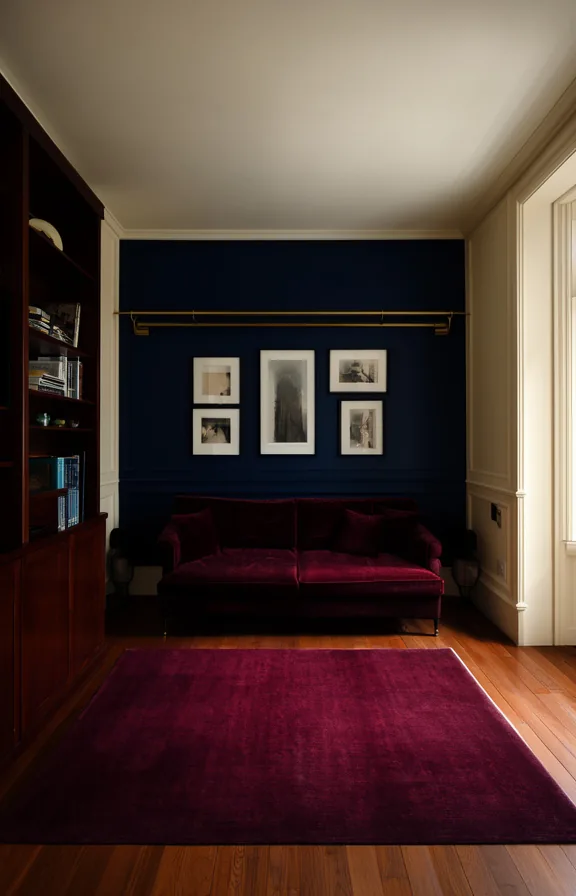
A single navy blue wall anchors the room like an open book. Paired with cream panelling on adjacent walls, this creates a grounded, intentional backdrop that reads scholarly without feeling cold.
Deep wood shelving loaded with leather spines catches warm lamplight against the navy depth. A low-slung sofa in charcoal or dark leather pulls the eye down, while brass floor lamps positioned at seating height warm the whole composition.
This approach works best in rooms with good natural light or the budget for layered overhead and task lighting. The navy reads rich at dusk and controlled during daylight.
Pro Tip: Paint the accent wall first, then source your furniture. Navy intensity shifts under different finishes. Matte reads darker and more sophisticated than satin.
13. Taxidermy and Botanical Mix
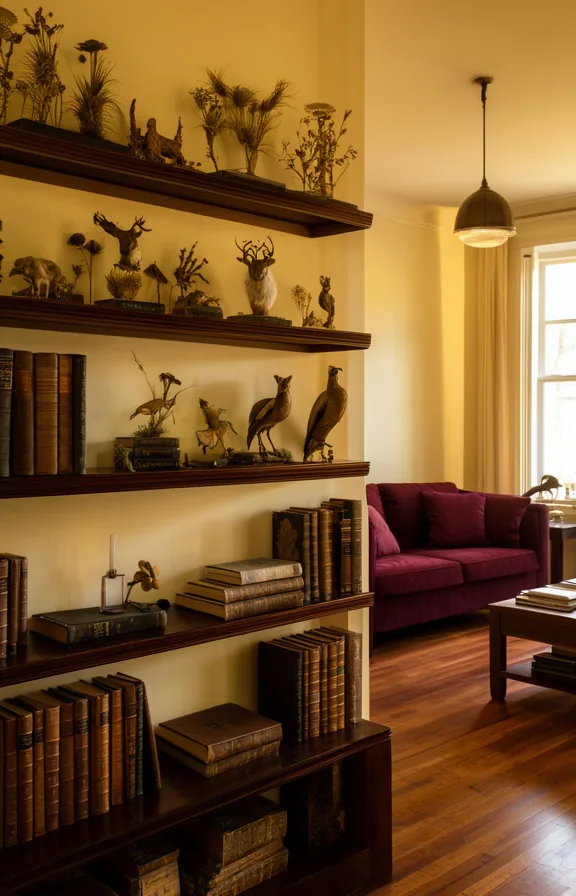
Mounted birds and pressed flowers share shelf space against deep forest walls. Taxidermy specimens become sculptural objects rather than conversation pieces when paired with dried botanicals in glass domes and pressed herbarium frames.
Rich mahogany shelving holds the collection at varying heights. Warm amber lighting from brass picture lights casts shadows that bring the natural specimens to life, while cream wallpaper accents prevent the room from feeling heavy.
This approach suits collectors with a genuine naturalist sensibility and enough wall space to showcase objects without clutter. It requires sourcing quality vintage pieces over time, not all at once.
Pro Tip: Cluster taxidermy with botanicals in odd numbers and vary the scale to feel intentional rather than museum-like. Leave breathing room between groups.
14. Plaid Wool Throw Blanket
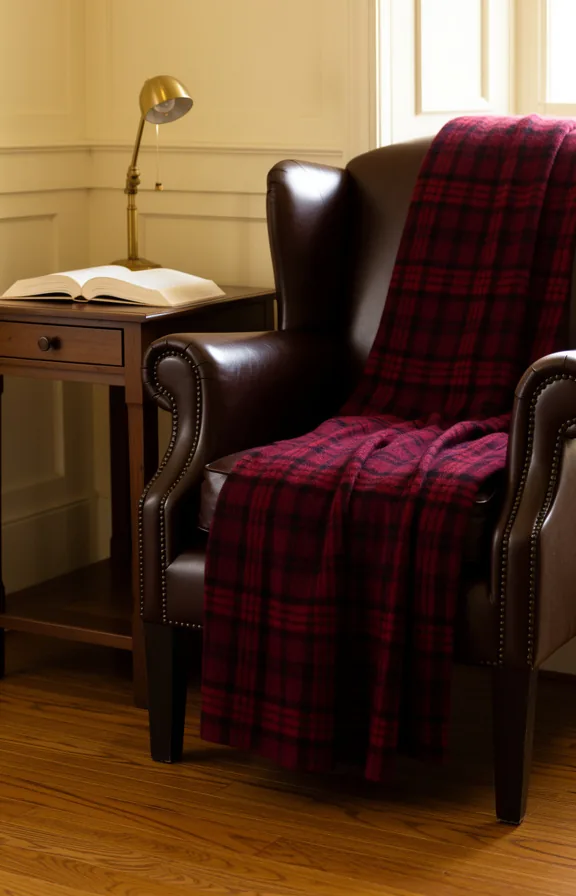
A burgundy plaid wool throw draped across a leather wingback chair signals serious comfort without breaking character. The woven texture catches lamplight and adds depth against deep furnishings.
Plaid reads as inherently literary and contemplative, connecting the room to countryside libraries and scholarly tradition. Wool’s natural warmth works best in rooms with cooler paint tones and brass or bronze metalwork.
This look suits homes with existing leather seating and vintage wood shelving. Most succeed when the plaid pattern sits in jewel tones rather than bright primary colours.
Pro Tip: Fold the throw into thirds lengthwise and drape it over the chair arm. This keeps it looking intentional and photograph-ready rather than bunched.
15. Antique Globe Collection
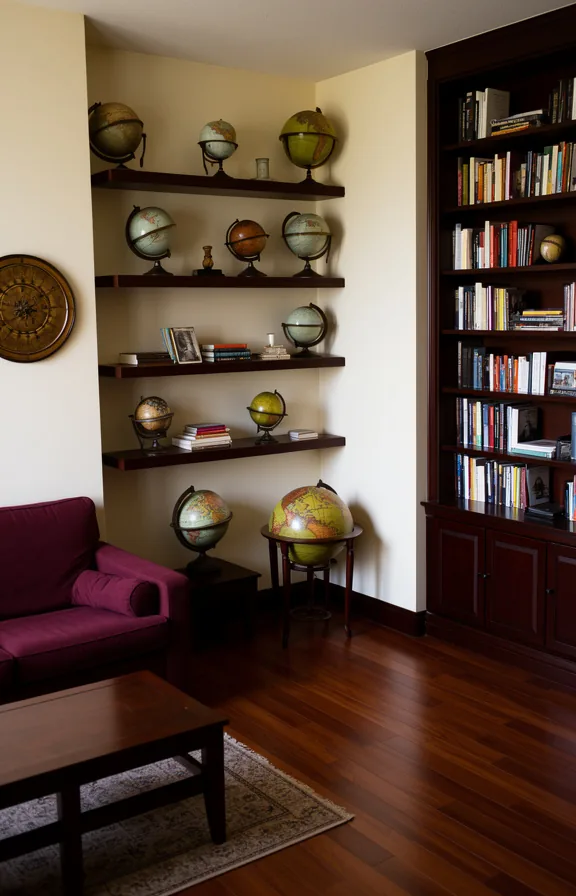
Brass-mounted vintage globes clustered on open shelving anchor a room steeped in scholarly curiosity. Each globe becomes a tactile artifact, paired with leather-bound volumes and antique maps that suggest years of intellectual wandering.
Deep jewel tones—burgundy, forest green, warm gold—emerge through the collection’s natural patina and the lighting around it. Warm brass catches low lamplight and creates shadow depth across the arrangement.
This concept suits readers and collectors who want objects that spark conversation and tell a story. The globes work best displayed at varying heights on dark wood or built-in shelving within arm’s reach.
Pro Tip: Group odd numbers of globes together with books laid horizontally beside them. This creates visual rhythm and prevents the shelves from feeling sparse.
16. Pendant Light with Edison Bulbs
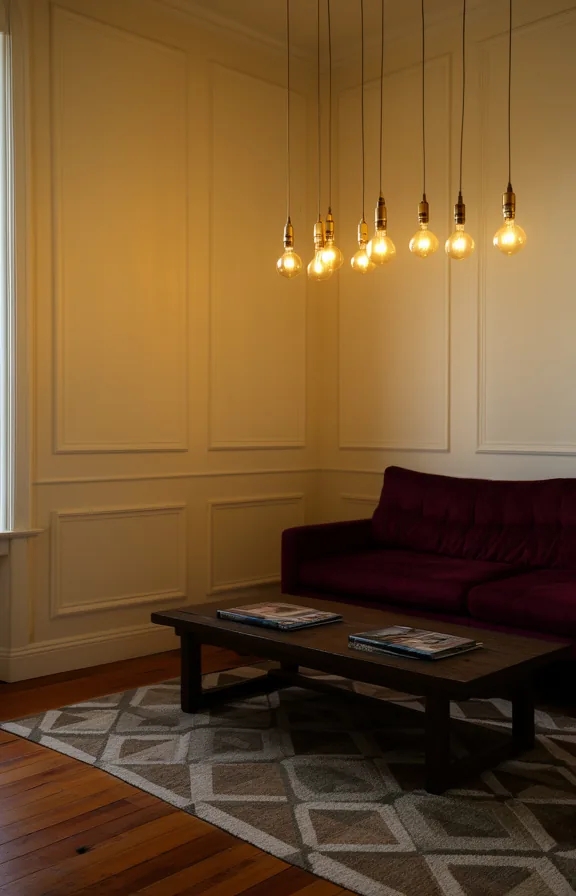
Warm amber light spills from exposed filament bulbs suspended above a leather wingback chair.
The brass or oil-rubbed bronze fixture hangs at eye level, casting a gentle glow across worn book spines and dark wood panelling.
This works well in rooms with high ceilings and architectural detail that benefits from dramatic downlighting.
The Edison bulb itself becomes décor, its vintage shape and visible coil visible from every angle in the room.
Pair this with a deep jewel-tone wall or forest green velvet seating to ground the warm light. Most people find this style reads as intellectual and intentional rather than trendy or modern.
Position the pendant over a reading nook or above a side table stacked with classic literature.
The warm colour temperature creates intimate pools of light rather than bright, even illumination. This concept suits collectors and readers who value atmospheric depth over practical brightness.
Pro Tip: Hang the pendant slightly lower than standard height. Eye-level or just below creates more drama and makes the bulb itself a focal point in photographs.
17. Burgundy Velvet Curtains
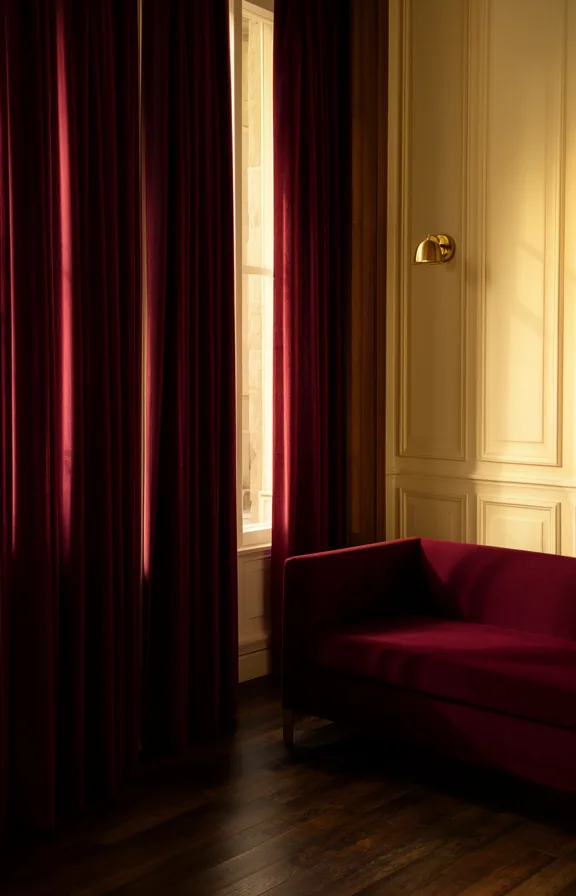
Burgundy velvet curtains anchor a room in scholarly elegance and warmth.
Floor-to-ceiling panels in deep wine tones frame tall windows and absorb light, creating an intimate reading nook that feels both grand and insulated.
Pair them with cream wall panelling, dark wood shelving, and warm brass fixtures to complete the vision. Candlelight reflects off the plush fabric, casting soft shadows across leather-bound spines and worn leather chair arms.
This look works best in rooms with generous ceiling height and natural window frames to showcase the fabric’s drape and texture. It requires commitment to blackout lining if you need true privacy during daylight hours.
Pro Tip: Hang curtain rods at ceiling height and let panels puddle slightly on dark wooden floors for maximum dramatic effect and that authentic old-library feel.
18. Wooden Ladder Shelf
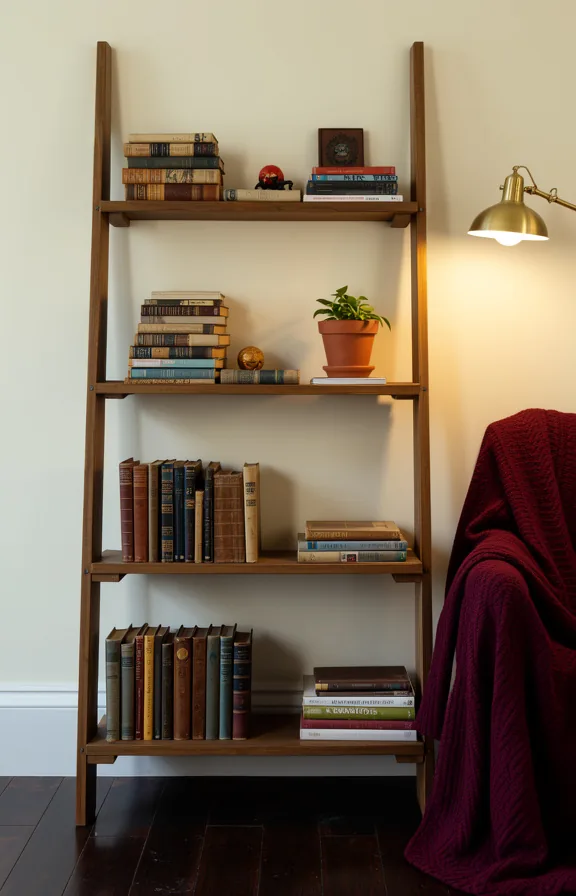
A wooden ladder shelf leans casually against cream walls, holding weathered hardcovers and leather-bound volumes. The natural wood grain reads warm against cool, muted tones throughout the room.
This works best in corners near reading chairs or beside tall windows where soft natural light catches the book spines. The angled form feels less formal than built-in shelving, adding lived-in authenticity to scholarly spaces.
Homes with limited wall space or rental constraints benefit most from this approach. Layer books horizontally and vertically, mix in a few decorative objects, and let negative space breathe between shelves.
Pro Tip: Place the ladder shelf at least six inches from the wall so books don’t look cramped. The gap lets light move behind and around, making the whole corner feel larger.
19. Dark Moody Paint Palette
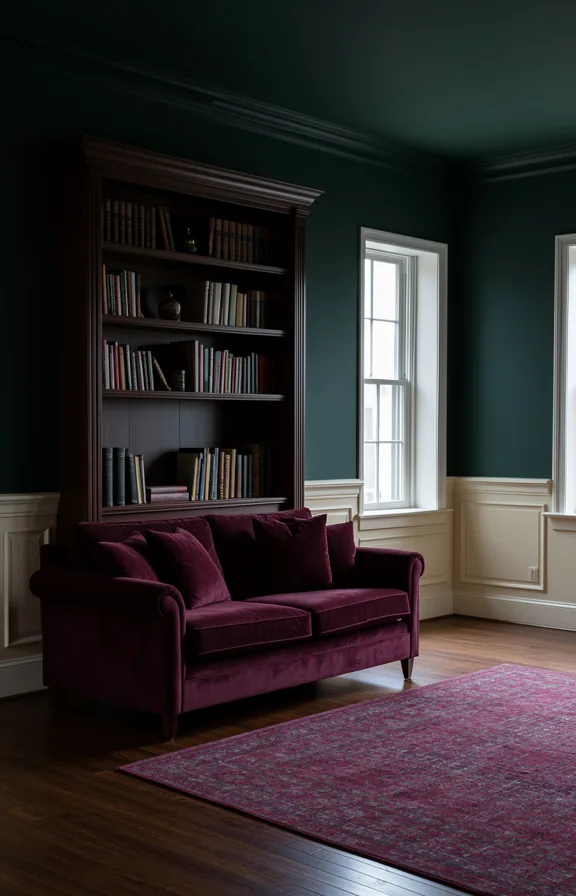
Deep jewel tones coat the walls in this library-inspired space. Burgundy, forest green, or charcoal create the scholarly backdrop that makes leather and wood feel intentional rather than accidental.
Rich paint absorbs light and makes brass fixtures and warm lamp glow feel essential. The darker the walls, the more deliberately you must light the room for reading and conversation.
This approach suits homes with good natural light and high ceilings, since moody paint can feel heavy in compact spaces. Pair dark walls with cream millwork or pale shelving to avoid a closed-in effect.
Pro Tip: Test your paint colour at dusk with overhead lights off. Dark academia rooms need to feel inviting by candlelight, not cave-like.
20. Vintage Book Stack Styling
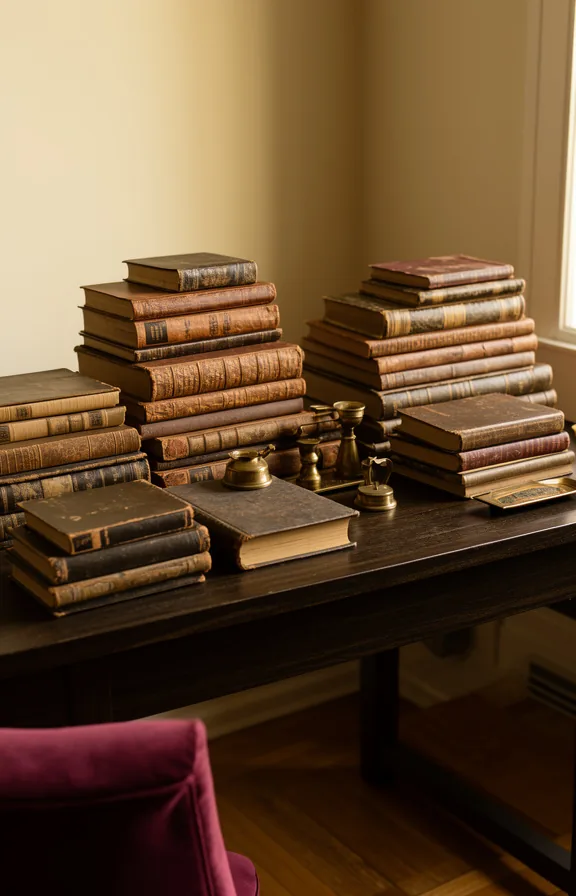
Leather-bound volumes in burgundy, forest green, and chocolate brown anchor a side table or low shelf. Stack them horizontally and vertically for organic rhythm.
This works best in rooms with existing dark wood furniture and deep jewel tones.
Brass bookends and a single small vase break up the stacks. Warm table lamps positioned nearby cast amber light across the spines. The effect feels collected over decades rather than purchased yesterday.
Books with visible wear, gold foiling, and varied paper textures tell a story. Leave some stacks slightly crooked. Real libraries look lived in, not styled for a single afternoon.
Pro Tip: Mix book heights by laying some flat and standing others upright. This prevents the stacked look from feeling too rigid or new.
21. Leather Ottoman Footrest
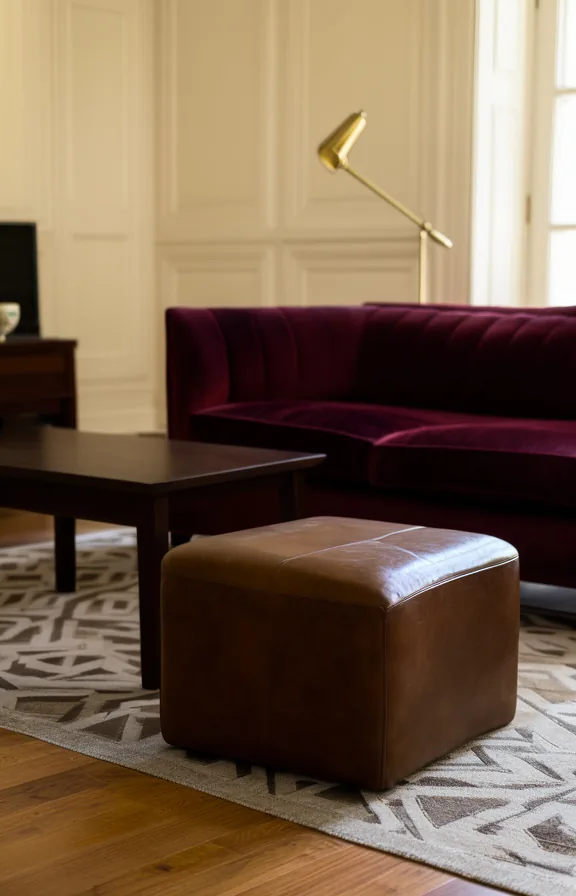
A cognac leather ottoman anchors the reading zone in front of a wing-backed armchair. The worn patina of the leather deepens over time, adding to the scholarly atmosphere.
This footrest works best paired with dark wood flooring and a jewel-toned area rug underneath. The combination reads instantly like a private study in an old manor house.
This concept suits anyone seeking a tactile, lived-in library aesthetic without needing extensive renovation or rare antiques. Leather ottomans bridge comfort and formality effortlessly.
Pro Tip: Place the ottoman slightly forward of your seating, not directly beneath it. This creates visual breathing room and makes the arrangement feel more intentional in photos.
22. Dark Ceiling Treatment
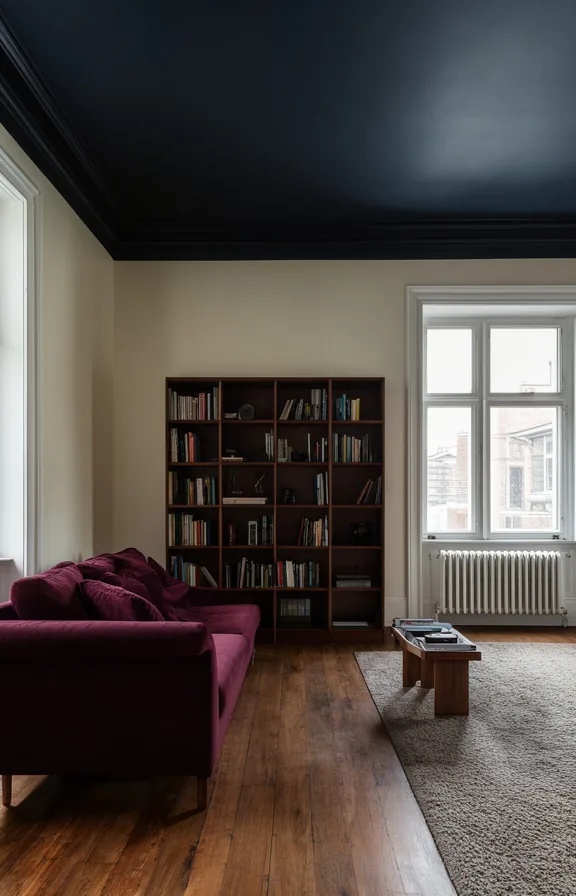
A deep charcoal or black ceiling anchors a room in shadow and intrigue. This overhead expanse draws the eye upward while making walls feel taller and more dramatic.
Crown moulding in matching tones adds architectural weight without breaking the mood.
Warm lighting becomes essential here. Table lamps and wall sconces cast pools of amber light that contrast beautifully against the dark overhead plane. The interplay of shadow and glow mimics a candlelit library at dusk.
This approach requires confidence and works best in rooms with good natural light during the day.
Smaller spaces benefit most because the darkness creates intimacy rather than claustrophobia. A burgundy or forest green sofa grounds the scheme while bookshelves become focal points beneath the moody canopy.
Pro Tip: Paint the ceiling first, then bring in furnishings. The dark overhead changes how every colour reads in the space below.
23. Brass Picture Rail System
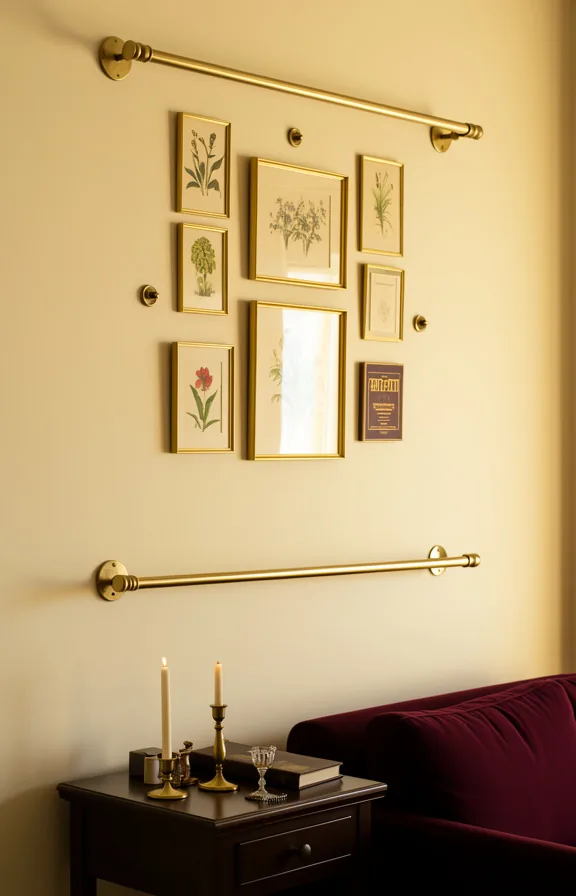
Brass rails mounted near the ceiling create an elegant gallery wall without permanent damage. Gold-framed botanical prints and leather-bound book covers hang at varying heights.
Cream walls and dark wood paneling frame the display, while warm brass hardware catches light from table lamps below. The system feels scholarly and intentional, like a curator’s private collection.
This approach works best in rooms with 9-foot ceilings and formal architectural bones. It requires patience to arrange prints thoughtfully rather than all at once.
Pro Tip: Install rails about 18 inches below crown molding. Space prints 3 to 4 inches apart for visual breathing room and a gallery feel.
24. Library-Style Wall Sconces
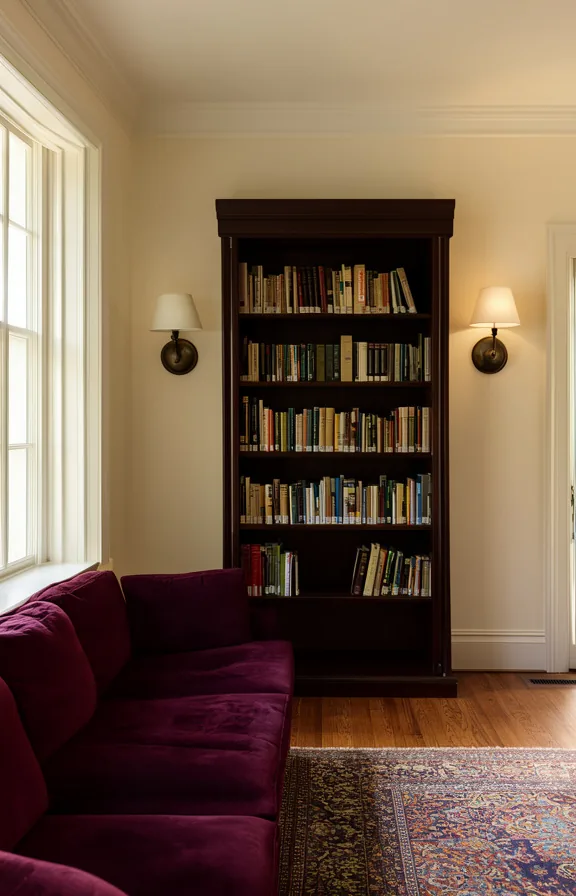
Warm brass or bronze sconces flanking a mahogany bookshelf cast pools of light that feel purposeful and learned. The glow sits at eye level, illuminating leather spines without brightening the entire room.
Paired with cream or taupe walls, these fixtures anchor the scholarly mood. Brass aged to a soft patina reads more authentic than polished new metal.
This setup suits readers who want layers of light and homes with existing architectural bones to highlight. Wall sconces replace overhead fixtures and create the intimate quality of a private study.
Pro Tip: Mount sconces slightly above the centre line of your tallest shelf. This angle bounces light across book covers and reduces harsh shadows on the wall behind.
Start with item 6, the Oriental rug layering approach. It costs between $50 and $150 and instantly grounds a room in dark academia energy without any installation or damage.
Once your rug is down, add the burgundy velvet sofa idea from item 1. These two pieces together create the foundation that makes every other element feel intentional.
Save this post and revisit it as you build your space. Dark academia living rooms take time, but each small addition brings you closer to the scholarly retreat you’re imagining.