

19 Grandma Core Kitchen Decor Ideas on a Budget
This platform is proudly ad-free! To keep it that way and support our efforts, some posts may contain affiliate links. These links come at no extra cost to you, but they help us grow and continue providing valuable content. Thank you for your understanding and support!
Grandma core kitchens feel collected over time, not purchased all at once. Most people see this style and assume it costs a fortune.
The truth is simpler: it’s about layering affordable vintage finds with budget-friendly painted furniture and thoughtful arrangement.
Your kitchen doesn’t need a major renovation to feel like this. Small decisions about what you hang, display, and where you place it create the whole effect.
This list gives you specific ideas that work whether you’re starting from scratch or refreshing what you already have.
Each concept works independently. Pick one and try it this weekend. Most cost under fifty dollars to start. By the end, you’ll have a kitchen that looks and feels completely yours, without spending like a designer did it.
1. Vintage Enamelware Display Wall
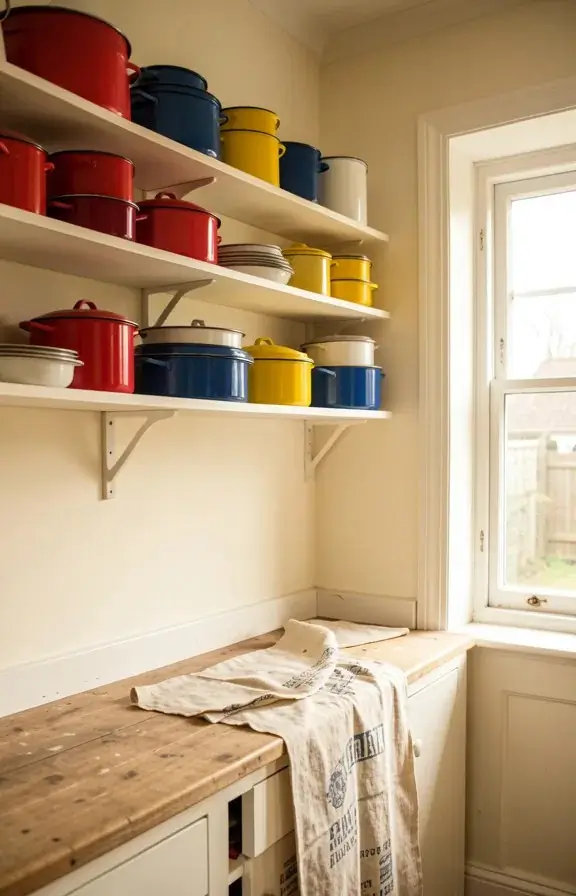
Warm amber tones collect along an open wall where white shiplap or painted brick meets vintage enamelware in robin’s egg blue, soft yellow, and cream.
The pieces hang at varying heights, creating rhythm without feeling staged. Morning light catches the glossy enamel finish, making each bowl and pitcher glow slightly.
Below, a simple wooden shelf or ledge in natural pine or painted white holds a few pieces at rest. The effect feels lived-in, not precious.
This wall becomes the room’s anchor. It pulls your eye and gives your kitchen character without requiring expensive renovations or trend-dependent choices.
Pro Tip: Group enamelware by color family rather than size to create visual balance and prevent the wall from feeling cluttered or random.
2. Open Shelving with Mismatched Dishes
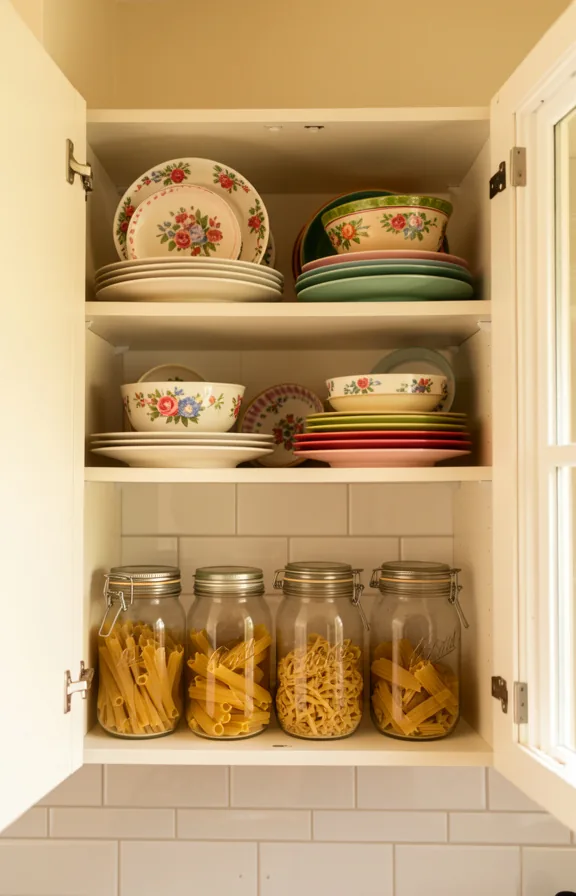
Warm cream-colored shelves hold a layered collection of ceramic plates, bowls, and vintage glassware in soft greens, dusty blues, and peachy tones.
The plates don’t match, but they share a common thread: aged finishes and gentle colors that feel collected rather than bought.
Soft window light from the side catches the glaze and rim details, making each piece feel like something discovered over decades.
The effect is lived-in and honest, with no attempt at perfection or symmetry.
Pro Tip: Group dishes by color family rather than size to create visual coherence while keeping the mismatched, authentic feel intact.
3. Apron Hooks Above the Sink
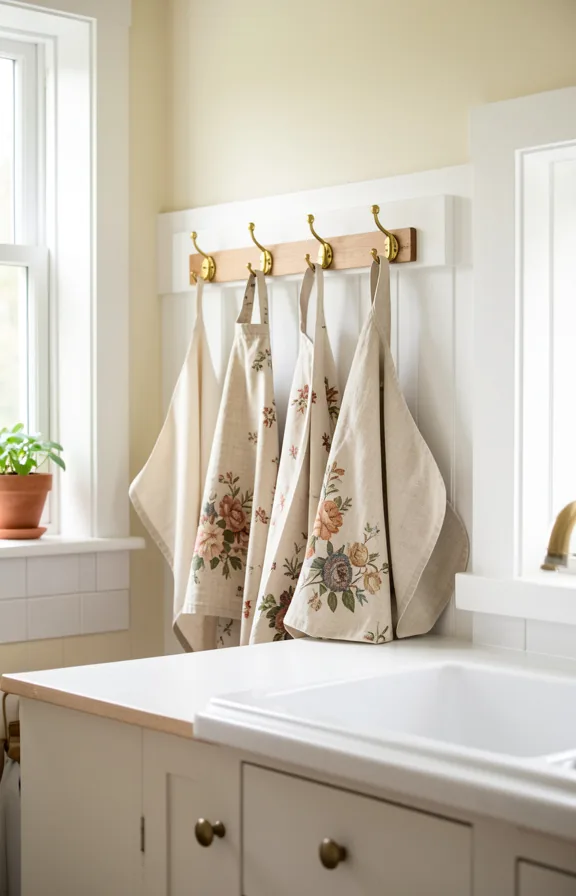
Brass or aged iron hooks mounted at eye level above your sink create a functional focal point. They anchor the space with vintage hardware that catches morning light.
Keep aprons here in solid cotton, gingham, or faded linen. The hooks themselves become visible storage, not hidden away.
This detail works best on a painted wall in cream, soft white, or pale sage. It echoes a working kitchen where tools lived within reach, not tucked in drawers.
The placement matters most. Hooks above the sink connect your prep work directly to hand-washing, creating honest kitchen logic that reads authentically vintage.
Pro Tip: Install hooks slightly wider than your sink width so aprons hang clear of splashes and steam.
4. Checked Gingham Window Treatments
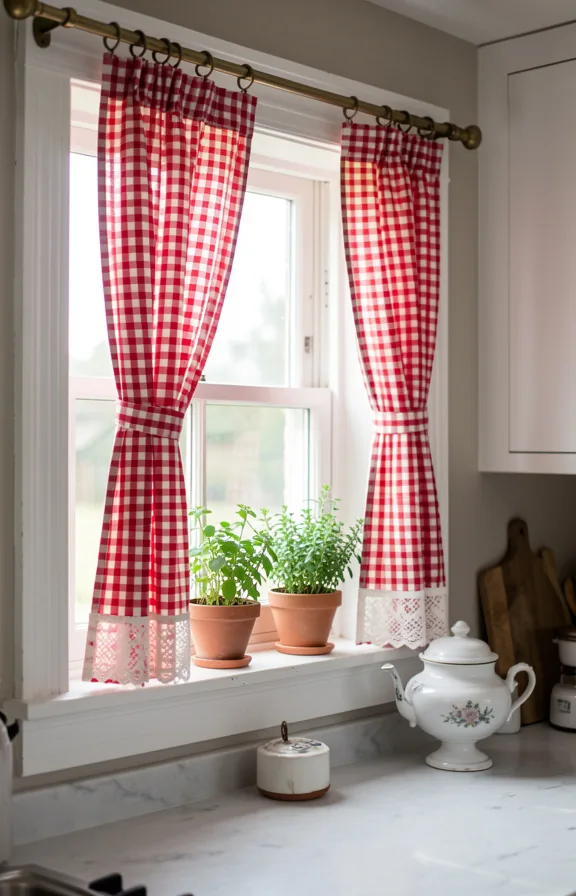
Red and white gingham fabric frames your kitchen window in the most approachable way possible. The checked pattern catches soft morning light and bounces it across white subway tile and pale wood cabinetry.
Cafe curtains hang at mid-window height, leaving the sill visible for potted herbs or stacked vintage plates. This style works in small kitchens because it doesn’t block natural light or dominate the room.
The colour palette stays simple: warm brass hardware, cream walls, and that classic red-and-white check repeating across the fabric. No competing patterns fight for attention.
Pro Tip: Buy gingham fabric by the yard from a fabric store and hang it from an inexpensive tension rod. This costs less than pre-made curtains and lets you adjust length exactly to your window.
5. Copper Pot Rack Ceiling
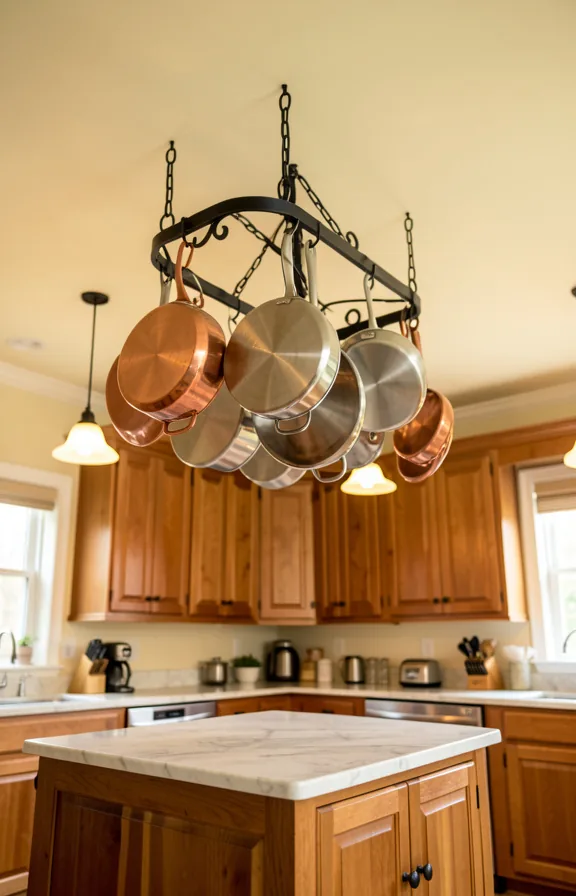
Warm copper metal catches the light above your head, creating a functional display that feels like lived-in comfort.
A ceiling-mounted pot rack in burnished copper or aged brass becomes the room’s focal point. Hanging copper cookware, ceramic mixing bowls, and vintage ladles from sturdy S-hooks adds character without taking up cabinet space.
The warm metal tones pair naturally with cream-painted walls and honey-colored wood cabinetry. Soft overhead lighting reflects off the copper surfaces, making the kitchen feel both brighter and more intimate.
This approach works especially well in smaller kitchens where wall space is tight. Your most-used pots stay visible and accessible, not hidden away.
Pro Tip: Install your rack using heavy-duty ceiling anchors rated for at least 50 pounds. Uneven weight distribution causes sagging, so space your hooks thoughtfully across the frame.
6. Wooden Plate Rail Ledge
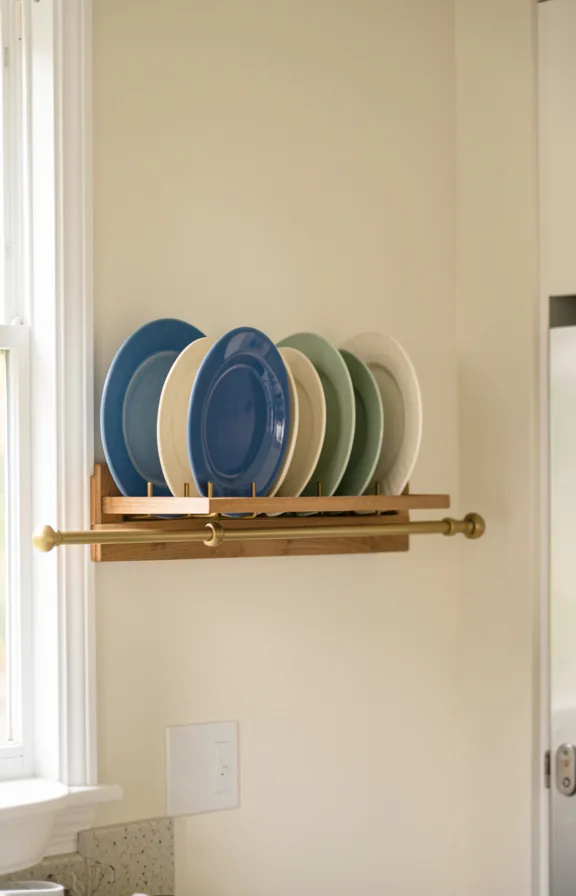
A shallow wooden ledge running along your kitchen wall creates instant architectural character without renovation costs.
Mount it at eye level above countertops or open shelving using simple brackets and existing studs.
Layer vintage plates in soft blues, creams, and sage greens across the ledge for depth and color.
The natural wood finish pairs beautifully with white or buttery walls, while the arrangement catches light throughout the day.
This single addition makes a bare kitchen feel intentional and lived-in.
Pro Tip: Group plates by color rather than pattern to avoid visual clutter and let the wooden ledge remain the focal point.
7. Ceramic Canister Kitchen Counter
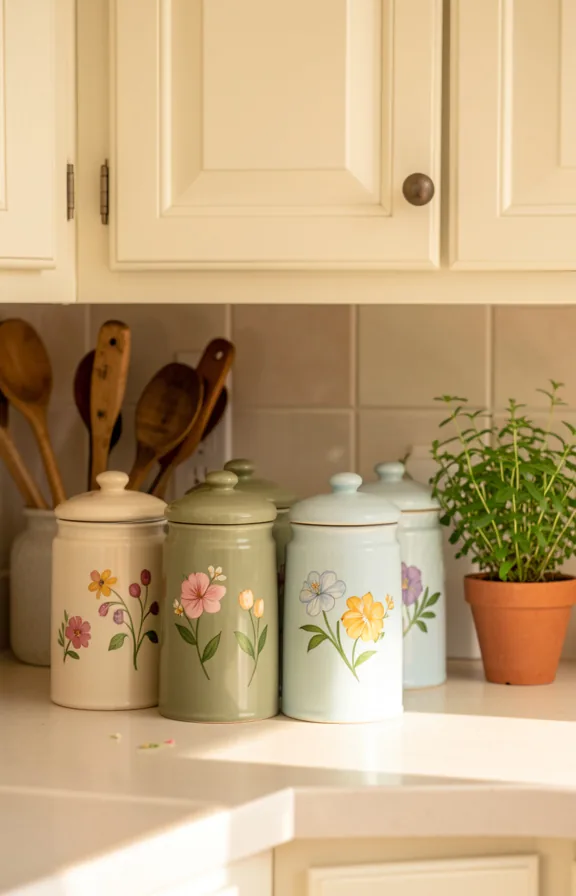
Low and wide across your countertop, a set of ceramic canisters in cream or soft sage anchors the entire kitchen.
These glazed vessels sit at arm’s reach from your stove and prep zone. They hold flour, sugar, tea, and dried beans in plain sight.
The matte finish catches soft afternoon light without gloss. Hand-painted details or simple brushstrokes keep the aesthetic honest and worn-in.
Your eye moves from one to the next like a visual rhythm. Four canisters feel complete; three feels sparse; five feels cluttered.
This arrangement works because it serves function first and beauty second. You use them daily, not just admire them.
Pro Tip: Group canisters in odd numbers or pairs rather than fours. Asymmetry feels more authentic than symmetry in grandma-core spaces.
8. Lace Doilies on Open Shelves
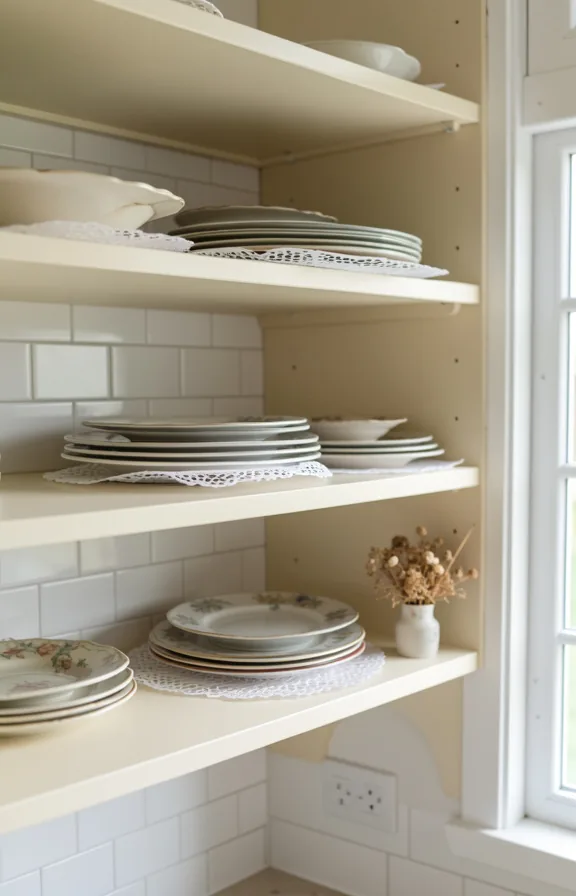
Cream-painted open shelves lined with ivory lace doilies create a soft, layered backdrop for your everyday dishes and glassware.
The doilies catch morning light and add texture without clutter. They soften the hard lines of modern shelving instantly.
Stack your white ceramic bowls and vintage mugs directly on the lace. The contrast between delicate crochet and sturdy pottery feels authentic and lived-in.
Pair this with warm brass or gold shelf brackets and pale wood countertops to complete the effect. The combination reads as collected, not decorated.
Pro Tip: Layer multiple doilies of different widths and patterns across each shelf for visual depth without buying matching sets.
9. Herb Garden Windowsill Corner
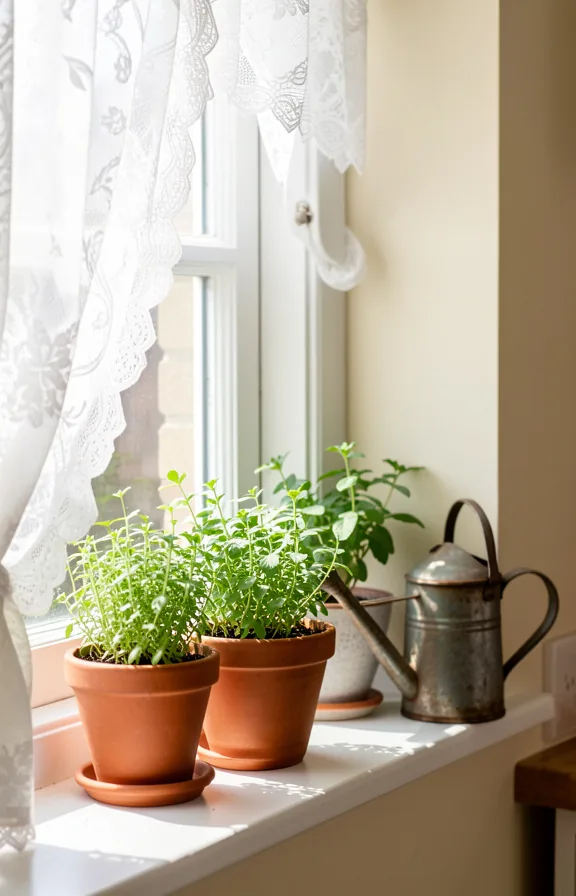
Rough terracotta pots clustered across a sunny windowsill catch soft morning light and cast gentle shadows on white painted wood.
Green basil, parsley, and chives spill slightly over pot rims, filling the corner with living colour and authentic kitchen purpose.
Mismatched ceramic vessels in cream and soft grey sit alongside terracotta, creating visual texture without trying too hard.
The whole corner smells faintly of earth and green growth, something no decoration alone can replicate.
Pro Tip: Group pots of varying heights and materials together rather than lining them in a single row. Odd numbers and unmatched vessels read as intentional and naturally aged.
10. Floral Tea Towel Bar
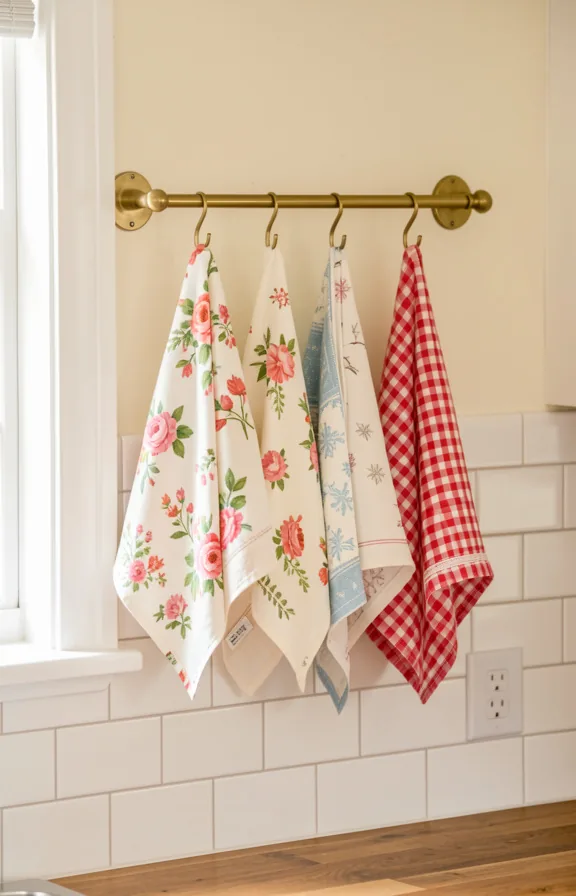
A vintage brass or aged iron rod mounted low on your kitchen wall holds vintage floral linen tea towels within easy reach.
The towels themselves anchor the look: faded cabbage roses, delicate florals in cream and soft pink, or botanical prints on natural linen.
This placement keeps your counter uncluttered while adding soft color and pattern at arm’s height where you notice it most.
The rod becomes a small architectural detail that grounds the wall without demanding attention.
Pro Tip: Mount your rod 12 to 15 inches above your countertop so towels hang at a natural, functional level without touching water or splashes.
11. Painted Furniture Storage Bench
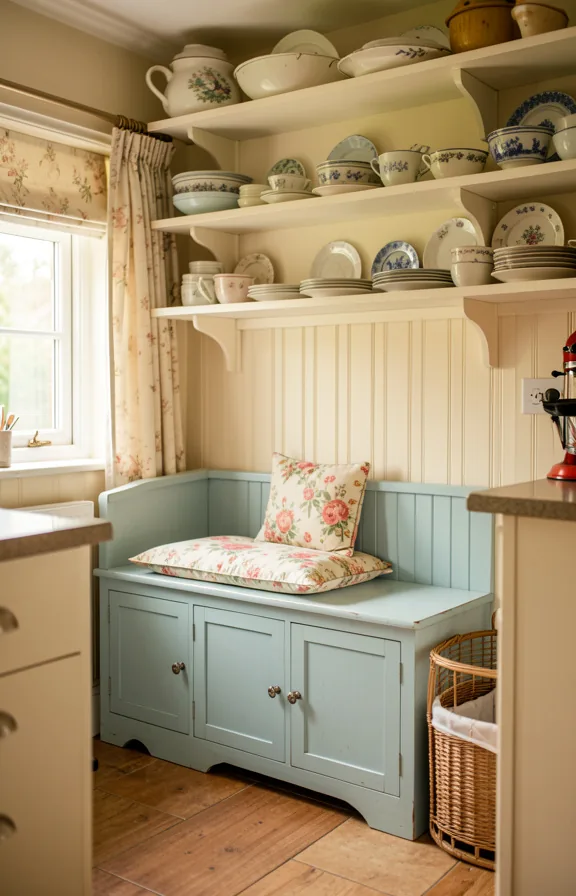
A low painted bench anchors your kitchen corner with both function and warmth. Soft sage green or cream lacquer finishes pair well with a cushioned seat in faded floral linen or cotton velvet.
Open storage cubbies underneath keep cookbooks, linens, and vintage dishware within reach. This works especially well in galley kitchens where vertical space feels tight.
Position it under a window or against bare wall space to create a small gathering spot. The bench grounds the room without demanding much floor space.
Thrifted wooden benches take paint well and cost far less than new furniture. Look for solid wood frames at estate sales or Facebook Marketplace.
Pro Tip: Paint your bench in a chalky matte finish rather than glossy. Matte surfaces read as vintage and hide fingerprints better than shiny lacquer in high-traffic kitchens.
12. Basket Weave Under Sink Storage
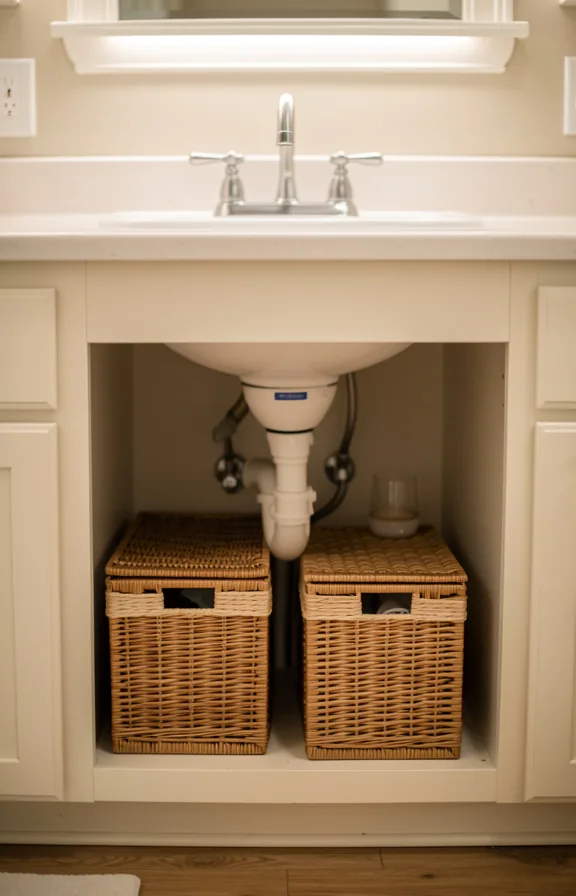
Natural woven baskets tucked beneath your sink create instant softness in a hardworking space. The warm honey and tan tones of rattan catch light without demanding attention.
This storage style hides cleaning supplies while keeping them within arm’s reach. Your under-sink area becomes part of the kitchen’s visual story instead of a jumbled eyesore.
Two or three baskets in graduating sizes feel intentional and balanced. Deeper baskets hold large bottles; shallower ones store sponges and cloths.
Pro Tip: Line baskets with kraft paper or linen fabric to protect contents and soften the visual weight even further.
13. Stenciled Backsplash Kitchen Wall
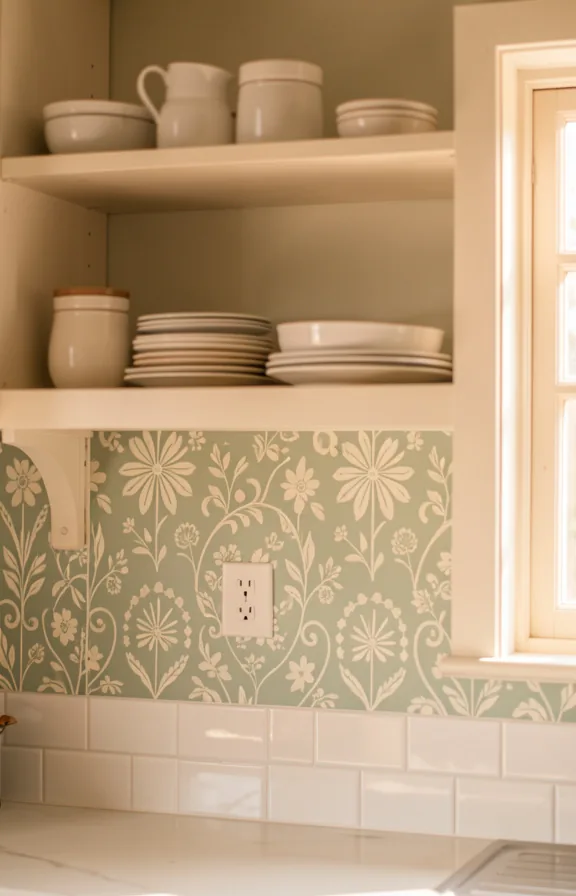
Soft sage green repeating patterns bloom across white plaster above your kitchen counter, hand-stenciled in a loose, imperfect rhythm.
The wall becomes architectural character without tile or professional installation. Your backsplash catches natural morning light differently each hour.
Cream subway tile or simple painted drywall underneath grounds the pattern. The stencil work feels handmade, which is the point.
Warm brass cabinet hardware and pale linen towels echo the soft green tones. The whole wall reads as lived-in and deliberate.
This works well in smaller kitchens because the pattern adds visual interest without overwhelming tight spaces.
Pro Tip: Use a foam stencil brush with very little paint to avoid bleeding under the edges, and let each layer dry fully before repositioning the stencil.
14. Quilted Table Runner Dining
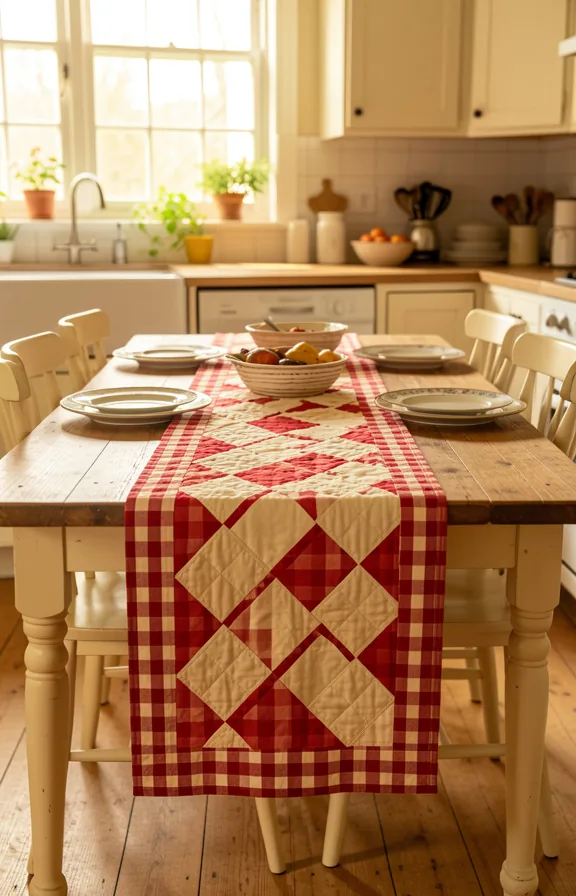
Soft cotton quilting in cream, butter, and faded rose tones runs the length of your wooden table. The stitched pattern catches light differently depending on the angle you view it from.
This runner protects your table while adding handmade warmth without looking precious or overdone. Thrifted quilts work just as well as new ones, and cost less.
Paired with mismatched vintage plates and simple white linens, the quilted runner becomes the visual anchor of your dining space. It signals that meals here matter.
Pro Tip: Layer a quilted runner over a solid linen tablecloth in cream or sage to add depth and protect both fabrics from daily wear.
15. Milk Glass Bud Vase Collection
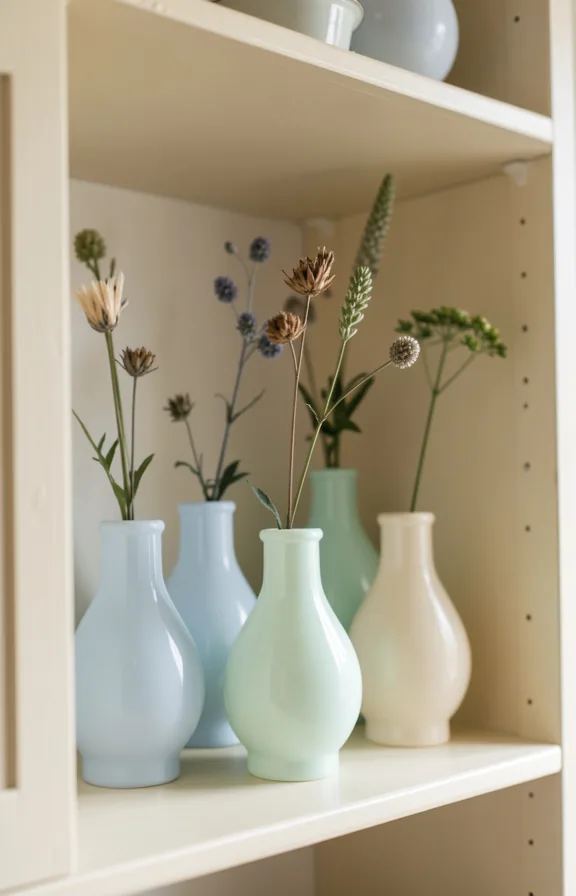
Pale blue, mint, and cream glass vessels lined across an open shelf catch soft kitchen light. The frosted finish creates depth without weight or visual clutter.
Group your bud vases in odd numbers of three or five. Thrift stores and estate sales carry milk glass cheaply, often for under two dollars per piece.
Fill each one with a single stem or leave empty for a cleaner look. The glassware itself becomes the decoration, not what goes inside it.
Position them at varying heights using small stacked books underneath. This creates visual rhythm and draws the eye across your shelf naturally.
Pro Tip: Group milk glass by color family rather than shape. A unified palette reads as intentional design, even on a thrifted budget.
16. Embroidered Linen Kitchen Curtains
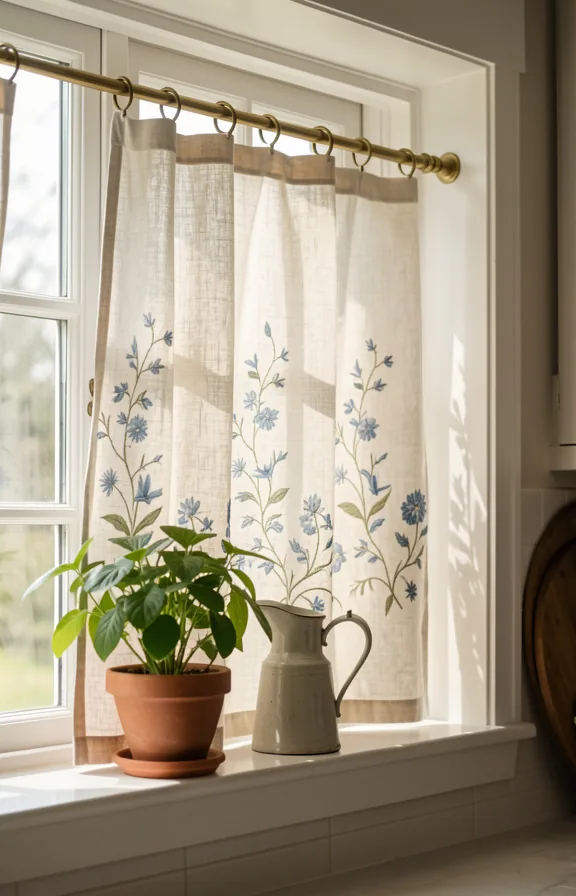
Cream linen hangs from a simple brass rod, embroidered with faded floral motifs in pale blue and sage green.
Soft morning light filters through the fabric, casting delicate shadows across your countertop and sink.
The texture is substantial but breathable—linen that moves gently when you open a window, never stiff or plastic.
This single design choice anchors your entire kitchen in a slower, more intentional aesthetic than standard store-bought curtains.
Embroidered linen costs less than you’d expect, especially vintage or deadstock pieces from thrift stores and online secondhand shops.
Pro Tip: Hang curtains on a vintage brass or wooden rod mounted high and wide to make your window appear larger and your kitchen feel more generous.
17. Wooden Cutting Board Wall Mount
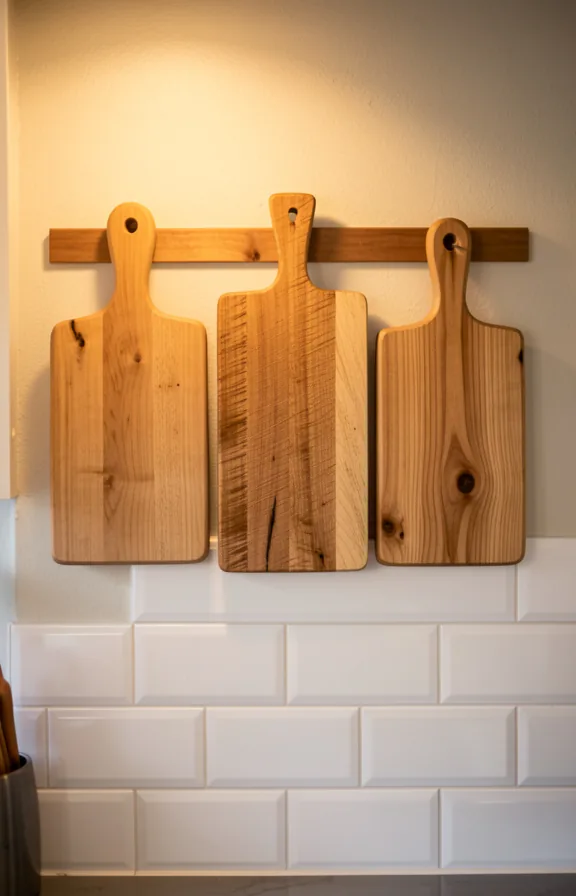
Warm wood tones arranged low on your kitchen wall create an instant focal point above your counter.
Wooden cutting boards in honey, walnut, and light oak shades layer depth and texture together.
This display works especially well in kitchens with white or cream cabinetry and soft, diffused light from a window.
The boards catch morning or afternoon light naturally, making your wall feel lived-in and functional at once.
Most people find that grouping three boards at varying heights feels more balanced than a single piece.
Pro Tip: Mount boards at eye level or slightly below so they feel anchored to your workspace, not floating above it.
18. Wallpapered Kitchen Soffit Ceiling
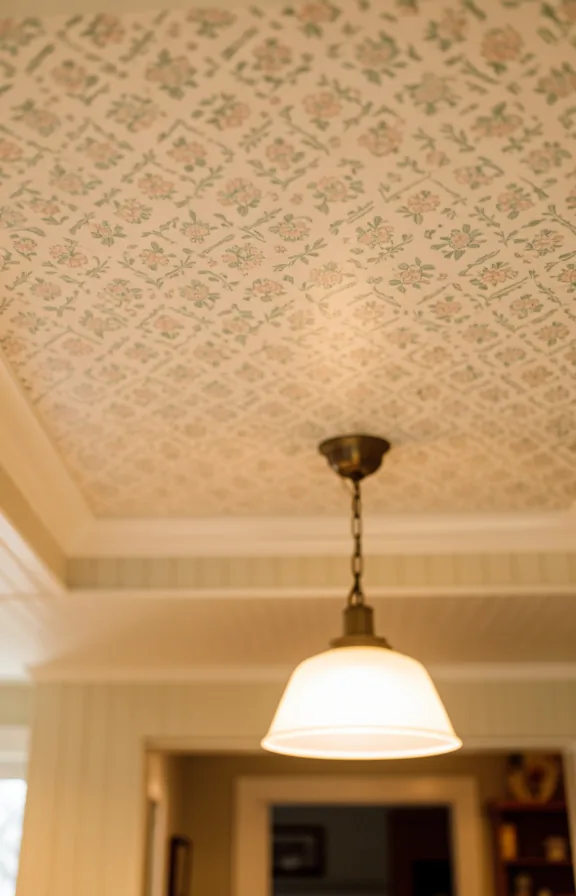
Warm amber tones peek through when light hits the floral or gingham wallpaper above your kitchen counter. A soffit ceiling, wrapped in vintage-pattern paper, creates the feeling of stepping into a 1970s cottage kitchen.
This works because wallpapered soffits draw the eye upward without requiring major construction. The pattern adds character to an otherwise plain architectural detail.
Pair it with cream-painted cabinets, a brass light fixture, and open shelving below. The enclosed space feels smaller, warmer, and intentionally designed.
Most people find that removable peel-and-stick wallpaper works just as well as traditional paste. You avoid permanent damage and can change the pattern in a few years.
Pro Tip: Apply wallpaper only to the recessed soffit, not the full ceiling, to avoid making the room feel oppressive.
19. Cottage Garden Kitchen Entryway
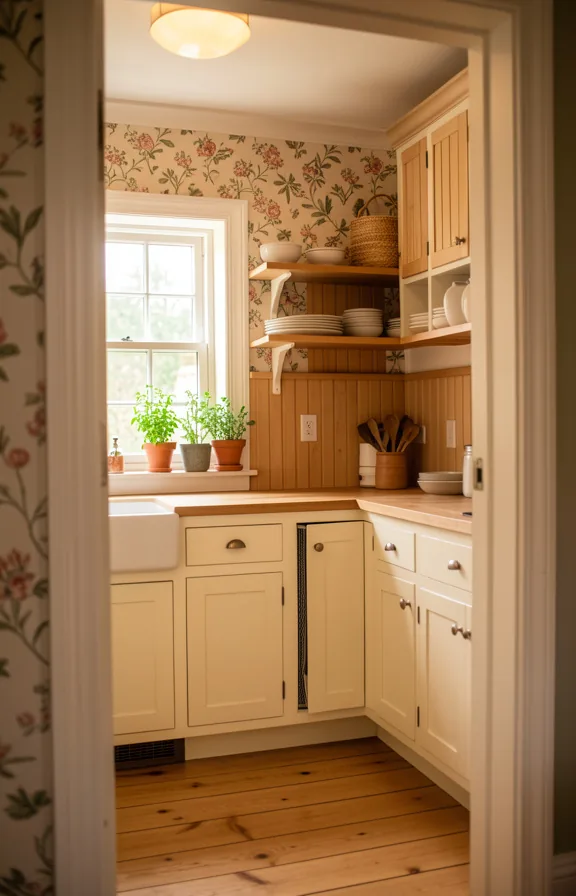
Soft cream-painted woodwork frames a doorway into a kitchen that feels lived-in and welcoming from the threshold itself.
The entryway holds a narrow wooden shelf with rounded edges, finished in weathered white or pale sage. Small ceramic canisters, vintage glass jars, and dried herbs in cream linen bundles rest here naturally.
A single arched window above the doorway lets warm afternoon light spill across the frame. The glass is divided into small panes, catching light without glare.
The wall colour transitions gently from the main kitchen shade to a softer, almost greyed-white at the threshold. This creates visual breathing room and marks the entryway as a small, intentional pause.
You feel the shift from outside to inside the moment you cross it. The space smells of old wood and something quietly herbs.
Pro Tip: Paint your doorframe trim a shade lighter than your kitchen walls to signal entry and make the space feel larger than it is.
Start with the vintage enamelware display wall. It’s the easiest first step because you can thrift pieces slowly and add them as you find them. No commitment, no installation required beyond finding shelf space.
Save this article and come back to it as you shop thrift stores and farmers markets. Your grandma core kitchen is already waiting to be built.